Over the past three generations, America’s spiritual landscape has undergone quiet but profound changes. Recent surveys show 19% of U.S. adults now identify with a faith community that once represented nearly a quarter of the population. This shift becomes even clearer when comparing today’s numbers to those from 1965, when six times more clergy served far fewer congregants.
What does this transformation mean for communities and cultural values? We’re not just talking about attendance figures – it’s about evolving relationships with tradition, community, and personal belief systems. Younger generations in particular are redefining what spirituality looks like in modern life.
This exploration isn’t about assigning blame or sounding alarms. Instead, we’ll look at regional patterns, generational attitudes, and social factors shaping these trends. From bustling cities to rural towns, the reasons behind changing affiliations vary as widely as America itself.
Key Takeaways
- Religious identification patterns have shifted noticeably since the mid-1960s
- Only 44% of current adherents rate faith as “very important” in daily life
- Weekly participation rates now sit below 30% nationwide
- Regional differences play a key role in affiliation trends
- Multiple generations contribute to evolving spiritual practices
- Understanding these changes helps decode broader cultural shifts
As we unpack these developments, we’ll consider what historical context and modern research reveal about American values. Whether you’re part of this tradition or simply curious about social change, these insights offer valuable perspective on our evolving nation.
Understanding the Catholicism Decline: Trends and Statistics
Recent surveys reveal striking changes in American spiritual affiliations. Three major studies show consistent patterns across different measurement methods and time frames. Let’s explore what the numbers tell us about evolving faith traditions.
What Surveys Reveal About Participation
The Pew Research Center tracked a 5-point drop in religious identification between 2007 and recent years. Their data shows membership falling from 24% to 19% – a significant shift in just fifteen years. The General Social Survey paints a similar picture, with numbers sliding from 26% to 21% since the 1970s.
These patterns become clearer when comparing studies:
- Cooperative Election Study reports 17.5% affiliation in latest counts
- Weekly service attendance halved since 1970s
- Younger generations show lower engagement rates
Tracking Changes Through the Decades
The 1990s marked a turning point, with surveys showing stable numbers before gradual declines. Participation rates tell an even stronger story – only 1 in 4 adherents now attend regular services. This suggests a growing gap between cultural identity and active practice.
Researchers note these trends mirror broader social shifts. As one analyst observed: “What we’re seeing isn’t isolated – it’s part of America’s evolving relationship with organized communities.” The data helps us understand how spiritual lives adapt to modern realities.
Exploring the Contributing Factors Behind the Decline
Multiple forces have reshaped America’s spiritual identity. From sweeping social changes to institutional reforms, these influences created ripple effects across generations. Let’s unpack the key elements driving this transformation.
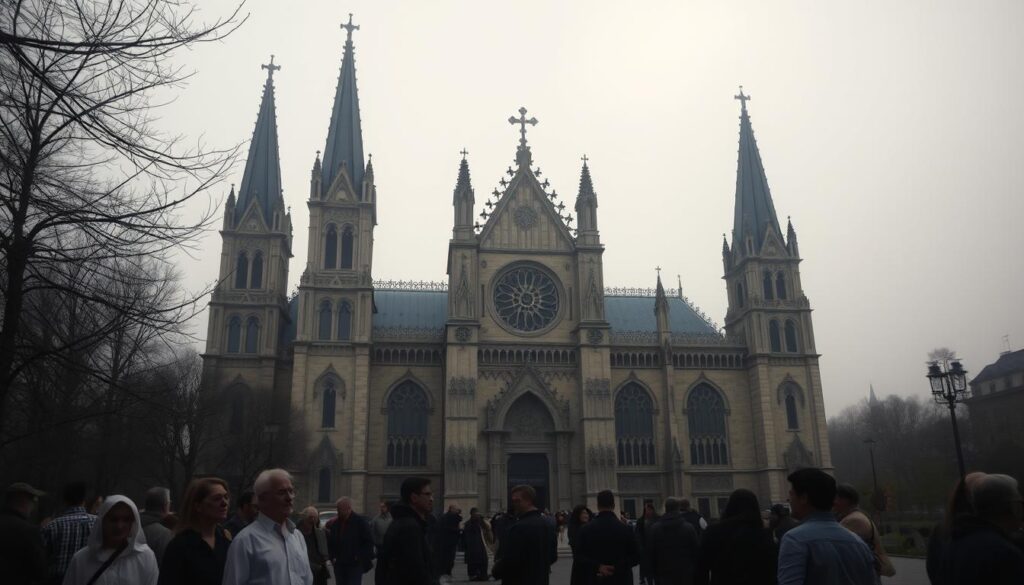
Cultural Shifts and Changing Social Values
The 1960s brought seismic changes that challenged traditional norms. Surveys show 73% of adherents now support LGBTQ+ rights, while 59% favor accessible abortion. These views often clash with established teachings, creating tension for families balancing modern values with inherited beliefs.
Younger generations particularly struggle with this disconnect. As one researcher notes: “Millennials want communities that evolve with societal progress.” This gap impacts everything from marriage ceremonies to youth participation in sacraments.
| Factor | Impact Level | Generational Effect |
|---|---|---|
| Vatican II Reforms | High | All age groups |
| Social Value Shifts | Extreme | Under 50s |
| Religious Education Changes | Moderate | Post-1980s |
| Institutional Scandals | Severe | All demographics |
Impact of Vatican II and Institutional Changes
The 1960s reforms aimed to modernize worship practices but had unintended consequences. A National Bureau study found global attendance dropped 18% faster in Catholic communities than other denominations post-Vatican II. Some members felt traditional rituals lost their sacred quality.
Church leadership also faced growing scrutiny. High-profile scandals eroded trust, particularly among parents concerned about youth programs. Combined with relaxed religious education standards, these issues made consistent practice harder to maintain across generations.
These factors don’t operate in isolation. As cultural expectations shift and institutional challenges persist, families often renegotiate their relationship with time-honored traditions. The result? A complex web of reasons behind changing affiliations.
Regional and Demographic Insights in the United States
America’s spiritual map shows uneven patterns of belief and practice. While some areas maintain strong ties to tradition, others experience rapid shifts in community engagement. Let’s explore how geography shapes these variations.
Geospatial Distribution and State-Level Variations
Traditional strongholds face surprising changes. Massachusetts saw an 11% drop in identification since 2008, while Connecticut lost 16% of its affiliated population. Midwestern states like Kansas and Ohio report 6-8% reductions, according to recent surveys.
| State | Identification Change | Key Notes |
|---|---|---|
| Florida | +3% | Growth in urban centers |
| New Mexico | -9.8% | Rural areas most affected |
| Mississippi | +1.5% | Increased mass attendance |
| Colorado | -5.5% | Youth disengagement rises |
Differences in Mass Attendance and Parish Engagement
Weekly participation tells its own story. Southern states like Mississippi buck national trends with growing numbers, while Tennessee and North Carolina report 12% fewer regular attendees. Urban parishes face unique challenges – many struggle to track members as neighborhoods change.
Immigration patterns add complexity. Hispanic communities help stabilize numbers in Texas and California, yet leaders note integration challenges. “Parishes must adapt to cultural shifts while maintaining core values,” observes a Florida-based community organizer.
Some churches lose members through simple oversight. In Chicago, a once-active family stopped attending after their parish failed to notice six months of absences. Such stories highlight the need for better outreach strategies across the country.
Conclusion
America’s religious identity continues evolving in ways that defy easy explanations. Over three generations, communities across the country have navigated shifting relationships with organized church life. This transformation isn’t about rejection of faith, but rather how people connect with spiritual practice in modern times.
Regional differences reveal surprising patterns – Southern states see stable participation while Northeastern groups shrink. Urban parishes adapt to cultural currents, while rural areas face unique challenges. These variations show there’s no single problem or solution, only localized realities needing tailored responses.
Some leaders advocate updating policies to match today’s values, while others emphasize traditional roots. Both approaches miss a key point: many still cherish their spiritual heritage but seek deeper community ties. Successful strategies might focus on meaningful outreach rather than attendance numbers.
As we look ahead, this country’s religious landscape will keep changing. The real story isn’t in news headlines about shrinking numbers, but in how church communities adapt to serve new generations. Understanding these shifts helps us see broader changes in how Americans find purpose and connection through the years.
FAQ
What data shows the Catholic Church’s membership changes in recent years?
Studies by the Pew Research Center reveal a steady drop in self-identified Catholics since 2000. In 2022, only 20% of U.S. adults identified as Catholic, down from 24% in 2007. Surveys also highlight reduced weekly Mass attendance, especially among younger generations.
How have cultural shifts influenced participation in Catholic practices?
Changing views on issues like LGBTQ+ rights, gender roles, and reproductive policies have created tensions. Many younger believers feel disconnected from traditional teachings, leading to lower engagement with parishes or religious rituals like sacraments.
Are there regional differences in Catholic engagement across the U.S.?
Yes. States like Massachusetts and Illinois retain stronger parish networks, while areas in the Pacific Northwest report sparse attendance. Rural regions often face priest shortages, whereas urban centers struggle with diverse spiritual competition.
Did Vatican II reforms contribute to the current challenges?
While Vatican II modernized practices in the 1960s, debates over its long-term impact persist. Some argue it alienated traditionalists, while others believe it didn’t adapt quickly enough to social changes, leaving gaps in addressing modern ethical questions.
How is the Church addressing declining membership today?
Initiatives focus on youth outreach, digital evangelization, and lay leadership programs. Groups like CARA (Center for Applied Research in the Apostolate) track trends to help parishes adapt. However, reversing decades of decline remains a complex, ongoing effort.
Do younger Catholics practice their faith differently than older generations?
Surveys show millennials and Gen Z prioritize social justice and inclusivity over institutional loyalty. Many engage with spirituality outside traditional Mass settings, leaning toward community service or online faith groups instead.