Welcome to a small, inviting holy space on the Marquette University campus. This chapel blends quiet prayer, daily worship, and student life in a warm, open way. Visitors and alumni find it easy to pause and reflect between classes or during a campus visit.
Built in the 15th century and moved to Milwaukee decades later, the chapel carries a living history. Its Gothic stone and wood evoke an older world while ministries today serve students and neighbors. Over the years the journey from France to this American campus has shaped a unique story.
The arc chapel remains active year-round. Expect Mass, study prayer times, student ministries, and a friendly community that welcomes all. The site also offers artifacts, a colder stone near the altar, and quiet corners for reflection.
This short guide previews worship options, history, and visit tips so you can plan a meaningful stop at this spiritual oasis on campus.
Key Takeaways
- A welcoming, intimate space for prayer and student life at Marquette University.
- Gothic chapel with centuries-old origins and modern stewardship.
- Active worship, student ministries, and community outreach year-round.
- Unique artifacts and a legendary colder stone near the altar to discover.
- Accessible location on campus, open to visitors, alumni, and scholars.
St Joan of Arc Catholic Church: Worship, Community, and Spiritual Growth on Marquette University’s Campus
On any week during the academic year, the chapel offers rhythms of worship that steady campus life.
Ministries that welcome all in our campus community
Ministries meet students, faculty, staff, and neighbors where they are. Groups reflect many backgrounds and invite dialogue in a Jesuit spirit of care. Volunteers, peer ministers, and staff lead formation, service projects, and small-group prayer.
Sacraments and regular liturgies in an intimate chapel setting
Daily and weekly liturgies draw a steady crowd. The st. joan arc worship experience is intimate by design and often fills early. Arrive ahead of time to find seating and settle into focused prayer.
Community activities from candlelit vigils to meaningful gatherings
Candlelit vigils and remembrance services have turned this arc chapel into a beacon during tense or joyful moments. The site also supports academic classes and exhibitions that link faith, history, and the arts.
Check campus postings for seasonal schedules. Newcomers are encouraged to introduce themselves after liturgies and join service opportunities that begin in chapelst. joan and extend into broader community partnerships.
From 15th‑century France to Milwaukee: History, Stone, and Reconstruction of the Joan of Arc Chapel
A medieval chapel’s path from rural France to a Midwestern campus tells a surprising story of rescue and care.
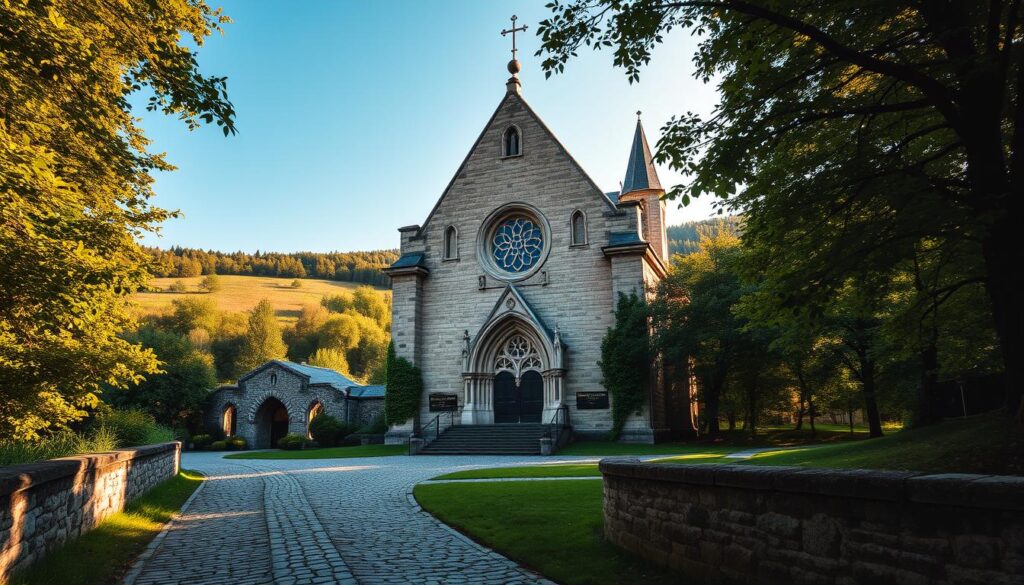
Origins and early journey
The structure began as Chapelle de St. Martin de Seyssuel in Chasse‑sur‑Rhône, built over years in the late medieval period. It fell into ruin after the Revolution and lay forgotten until Jacques Couëlle rediscovered it after World War I.
Moves, reconstructions, and survival
In 1927 the elements crossed to Brookville, New York, where John Russell Pope led a careful reconstruction attached to Gertrude Hill Gavin’s estate. After a 1962 fire damaged the mansion, the sanctuary survived.
| Year | Event | Key Figure |
|---|---|---|
| 15th century | Original build in France | Medieval artisans |
| 1927 | Move to Brookville and reconstruction | John Russell Pope |
| 1964–1966 | Gift to Marquette University and rededication | Lucien David & Earnest Bonnamy |
Art, legend, and stewardship
The Gothic stone-and-wood fabric holds Spanish tapestries, coats of arms, crucifixes, and Charles J. Connick stained glass (1929). A flat stone near the altar is traditionally colder, linked to a prayer on March 9, 1429.
The st. joan arc narrative bridges continents and years. The st. joan arc reconstruction honors authenticity while making the space a lasting site for visitors and study.
Plan Your Visit to the St. Joan of Arc Chapel on Campus
Make your trip smoother by checking coordinates, closing dates, and worship guidance for the campus chapel.
Location and directions
Where to find it: The joan arc chapel sits on the Marquette University campus in Milwaukee, Wisconsin. Use coordinates 43.03763°N, -87.93108°W for precise navigation.
Hours and special notices
Planned closure: Please note the chapel will be closed June 30–July 4, 2025. Check on‑site notices for any other temporary changes during academic breaks.
Mass context and capacity
Services at this intimate arc chapel often reach capacity. Arrive early for seating. If a service is full, nearby parishes in the Archdiocese of Milwaukee offer alternative Mass times.
Visitor tips and stewardship
Be mindful: silence phones and respect the sanctuary. Visitors may handle certain artifacts—ask staff or student ministers which items are permitted. Take a quiet moment by the colder stone beside the altar.
| Need | Info | Action |
|---|---|---|
| Exact location | Marquette University, Milwaukee, WI | Use GPS coords 43.03763°N, -87.93108°W |
| Temporary closure | June 30–July 4, 2025 | Plan visits outside these dates |
| Worship seating | Intimate chapel, can fill | Arrive early or use nearby parishes |
| Support | Restoration and stewardship opportunities | Gift to preserve fabric, artifacts, and mission |
Tip: Pair your visit with campus exhibitions or a walk through nearby green spaces to make a fuller day of history and reflection. Accessible drop‑off points and clear walking routes are available on the marquette university campus map.
Conclusion
Step inside to find a living place where prayer, study, and friendship meet each day. This small campus sanctuary blends history with active use, inviting visitors to join worship, a quiet pause, or a guided look at art and artifacts.
Every visit supports a long story of care and community. Whether you attend a liturgy, bring a friend, or help sustain restoration efforts, you add to that living tradition.
Thank you for considering a stop at the st. joan arc chapel. Plan a visit soon, take a quiet moment by the colder stone, and carry the stillness back into your day.
FAQ
Where is the Joan of Arc chapel located on Marquette University’s campus?
The chapel sits near the center of Marquette University’s Milwaukee campus. Look for signs and campus maps that list historic buildings and chapels; the site is within easy walking distance of main academic halls and student services.
What are the chapel’s regular hours and any upcoming closures?
The chapel maintains regular visiting hours most days, with extended access for campus events. Note the special closure from June 30 to July 4, 2025. Always check Marquette University’s events calendar or the campus ministry page before you visit.
Are liturgies and sacraments held in the chapel?
Yes. The chapel hosts intimate liturgies and sacramental celebrations tailored to the campus community. For larger parish Masses, the university coordinates with nearby Archdiocese parishes to provide additional options.
What kinds of ministries and community activities take place at the chapel?
Ministries welcome students, faculty, and visitors with programs like prayer groups, campus outreach, candlelit vigils, and spiritual formation sessions. Events often aim to build fellowship and support student faith development.
What is the history of the chapel’s structure and how did it arrive at Marquette?
The stone chapel was originally built in 15th‑century France and later moved through New York before its reconstruction on Marquette’s campus. The Gothic design and preserved artifacts reflect its long journey and careful restoration.
Why is one area of the chapel noted for colder stone near the altar?
Visitors and historians often remark on a cooler stone area by the altar. That effect comes from the original building materials and the methods used during reconstruction, which preserved the chapel’s historic character.
Can visitors contribute to chapel upkeep or restoration projects?
Yes. Marquette University and affiliated campus ministries provide giving options to support preservation and restoration. Information is available through the university’s development office or the chapel’s support pages.
Is the chapel open to non-students and tourists?
Visitors from the public are welcome during posted hours. Some campus events or liturgies may limit access, so check schedules before arriving. Guided tours may be available through university visitor services.
How can I find nearby parking and accessibility information for a chapel visit?
Marquette University’s campus map lists visitor parking, accessible routes, and entrance points near the chapel. Contact campus services or consult the online map for real-time parking guidance and accessibility details.
Who can I contact for questions about Mass times, campus ministry programs, or special events?
Reach out to Marquette University’s campus ministry office or the university events line. They can provide up-to-date Mass schedules, ministry contacts, and information about special liturgies and community gatherings.