Welcome to a clear, friendly guide on one of the most enduring offices in the global faith tradition. This section explains who the senior advisors are, why the role matters, and how the title connects to centuries of practice.
The word itself comes from the Latin for “hinge,” a fitting image: these leaders help the pope govern and, above all, select his successor. Historically, laymen sometimes held the honor, but modern rules limit membership to ordained clergy, usually priests or bishops.
These advisors wear scarlet symbols and hold a ring and Roman titles that link them back to the Diocese of Rome. The rank is prestigious but not a new sacramental order; it does not grant higher spiritual power beyond a bishop.
Over time the number of members has changed—from a few in the Middle Ages to roughly 180 today—shaping how the college meets and decides on vital matters for the world faith community.
Key Takeaways
- These senior leaders advise the pope and help steer the worldwide faith community.
- The name traces to a Latin word meaning hinge, highlighting their central role.
- The title is a papal appointment, not a new sacrament, and generally goes to ordained clergy.
- Symbolic vestments and a ring point to sacrifice, fidelity, and unity with the See of Peter.
- The College of members has changed in number over time, affecting governance and elections.
The cardinal catholic church: origins, meaning, and why cardinals matter
What began as an address in Rome evolved into a body of trusted counselors. The name traces to cardo, Latin for hinge, reflecting how early popes like Sylvester I relied on local clergy to anchor governance in the city.
By the 12th century the advisors formed a formal college. Since 1059 they have had the exclusive duty to elect a new pope and to advise the pontiff on major decisions. That electoral role ties their early Roman identity to an enduring global purpose.
Over time the number and reach of members changed. A long-standing cap of 70 gave way in the 20th century as popes of the modern era—Paul VI, Pope John Paul II, and Pope Francis—named leaders from diverse dioceses and catholic churches worldwide.
Key points:
- The title began as a Roman parish address and kept the hinge metaphor.
- The college expanded from local clergy to a worldwide college with titular ties to Rome.
- While the rank is conferred by the pope, it is not a separate order of ordination; modern practice usually requires episcopal consecration before elevation.
Inside the College of Cardinals: ranks, titles, and governance
The College divides its members into three distinct ranks that shape both ceremony and governance.
Three ranks cardinals — cardinal bishops, cardinal priests, and cardinal deacons — set roles and precedence.
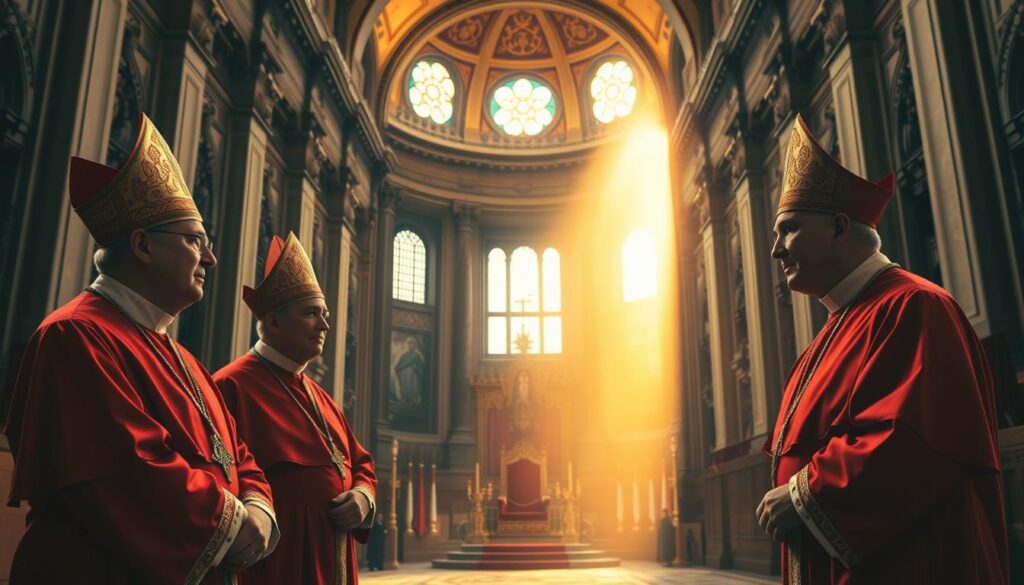
The three ranks and what they do
Cardinal bishops are the senior group historically tied to the suburbicarian sees around Rome. Today this rank also includes patriarchs eastern catholic who keep high office and senior officials.
Cardinal priests are usually bishops or archbishops who lead major dioceses worldwide or serve in the roman curia and hold a titular Roman parish.
Cardinal deacons often serve as officials roman curia or are honored theologians linked to ancient deaconries.
Titles, governance, and duties
Every member must hold a Roman title. That titular connection binds global service to the Diocese of Rome while day-to-day parish care stays local.
“Titles are symbolic: they mark membership in Rome’s clergy without replacing local leadership.”
The college is led by the dean college cardinals and a vice-dean, chosen from the bishops in the senior group and confirmed by the pope. These officers coordinate meetings, represent the body, and help maintain continuity in its work.
Consistory and conclave: how cardinals elect a new pope and advise the Church
A consistory blends ceremony with counsel. It is the formal rite where the pope creates new cardinals and a working meeting where members advise the supreme pontiff on world matters.
What a consistory is
New cardinals receive a red biretta, a ring, and a Roman title. That investiture links each person to a titular church or deaconry in Rome and marks their formal membership in the college.
Conclave essentials
The conclave is the closed election to elect new pope. Only members under the age of 80 may enter and vote in the conclave.
By rule, no more than 120 eligible electors is the usual cap, though Paul VI and John Paul II at times exceeded that to broaden global representation.
Counting members over time
The total number of members can far exceed the number eligible to vote. Examples include snapshots like 117 electors out of 183 members or 128 electors after the Nov. 28, 2020 consistory.
Between popes
During a vacant See of Peter, the college manages ordinary governance, preserves continuity, and prepares the conclave to elect the next pontiff. Senior members, including bishops, deacons, and officials from the roman curia, keep advising even after they lose voting rights at age 80.
“Transparent rules — caps, age thresholds, and clear procedures — help ensure a legitimate vote conclave that the faithful can trust.”
Conclusion
The college cardinals stands as a bridge between Rome’s history and leaders who serve dioceses across the world.
The three ranks — cardinal bishops, cardinal priests, and cardinal deacons — give a clear model of roles and precedence. Each member must hold title to a Roman parish or deaconry to signify membership in the Roman clergy.
The dean college cardinals, chosen from the cardinal bishops, helps coordinate work with the roman curia. Modern consistories and new cardinals have broadened global representation, while rules like the age-80 voting limit and elector caps keep conclaves orderly.
In short: the rank cardinal is an honor tied to service, not extra sacramental power. From eastern catholic churches and patriarchs to officials roman curia, the college unites diverse ministries. Learn more locally about your dioceses, bishops, and deacons to see how this global framework lives in daily pastoral care.
FAQ
What does the term that comes from “cardo” (hinge) mean in Church history?
The word derived from Latin “cardo” originally described something pivotal. In Church history it came to name the senior clergy who serve as principal advisors and electors for the pope. They historically linked the local Roman clergy to the wider global leadership that guides dioceses and major offices.
How did these senior clergy evolve from local Roman roles to a global college?
Over centuries the group moved beyond Rome as the Church expanded. Leaders from bishops, priests, and deacons around the world received titles tied to Rome but served in local dioceses and the Roman Curia. This shift created a formal college that balances pastoral duties with governance and papal elections.
What are the three ranks within this college and what do they do?
The three ranks are bishops, priests, and deacons within the college structure. Those holding the bishop rank often oversee sees near Rome or are senior officials. The priest rank usually includes diocesan bishops worldwide who hold a titular church in Rome. The deacon rank covers officials in the Roman administration and those serving temporary assignments before promotion.
How does leadership inside the college work, especially the roles of dean and vice-dean?
The dean leads meetings of the members and coordinates during a vacant See of Peter, while the vice-dean steps in when needed. Both are elected by their peers and receive papal confirmation. Their duties include organizing consistories and representing the college in formal functions.
Why do members hold titular churches or offices in Rome?
Holding a Roman title symbolizes unity with the See of Peter and links global leaders to the Church’s historical center. Even when serving in distant dioceses or the Roman Curia, these titles preserve an institutional bond with Rome and its pastoral mission.
How are Eastern patriarchs integrated into the bishop rank?
Leaders of Eastern Catholic Churches who are patriarchs may be elevated while keeping their own patriarchal see. They often receive honors that recognize their ancient traditions and can be placed among the bishop rank without losing autonomy in their Eastern jurisdictions.
What is a consistory and what happens during one?
A consistory is a formal gathering where the pope creates new members, confers titles, and seeks counsel. It can be ceremonial—when new members receive their insignia—or administrative, addressing governance matters and major Church initiatives.
Who can vote in a conclave to elect a new pope and what are the age rules?
Only members who have not reached their 80th birthday before the day a See becomes vacant may vote in a conclave. The college sets a cap on electors at times to keep the voting body manageable, though the pope can name new members at consistories.
How does the total number of members compare to the number of electors over time?
The total membership often exceeds the number of eligible electors because many members surpass the age limit or hold honorary roles. Popes adjust appointments to maintain a balance between experienced leaders and active electors, so numbers have fluctuated historically.
What duties does the college have between popes during a vacant See of Peter?
During a sede vacante the group governs limited day-to-day affairs, manages the transition, and prepares for the conclave. They must avoid major decisions that would bind the next pope but ensure continuity in essential functions and communications.