In the heart of Europe lies a city that shaped religious history. During the 1500s, this vibrant hub became a magnet for thinkers seeking spiritual renewal. Visionaries like Jean Calvin and Guillaume Farel sparked a movement here that would ripple across continents.
By the mid-16th century, the location earned a powerful nickname: “Protestant Rome.” Thousands fleeing persecution found sanctuary within its walls. The establishment of a renowned academy in 1559 turned the area into an intellectual powerhouse, training leaders who carried Reformed ideals worldwide.
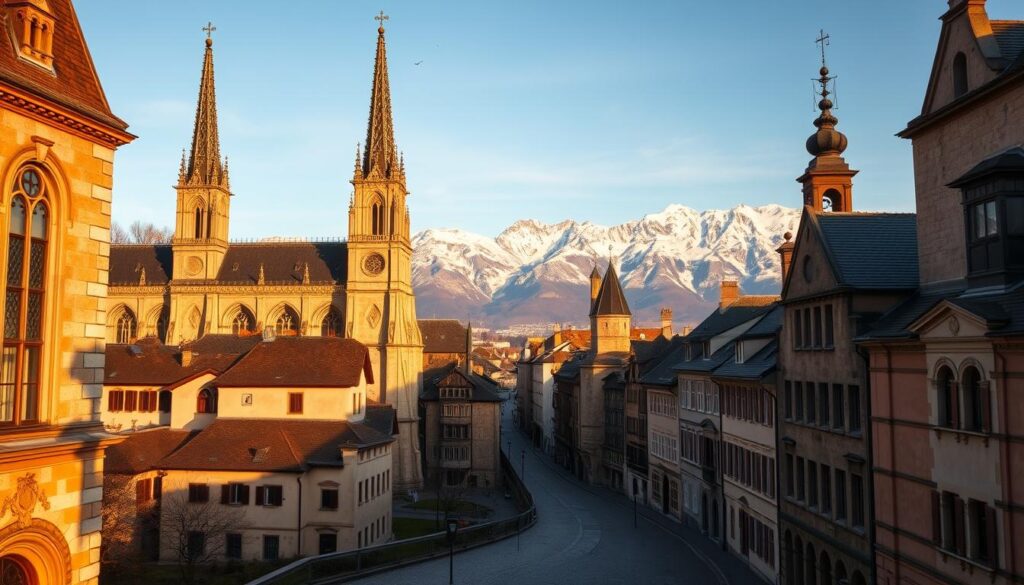
Today, visitors encounter stunning architecture that whispers stories of resilience. From towering steeples to hidden courtyards, every stone reflects centuries of cultural transformation. These landmarks aren’t just relics—they’re living testaments to how ideas can redefine a nation’s identity.
The legacy lives on through modern practices and interfaith dialogue. As you walk through cobblestone streets, you’re tracing paths where history’s boldest reformers once stood. This journey through time reveals how courage and conviction built bridges across borders.
Key Takeaways
- A 16th-century spiritual revolution transformed Geneva into Europe’s Reformation capital
- Pioneers like Calvin created educational systems that influenced global religious thought
- Historic sites blend architectural beauty with stories of religious refuge
- The city’s nickname reflects its role as a safe haven for persecuted believers
- Modern Switzerland’s culture of tolerance roots in this transformative era
- Visitors can explore living history through preserved buildings and institutions
Introduction: Discovering Geneva’s Protestant Legacy
When religious turmoil swept across Europe, a haven for reformers took root beside Alpine peaks. This 16th-century transformation began with bold thinkers challenging old traditions. Their ideas reshaped not just beliefs, but entire communities.
An Overview of the Reformation’s Local Impact
Early reformers here didn’t just debate theology—they rebuilt society. Schools opened to teach new principles, while leaders redesigned civic structures. By 1550, this city-state had become a blueprint for modern religious communities.
The changes reached kitchens and council chambers alike. Families adopted new worship practices, while laws reflected fresh interpretations of scripture. This holistic approach created lasting social bonds.
Enduring Echoes Through Time
Thousands fleeing persecution found safety here during the 1500s. Many brought skills that boosted local craftsmanship and trade. Today, this spirit of shelter lives on through global organizations based in the region.
Modern discussions about human rights trace back to these reforms. The emphasis on education and fair governance continues to shape Switzerland’s approach to international relations. What started as local changes now influence global conversations about freedom and fairness.
Exploring the protestant church geneva: History and Reformation Impact
A quiet revolution began in the early 1500s as bold thinkers reimagined faith’s role in society. Local leaders embraced radical ideas that reshaped worship, education, and community life—laying groundwork for lasting change.
Origins and Early Reformation Efforts
Guillaume Farel’s fiery speeches in 1536 ignited a civic transformation. His partnership with Jean Calvin created a blueprint for organized religious communities. Their reforms reached beyond theology, establishing schools and social programs that prioritized literacy and fairness.
Calvin’s Institution Chrétienne became a cornerstone text, merging scripture with practical governance. By mid-century, this approach attracted scholars seeking structured yet adaptable models for spiritual life.
Geneva as a Refuge for Spiritual Renewal
Persecuted families from France and Italy poured into the city, bringing craftsmanship and trade skills. This influx turned the area into a mosaic of cultures and ideas. One refugee remarked: “Here, we found not just safety—but a chance to rebuild.”
The 1559 Academy trained leaders who spread Reformed principles globally. Théodore de Bèze’s teachings amplified Geneva’s reputation, earning comparisons to ancient Rome for its cultural influence. Through war and upheaval, the city remained a lighthouse for those valuing conscience over conformity.
Architectural Splendor and Cultural Significance
Design principles born from conviction shaped spaces for collective purpose. Structures built during the Reformation era reveal how form followed function, creating environments that fostered both worship and community connection.
Iconic Architectural Features and Design
Central pulpits and unobstructed sightlines defined 16th-century sacred spaces. These choices weren’t accidental—they placed scripture at the heart of gatherings. Wooden benches curved around speaking platforms, encouraging active participation.
| Region | Adopted Feature | Century |
|---|---|---|
| Scotland | Octagonal towers | 17th |
| Netherlands | Barrel-vaulted ceilings | 18th |
| South Africa | Whitewashed interiors | 19th |
Natural light flooded through clear glass windows, symbolizing spiritual clarity. This approach influenced public buildings beyond religious spaces, from town halls to libraries.
Cultural Impact and Educational Contributions
The 1559 Academy became Europe’s first reformed university, training thinkers who shaped nations. Over 200 years, its graduates established similar schools across three continents. A student from Edinburgh noted: “We learned to build minds before buildings.”
When church and state separated in 1907, former religious schools evolved into public institutions. This transition cemented the city’s reputation as a cradle of accessible learning. Today, parks and plazas continue this legacy of communal gathering spaces.
Modern architects still draw inspiration from these principles. Open layouts in contemporary structures echo Reformation-era values of inclusion and dialogue.
Influential Figures and Their Lasting Legacy
Ideas from 16th-century thinkers still shape modern spiritual conversations. Their bold visions created frameworks that bridged personal faith and community action. Let’s meet the pioneers who turned radical concepts into enduring systems.
Jean Calvin and the Reformation Model
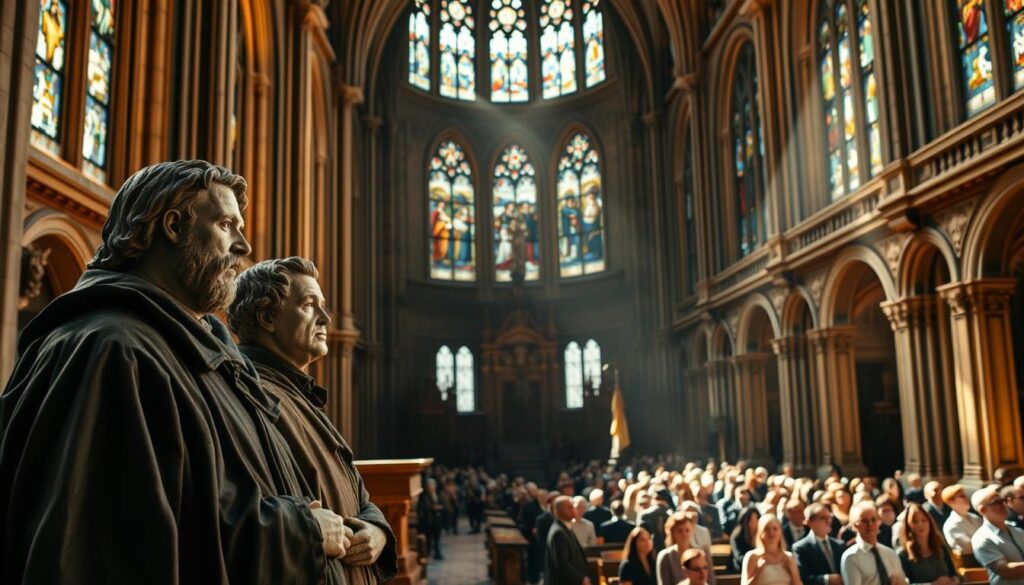
When Calvin arrived in 1536, he transformed theory into practice. His Institution Chrétienne blended scripture with daily life, creating a blueprint for organized worship. This work became the basis for Reformed communities worldwide.
Calvin’s academy trained leaders who carried his ideas from Scotland to South Africa. A student later wrote: “He taught us to build institutions that outlive individuals.”
The Roles of Farel, Zwingli, and Other Reformers
Guillaume Farel’s fiery sermons paved the way for Calvin’s systems. Meanwhile, Ulrich Zwingli developed theology that complemented Geneva’s approach. Their teamwork made the region a magnet for religious innovation.
Heinrich Bullinger sealed this legacy with the 1566 Helvetic Confession. This document unified Swiss cantons under shared principles. French Protestantism later drew heavily from these texts.
Together, these figures crafted an identity that earned their home the nickname “Protestant Rome.” Their focus on education and governance continues to influence global religion centuries later.
Geneva and the Swiss Cantonal Churches: Interconnected Histories
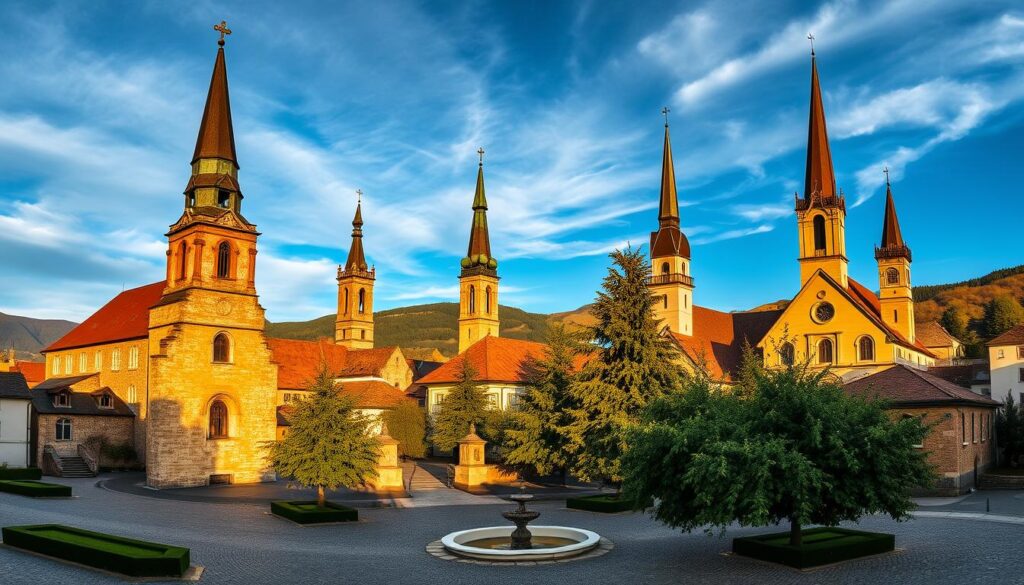
Switzerland’s patchwork of cantons holds a mirror to its religious heritage. Since 1920, the Federation of Protestant Churches has united 24 regional bodies under shared principles while respecting local identities. This unique system reflects the nation’s federal structure—where unity and diversity coexist.
Comparative Insights with Swiss Cantonal and Reformed Churches
Each canton’s faith community operates like a distinct thread in a tapestry. Some maintain official state ties, while others function independently. “Our strength lies in balancing local identity with collective purpose,” notes a Federation spokesperson. These variations showcase how Reformed theology adapts to different political landscapes.
Legal statuses range from state-supported churches to self-governed groups. Zurich’s church collaborates closely with civic authorities, while Vaud’s operates through formal agreements. Despite differences, all share core teachings from Reformation-era confessions.
The Federation’s Role and Synodical Council Impact
Renamed in 2020, the Protestant Church in Switzerland coordinates joint initiatives across cantons. Synodical councils handle day-to-day operations, ensuring grassroots voices shape national decisions. This structure empowers local leaders while tackling shared challenges like community outreach.
Educational programs and social projects thrive through inter-cantonal teamwork. A recent initiative trained volunteers in six regions to address urban poverty. Such efforts prove how centuries-old Reformed values continue guiding modern Swiss society.
Conclusion
Modern diplomacy finds deep roots in centuries-old values of shelter and dialogue. The 1602 Escalade victory cemented this city’s reputation as a fortress of freedom – a quality that later defined Switzerland’s neutral status during global conflicts. Today, over 180 international organizations call this lakeside hub home, continuing its legacy as a place where peace takes practical shape.
Swiss cantons demonstrate how local identities strengthen national character. Their collaborative governance model, born from Reformation-era teamwork, now supports humanitarian activities spanning borders. From refugee protections to climate initiatives, these efforts mirror 16th-century commitments to collective welfare.
Demographic shifts tell their own story. Catholic immigration reshaped religious landscapes, yet the spirit of inclusion remains unchanged. Schools here still teach conflict resolution techniques developed during Reformation debates, proving education outlasts empires.
As dawn breaks over Alpine peaks, the city awakens as both memory and promise. Its stone walls whisper tales of resistance, while glass towers host talks shaping tomorrow’s rights frameworks. This enduring balance between history and progress makes the region a living classroom for peaceful coexistence.
FAQ
Why is Geneva often linked to spiritual renewal in Europe?
During the 16th century, the city became a safe haven for reformers and refugees fleeing persecution. Its emphasis on scriptural study and democratic governance inspired movements across the continent, earning it the nickname “the Protestant Rome.”
What educational contributions emerged from this period?
Leaders like Jean Calvin established schools and the University of Geneva, prioritizing literacy and theology. These institutions became models for combining faith with critical thinking, shaping modern Reformed education systems.
How did Swiss cantons influence Geneva’s religious identity?
Nearby regions like Zurich and Bern shared Reformed ideals, creating a network of support. Collaborative efforts, such as the Helvetic Confession, unified doctrines while allowing local practices, strengthening ties between cantonal churches.
Who were key figures beyond Calvin in shaping this legacy?
William Farel persuaded Calvin to stay in Geneva, while Huldrych Zwingli pioneered reforms in Zurich. Together, they created a collaborative model that balanced theological rigor with civic engagement.
Are there architectural landmarks from this era still visible today?
Yes! The St. Pierre Cathedral stands as a symbol of Reformation simplicity, with its stripped-down design emphasizing community worship. Many historic buildings now host cultural events, blending heritage with modern life.
How does this history affect Geneva’s current cultural activities?
Annual events like the Escalade Festival celebrate the city’s resilience, while museums and interfaith dialogues reflect its ongoing commitment to inclusivity and intellectual freedom.