Step into the world of one of Christianity’s oldest communities, tracing its roots to the earliest days of faith in Mesopotamia. This ancient denomination has preserved traditions linked to apostles like Thomas and Addai, surviving centuries of challenges while maintaining its spiritual identity.
Today, this global community unites over 400,000 members across six continents. Based in Erbil, Iraq, its leadership under Mar Awa III reflects a blend of timeless practices and modern adaptability. Followers celebrate worship in Classical Syriac, using liturgies unchanged for generations.
What makes this group unique? Its story includes resilience through political shifts and migrations, yet its core teachings remain anchored in early Christian theology. From India to Australia, congregations thrive while honoring rituals passed down through 2,000 years of history.
Key Takeaways
- Originates from apostolic teachings attributed to early disciples like Saint Thomas
- Maintains ancient worship practices, including Syriac-language liturgies
- Led by Patriarch Mar Awa III, elected in 2021
- Global membership spans 20+ countries with significant Iraqi roots
- Balances historic traditions with contemporary diaspora needs
Introduction to the Holy Apostolic Catholic Church of the East
Among Christianity’s oldest branches stands a community tracing its roots to Mesopotamia’s first believers. Officially called the Holy Apostolic Catholic Assyrian Church of the East, this group follows practices shaped long before Europe’s major denominations emerged. Unlike Roman Catholic or Orthodox traditions, it developed unique customs in ancient Assyria and Persia.
This denomination proudly maintains early Christian rituals unchanged for centuries. Its East Syriac Rite liturgy uses Classical Syriac – a language close to what Jesus spoke. Members view their faith as preserving teachings passed directly from apostles like Thomas and Thaddeus.
Geographic isolation helped shape its distinct identity. While Western churches debated doctrines at councils, this community focused on spreading faith eastward. By 410 AD, it had established bishoprics from Cyprus to China.
Modern followers emphasize two remarkable traits: unbroken leadership since apostolic times and survival through empires’ rises and falls. As one member notes: “Our rituals connect us to believers who walked these lands 1,900 years ago.”
Today’s global diaspora keeps traditions alive while adapting to new cultures. From Chicago to Sydney, families maintain ancient fasts and festivals, proving timeless practices can thrive in contemporary settings.
Historical Origins and Apostolic Foundations
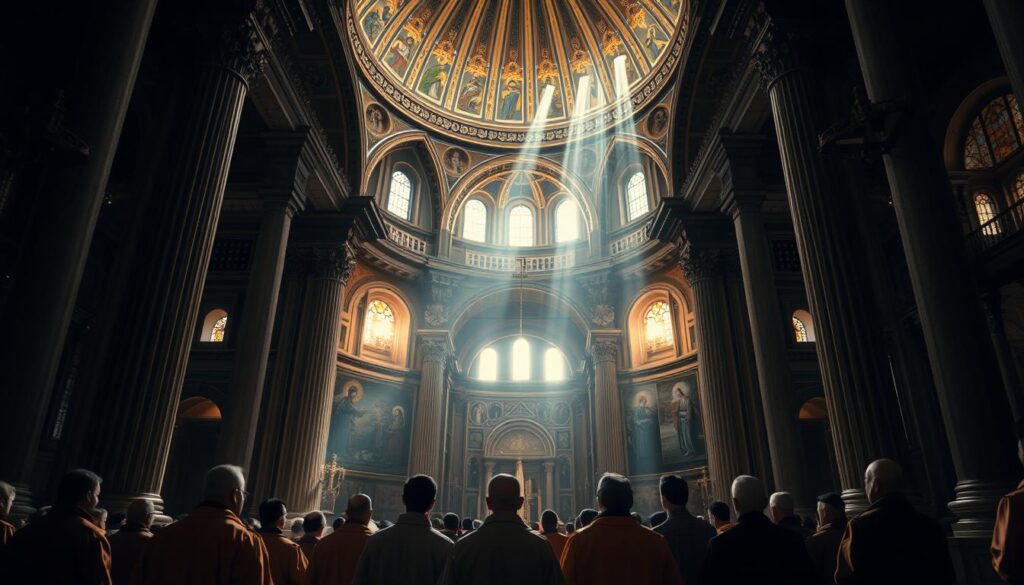
Rooted in the lands where empires rose and fell, a spiritual legacy took shape through daring missionary work. Three disciples of Jesus Christ – Thomas, Thaddeus, and Bartholomew – carried their message beyond Roman territories, planting seeds in Persia and India.
Pioneers of Eastern Christianity
Thomas’s journey to India created lasting ties between Mesopotamian believers and South Asian communities. Meanwhile, Thaddeus established vibrant groups in Upper Mesopotamia, using Edessa as a strategic hub. By the first century, this city became Christianity’s eastern heartbeat.
Networks of Faith Along Trade Routes
Merchants and missionaries traveled Silk Road paths together, spreading teachings from Cyprus to China. Saint Peter’s visit to Babylon – mentioned in his letters – gave official approval to these efforts. A historian notes: “This wasn’t just religion – it was a cultural bridge connecting continents.”
By 300 AD, nineteen bishop seats dotted the map, showing impressive growth. The Assyrian Church East developed unique traditions while maintaining core early church values. Its survival through political changes proves the strength of those first century foundations.
Milestones and Schisms in the Church’s History
Navigating shifting political landscapes and theological debates, this ancient community faced defining moments that reshaped its path. Three critical periods stand out in its journey toward modern identity.
Evolution Through Centuries and Key Councils
In 280 CE, a major organizational shift occurred. Mar Papa bar Gaggai established central leadership at Seleucia-Ctesiphon, Persia’s capital. This move created a stable structure for growth.
By 410 CE, leaders made a bold declaration. They formally broke ties with Antioch’s patriarchate, asserting full independence. One historian describes this as “the birth certificate of Eastern Christianity’s self-governance.”
Impact of the Schism and the Rise of Distinct Lines
The 16th century brought seismic changes. Yohannan Sulaqa’s 1552 decision to seek Roman approval split followers. His group later formed the Chaldean Catholic Church, while traditionalists kept ancient practices alive.
Two leadership lines emerged – the Eliya family in Alqosh and the Shimun branch in Qochanis. Each preserved unique traditions until 1804, when modern structures took shape. Today, the Assyrian Church East and Chaldean Catholic Church maintain separate identities while sharing deep historical roots.
These divisions show how faith adapts to new realities without losing core values. As one scholar notes: “Their story isn’t about division – it’s about survival through flexibility.”
Theology and Liturgical Traditions
At the heart of ancient Christian worship lies a living connection to spiritual practices older than most nations. The community’s rituals blend poetic prayers with gestures unchanged since the early centuries of faith.
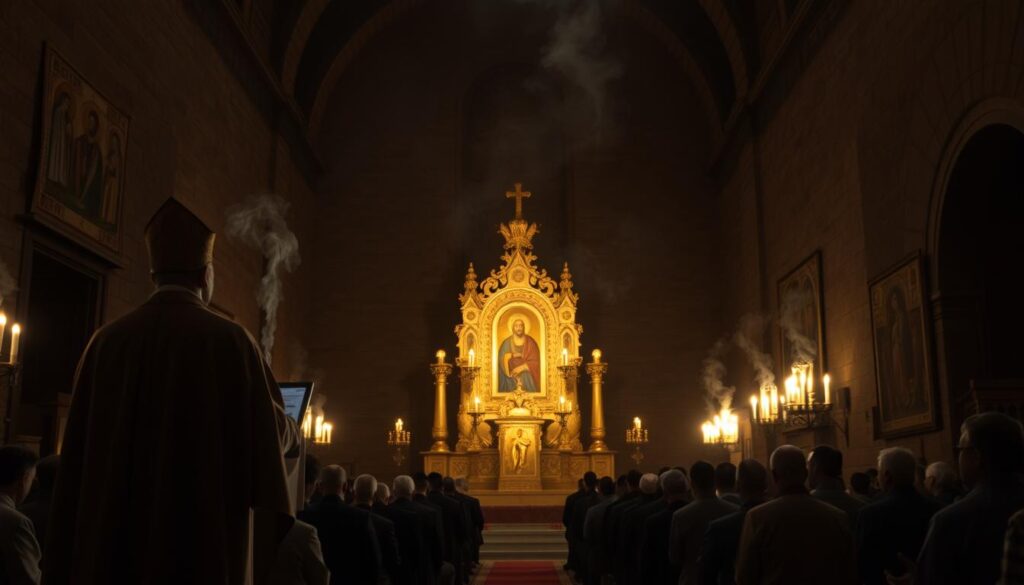
East Syriac Rite and the Divine Liturgy of Saints Addai and Mari
The East Syriac Rite forms the backbone of worship, featuring the revered Divine Liturgy of Saints Addai and Mari. This 3rd-century ritual surprises scholars by omitting Jesus’s Last Supper commands – “Take, eat, this is my body” – yet remains recognized as valid by global Christian leaders.
“This liturgy proves early Christians valued spiritual essence over standardized formulas,” notes a liturgical historian.
Use of Classical Syriac and Aramaic
Worshippers hear prayers in Classical Syriac, an Aramaic dialect preserving sounds from Jesus’s lifetime. Manuscripts use the Nestorian script, a flowing alphabet developed in 5th-century Persia. As one member explains: “When we chant, we’re speaking across 1,600 years of history.”
| Feature | East Syriac Rite | Roman Rite | Byzantine Rite |
|---|---|---|---|
| Main Language | Classical Syriac | Latin | Greek |
| Institution Words | Optional | Required | Required |
| Christology Focus | Two qnome | Hypostatic Union | Divine-Human Unity |
The community teaches that Christ contains two qnome – divine and human aspects united as one. While embracing the Nicene Creed, their interpretation reflects early Mesopotamian theology. Modern members balance these ancient ideas with contemporary interfaith dialogues.
Organizational Structure and Leadership
Strong frameworks keep ancient communities thriving in modern times. The Assyrian Church East combines centuries-old hierarchy with smart adaptations for today’s global members.
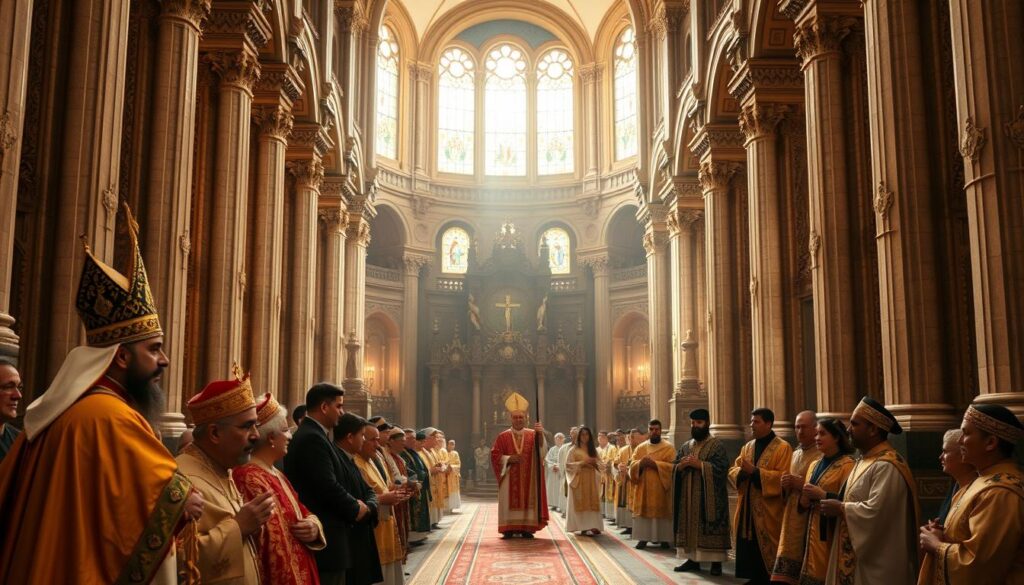
Patriarchal Leadership and Hierarchical Traditions
At the helm stands Mar Awa III, elected in 2021 as the 122nd Catholicos-Patriarch. His role connects modern believers to leaders dating back to apostolic times. The structure flows downward through:
| Role | Responsibility | Regions |
|---|---|---|
| Metropolitans | Oversee multiple dioceses | Continents |
| Bishops | Manage local dioceses | Countries |
| Priests | Lead parishes | Cities |
This system ensures teachings stay consistent from Erbil to Chicago. As one bishop notes: “Our structure isn’t about power – it’s about preserving truth across generations.”
Modern Shifts and Global Administrative Growth
Awa III guides a community spread across 20+ countries. Digital tools now link the patriarchal see in Iraq to Sydney youth groups and Detroit prayer circles. Regional councils help address unique needs:
- Middle East: Focus on security and preservation
- North America: Cultural integration programs
- Australia: Youth engagement initiatives
Despite new challenges, the church east remains rooted in its 2,000-year mission. Through video calls and ancient liturgies, leaders keep the faithful united worldwide.
Holy Apostolic Catholic Church of the East: Identity and Distinctiveness
Standing apart yet deeply connected, this community offers a living bridge between ancient faith and modern practice. Its spiritual DNA combines unbroken traditions with adaptive approaches to contemporary challenges.
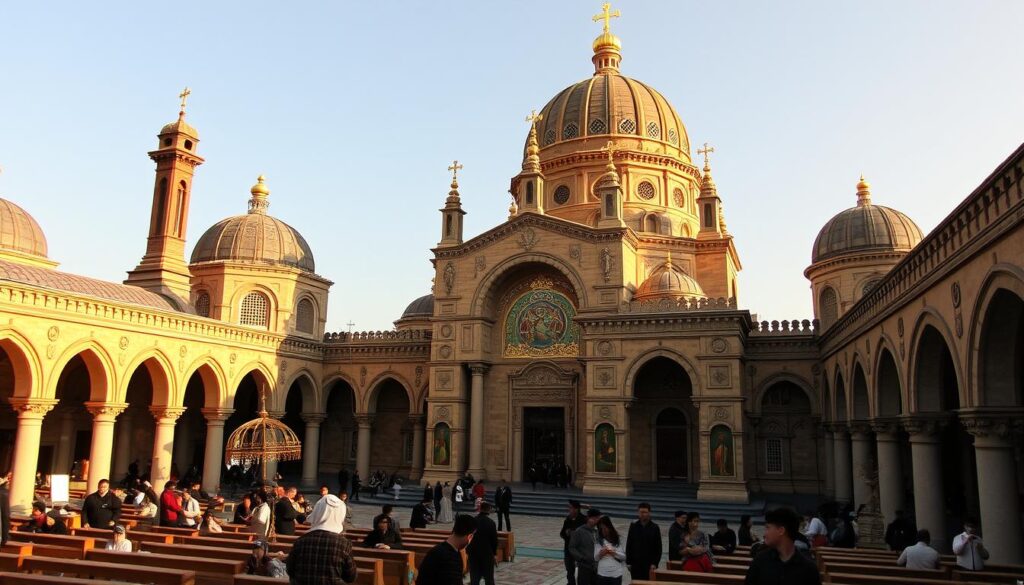
Defining Features and Core Beliefs
The community’s holy apostolic catholic identity centers on preserving apostolic teachings without external oversight. Leaders emphasize three pillars:
- Direct succession from early Mesopotamian disciples
- Liturgical practices unchanged since 3rd-century Persia
- Autonomous governance rejecting political influences
Unlike Roman Catholic or Oriental Orthodox groups, it never adopted doctrines like papal infallibility. A theologian explains: “Our theology remains rooted in the East Syriac tradition – a third way beyond Rome and Constantinople.”
Comparison with Other Eastern and Catholic Traditions
While sharing Christian foundations, key differences emerge:
| Aspect | Assyrian Tradition | Chaldean Catholic | Oriental Orthodox |
|---|---|---|---|
| Leadership | Independent patriarch | Under Pope | Autocephalous |
| Eucharist Sharing | Limited agreements | Full Catholic rites | Restricted |
| Language | Classical Syriac | Syriac/Arabic | Coptic/Armenian |
The 1994 agreement with Rome marked progress, allowing shared communion in special cases. Recent dialogues with Orthodox churches explore common ground while respecting differences. As one bishop noted: “We’re rewriting history – not through conquest, but conversation.”
Cultural Impact and Global Diaspora
From bustling American cities to remote Australian towns, vibrant traditions thrive far from their ancestral homeland. The Assyrian Church serves as both spiritual anchor and cultural compass for communities preserving their heritage across continents.
Assyrian Cultural Heritage and Community Traditions
In the Middle East, ancient festivals like Kha b-Nisan mark spring’s arrival with pomegranate displays and folk dances. Families worldwide maintain this 6,700-year-old celebration, adapting recipes while keeping core rituals intact. Youth groups in Chicago and Sydney learn Sureth dialects through smartphone apps and grandmothers’ stories.
The church’s global presence strengthens connections to historical roots. Detroit’s annual Mesopotamian food fair draws 20,000 visitors, showcasing dishes from the region’s fertile crescent. “Our cuisine tells stories older than borders,” explains a third-generation baker.
Digital networks now amplify traditions once confined to the Middle East. Toronto musicians mix ancient church hymns with electronic beats, while Instagram accounts teach cuneiform calligraphy. Through innovation and memory, people sustain a living bridge between past and future.
FAQ
What makes this community unique among Christian traditions?
It preserves ancient rituals like the Divine Liturgy of Addai and Mari, uses Classical Syriac in worship, and maintains a distinct hierarchical structure rooted in early Mesopotamian Christianity.
How did historical events shape its identity?
Conflicts like the Council of Ephesus (431 CE) and later splits with Rome led to theological independence, while persecution and diaspora spread its presence globally, including in the U.S. and Australia.
Who leads the community today?
Mar Awa III serves as the current patriarch, overseeing spiritual and administrative matters from the patriarchal see, with bishops managing dioceses in regions like Iraq and North America.
Why is Aramaic important in its liturgy?
Aramaic, the language spoken by Jesus, connects worshipers to early Christian practices. The East Syriac Rite also incorporates hymns and prayers passed down for centuries.
How does it differ from the Chaldean Catholic Church?
While both share Mesopotamian roots, the Chaldean Catholic Church reunited with Rome in the 16th century. This community remains independent, emphasizing its Assyrian heritage and traditional theology.
What role does cultural heritage play for its members?
Assyrian traditions, language, and festivals like Kha b-Nisan (New Year) are central, fostering unity among global diaspora communities in places like Europe and New Zealand.
Has it engaged in ecumenical dialogue?
Yes! The 1994 Common Christological Declaration with the Catholic Church resolved historical disputes, acknowledging shared beliefs about Christ’s divinity and humanity.