In the heart of Canada’s cultural mosaic, historic faith communities stand as cornerstones of spiritual and social connection. These spaces blend centuries-old traditions with modern-day inclusivity, welcoming people from all walks of life. Their steeples and stained glass tell stories of resilience, reflecting a heritage that has shaped the city’s identity.
Beyond their spiritual role, these institutions serve as lively hubs for cultural exchange. Concerts, art exhibits, and community dinners breathe new life into sacred spaces, creating bonds that stretch across generations. Many downtown locations host events that draw both locals and travelers, offering a taste of local flavor.
Architectural diversity adds another layer of charm. From grand structures with vaulted ceilings to cozy neighborhood gathering spots, each building carries its own narrative. They’ve adapted over time, balancing preservation with contemporary needs—proof that tradition and progress can coexist.
Today, these centers continue to evolve while honoring their roots. They remain vital to urban life, providing comfort and connection in a fast-paced world. Whether you’re seeking quiet reflection or vibrant engagement, there’s always a place to belong.
Key Takeaways
- Historic faith centers blend cultural preservation with modern community engagement
- Architectural diversity ranges from iconic downtown landmarks to intimate local spaces
- Multipurpose venues host concerts, workshops, and events beyond traditional services
- Adaptive reuse maintains historical integrity while meeting current societal needs
- Inclusive environments welcome both residents and global visitors
- Spiritual traditions interweave with Montreal’s multicultural urban fabric
Historical Overview of Protestant Churches in Montreal
Faith communities have shaped Montreal’s story since colonial days. Their journey mirrors the city’s growth, blending diverse traditions into a shared heritage. Let’s explore how these groups laid foundations that still support modern spiritual life.
Early Influences and Heritage
Immigrant groups built the first worship spaces to preserve their beliefs abroad. In 1925, a landmark union merged three traditions—Congregational, Methodist, and Presbyterian—into The United Church of Canada. Their crest, designed later, combined symbols: an open Bible, dove, and burning bush. These represented truth, renewal, and enduring faith.
Early settlers prioritized practicality. Simple wooden structures hosted both services and town meetings. Over time, these spaces became anchors for cultural exchange, helping newcomers balance old traditions with new lives.
The Evolution of Church Architecture
Buildings grew grander as congregations flourished. Gothic Revival styles emerged, featuring pointed arches and stained glass. Architects turned humble halls into symbols of permanence, using stone carvings and soaring steeples.
Design choices reflected changing needs. Spacious interiors allowed for music performances and community meals. Craftsmen blended beauty with function, creating venues that served spiritual and social roles. Today, these structures stand as testaments to skilled work across generations.
Spotlight on protestant churches montreal
Montreal’s skyline tells stories through stone and stained glass. Three historic structures stand out for their design brilliance and community impact. Let’s explore these treasures where heritage meets modern life.
St. James United Church: A Victorian Neo-Gothic Gem
Alexander Francis Dunlop’s 1889 masterpiece hides a surprising past. For 79 years, shoppers passed its hidden neo-Gothic façade without knowing the architectural wonder behind storefronts. The 2006 restoration revealed intricate stonework that now anchors the Quartier des Spectacles.
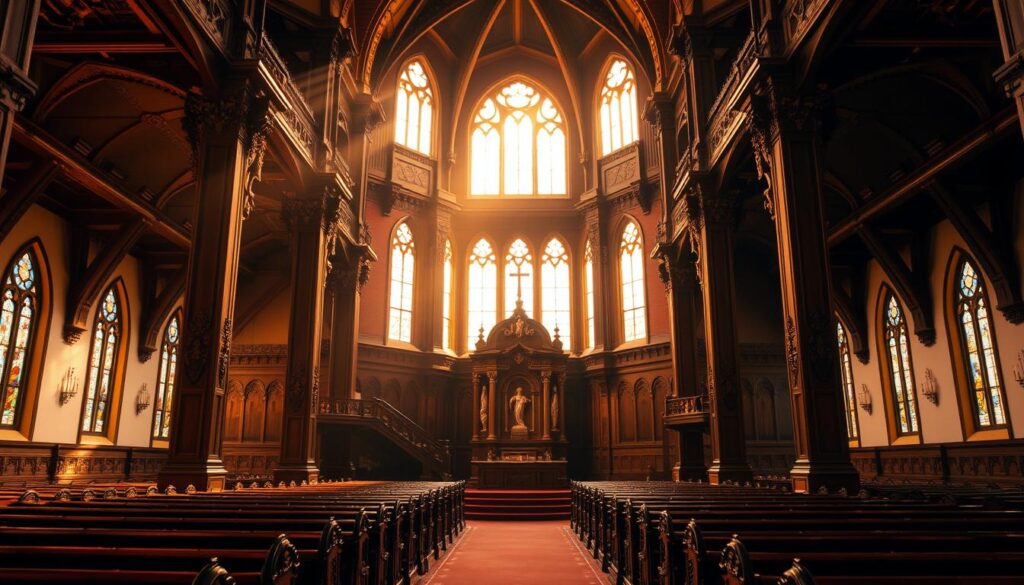
Inside, amphitheater seating wraps 1,200 guests around a Casavant Frères organ with 3,984 pipes. This cultural hub hosts everything from jazz concerts to Le Balcon’s French cuisine. “Our space breathes new life into ancient traditions,” shares a staff member during SoulFest preparations.
Christ Church Cathedral: A Neo-Gothic Masterpiece
Frank Wills’ 1859 design floats above Sainte-Catherine Street’s bustle. The cathedral’s limestone arches shelter regimental banners of the Canadian Grenadier Guards. Music lovers flock here for Bach Festival performances beneath the 1894 Warren organ’s golden pipes.
St. George’s Anglican Church: Historic and Inviting
William Tutin Thomas’ 1870 creation charms with its uneven bell tower. Sunlight filters through memorial windows onto carved oak pews. Volunteers often greet guests with stories about the 1875 pipe organ that still accompanies Sunday services.
These landmarks prove sacred spaces can evolve. From hidden treasure to cultural stage, they remain living chapters in Montreal’s ongoing story.
Architectural and Community Significance
Stone walls and stained glass whisper stories of craftsmanship and connection. These spaces merge artistry with purpose, creating environments where design and devotion intersect. Let’s explore how form and function unite to shape shared experiences.
Distinctive Architectural Styles and Features
Builders encoded meaning into every arch and ornament. Gothic Revival vaults draw eyes upward, symbolizing spiritual aspiration. Stained glass transforms sunlight into storytelling, depicting scenes from sacred texts. Wooden pews curve like embracing arms, encouraging fellowship during services.
| Symbol | Meaning | Design Influence |
|---|---|---|
| Open Bible | Spiritual freedom | Central pulpits |
| Dove | Peace & renewal | Baptismal fonts |
| Burning Bush | Eternal presence | Bronze altar pieces |
| Alpha/Omega | Divine timelessness | Circular window motifs |
The Role in Building Community Heritage
Beyond Sunday services, these spaces host soup kitchens and language classes. “Our building breathes with the neighborhood’s heartbeat,” shares a volunteer coordinator. Memorial plaques honor generations who shaped local history, while community boards advertise modern workshops.
Preservation teams balance original brickwork with wheelchair ramps. Recent updates include Indigenous art installations beside Victorian mosaics. This blend of old and new keeps heritage alive while welcoming fresh voices.
Events and Experiences at Montreal Churches
Melodies echo through vaulted halls where history meets harmony. These spaces pulse with energy, hosting events that blend artistry with tradition. From soul-stirring concerts to reflective walks, every experience invites connection.
Special Concerts, Festivals, and Organ Recitals
St. James United Church transforms during its annual SoulFest, where R&B vibrations shake its neo-Gothic walls. The venue’s Casavant Frères organ—boasting nearly 4,000 pipes—anchors performances that draw global crowds. “Music bridges generations here,” says a regular attendee.
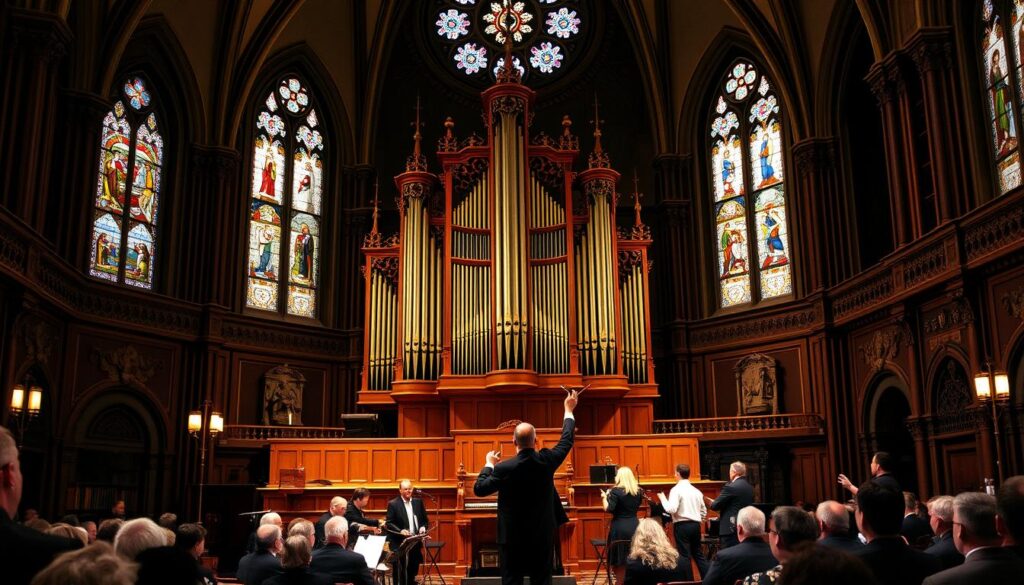
Downtown, Christ Church Cathedral becomes a classical haven during the Bach Festival. Its golden-piped Warren organ fills the space with Baroque brilliance. For casual listeners, St. George’s Anglican offers free Sunday concerts—a 150-year tradition sustaining the city’s love affair with sacred music.
Heritage Walks and Community Pilgrimages
Guided tours reveal hidden stories etched in stained glass and stone. Visitors trace routes connecting chapels to civic landmarks, discovering how faith shaped the urban landscape. Seasonal pilgrimages invite quiet reflection, turning familiar streets into pathways of discovery.
These events create living bridges between past and present. Whether marveling at a 19th-century organ or tracing artisans’ handiwork, every encounter celebrates shared human creativity.
Conclusion
Legacy and landscape intertwine at Montreal’s spiritual landmarks. While exploring historic faith communities, don’t miss Saint Joseph’s Oratory on Mount Royal. This iconic site, founded by Brother André in 1924, became a beacon for pilgrims worldwide. Its Art Deco votive chapel stands as a testament to human devotion and craftsmanship.
The Oratory’s story mirrors the city’s spirit—humble beginnings growing into enduring symbols. Over two million visitors annually climb its stone steps, drawn by both faith and architectural wonder. As a National Historic Site, it preserves heritage while welcoming modern seekers.
These spaces remind us that sacred sites shape more than skylines. They anchor community memories and collective identity. From quiet prayer to grand festivals, they offer connection points in our fast-paced world.
Whether you’re marveling at a basilica’s dome or tracing a saint’s footsteps, Montreal’s spiritual landmarks invite reflection. They prove that places of meaning can adapt across centuries, keeping history alive through every generation’s touch.
FAQ
What makes St. James United Church a must-visit landmark?
Known for its striking Victorian Neo-Gothic design, this historic site features intricate stained glass, a grand organ, and a vibrant role in Montreal’s cultural heritage. It’s also one of the city’s oldest surviving worship spaces.
How does Christ Church Cathedral blend tradition with modern life?
As a Neo-Gothic masterpiece, the cathedral hosts concerts, festivals, and community events. Its soaring arches and stunning interior serve as both a spiritual haven and a hub for artistic expression.
Are there guided tours available at these historic sites?
Yes! Many locations offer heritage walks, organ recitals, and seasonal festivals. Check their schedules for guided tours that highlight architectural details and local stories.
What role do these spaces play beyond religious services?
They act as community anchors, hosting food drives, cultural festivals, and music events. Their doors often open to support social causes, making them vital to Montreal’s social fabric.
Can visitors attend musical performances at these churches?
Absolutely. Venues like Christ Church Cathedral are famed for their acoustics and organ recitals. Seasonal concerts and choir performances draw locals and tourists alike.
How does St. George’s Anglican Church reflect Montreal’s history?
Built in 1869, its inviting interior and Gothic Revival style symbolize resilience. The church has preserved its original woodwork and remains a welcoming space for reflection and connection.
Is there a connection between these churches and the city’s heritage trails?
Many are part of self-guided or organized heritage walks. These trails highlight their architectural significance and contributions to Montreal’s cultural identity over centuries.