For over 40 years, congregations across North America have turned to one trusted resource to guide their services. This green-bound volume, first released in 1978, brought together diverse faith communities through shared songs and prayers. Its creation marked a historic moment of unity among different branches of the Lutheran tradition.
The collection features 569 hymns ranging from ancient chants to modern compositions. Alongside these musical treasures, you’ll find 150 psalms and liturgical texts that form the backbone of weekly services. What makes this compilation special isn’t just its content – it’s how it continues to connect worshippers across generations.
Though newer resources have emerged, many churches still reach for this well-loved book. Its enduring popularity stems from careful curation that balances tradition with accessibility. The pages contain not just words and notes, but decades of spiritual heritage passed from one worshipper to another.
Key Takeaways
- First published in 1978, this hymnal united multiple Lutheran denominations
- Contains 569 hymns and 150 psalms across 960 pages
- Known as the “green book” for its distinctive cover color
- Remains widely used despite newer worship resources
- Created common ground for different Lutheran traditions
- Shaped congregational singing practices for generations
Origins and Historical Context
When European settlers arrived in America, they carried more than belongings—they brought centuries-old worship traditions. German, Swedish, and Norwegian immigrants established tight-knit communities where services echoed with familiar languages. This cultural mosaic shaped early religious practices across growing congregations.
From Diversity to Unity
By the late 1800s, a linguistic shift occurred. Younger generations preferred English, creating tension between heritage preservation and practical communication. Visionaries like Henry Melchior Muhlenberg foresaw this challenge, advocating for shared resources that could bridge denominational divides.
| Year | Milestone | Impact |
|---|---|---|
| 1888 | Common Service | First unified English texts |
| 1958 | Service Book & Hymnal | Introduced Eucharistic Prayer |
| 1978 | Collaborative Publication | Standardized worship framework |
Building Common Ground
The 20th century saw denominations working together like never before. The Evangelical Lutheran Church in America and other groups pooled resources to create accessible materials. This cooperation answered Muhlenberg’s 18th-century dream of “one church,” now realized through carefully crafted liturgies that honored multiple traditions.
These efforts transformed Sunday services from fragmented experiences into cohesive celebrations. Shared prayers and hymns helped congregations feel connected, not just to their local community, but to a larger spiritual family across the continent.
Understanding the Lutheran Book of Worship
Creating a common worship book required unprecedented cooperation among Lutheran groups starting in the 1960s. The Inter-Lutheran Commission on Worship became the driving force behind this effort, uniting four major denominations through shared goals.
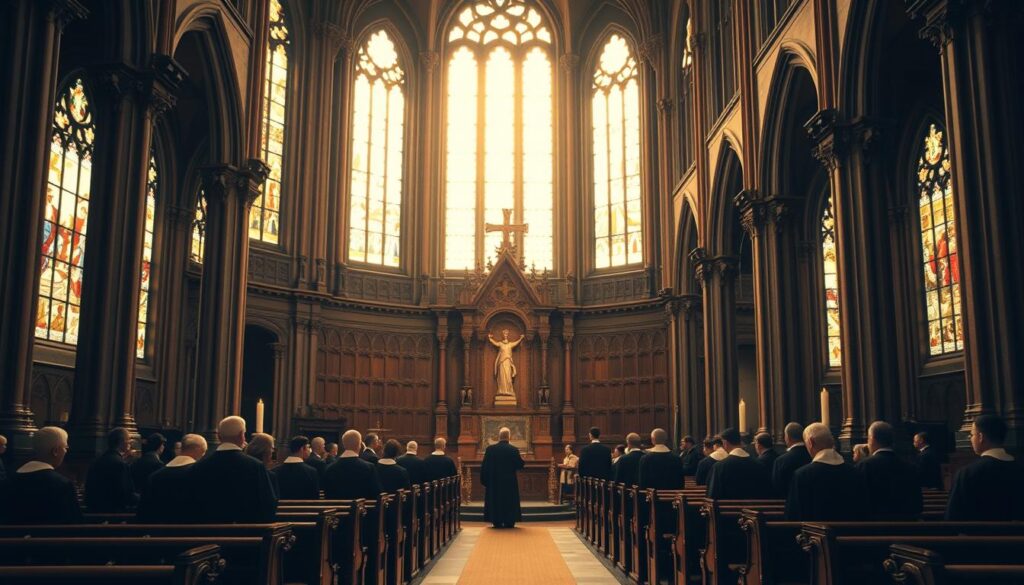
Key Features and Liturgical Components
This collaborative work offers diverse tools for spiritual practice. Four distinct Holy Communion settings allow flexibility, while daily prayer services like Morning Praise and Evening Devotions structure personal reflection. Specialized sections address life milestones through marriage blessings and memorial rites.
The collection balances tradition with innovation. Over 500 hymns span centuries, from medieval chants to 20th-century compositions. Detailed indexes help worshippers quickly find psalms, readings, and seasonal materials.
Development Process and the Inter-Lutheran Commission on Worship
Rev. Dr. Eugene Brand led a 12-year project involving 100+ scholars and musicians. Four specialized teams handled texts, music, and editorial work. “We aimed to create materials that respected all traditions,” Brand noted in 1978 interviews.
Though the Missouri Synod withdrew before publication, their early input shaped the final product. The Augsburg Publishing House ensured quality production, resulting in a 960-page resource still cherished today.
Contemporary Impact and Supplementary Materials
The legacy of this cherished hymnal extends far beyond its initial publication. Over 19 semi-trailers delivered its first million copies in 1978, creating an instant connection between church America and church Canada communities. Today, it remains a cornerstone in many congregations, even as newer resources like Evangelical Lutheran Worship address modern needs.
Modern Usage in Denominations
Despite newer options, the green-bound volume still fills pews across multiple denominations. The Evangelical Lutheran Church in America reports its twenty-seventh printing actively supports weekly services. Many Canadian parishes similarly rely on its timeless texts, proving its cross-border appeal.
Companion Hymnals and Supplements
Augsburg Publishing expanded the core collection through creative partnerships. Their 1995 release With One Voice added 207 modern hymns in a blue-covered edition. This supplement bridged traditional and contemporary styles, offering fresh materials for baptisms, weddings, and seasonal events.
Publishing Insights and Access
Durable binding and quality paper explain why original copies still function perfectly. Digital platforms like Hymnary.org now provide searchable content, letting users explore psalms or study lectionary connections. As one church musician noted: “These resources help us honor tradition while embracing innovation.”
Conclusion
The enduring presence of this hymnal in church America and church Canada speaks volumes about its thoughtful creation. For 40+ years, the Inter-Lutheran Commission’s vision has connected diverse congregations through shared rhythms of prayer and song. Their work created more than a resource—it built bridges between traditions.
Durable materials from Augsburg Publishing House ensured physical longevity to match its spiritual depth. Though Evangelical Lutheran Worship now leads, many congregations still open its pages weekly. This choice honors both heritage and the value of timeless hymns.
What makes this achievement remarkable? Different bodies united around common services, proving collaboration strengthens faith communities. From morning devotions to holiday celebrations, its legacy lives wherever voices join in familiar refrains.
FAQ
What is the purpose of the Lutheran Book of Worship?
The LBW serves as a foundational resource for liturgical texts, hymns, and prayers, unifying worship practices across congregations. It reflects theological traditions while offering flexibility for modern expressions of faith.
How did different Lutheran bodies collaborate on its creation?
The Inter-Lutheran Commission on Worship, formed in 1966, brought together the American Lutheran Church, Lutheran Church in America, and others. This collaboration ensured shared liturgical language and hymnody across denominations.
What makes the LBW distinct from earlier hymnals?
It integrates updated liturgical texts, inclusive language, and ecumenical influences while preserving classic Lutheran theology. The inclusion of a revised lectionary and seasonal prayers also enhances its adaptability.
Do all Lutheran churches use this resource today?
While widely adopted by the ELCA and some LCMS congregations, usage varies. Some denominations supplement it with newer materials like Evangelical Lutheran Worship or denominational-specific guides.
Are there companion materials available for the LBW?
Yes! Augsburg Fortress and other publishers offer accompanist editions, lectionary guides, and study resources. These supplements help congregations explore its content deeply and apply it contextually.
How can I access historical data about its first printing?
Original editions and archival documents are held by institutions like the ELCA Archives. Digital excerpts and liturgical texts may also be available through denominational websites or academic libraries.