Let’s dive into a vibrant journey tracing one of Christianity’s most influential branches. With over 833 million followers globally, this faith has shaped cultures and nations. From its roots in 16th-century Europe, it now spans continents, creating unique communities everywhere.
North America plays a key role in this story. Recent data from Pew Research shows the United States alone hosts 20% of global followers. That’s 141 million people—nearly half the country’s population as of 2019. How did this movement become so widespread?
Our exploration uses trusted sources to reveal patterns you might not expect. You’ll see how local traditions blended with new beliefs, creating lasting impacts. Whether in bustling cities or quiet towns, these communities tell a story of adaptation and growth.
Key Takeaways
- Protestantism represents 40% of Christians worldwide
- The United States has the largest concentration globally
- Modern demographics show surprising regional hubs
- Cultural integration shaped its global spread
- Data from 2019 highlights current trends
Overview of Protestantism Around the Globe
Protestant Christianity’s global footprint tells a story of faith and transformation. What began as a religious revolution now thrives in diverse cultures, creating communities that blend tradition with innovation.
Historical Background
In the 16th century, reformers like Martin Luther reshaped Christianity by challenging established churches. Their ideas spread like wildfire across Europe, reaching Switzerland, England, and Scandinavia within decades. By the 1700s, missionaries and colonists carried these beliefs to new continents.
This movement wasn’t just about theology—it sparked social change. Local groups adapted Protestant teachings to their cultures, creating unique practices still seen today.
Global Statistics and Early Trends
Modern demographics reveal surprising shifts. While Europe birthed Protestantism, Sub-Saharan Africa now leads with 300 million followers. The Americas follow closely at 260 million, according to 2010 data. Even the Asia-Pacific region shows rapid growth, hosting 140 million believers.
- Europe: 100 million
- Middle East-North Africa: 2 million
Pew Research notes these changes accelerated in the 20th century. Traditional strongholds now share influence with vibrant new communities. As one scholar observed: No other Christian branch has diversified so quickly across so many regions.
Mapping the Spread of Protestantism Over Centuries
Waves of religious change reshaped continents as new beliefs traveled farther than their founders imagined. This movement’s growth wasn’t just about ideas—it rewrote cultural landscapes through trade, migration, and grassroots efforts.
Reformation and Post-Reformation Movements
The 16th-century Reformation sparked a chain reaction. By the 17th century, Dutch merchants carried these beliefs to Indonesia. Swedish settlers planted them along Delaware Bay. Each country added its own flavor to the faith.
Missionaries became key players in the 1800s. British groups like the London Missionary Society reached Pacific islands. American preachers sailed to Liberia. Their work laid foundations for today’s global network of churches.
| Region | 1900 Protestant % | 2000 Protestant % |
|---|---|---|
| Africa | 2% | 27% |
| South America | 2.5% | 17% |
| Asia | 0.5% | 5.5% |
Numbers tell a stunning story. Africa’s Protestant population grew 13-fold in 100 years. Brazil now has more believers than Germany. As Pew Research notes: No movement has diversified so fast across so many cultures.
These shifts created lasting change. Schools in Ghana. Radio ministries in Guatemala. From small German towns to North America’s megachurches, the faith keeps adapting while staying rooted in its revolutionary past.
Exploring the protestantism map: Global Insights
Modern faith movements reveal unexpected patterns when we examine where believers gather today. One standout story comes from China, where an estimated 58 million Protestants form the world’s largest minority group in this category. This growth happened despite decades of restricted religious activity.
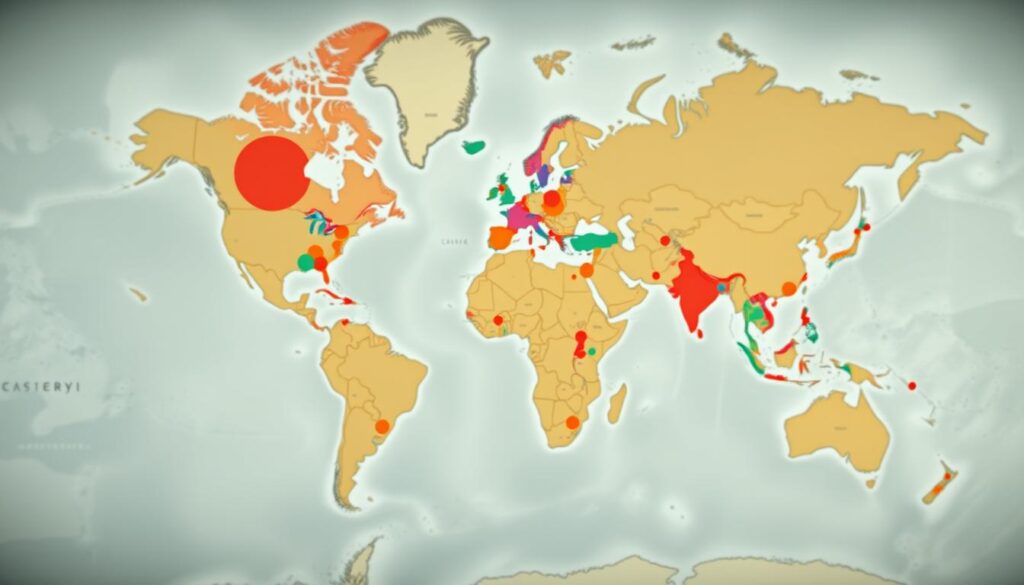
Key Regions and Shifting Populations
Anglican demographics showcase dramatic changes. In 1910, 79% of this group lived in the United Kingdom. By 2010, Africa claimed 59% of global Anglicans. Historian Mark A. Noll notes: The faith’s center of gravity moved south faster than anyone predicted.
| Region | 1910 Anglican % | 2010 Anglican % |
|---|---|---|
| United Kingdom | 79% | 13% |
| Africa | 3% | 59% |
| United States | 12% | 9% |
These shifts reshape worship practices. African churches now blend traditional hymns with local instruments. Pew Research shows 7 in 10 Kenyan Protestants attend services weekly, compared to 1 in 3 Americans.
New majority regions bring fresh perspectives. Nigerian congregations emphasize community development. Brazilian groups integrate indigenous spiritual elements. This diversity strengthens global connections while honoring local roots.
Historical Context and Key Events in Protestantism
History books come alive when we trace how faith movements reshape nations. The Protestant story blends daring ideas with royal decrees, creating ripples that still touch our lives today. Let’s explore two forces that changed the world: theological breakthroughs and their real-world consequences.
Major Reformation Milestones
Three pivotal moments defined early Protestant growth. Martin Luther’s 1517 challenge to Catholic tradition sparked global change. The 1555 Peace of Augsburg let German princes choose their realm’s faith—a radical idea for its time.
| Event | Year | Impact |
|---|---|---|
| Ninety-five Theses | 1517 | Began Reformation |
| Peace of Augsburg | 1555 | Established state religious choice |
| Westminster Confession | 1646 | Shaped Presbyterian churches |
Political and Social Impacts Over Time
France’s 17th-century crackdown shows how politics shaped faith communities. Huguenots once formed 10% of the population, but persecution slashed their numbers to 4.5% by 1685. Historian Philip Benedict notes: Louis XIV’s revocations scattered French Protestants across North America and beyond.
These exiles enriched host nations with skills and ideas. Many settled in the United States, fueling its pluralistic identity. Meanwhile, Alsace kept religious diversity—proof that local conditions often trumped royal decrees.
Influential Figures and Religious Movements
Visionary thinkers reshaped spiritual landscapes through bold ideas and grassroots action. Their work sparked movements that now span continents, blending ancient wisdom with modern practices.
Leaders and Theologians
Martin Luther’s 1517 protests ignited a chain reaction. John Calvin systematized Reformed theology in Geneva, while John Wesley’s Methodist revivals reached coal miners and factory workers. “These weren’t just scholars,” notes historian Diana Butler Bass. “They built communities that transformed everyday lives.”
Emergence of New Denominational Trends
Modern faith groups reflect centuries of adaptation. Pentecostal churches now lead global growth, emphasizing spiritual experiences over rigid structures. Check how major families compared in 2010:
| Denomination | Global Share | Key Feature |
|---|---|---|
| Pentecostal | 10.8% | Spiritual gifts focus |
| Anglican | 10.6% | Liturgical tradition |
| Lutheran | 9.7% | Scripture-centered |
| Baptist | 9% | Adult baptism |
The United States became a melting pot for these traditions. African American churches blended Baptist teachings with civil rights activism. Korean congregations in North America mix Presbyterian roots with vibrant praise music.
This diversity proves Protestantism’s core strength: adapting timeless truths to new contexts while keeping faith personal and accessible to all.
Demographic Trends and Population Shifts
Global faith communities are undergoing a seismic shift unseen in modern history. While Europe once led Protestant growth, recent data shows a dramatic southward tilt. Vibrant new centers now drive expansion across three continents.
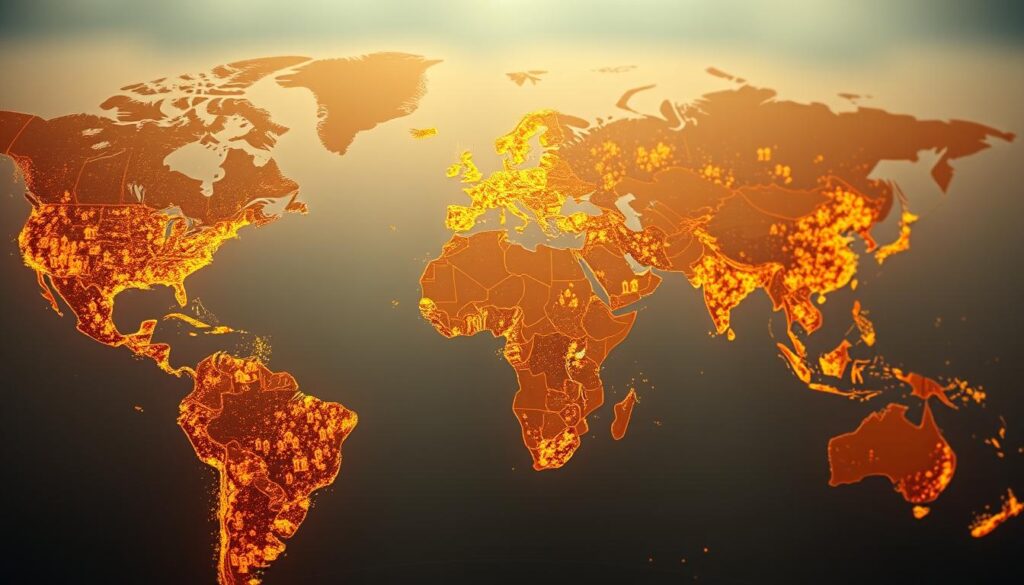
New Frontiers of Faith
Africa’s Protestant community grew from 2% to 27% of its total population in just 100 years. Nigeria alone hosts 60 million believers—more than all Scandinavian churches combined. This growth shows no signs of slowing:
| Region | 2000 Followers | 2040 Projection |
|---|---|---|
| Africa | 300 million | 550 million |
| Latin America | 90 million | 140 million |
| Asia | 140 million | 220 million |
South Korea sends more missionaries than Britain. China’s underground churches reportedly outnumber official congregations 3-to-1. As one Nairobi pastor observed: We’re not just receiving faith—we’re reshaping it.
Changing Tides in Traditional Strongholds
Europe tells a different story. Once dominant, its share of global Protestant numbers will drop below 9% by 2050. Even historic hubs show declines:
| Country | 1900 % Protestant | 2020 % Protestant |
|---|---|---|
| Germany | 63% | 25% |
| Sweden | 99% | 58% |
| France | 2% | 3% |
France’s slight rebound comes from immigrant communities and new evangelical movements. Meanwhile, North America remains stable—the United States still claims 20% of global Protestants despite slower growth rates.
Regional Focus: Protestantism in the United States
The story of faith in America finds one of its most dynamic chapters in Protestant communities. These churches and movements evolved from colonial settlements to modern megachurches, reflecting the nation’s changing values.
Historical Roots and Calvinist Heritage
Early settlers brought Reformed theology across the Atlantic. Puritan groups shaped New England’s identity, while Quakers influenced Pennsylvania’s tolerance policies. By the Revolutionary War, 75% of colonists identified with Protestant families.
Contemporary Statistics and Denominational Diversity
Today, the U.S. hosts over 140 million Protestants—20% of the global protestant population. Baptists lead with 33%, followed by Pentecostals at 12%. Pew Research notes 43% of Americans still affiliate with these traditions.
Urban centers showcase this diversity best. Korean Presbyterian congregations thrive in Los Angeles. Latino evangelical churches grow in Miami. Each adds fresh energy to a faith that’s reshaped itself across time.
FAQ
Which regions have the highest Protestant populations today?
Sub-Saharan Africa, North America, and parts of Latin America currently have significant communities. Countries like Nigeria, Brazil, and the United States report large numbers of adherents, with over 160 million in the U.S. alone, according to Pew Research Center.
How did the Reformation shape Protestantism’s global spread?
The 16th-century Reformation, led by figures like Martin Luther and John Calvin, broke from Catholic traditions. This movement sparked new churches across Europe, later spreading through colonization, missions, and immigration to the Americas, Africa, and Asia.
Why is Protestantism declining in Europe while growing elsewhere?
Secularization and changing cultural values have reduced church participation in Europe. Meanwhile, evangelical movements and Pentecostalism thrive in Africa and Latin America due to community-focused outreach and adaptability to local cultures.
What role does the United States play in Protestant history?
The U.S. became a hub for denominational diversity, from early Puritan settlers to modern megachurches. Over 40% of American Nobel laureates identify with Protestant traditions, reflecting its cultural and intellectual influence, per Oxford University Press.
How do modern denominational trends differ from earlier centuries?
While Lutheranism and Anglicanism dominated post-Reformation Europe, newer groups like Baptists, Methodists, and Pentecostals now drive growth. Non-denominational churches are also rising, emphasizing flexible worship styles over traditional structures.
What political changes were tied to Protestantism’s rise?
The Edict of Fontainebleau (1685) and the Thirty Years’ War reshaped Europe’s religious landscape. Protestant ideals also influenced democratic movements, such as the push for religious freedom in colonial America.