For over five centuries, a powerful spiritual movement has shaped Switzerland’s cultural identity. What began as a bold Reformation-era experiment now stands as one of Europe’s most unique religious alliances. This organization unites 24 regional branches with the Evangelical-Methodist community under a shared vision.
Many don’t realize how geography shaped this faith network. Mountainous terrain once kept communities isolated, leading to distinct theological practices in each city. By 2019, these groups formed a cohesive federation that balances local traditions with national collaboration.
Urban centers like Zurich and Geneva played starring roles in this evolution. Their thinkers sparked ideas that rippled across borders, blending spiritual values with practical governance. Today, nearly 2 million members participate in this living tradition that honors its past while adapting to modern life.
Key Takeaways
- Traces its roots to 16th-century Reformation movements
- 25-member federation includes regional and Methodist communities
- Serves 1.92 million members as of recent reports
- Current leadership under President Rita Famos
- Combines local customs with national coordination
- Continues shaping global theological discussions
The organization’s structure reveals Swiss values in action. Rather than centralizing power, it empowers regional voices through what locals call “spiritual federalism.” This approach has allowed ancient cathedrals and modern congregations alike to thrive in cities and valleys across the country.
Introduction to Swiss Protestantism and Its Historical Context
Cantonal alliances created unexpected opportunities for religious change. During the 16th century, Switzerland’s decentralized structure allowed towns to become hotbeds of spiritual innovation. City councils often dictated local faith practices, creating a mosaic of beliefs across Swiss cantons.
Urban centers like Bern and Basel embraced new ideas faster than remote valleys. Market towns buzzed with debates about scripture, while alpine villages preserved traditional rituals. This split shaped worship spaces – bustling city churches hosted fiery sermons, while mountain chapels maintained quiet devotion.
Language borders deepened these contrasts. German-speaking regions developed stripped-down services focused on preaching. French areas favored structured liturgy with communal singing. Both approaches shared a common thread: reshaping spiritual life through accessible theology.
By the 1650s, a delicate balance emerged. Most regions officially recognized one tradition, yet tolerated minority groups. This pragmatic approach let diverse practices coexist without central control. The time-tested system still influences how communities organize spiritual life today.
The Reformation in Switzerland: Breaking New Ground
In the 1520s, Swiss cities became laboratories for religious revolution. Urban centers like Zurich buzzed with radical ideas as reformers reimagined spiritual life. Huldrych Zwingli led this charge, transforming Zurich’s Grossmünster into a hub for scripture-based teachings that spread like wildfire.
Bern joined the movement in 1528 when Berchtold Haller convinced city leaders to adopt reformed practices. Basel followed a year later under Johannes Oecolampadius, merging academic rigor with grassroots change. These cities formed a powerful triangle of influence, reshaping worship and civic life.
French-speaking regions caught the reform wave later. By the 1540s, Geneva’s streets echoed with debates led by William Farel and John Calvin. Their ideas turned the city into a global center for reformed theology. This staggered timeline shows how cultural borders shaped religious transformation:
- German-speaking areas: 1520s reforms
- French regions: 1530s-40s changes
- Italian valleys: Limited adoption
City councils didn’t just alter church rituals – they reinvented education and social services. Zurich’s leadership declared, “True faith requires both prayer and practical charity,” establishing Europe’s first mandatory poor relief system. This blend of spiritual and civic renewal became Switzerland’s gift to the world.
The Early Impact of the Protestant Revolution in Swiss Cantons
The 16th-century spiritual upheaval redrew Switzerland’s religious map in unexpected ways. Merchants carried radical ideas along trade routes, while mountain passes slowed their spread. This created striking contrasts between bustling city squares echoing with reform debates and alpine villages clinging to familiar rituals.
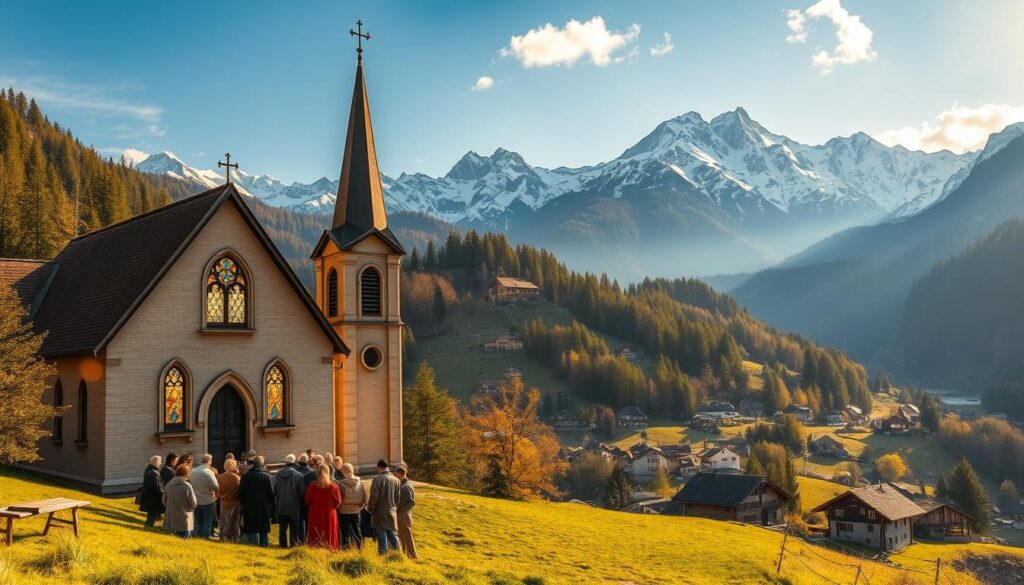
Transformative Changes in Urban Centers
Zurich’s cobblestone streets became laboratories for social change. City councils replaced Latin masses with scripture discussions in local dialects. Basel merged its university with reformed teachings, creating Europe’s first theological training ground for Protestant leaders.
Bern took a practical approach. Leaders declared, “True faith feeds both souls and bodies,” establishing soup kitchens alongside new churches. These urban hubs developed distinct flavors of reformed faith while sharing core principles.
Diffusion of Reformed Ideas in Rural Areas
Mountain communities resisted changes that threatened their seasonal traditions. Catholic strongholds like Uri maintained pilgrimage sites, while mixed cantons found creative compromises. In Glarus, families from different faiths shared grazing lands but attended separate services.
Traveling preachers bridged the divide. They adapted messages for rural audiences, linking biblical parables to farming cycles. By 1600, weekly markets in valley towns buzzed with debates about predestination and community ethics.
Foundational Figures in Swiss Protestant History
Two visionary thinkers transformed religious thought through bold ideas and practical reforms. Their contrasting approaches created a theological legacy that still shapes modern faith communities.
Huldrych Zwingli and His Pioneering Role
Born in 1484, Zwingli sparked change by reimagining sacred rituals. He declared, “True worship lives in hearts, not ceremonies,” replacing traditional communion with symbolic interpretation. This radical view set Swiss reforms apart from both Catholic and Lutheran traditions.
The reformer’s 1531 death during religious conflicts left unfinished work. Yet his later writings on predestination laid groundwork for future theologians. Zwingli’s blend of civic engagement and spiritual renewal became his lasting gift.
John Calvin’s Transformative Influence in Geneva
When Calvin came to Geneva in 1536, he found a city ripe for transformation. His systematic doctrine turned religious theory into daily practice. The French exile organized schools, hospitals, and strict moral codes alongside worship reforms.
Calvin’s Institutes of the Christian Religion became Protestantism’s first comprehensive guidebook. His emphasis on divine sovereignty through predestination debates energized global religious discussions. By 1564, Geneva exported reformed ideas through trained ministers and printed texts.
Though never meeting personally, Zwingli (1484-1531) and Calvin created complementary legacies. One ignited the flame of reform, while the other built institutions to keep it burning. Together, they shaped a movement that crossed mountains and oceans.
protestant church of switzerland: Formation and Evolution
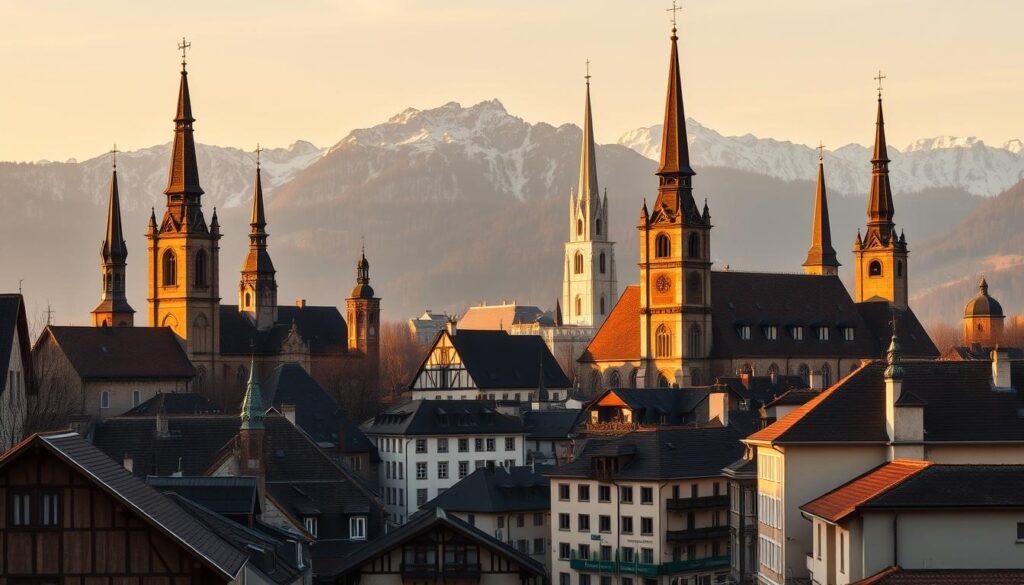
Twentieth-century Switzerland witnessed a groundbreaking shift in religious collaboration. In 1920, leaders from 24 regional reformed churches formed the Fédération des Eglises protestantes de Suisse. This alliance balanced local traditions with national coordination, mirroring the country’s political structure.
The federation’s founders declared, “Unity thrives when roots remain deep.” They crafted a framework allowing cantonal churches to keep their rituals and governance while sharing resources. Members ranged from bustling urban congregations to remote alpine parishes.
Key features of this unique model:
- Legal representation for all members at federal level
- Joint initiatives in education and social services
- Preservation of regional dialects in worship
By 2020, the organization adopted a simpler name – Protestant Church in Switzerland. This rebranding reflected evolving goals while honoring its reformed church heritage. The change strengthened public recognition without altering theological independence.
Today, this network includes Methodist communities alongside historic Swiss reformed groups. Its success lies in blending flexibility with shared purpose – a formula admired by religious federations worldwide.
Doctrinal Milestones and Reformed Confessions
Swiss religious leaders achieved what many thought impossible – unifying rival theological camps through groundbreaking agreements. These pacts balanced deep convictions with practical cooperation, creating blueprints still studied worldwide.

The Consensus Tigurinus and Second Helvetic Confession
In 1549, Heinrich Bullinger and John Calvin bridged Zurich and Geneva’s differences through the Consensus Tigurinus. This 26-article document settled heated debates about communion, declaring: “True faith transforms symbols into spiritual nourishment.”
The 1566 Second Helvetic Confession became Switzerland’s theological cornerstone. Bullinger crafted it as a comprehensive guide addressing:
- Scripture interpretation methods
- Church governance structures
- Sacraments’ symbolic nature
| Document | Year | Key Figures | Main Focus | Impact |
|---|---|---|---|---|
| Consensus Tigurinus | 1549 | Bullinger, Calvin | Eucharist theology | Unified Swiss reformers |
| Second Helvetic | 1566 | Bullinger | Complete doctrine system | Adopted by 13 cantons |
Debates on Predestination and Revolutionary Theology
Swiss theologians reshaped the doctrine predestination debate through nuanced positions. Unlike strict Calvinism, they emphasized God’s mercy over abstract decrees. This approach let communities adapt teachings to local needs while keeping core principles.
Bullinger’s confession cleverly sidestepped divisive language about eternal fate. Instead, it focused on practical Christian living – a strategy that maintained unity across regions with different traditions.
The Role of Cantonal Churches in Shaping National Identity
Switzerland’s regional faith communities have long mirrored its political landscape. Cantonal churches developed alongside local governments, creating unique partnerships between spiritual and civic life. This collaboration shaped education systems and social services across Alpine valleys.
Legal status varies significantly between cantons. Some maintain official state ties through historic agreements. Others operate independently while preserving reformed church principles. These differences reflect each region’s historical path.
Urban centers like Zurich amplified this model’s influence. Their institutions blended tradition with progressive ideas, becoming cultural anchors. Through shared values and adaptable structures, these communities helped forge an identity rooted in local diversity.
Today, this system remains a vital part of Swiss heritage. It honors regional traditions while fostering national unity – a balance few countries achieve.
FAQ
How did the Reformation begin in Switzerland?
The movement started in Zurich under Huldrych Zwingli, who challenged traditional practices. His teachings in the early 16th century sparked debates that spread to other cantons, reshaping religious life.
Why was Geneva important to Swiss Protestantism?
Geneva became a hub under John Calvin’s leadership. His Institutes of the Christian Religion and emphasis on doctrinal clarity influenced Reformed theology globally, earning the city the nickname “Protestant Rome.”
What role did the Second Helvetic Confession play?
Written by Heinrich Bullinger, this 1566 document unified Reformed teachings across Swiss regions. It addressed topics like predestination and became a cornerstone for Reformed churches beyond Switzerland.
How did rural areas respond to Reformed ideas?
Rural regions adopted changes slower than cities. Local leaders often blended new teachings with traditional practices, creating unique expressions of faith while maintaining community ties.
What caused tensions between cantons during the Reformation?
Religious divides led to conflicts like the 1531 Kappel Wars. Catholic and Reformed cantons clashed politically, but later agreements allowed coexistence while preserving regional autonomy.
How did Calvin’s theology differ from Zwingli’s?
Both emphasized scripture, but Calvin focused on predestination and church structure. Zwingli prioritized symbolic communion and civic reform, shaping Zurich’s identity as a Reformed center.
What was the Consensus Tigurinus?
This 1549 agreement bridged Calvinist and Zwinglian views on communion. It promoted unity among Reformed groups, helping solidify a shared theological foundation across Switzerland.
How do cantonal churches function today?
Many operate under the Fédération des Églises protestantes de Suisse, balancing local traditions with national collaboration. They manage education, social services, and interfaith dialogue while maintaining historical ties.