Imagine a vibrant tapestry woven over thousands of years, blending rituals, stories, and philosophies. This is the essence of one of the world’s oldest living traditions, rooted in the Indian subcontinent. With nearly a billion followers today, it remains a guiding force for millions seeking spiritual connection.
The name we use today emerged in the 19th century, but its foundations stretch back to ancient texts and practices. Unlike many religions, it celebrates diverse paths to truth rather than a single doctrine. From colorful festivals to meditation techniques, every element reflects a deep respect for life’s interconnectedness.
What makes this tradition unique? It thrives as both a way of living and a philosophical framework. Its teachings adapt seamlessly to modern challenges while preserving timeless wisdom. Whether through yoga’s global reach or age-old family customs, its influence spans continents and generations.
Key Takeaways
- Originating over 3,000 years ago, this tradition remains deeply influential in India and worldwide
- Embraces diverse beliefs and practices rather than rigid doctrines
- Integrates spiritual principles with daily life through rituals and ethics
- Recognizes multiple valid paths to personal enlightenment
- Ancient texts like the Vedas form the foundation of its evolving philosophy
Introduction to the Richness of Hinduism
Picture a flowing river that carries ancient wisdom through changing landscapes while keeping its essential character. This vibrant spiritual path thrives not through rigid rules but through adaptability—blending timeless truths with modern life. Its depth lies in welcoming countless interpretations while maintaining a shared core.
Understanding the Living Tradition
Scholars often describe this tradition as sanatana dharma—the eternal way. Unlike structured religions, it grows organically, absorbing new ideas without losing its roots. Early texts like the Vedas reveal debates about existence, while temple carvings from 400 BCE show nature-based worship.
An Overview of Beliefs and Practices
From philosophical discussions to joyful festivals, practices vary widely. Some people meditate daily, while others focus on community rituals. The tradition encourages personal exploration, asking seekers to find their unique path through:
- Devotional singing and prayer
- Study of sacred texts
- Service to others
This flexibility explains its lasting appeal. Whether through yoga’s physical discipline or artistic expressions, it remains a living guide for millions worldwide.
The Historical Timeline of Hinduism
Uncovering layers of history reveals how spiritual practices evolved through cultural exchanges. Ancient civilizations left clues in art, architecture, and rituals that shaped today’s traditions.
From the Indus Valley Civilization to Aryan Migration
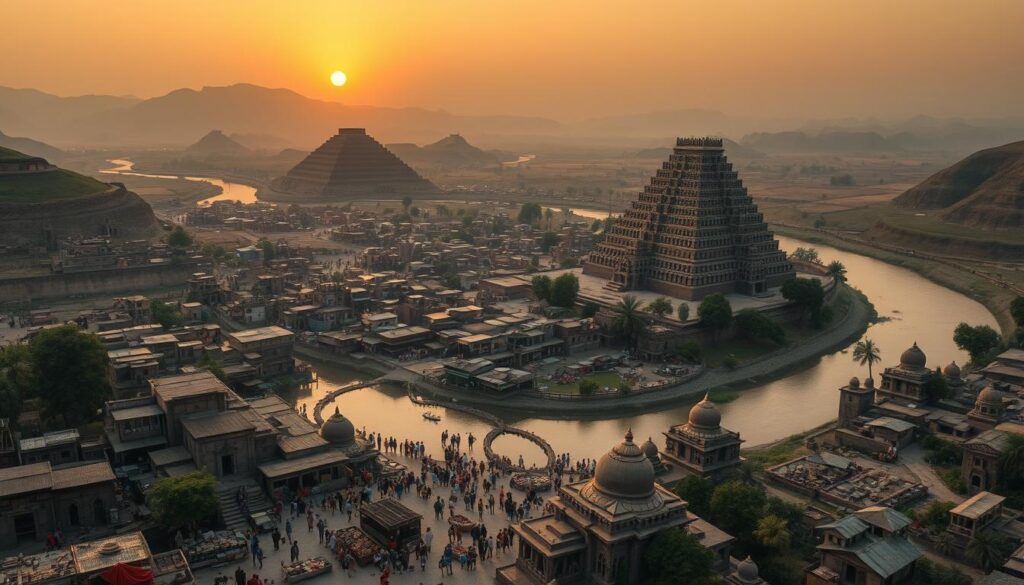
Around 2500 BCE, the Indus Valley Civilization thrived with advanced cities like Mohenjo-Daro. Archaeologists found bathing tanks and seals depicting yoga-like poses. These discoveries suggest early roots of purification rituals and meditation practices.
By 1500 BCE, nomadic groups migrated into the region, bringing new spiritual customs. Their fire ceremonies and nature-based worship blended with local traditions. This fusion created early forms of deity veneration seen in later centuries.
The Evolution from Vedic Texts to Upanishads
Oral traditions preserved sacred hymns now known as the Vedas. The Rig Veda, composed around 1400 BCE, remains the oldest collection. These texts guided rituals while exploring cosmic mysteries.
Later writings like the Upanishads (800-200 BCE) shifted focus inward. They asked profound questions about consciousness and reality. This transition marked a move from external rituals to personal spiritual exploration.
Key developments included:
- Expansion of philosophical concepts in the Aranyakas
- Integration of meditation techniques
- Emphasis on universal truths over regional practices
The Significance of hinduism faith in Daily Life
From kitchen counters to office desks, sacred rituals blend with modern routines. Millions find meaning in small acts—lighting a lamp before dawn or pausing to chant during a commute. These moments transform ordinary tasks into connections with something greater.
Home shrines serve as personal sanctuaries. Families arrange fresh flowers and incense near deity statues, creating spaces for morning prayers. Offerings like fruits or sweets symbolize gratitude, turning meals into shared blessings.
The concept of dharma guides ethical choices. It shapes how people approach work, relationships, and community roles. A shopkeeper might prioritize fair pricing, while a student focuses on diligent study—both honoring their life duties.
| Aspect | Traditional Practice | Modern Adaptation |
|---|---|---|
| Morning Rituals | Chanting at home shrine | Meditation apps with mantras |
| Offerings | Flowers & oil lamps | Digital temple donations |
| Pilgrimage | Visiting sacred rivers | Virtual temple tours |
Many followers today balance ancient customs with contemporary life. Grandparents teach grandchildren to fold hands in prayer, while teens share devotional songs online. Annual pilgrimages to holy sites remain popular, blending travel with spiritual renewal.
This living tradition thrives through flexibility. Whether cooking becomes an act of love or exercise turns into moving meditation, daily life itself becomes the path.
Sacred Texts and Philosophical Traditions
Ancient voices echo through time in carefully preserved manuscripts and oral traditions. These sacred texts form a library of wisdom spanning poetry, rituals, and profound ideas about existence. Unlike rigid doctrines, they invite exploration through both intellectual study and heartfelt devotion.
Exploring the Vedas, Upanishads, and the Bhagavad Gita
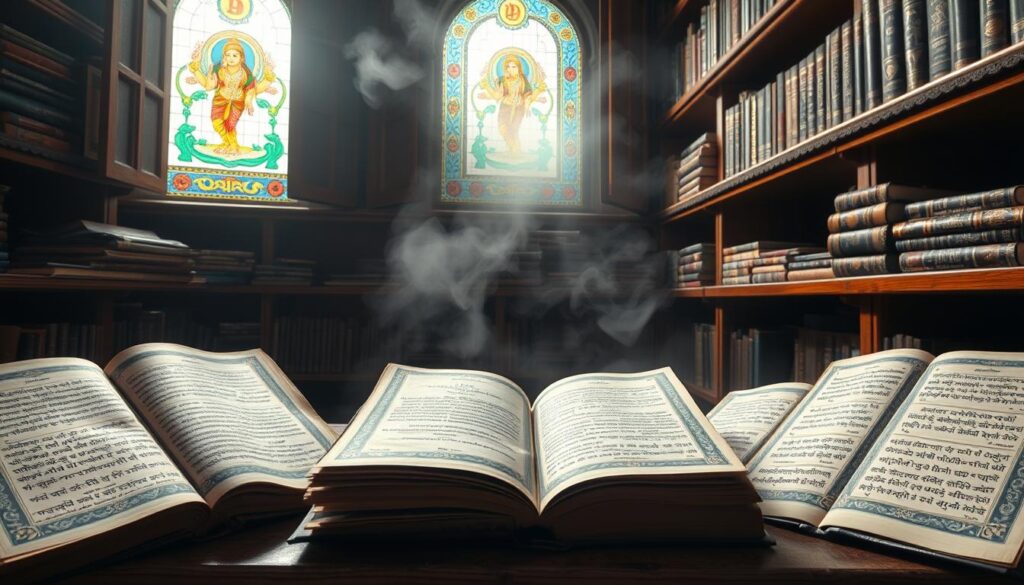
The four Vedas, composed between 1400-900 BCE, remain humanity’s oldest continuous spiritual record. The Rig Veda’s hymns celebrate natural forces, while later texts like the Upanishads explore consciousness itself. One timeless passage asks: “What is that, knowing which all else becomes known?”
The Bhagavad Gita emerged around 200 BCE as part of the Mahabharata epic. This dialogue between warrior Arjuna and divine guide Krishna tackles pressing questions:
- Balancing duty with compassion
- Finding purpose in chaotic times
- Connecting action with spiritual growth
The Role of Epic Narratives: Mahabharata and Ramayana
Spanning 100,000 verses, the Mahabharata isn’t just a story—it’s a mirror reflecting human strengths and flaws. Its sibling epic, the Ramayana, took shape between 500 BCE-200 CE through oral retellings. Both books use dramatic plots to teach ethical living.
Key features of these narratives:
- Complex characters facing moral dilemmas
- Symbolic battles between wisdom and desire
- Family dynamics as spiritual training grounds
This tradition values layered understanding—simple tales for children, deeper meanings for seekers. Even today, new adaptations keep these texts alive in films, comics, and digital formats.
Diverse Deities and Forms of Worship
Step into a world where divine energies take countless forms, each offering unique pathways to spiritual connection. This tradition celebrates sacred expressions through vibrant rituals and symbolic gestures, inviting personal reflection and communal celebration.
Major Gods and Goddesses in the Hindu Pantheon
Three cosmic forces form the spiritual backbone: Brahma (creation), Vishnu (preservation), and Shiva (transformation). Surrounding them shines a constellation of beloved figures. Lakshmi brings abundance, Saraswati nurtures wisdom, and Krishna embodies compassionate love.
These divine figures appear in stories, art, and daily prayers. Many families keep small shrines at home, creating personal spaces for connection. “The divine speaks through many voices,” explains a temple priest from Varanasi.
The Importance of Temples, Puja, and Offerings
Temples serve as community hubs where rituals come alive. The earliest structures appeared over 2,000 years ago, evolving into architectural marvels with carved pillars and sacred chambers. Visitors often bring flowers, fruits, or lamps as offerings—symbols of gratitude and humility.
| Deity | Role | Common Offering |
|---|---|---|
| Lakshmi | Wealth & Prosperity | Gold coins, sweets |
| Saraswati | Knowledge & Arts | Books, white flowers |
| Shiva | Transformation | Milk, holy ash |
Modern adaptations blend tradition with innovation. Apps now deliver daily prayers, while virtual temple tours connect global devotees. Yet the core remains unchanged: finding meaning through devotion, whether in crowded shrines or quiet home corners.
Regional Manifestations and Cultural Impact
Across lush jungles and ancient trade routes, spiritual ideas merged with local traditions to create vibrant new expressions. This blending of practices shows how deeply interconnected our world has always been, with ideas flowing as freely as monsoon winds.
Cultural Bridges Across Oceans
By the 4th century, merchant ships carried more than spices between the Indian subcontinent and Southeast Asia. They transported temple architects, storytellers, and scholars who shaped kingdoms from Bali to Cambodia. The majestic Angkor Wat stands as proof—its towers mirroring sacred mountain peaks described in ancient texts.
Local communities adapted these spiritual concepts while preserving their unique identities. In Java, shadow puppetry retold epic tales using regional dialects. Thai dancers incorporated graceful hand gestures from Indian classical traditions. This fusion created living culture that still thrives today.
Powerful empires like Vijayanagara (1336-1646 CE) strengthened these connections. Their influence reached modern Malaysia and the Philippines through diplomacy and shared artistic traditions. Even now, Bali’s daily offerings and Singapore’s colorful festivals reveal this enduring legacy across Southeast Asia.
From temple carvings to family recipes, these cross-cultural exchanges remind us that wisdom grows through sharing. They show how a tradition rooted in one region can blossom into countless forms, enriching our global world.
FAQ
What are the core beliefs that define this ancient tradition?
Central ideas include dharma (moral duty), karma (action-consequence cycle), and moksha (liberation from rebirth). These principles guide daily practices, rituals, and ethical living across diverse communities.
How did early societies like the Indus Valley shape spiritual practices?
Archaeological finds from 3300–1300 BCE reveal ritual baths, fire altars, and symbols later linked to deities like Shiva. These elements merged with Vedic traditions during cultural exchanges, forming foundational concepts.
Why are texts like the Bhagavad Gita still relevant today?
The Gita’s dialogue on duty, righteousness, and devotion transcends time. Its teachings on balancing action with spiritual growth resonate in modern ethical dilemmas and personal development.
What role do epic stories like the Ramayana play in cultural life?
These narratives teach values through relatable characters. For example, Diwali celebrates Rama’s return from exile, while dance-dramas in Indonesia retell these tales, blending art with moral lessons.
How do regional temples reflect local interpretations of deities?
Vishnu might be worshipped as Jagannath in Odisha or Venkateswara in Andhra Pradesh, each with unique rituals. Offerings range from Kerala’s floral carpets to Bengal’s clay idols, showcasing regional diversity.
What connects modern practices to ancient Vedic rituals?
Chants from the Rigveda still echo in weddings, while fire ceremonies (yajna) remain central. However, medieval bhakti movements shifted focus to personal devotion, adapting traditions over centuries.
How did this tradition spread across Southeast Asia?
Through trade routes, kingdoms like Cambodia’s Angkor adopted Sanskrit scripts and temple architecture. Bali preserves wayang kulit shadow plays, blending indigenous customs with imported epics.