Imagine streets alive with laughter, where vibrant powders fill the air like confetti. Every spring, communities worldwide unite for a joyful celebration that turns strangers into friends. This ancient tradition marks new beginnings while honoring timeless stories of triumph and unity.
Known as the “festival of love,” this event breaks down social barriers. For one day, differences in age, status, or background dissolve under clouds of magenta and turquoise. People share sweets, dance to drumbeats, and embrace the simple pleasure of being together.
The festivities peak during the full moon of Phalguna month, aligning with nature’s renewal. Farmers celebrate harvests while city dwellers recharge relationships. Many compare it to cultural reset buttons – a chance to mend fences and start fresh.
Though rooted in sacred tales, modern celebrations blend tradition with creativity. From eco-friendly dyes to virtual gatherings, this cultural phenomenon keeps evolving. Its universal message of connection now resonates across continents, inviting everyone to join the rainbow revolution.
Key Takeaways
- Celebrates spring’s arrival with colorful community gatherings
- Promotes equality by temporarily removing social divisions
- Combines ancient traditions with modern adaptations
- Occurs during the full moon of Phalguna month
- Encourages forgiveness and relationship renewal
- Has grown into a globally recognized cultural event
Introduction to the Vibrant World of Holi
Picture a morning where the sky bursts into rainbows as neighbors become collaborators in art. Streets transform into kaleidoscopes, alive with hues that cling to skin, clothes, and laughter. This is the magic of a centuries-old tradition where celebration becomes a shared language.
What Makes This a Celebratory Spectacle
The heart of the event lies in its democratic chaos. Buckets of colored water fly alongside clouds of powder, turning every corner into a living mural. Friends and strangers alike join this dance of pigments, their giggles harmonizing with drumbeats.
Roots in Stories and Time
Ancient tales whisper through the modern revelry. One story tells of divine playfulness, where a mischievous deity popularized smearing colored powder on loved ones. These legends blend with harvest celebrations, creating layers of meaning that span generations.
Three elements define the experience:
- Tactile joy of organic pigments clinging to skin
- Social freedom dissolving barriers between people
- Historical echoes in every handful of gulal
Exploring hinduism holi: Traditions and Symbolism
Every handful of color thrown during this spring celebration carries whispers of ancient wisdom. These vibrant traditions bloom from powerful tales about courage, faith, and the enduring power of love.
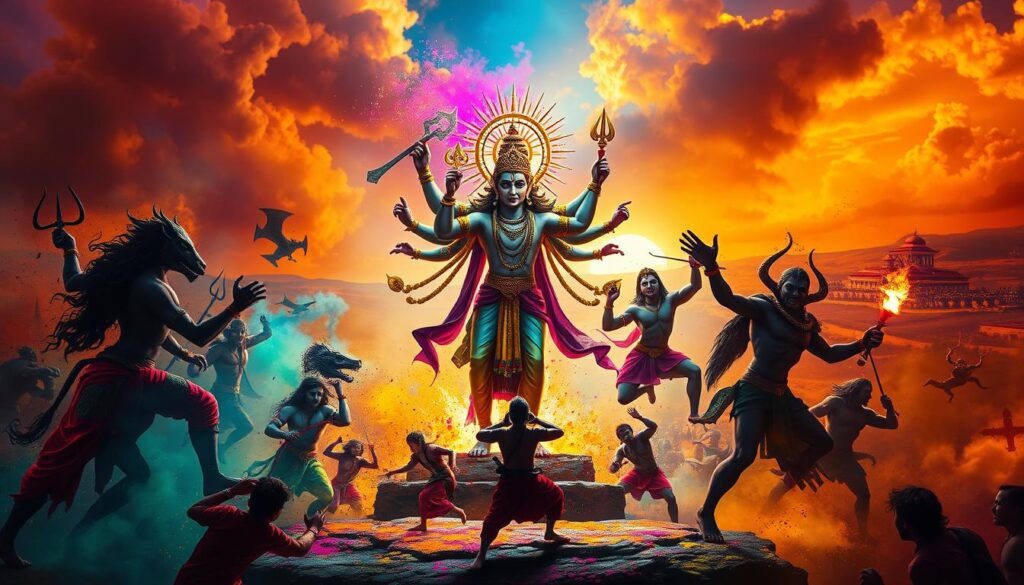
When Fire Couldn’t Touch the Faithful
One legendary story features a demon king named Hiranyakashipu who demanded worship as a god. His son Prahlad defied him, remaining loyal to Vishnu. Enraged, the ruler plotted with his sister Holika to burn the boy alive.
But when flames engulfed them, Holika’s fire-resistant cloak flew to Prahlad instead. Her ashes became the first bonfire lit during celebrations, symbolizing how good triumphs over evil through devotion.
A Blue-Skinned Trickster’s Romantic Solution
Another tale explains the colorful playfulness. Young Krishna worried his dark blue skin (caused by a demon‘s poison) might push Radha away. His mother suggested, “Why not color her face too?”
Their playful smearing of pigments became a beloved ritual. Today, people honor this love story by painting friends and strangers alike – turning differences into shared joy.
These traditions remind us that light always outshines darkness. Whether through fiery trials or creative courtship, the festival’s heart beats with hope that good will always have the final laugh.
Regional Variations and Global Celebrations
From Himalayan foothills to tropical coasts, this festival of colors transforms in delightful ways. Each region adds its own flavor to the celebrations, creating a tapestry of traditions as diverse as India itself.
Diverse Traditions Across India
In Uttar Pradesh’s Barsana, laughter echoes during Lathmar Holi, where women chase men with bamboo sticks. Maharashtra’s Rangpanchami extends the fun for five days, with dancers swirling to folk tunes. Southern states like Tamil Nadu weave flower petals into intricate patterns instead of powders.
Mathura and Vrindavan host month-long events honoring Krishna’s playful legacy. Pilgrims flock to temples where priests shower crowds with marigold blossoms. Meanwhile, Punjab’s Hola Mohalla showcases martial arts displays beside colorful revelry.
Modern Celebrations Around the World
New York’s Union Square erupts in rainbow clouds every spring, while London’s Battersea Park hosts family-friendly color throws. Australian beaches see surfers riding waves tinted with eco-friendly pigments.
These global events often blend local touches – think Dutch DJs mixing bhangra beats or Brazilian samba parades dusted in gulal. “It’s our way of sharing joy beyond borders,” says Mumbai-born organizer Priya Kapoor.
From corporate team-building activities to university campus events, the spirit of unity keeps spreading. Even virtual celebrations emerged during lockdowns, proving that connection transcends physical boundaries.
The Cultural Impact of Holi on Art and Society
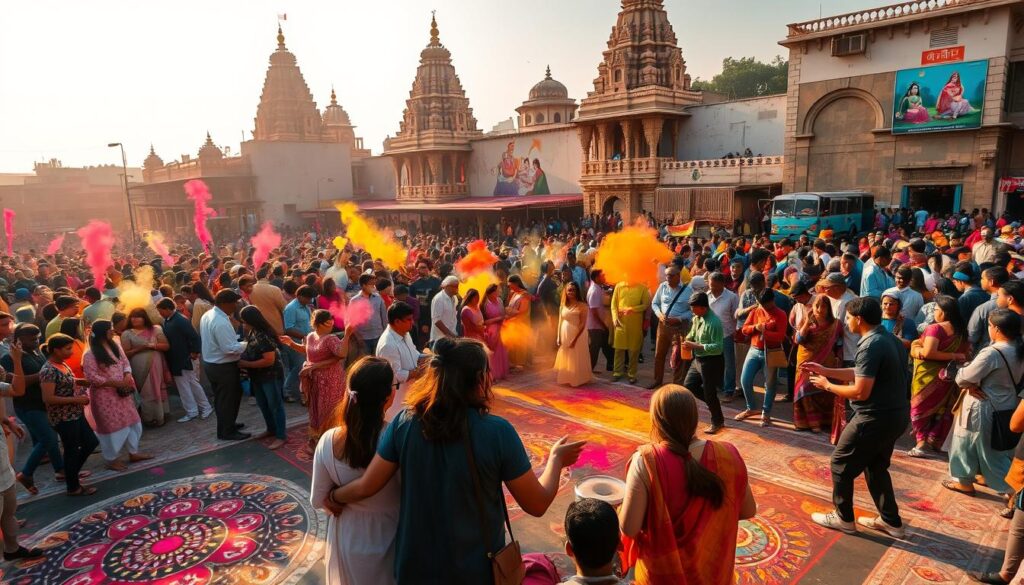
Vivid splashes of color have leaped from streets to screens, shaping creative expressions across generations. This celebration’s visual energy inspires artists and storytellers to capture its essence in bold new ways.
Influence on Popular Culture and Cinema
Bollywood films feature iconic Holi sequences where characters reconcile through flying pigments. The Hindu American Foundation notes these scenes often mirror real-life moments when “social masks dissolve under rainbow hues.” From classic musical numbers to modern rom-coms, the festival becomes a storytelling device for showing unity amid chaos.
Holi’s Role in Fostering Community Unity
Beyond entertainment, the event sparks new beginnings in relationships. Neighborhoods host joint color-throwing events where old grudges fade with each handful of gulal. “It’s like hitting reset on strained connections,” explains a community organizer in New Jersey.
Three ways the celebration bridges divides:
- Public art projects using eco-friendly dyes
- Multicultural festivals blending traditions
- School programs teaching conflict resolution through play
The Hindu American Foundation partners with museums to showcase how traditions evolve. Their exhibits highlight everything from ancient folk paintings to digital installations pulsing with chromatic energy. Through these efforts, the festival’s message of renewal reaches fresh audiences every spring.
Festivities, Rituals, and the Sensory Journey of Holi
Bonfire shadows dance across smiling faces as drums set the rhythm for renewal. Communities gather under the full moon of Phalguna – the final month in the Hindu lunar calendar – to begin two days of transformative celebrations.
Traditional Rituals: From Holika Dahan to Rangwali Holi
The night before the main event crackles with Holika Dahan fires. Families toss dried leaves and chickpeas into flames, symbolizing the release of old grudges. “The heat purifies relationships,” explains Delhi local Anika Patel, as neighbors sing and dance around glowing embers.
Dawn breaks on Rangwali Holi, when streets become rainbows in motion. Friends chase one another with handfuls of powder, their laughter mixing with splashes of water. This playful chaos continues until everyone wears matching hues – living proof that joy knows no boundaries.
The Symbolism Behind Colors and Seasonal Transitions
Each pigment tells a story:
- Red blooms like spring flowers, whispering of passion and growth
- Yellow mirrors turmeric roots, promising prosperity
- Green dances like new leaves celebrating nature’s rebirth
The festival’s timing mirrors nature’s calendar. As winter fades, the lunar calendar marks the perfect moment to welcome warmer days. Families share gujiya pastries filled with sweetened grains – edible symbols of abundance – while cooling thandai drinks soothe throats raw from singing.
Through scented powders and sticky sweets, through drumbeats and rainbow-stained shirts, this spring celebration engages all senses. It transforms ordinary days into memories that linger like sunset-colored fingertips.
Conclusion
When the last specks of color wash away, something transformative remains. This Hindu festival masterfully stitches ancient myths to modern joy, creating a living tapestry that dances across generations. Its magic lies in how traditions evolve while keeping their spiritual heartbeat intact.
More than just a celebration, it’s a global language of connection. From Delhi apartments to Hindu American community centers, the festival colors spark conversations that dissolve borders. The shared laughter between friends and strangers alike proves unity blooms brightest through play.
As spring whispers of beginnings, consider joining this chromatic chorus. Whether tossing powders at local events or savoring gujiya sweets abroad, you’ll discover why millions cherish this way of honoring life’s vibrancy. Let its message of renewal color your world long after the last drumbeat fades.
FAQ
Why is the festival associated with throwing colored powder?
The tradition stems from playful legends of Krishna and Radha, where vibrant hues symbolize joy and divine love. Today, people toss gulal (colored powder) to celebrate unity and the arrival of spring.
What story explains the triumph of good over evil during the festivities?
The tale of Prahlad and Holika highlights this theme. A devout prince survives a fire set by his demonic aunt, signifying virtue’s victory. Bonfires called Holika Dahan mark this event on the eve of celebrations.
How do regional traditions in India differ during the festival?
In Mathura, reenactments of Krishna’s life occur, while Punjab’s Hola Mohalla showcases martial arts. South India focuses on temple rituals, reflecting the country’s cultural diversity.
Are there eco-friendly alternatives to synthetic colors?
Yes! Many use natural dyes from turmeric, beetroot, or flowers. Groups like the Hindu American Foundation encourage sustainable practices to protect skin and the environment.
How has the festival influenced global pop culture?
From Bollywood dance sequences to international “color runs”, its themes of joy and renewal inspire music, art, and events worldwide. Major cities host parades blending traditional and modern styles.
What rituals precede the main day of color play?
The night before, communities light bonfires to symbolize burning negativity. Families share sweets, sing, and pray for prosperity, setting the stage for the next day’s lively festivities.
Why is the festival tied to the lunar calendar?
It falls on the full moon in Phalguna (March), aligning with spring’s arrival. This timing represents renewal, aligning agricultural cycles with spiritual rejuvenation.
How do modern celebrations promote inclusivity?
The event transcends barriers—people of all backgrounds join, sharing food and laughter. Its message of equality and fresh starts fosters community bonds, making it a universal celebration.