The Anglican faith is a rich and diverse Christian denomination with a history spanning centuries. At its core, Anglicanism values tradition, scripture, and reason. The concept of lex orandi, lex credendi, or “the law of praying is the law of believing,” is central to Anglican beliefs, highlighting the importance of worship in shaping doctrine.
The Anglican Church of Canada’s mission statement reflects this emphasis, focusing on spreading the Gospel and serving others. As a Christian denomination, Anglicanism is characterized by its liturgical worship and commitment to social justice.
Key Takeaways
- Anglicanism is a Christian denomination that values tradition, scripture, and reason.
- The concept of lex orandi, lex credendi is central to Anglican beliefs.
- Anglican worship is characterized by liturgical practices.
- The Anglican Church of Canada’s mission statement emphasizes spreading the Gospel and serving others.
- Anglicanism is committed to social justice.
The Origins and Historical Development of Anglicanism
The history of Anglicanism is deeply rooted in the English Reformation, a period that significantly shaped the church’s development. This era was marked by a complex interplay of theological, political, and social factors that ultimately led to the formation of the Anglican Communion.
The English Reformation and Henry VIII
The English Reformation was initiated by Henry VIII’s desire to annul his marriage, which was denied by the Pope. This led to a rift with Rome and the establishment of the Church of England, with Henry VIII as its head. The English Reformation laid the groundwork for Anglicanism’s unique blend of Catholic and Protestant elements.
The Elizabethan Settlement
Under Elizabeth I, the Church of England sought a via media or middle path between Catholicism and Protestantism. The Elizabethan Settlement established a framework that balanced Catholic traditions with Protestant reforms, shaping Anglican identity.
Evolution into a Global Communion
As British colonization expanded, Anglicanism spread globally. The church evolved into a worldwide communion, with diverse regional expressions. Today, Anglicanism encompasses a broad spectrum of beliefs and practices, united by a shared heritage and commitment to the Anglican tradition
What Do Anglicans Believe? Core Theological Foundations
At the heart of Anglican theology lies a complex interplay between scripture, tradition, and reason, forming a distinctive Christian identity. This threefold approach, often referred to as the “three-legged stool,” provides a balanced framework for understanding Anglican beliefs.
The Three-Legged Stool: Scripture, Tradition, and Reason
The concept of the three-legged stool is central to Anglican theology, suggesting that scripture, tradition, and reason are equally important in shaping Anglican beliefs. Scripture is considered the primary source of authority, while tradition provides historical context and continuity. Reason allows for the interpretation and application of scripture and tradition in contemporary contexts.
The Importance of the Nicene and Apostles’ Creeds
The Nicene Creed and the Apostles’ Creed are foundational to Anglican worship and theology, serving as summaries of the Christian faith. These creeds are recited in worship services, affirming the core beliefs of the Anglican tradition and providing a link to the broader Christian heritage.
The 39 Articles of Religion
The 39 Articles of Religion are a defining feature of Anglican theology, outlining the core doctrines of the faith. While not as commonly referenced in modern worship, these articles remain a crucial historical and theological resource, shaping Anglican understanding of key Christian doctrines.
The Book of Common Prayer: The Heart of Anglican Worship
At the core of Anglican worship lies the Book of Common Prayer, a foundational text that has guided the faithful for centuries. This sacred book is not just a collection of prayers and liturgies; it is the very heartbeat of Anglican religious practice, shaping the spiritual lives of adherents around the world.
A Rich History
The history and development of the Prayer Book are deeply intertwined with the evolution of Anglicanism itself. First introduced in the 16th century, the Book of Common Prayer was a product of the English Reformation, designed to provide a unified liturgical practice across England. Over the centuries, it has undergone numerous revisions, reflecting the changing needs and theological understandings of the Anglican Communion.
Key Elements of Worship
The Book of Common Prayer is renowned for its beautiful, expressive language and its comprehensive coverage of the liturgical year. It includes Morning and Evening Prayer, the Eucharist, and other sacraments, as well as daily prayers and devotions. As one Anglican scholar noted, “The Prayer Book is a means of grace, a tool for devotion, and a source of spiritual nourishment.”
“The Book of Common Prayer is a liturgical masterpiece that has stood the test of time, offering a rich and nuanced expression of Christian worship.”
Adaptation and Variation
While the Book of Common Prayer remains a unifying element across the Anglican Communion, different provinces have adapted it to suit local cultures and needs. Modern adaptations have incorporated contemporary language and concerns, ensuring the Prayer Book remains relevant and vibrant.
| Aspect | Traditional | Modern Adaptation |
|---|---|---|
| Language | Formal, antiquated | Contemporary, inclusive |
| Liturgy | Traditional rites | Innovative, contextual |
Anglican Sacramental Life
Sacramental practices are deeply rooted in Anglican tradition and identity. These practices are central to the spiritual life of Anglicans, providing a means of experiencing God’s grace and participating in the life of Christ.
The Two Major Sacraments: Baptism and Eucharist
Anglicans recognize two major sacraments: Baptism and the Eucharist. Baptism is seen as the sacrament of initiation into the Christian community, where individuals are welcomed into the body of Christ through water and the Spirit. The Eucharist, also known as Holy Communion, is the sacrament where believers participate in the body and blood of Christ, receiving spiritual nourishment.
The Five Minor Sacramental Rites
In addition to the two major sacraments, Anglicans observe five minor sacramental rites: Confirmation, Ordination, Marriage, Reconciliation of a Penitent, and Unction (Anointing of the Sick). These rites are significant in marking important life events and spiritual milestones.
Sacramental Theology in Anglicanism
Anglican sacramental theology emphasizes the importance of both the outward sign and the inward grace. It is rooted in a balanced approach that considers Scripture, Tradition, and Reason. This balanced approach allows for a rich and diverse sacramental life within the Anglican Communion.
The Structure and Governance of the Anglican Church
The structure and governance of the Anglican Church are rooted in its rich history and theological principles. This complex system has evolved over centuries, blending tradition with contemporary needs.
Episcopal Leadership: Bishops, Priests, and Deacons
The Anglican Church is led by a hierarchy of clergy, including bishops, priests, and deacons. Bishops oversee local churches and provide spiritual guidance, while priests and deacons assist in the administration of sacraments and community service. This episcopal leadership is crucial to maintaining the church’s theological integrity and organizational coherence.
The Role of the Archbishop of Canterbury
The Archbishop of Canterbury holds a symbolic role as the spiritual leader of the worldwide Anglican Communion. While not having direct authority over all Anglican provinces, the Archbishop serves as a unifying figure and a symbol of Anglican unity and identity.
Synodical Governance and Lay Participation
Anglican governance also involves synodical structures, where clergy and laity come together to make decisions for the church. These synods ensure that the church remains responsive to the needs of its members and the wider community, promoting a balance between clergy leadership and lay participation.
Anglican Spirituality and Devotional Practices
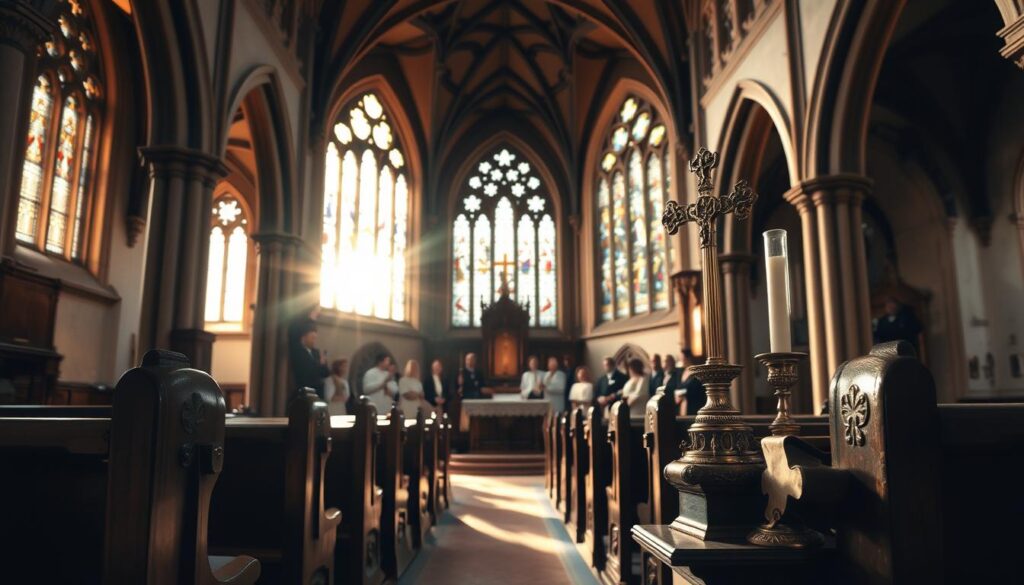
At the heart of Anglicanism lies a profound spirituality that is nurtured through various devotional practices. Anglican spirituality is characterized by a balance between liturgical worship and personal prayer, creating a rich tapestry of faith expression.
The Daily Office and Personal Prayer
The Daily Office, also known as the Liturgy of the Hours, is a cornerstone of Anglican devotional life. It involves praying at specific times of the day, using prayer books or digital resources. This practice helps individuals maintain a rhythm of prayer and reflection.
Personal prayer is also encouraged, with many Anglicans using devotional materials like prayer journals or guided meditations to deepen their spiritual lives.
Liturgical Seasons and Holy Days
Anglicans observe the liturgical calendar, which guides them through the life of Christ and the Christian year. Seasons like Advent, Lent, and Easter are marked with special services and observances.
“The Christian year is a journey through the story of salvation, with each season offering a unique perspective on the mystery of Christ.” –
Contemplative Traditions in Anglicanism
Anglicanism has a rich contemplative heritage, with practices such as meditation, contemplative prayer, and spiritual direction. These disciplines help believers cultivate a deeper inner life and connection with God.
| Spiritual Practice | Description |
|---|---|
| Daily Office | Praying at set times daily |
| Liturgical Seasons | Observing the Christian year |
| Contemplative Prayer | Deep, reflective prayer |
Anglican Identity: The Via Media
At the heart of Anglicanism lies the Via Media, a theological and liturgical approach that seeks to find a middle ground between Catholicism and Protestantism. This concept is fundamental to understanding the unique characteristics of Anglican identity.
The Middle Way Between Catholicism and Protestantism
The Via Media is not merely a compromise but a distinct theological and liturgical path. It incorporates elements from both Catholic and Protestant traditions, creating a balanced approach to Christian worship and doctrine. For instance, Anglican worship retains many Catholic liturgical practices while embracing Protestant principles of scripture and faith.
“The Anglican Church is not a denomination, but a method of being church.”
Diversity Within Unity: Anglican Comprehensiveness
Anglican comprehensiveness allows for a wide range of beliefs and practices within the Church, maintaining unity despite diversity. This is reflected in the varying interpretations of scripture, tradition, and reason across different Anglican communities worldwide.
| Aspect | Catholic Influence | Protestant Influence |
|---|---|---|
| Liturgy | Traditional rituals and sacraments | Simplified worship and scripture focus |
| Theology | Sacramental theology and episcopal governance | Justification by faith and scripture primacy |
The Via Media thus enables Anglicanism to navigate complex theological and liturgical issues, fostering a rich and diverse expression of Christian faith.
The Worldwide Anglican Communion
The worldwide Anglican Communion represents a diverse family of churches united in their Anglican tradition. This global fellowship is bound together by a shared history, theology, and liturgical practices.
Structure and Relationships Between Provinces
The Anglican Communion is composed of 40 autonomous provinces, each with its own governance structure. These provinces are connected through a network of relationships, fostering cooperation and mutual support. The provinces are diverse, ranging from the Church of England to churches in Africa, Asia, and the Americas.
The Lambeth Conference and Instruments of Communion
The Lambeth Conference, held every 10 years, is a significant gathering of Anglican bishops worldwide. It provides a forum for discussion, guidance, and decision-making. The conference is one of the Instruments of Communion, which also include the Anglican Consultative Council and the Primates’ Meeting. These instruments facilitate communication and unity among the provinces.
“The Anglican Communion is a worldwide family of churches that are in communion with the See of Canterbury.”
Contemporary Challenges to Anglican Unity
Despite its global unity, the Anglican Communion faces contemporary challenges, including theological disagreements and cultural differences. Issues such as human sexuality and women’s ordination have caused tension among the provinces. Addressing these challenges while maintaining unity is a pressing concern for the communion.
| Province | Region | Number of Members |
|---|---|---|
| Church of England | England | 25 million |
| The Episcopal Church | United States | 2 million |
| Anglican Church of Australia | Australia | 3 million |
The Episcopal Church: Anglicanism in the United States
With roots tracing back to the English Reformation, the Episcopal Church has evolved as a distinct entity within American Christianity. The church’s history in the United States is a story of adaptation and growth, from its colonial beginnings to its current status as a major Protestant denomination.
After the American Revolution
The American Revolution marked a significant turning point for the Episcopal Church. Following the war, the church had to establish its independence from the Church of England. This process involved the consecration of the first American bishop, Samuel Seabury, in 1784.
Distinctive Features
The Episcopal Church is known for its liturgical worship, rooted in the Book of Common Prayer. This tradition provides a sense of continuity with the worldwide Anglican Communion while allowing for diverse interpretations and practices within the church.
The Church Today
Today, the Episcopal Church continues to evolve, addressing contemporary social issues and engaging in ecumenical dialogue. Its commitment to inclusivity and social justice reflects the dynamic nature of American Anglicanism.
| Aspect | Description |
|---|---|
| Historical Roots | Tied to the English Reformation and colonial America |
| Liturgical Tradition | Based on the Book of Common Prayer |
| Current Focus | Social justice, inclusivity, and ecumenical dialogue |
Anglicanism Compared to Other Christian Denominations
As a distinct Christian denomination, Anglicanism shares both similarities and differences with other major Christian traditions. This comparison is particularly insightful when examining Anglicanism’s relationship with Roman Catholicism and Protestantism.
Anglican and Roman Catholic Similarities and Differences
Anglicanism and Roman Catholicism share a common heritage, with similarities in liturgical practices and sacramental theology. However, significant differences exist, particularly regarding papal authority and certain doctrines like the Immaculate Conception. Key differences include:
- The role of the Pope: Anglicans do not recognize papal authority.
- Clerical celacy: Anglican clergy are allowed to marry.
- Certain sacraments: Anglicans recognize two major sacraments, whereas Catholics recognize seven.
Anglican and Protestant Traditions
Anglicanism also shares commonalities with Protestant traditions, particularly in its rejection of certain Catholic doctrines and its emphasis on Scripture. However, Anglicanism retains a more formal liturgical structure, distinguishing it from many Protestant denominations. Notable similarities include:
- Emphasis on vernacular languages in worship.
- Rejection of certain Catholic traditions not supported by Scripture.
Unique Aspects of Anglican Practice and Belief
Anglicanism’s unique blend of Catholic and Protestant elements, often described as the “Via Media” or middle path, sets it apart. This is evident in its liturgical practices, sacramental theology, and ecclesiastical structure, which balance tradition with Protestant principles. The result is a diverse and inclusive communion that encompasses a wide range of beliefs and practices.
Anglican Perspectives on Contemporary Social Issues
The Anglican Church is at the forefront of addressing social issues that impact communities globally. As a communion with a presence in over 165 countries, Anglicans are engaged in a wide range of discussions and actions on contemporary social challenges.
Approaches to Gender, Sexuality, and Marriage
The Anglican Communion has been actively discussing and debating issues related to gender, sexuality, and marriage. While there is diversity in opinion across the global communion, there is a shared commitment to exploring these complex issues through prayer, dialogue, and study. Some provinces have taken progressive stances on same-sex marriage and the inclusion of LGBTQ+ individuals in church life, while others maintain traditional views.
“The church is called to be a community of love, compassion, and justice, embracing diversity while seeking unity in the Spirit.”
Environmental Stewardship and Social Justice
Anglicans are also deeply involved in environmental stewardship and social justice. The Episcopal Church in the United States, for example, has been a leader in advocating for climate action and environmental care, reflecting a broader Anglican commitment to caring for creation. This is coupled with efforts to address social injustices, including economic inequality and racial justice.
| Issue | Anglican Response |
|---|---|
| Climate Change | Advocacy for climate action and reduction of carbon footprint |
| Social Justice | Efforts to address economic inequality and racial justice |
| Human Rights | Support for human rights, including LGBTQ+ rights |
Ecumenism and Interfaith Dialogue
Furthermore, the Anglican Communion is committed to ecumenism and interfaith dialogue. Anglicans engage in conversations with other Christian denominations and faith communities to promote understanding and cooperation. This includes dialogue on theological issues, joint community service projects, and collaborative advocacy on social issues.
By engaging with contemporary social issues, the Anglican Communion seeks to live out its faith in a way that is relevant, compassionate, and just.
Conclusion: Exploring Anglican Faith Today
The Anglican faith is a rich and diverse tradition that continues to evolve in the modern world. As we have explored, Anglicanism has its roots in the English Reformation and has since spread globally, embracing various cultures and contexts.
Contemporary Anglicanism is characterized by its commitment to scripture, tradition, and reason, as well as its sacramental life and liturgical worship. The Anglican Communion, with its diverse provinces and dioceses, strives for unity amidst diversity, navigating complex social issues and ecumenical dialogue.
As the global Anglican community continues to grapple with contemporary challenges, its faith remains a vibrant and dynamic force, shaping the lives of millions worldwide. By understanding the Anglican faith and its practices, we can better appreciate the significant role it plays in the lives of its adherents and its contribution to the broader Christian tradition.
FAQ
What is Anglicanism?
Anglicanism is a Christian denomination that values tradition, scripture, and reason, originating from the English Reformation.
What is the significance of the Book of Common Prayer in Anglican worship?
The Book of Common Prayer is a central element of Anglican worship, providing a common liturgical framework for prayer and sacraments.
What are the core theological beliefs of Anglicans?
Anglicans believe in the three-legged stool of scripture, tradition, and reason, as well as the importance of the Nicene and Apostles’ Creeds and the 39 Articles of Religion.
What is the Via Media, or the middle way, in Anglicanism?
The Via Media refers to Anglicanism’s balance between Catholic and Protestant elements, maintaining diversity within unity.
What is the structure and governance of the Anglican Church?
The Anglican Church is governed by episcopal leadership, with the Archbishop of Canterbury playing a key role, as well as synodical governance and lay participation.
How does Anglicanism approach contemporary social issues?
Anglicans approach issues like gender, sexuality, environmental stewardship, and ecumenism through a lens of scripture, tradition, and reason, seeking to balance compassion and doctrine.
What is the relationship between the Anglican Communion and the Episcopal Church?
The Episcopal Church is a province within the worldwide Anglican Communion, sharing a common heritage and theology while maintaining some distinctives.
How does Anglicanism compare to other Christian denominations?
Anglicanism shares similarities with Roman Catholicism and Protestant traditions, while maintaining unique aspects of practice and belief, such as the importance of the Book of Common Prayer.
What is the significance of sacraments in Anglican theology?
Anglicans recognize two major sacraments, baptism and Eucharist, as well as five minor sacramental rites, which are seen as means of grace and spiritual nourishment.
What is the role of the Archbishop of Canterbury in the Anglican Communion?
The Archbishop of Canterbury serves as a symbol of unity and a leader in the Anglican Communion, facilitating communication and cooperation among provinces.
How does Anglicanism approach ecumenism and interfaith dialogue?
Anglicans engage in ecumenical dialogue with other Christian denominations and interfaith dialogue with other religious traditions, seeking to build understanding and cooperation.