Welcome to a journey through one of Christianity’s most vibrant traditions. With roots stretching back to the 17th century, this faith community emphasizes direct personal relationships with God and a commitment to Scripture as the ultimate guide. Today, over 42 million adherents worldwide uphold these principles, blending historical depth with modern relevance.
This guide unpacks core teachings that shape congregations globally. You’ll discover how biblical authority influences worship styles, decision-making, and daily life. Central practices like immersion baptism and communion reflect deep spiritual symbolism, uniting believers across cultures.
Local congregations operate independently, a hallmark of this tradition. This autonomy allows communities to address unique needs while maintaining shared doctrines. From small rural assemblies to urban megachurches, this flexibility fosters both unity and diversity.
Historical milestones also play a key role. Early advocates championed religious freedom and individual conscience—values still celebrated today. Their legacy lives on in ministries prioritizing evangelism, education, and social justice.
Key Takeaways
- Global community of over 42 million, rooted in 400 years of history
- Bible-centered approach guides worship and decision-making
- Immersion baptism symbolizes spiritual rebirth and commitment
- Self-governing congregations adapt to local needs and cultures
- Pioneered religious freedom principles still relevant today
- Personal faith experience valued alongside collective traditions
- Diverse expressions within shared foundational doctrines
Understanding the Foundations of Baptist Faith
At the heart of this faith tradition lies a commitment to scriptural authority shaping every practice. Early leaders declared, “The Scriptures are the only sufficient rule for faith and conduct,” as seen in the 1689 Second London Confession. This principle remains central, guiding how communities interpret spiritual matters and organize their life together.
Biblical Authority as the Cornerstone
Every teaching and tradition flows from Scripture’s unchanging truth. Members affirm this through personal Bible study and congregational decisions rooted in biblical principles. Key events like Christ’s death and resurrection form the bedrock of teachings about salvation and eternal life.
Historical Roots and Early Developments
Emerging in 17th-century England, early groups like the General Baptists championed religious freedom against state-controlled churches. Their emphasis on adult baptism and local church governance spread globally, adapting to diverse cultures while maintaining core doctrines.
| Period | Key Development | Impact |
|---|---|---|
| 1609 | First Baptist congregation forms in Amsterdam | Established believer’s baptism |
| 1644 | Publication of First London Confession | Defined core doctrines |
| 1792 | Formation of Baptist Missionary Society | Expanded global outreach |
| 1905 | World Baptist Alliance founded | United 127 countries |
Today, over 42 million adherents worldwide maintain these historic convictions. Local churches continue exercising autonomy while cooperating through missions and humanitarian efforts, proving ancient principles remain vital in modern contexts.
Exploring what baptist beliefs in Local Church Autonomy and Congregational Governance
In communities across America, self-governance shapes how faith takes root. This distinctive approach lets each congregation reflect its members’ values while maintaining unity through shared spiritual foundations. Over 85% of Baptist churches report making decisions through member-led votes, from budget approvals to outreach initiatives.
The Significance of the Local Church
Every assembly operates as its own spiritual family. Members gather to choose leaders, plan ministries, and interpret Scripture collectively. This structure mirrors early Christian communities described in the New Testament, where believers actively shaped their worship and service.
Principles of Autonomy and Community Engagement
While independent, churches frequently partner for larger missions. Many participate in:
- Disaster relief networks spanning 50 states
- Youth camps supported by regional associations
- Translation projects for global Scripture access
This balance allows creative solutions to local needs. A rural congregation might host farm-to-table meals for neighbors, while an urban church develops job-training programs. Both honor Jesus Christ through context-sensitive practice.
Cultural diversity flourishes under this model. Haitian congregations in Miami incorporate Caribbean music into services, while Korean churches in Los Angeles blend traditional hymns with local artistry. Yet all affirm core teachings about salvation and discipleship.
Core Practices in Baptist Worship and Ordinances
Distinctive worship practices shape spiritual identity within many faith communities. For over 300 years, immersion baptism and communion have served as visible expressions of commitment and unity. These acts aren’t mere rituals but profound declarations of faith rooted in New Testament teachings.
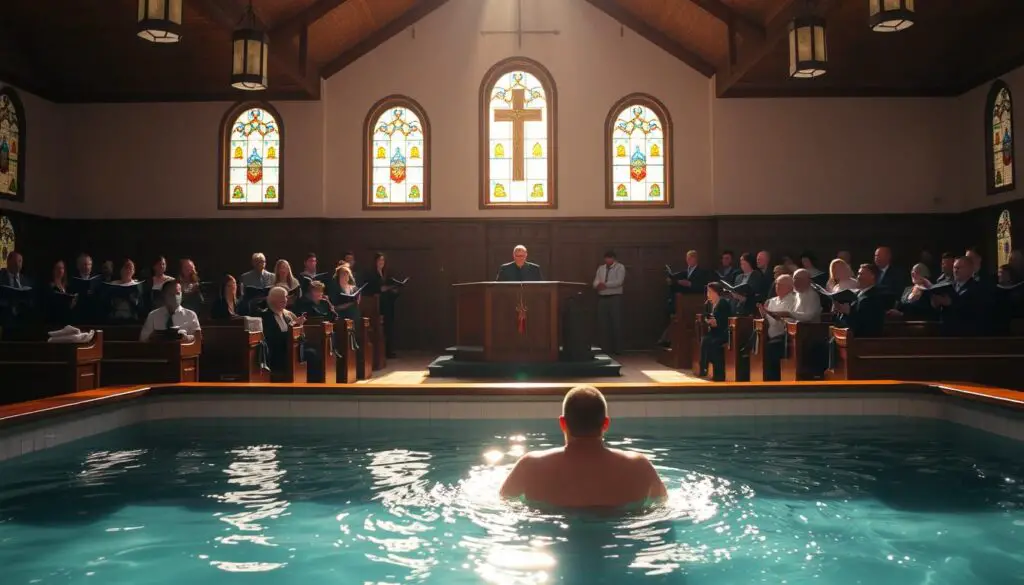
Baptism by Immersion: Symbolism and Practice
Full immersion baptism mirrors Jesus’ own example in the Jordan River. Over 75% of American congregations practice this method, seeing it as a public declaration of spiritual rebirth. The act symbolizes burial of old habits and rising to new relationship with God—a physical echo of Romans 6:4’s teaching on dying to sin.
Water’s complete covering represents cleansing from past struggles. This practice underscores liberty of conscience, as individuals choose baptism after personal faith decisions rather than infant ceremonies.
The Lord’s Supper: Remembrance and Fellowship
Communion services unite members through shared bread and cup. Unlike some traditions, Baptists view this meal as symbolic—a memorial of Christ’s sacrifice rather than literal transformation. Most congregations observe it monthly, fostering reflection on spiritual relationship with God and others.
Historical records show early Baptists risked persecution to practice communion freely. Today, this ordinance reinforces separation of church and state by focusing on voluntary participation rather than institutional mandates.
| Practice | Symbolic Meaning | Frequency |
|---|---|---|
| Immersion Baptism | Spiritual rebirth & commitment | Once per believer |
| Lord’s Supper | Christ’s sacrifice & unity | Monthly/Quarterly |
| Scripture Reading | Divine guidance | Every service |
Both ordinances highlight liberty in worship while nurturing communal bonds. They allow diverse congregations to express shared convictions through culturally relevant yet doctrinally consistent methods.
Baptist History and Theological Evolution
Dynamic theological shifts have reshaped this Christian tradition over four centuries. Early Particular Baptists leaned heavily on Calvinist doctrines, emphasizing predestination. By the 1800s, evangelical fervor softened these views, creating space for broader participation in faith communities.
From Early Traditions to Modern Movements
The 1742 Philadelphia Confession highlighted strict Calvinist principles. But frontier revivals and social reforms sparked change. Southern Baptists emerged as key players, blending evangelism with cultural engagement. Their growth mirrored America’s expansion—from 4,000 churches in 1845 to 47,000 today.
Modern congregations balance historic roots with fresh approaches. The holy spirit now guides many in reimagining faith practice, from contemporary worship music to digital outreach. This evolution reflects adaptability while honoring core commitments like religious liberty.
Influence of Evangelism and Missionary Work
Mission boards transformed global outreach. Consider these milestones:
| Year | Initiative | Impact |
|---|---|---|
| 1814 | First U.S. mission society | 12 states reached |
| 1900 | Lottie Moon offering | $3.8M annual support |
| 2023 | Global hunger relief | 14M meals served |
The lord supper evolved too—once quarterly, now often monthly. This shift underscores communal bonds and priesthood believers concepts. Churches collaborate as one another partners, funding disaster relief and literacy programs worldwide.
Southern Baptists championed religious liberty debates, defending church state separation. Their voice remains vital in discussions about faith’s public role. Through change, the holy spirit continues inspiring new expressions of ancient truths.
Religious Liberty, Evangelism, and Social Impact
Freedom of conscience stands as a cornerstone for communities valuing both spiritual depth and societal transformation. This commitment to individual relationship with God fuels active engagement in public matters, blending faith with practical action.
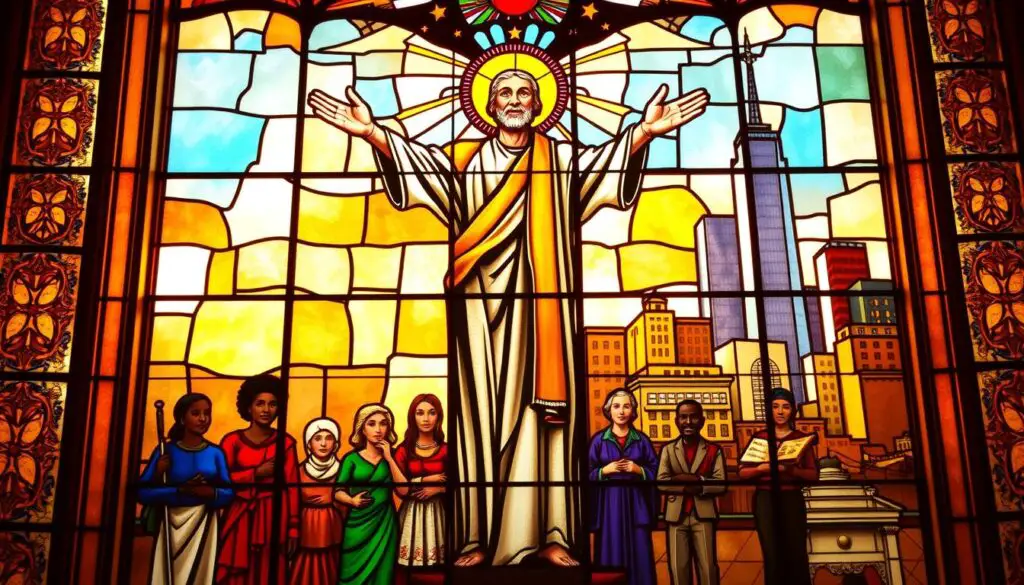
Advocating Separation of Church and State
Early American leaders like Roger Williams—a minister exiled for his views—fought to prevent government interference in worship. Their efforts shaped the First Amendment, ensuring no group could impose religious practices on others. Modern congregations continue this legacy by defending rights for all faiths.
One pastor summarized this principle: “True faith thrives when chosen freely, not forced by power.” Today, over 60% of churches participate in interfaith alliances protecting religious expression in schools and workplaces.
Baptist Contributions to Social Justice
From civil rights marches to hunger relief programs, collective action defines this tradition. Martin Luther King Jr., raised in a Baptist home, exemplified how evangelism and justice work intertwine. His leadership showed that spreading hope requires addressing systemic inequality.
Contemporary initiatives include:
- Coalitions providing 2 million meals monthly through food banks
- Legal aid clinics serving immigrant communities
- Scholarship funds breaking cycles of poverty
Membership in these efforts often starts locally. A single person might organize a neighborhood clean-up, while regional groups tackle housing reforms. Together, they prove faith without works remains incomplete—a living testament to shared values.
Conclusion
Centuries of faith have shaped a tradition where personal conviction meets collective purpose. Through evolving practices and steadfast principles, communities continue thriving by anchoring their salvation in Christ while honoring Scripture’s timeless wisdom.
Core teachings endure across generations. Biblical authority guides worship styles and ethical choices. Self-governing congregations address local needs without compromising shared truths. Immersion baptism and communion remain powerful symbols of spiritual rebirth and unity.
Historical roots reveal remarkable adaptability. From 17th-century pioneers of religious liberty to modern social justice initiatives, this religion balances heritage with innovation. The priesthood of believers concept empowers individuals to live out faith actively—whether leading ministries or serving neighbors.
Today’s expressions honor this legacy through diverse cultural adaptations. Urban food banks and global mission partnerships demonstrate how ancient values meet contemporary challenges. Such resilience proves traditions grounded in salvation and Scripture remain vital through every century.
We invite you to explore how these enduring principles might inspire your spiritual journey. Their blend of personal freedom and communal strength offers fresh perspectives for modern seekers of truth.
FAQ
How does biblical authority shape Baptist practices?
Scripture serves as the ultimate guide for faith and practice. Congregations and individuals rely on its teachings to make decisions, nurture personal relationships with God, and uphold traditions like baptism and communion.
What role does the local church play in governance?
Each congregation operates autonomously, making decisions through member participation. This self-governance fosters community engagement while maintaining unity in core principles like evangelism and discipleship.
Why is baptism by immersion significant?
Immersion symbolizes the believer’s identification with Jesus’ death, burial, and resurrection. It reflects obedience to New Testament teachings and publicly declares faith in Christ’s redemptive work.
How do Baptists view the Lord’s Supper?
The Lord’s Supper is a symbolic act of remembrance, celebrating Christ’s sacrifice and fostering fellowship among members. It’s practiced periodically, emphasizing spiritual reflection over ritual.
What historical events influenced Baptist theology?
Early roots trace back to 17th-century reformers advocating religious liberty. Movements like the Great Awakening emphasized revivalism, while modern missions expanded their global impact through evangelism.
How do Baptists advocate for religious freedom?
They champion the separation of church and state, ensuring individuals can worship freely. This commitment stems from historical struggles against state-controlled religion and a focus on personal conscience.
What is the priesthood of all believers?
This doctrine teaches that every Christian has direct access to God through Christ, eliminating the need for human intermediaries. It encourages personal accountability and active participation in ministry.
How do congregations approach social justice?
Many prioritize acts of service, such as feeding the hungry or advocating for equality, guided by Scripture’s call to love others. These efforts reflect faith in action rather than political alignment.