Understanding the foundations of Baptist traditions offers insight into one of America’s most influential Christian movements. Rooted in scriptural authority and a commitment to personal faith, these communities prioritize individual conscience and collective worship. This guide explores their core principles, historical shifts, and enduring values – all while keeping the tone approachable for newcomers and curious readers alike.
At the heart of Baptist practice lies believer’s baptism, a symbolic act reserved for those who consciously embrace their faith. Unlike infant baptism traditions, this ritual reflects a personal choice tied to spiritual maturity. Historical records, including the STORRE report, show how early Baptists broke from state-controlled religion to champion religious freedom – a legacy still evident today.
Local congregations operate independently, making decisions without centralized oversight. This self-governance model fosters adaptability while maintaining unity through shared doctrines. Over centuries, theological perspectives evolved, with many groups shifting from strict Calvinist roots toward broader evangelical outreach.
Key Takeaways
- Baptist traditions emphasize personal faith decisions and adult baptism
- Independent local churches govern themselves without hierarchical structures
- Religious freedom and scripture-based teachings form core values
- Historical evolution includes shifts toward evangelical practices
- Community-focused worship remains central to Baptist identity
The Historical Roots of Baptist Beliefs
The story of Baptist origins reads like a spiritual revolution. Emerging in 17th-century Europe, early groups championed radical ideas like separation of church from state control. Their journey began with Calvinist teachings about predestination but soon took unexpected turns.
Calvinist Influences and the Evangelical Shift
Foundational Baptist doctrines initially mirrored Calvinist views on divine sovereignty. Leaders like John Smyth argued that scriptural authority mattered more than tradition. By the 1730s, revival movements reshaped priorities. Preachers emphasized personal conversion over rigid theology, sparking growth across America.
Key Milestones in Baptist History
Four pivotal events defined the movement’s path:
| Year | Event | Impact |
|---|---|---|
| 1609 | First Baptist church in Amsterdam | Established believer’s baptism |
| 1639 | Roger Williams founds Rhode Island colony | Pioneered religious freedom laws |
| 1740s | Great Awakening revivals | Shift to experiential faith |
| 1845 | Southern Baptist Convention forms | Expanded regional influence |
Immersion baptism became central during this evolution. Unlike sprinkling rituals, full-body immersion symbolized rebirth. Churches also adopted congregational governance, letting local members decide matters collectively. This blend of tradition and adaptability kept communities thriving through cultural shifts.
What Baptist Believe: Core Doctrines and Practices
At the heart of these communities lies a deep commitment to foundational principles guiding both belief and daily life. Central to their identity is the conviction that scriptural authority shapes every aspect of faith. Members view the Bible not just as ancient text but as a living guide for modern challenges.
Guiding Principles in Action
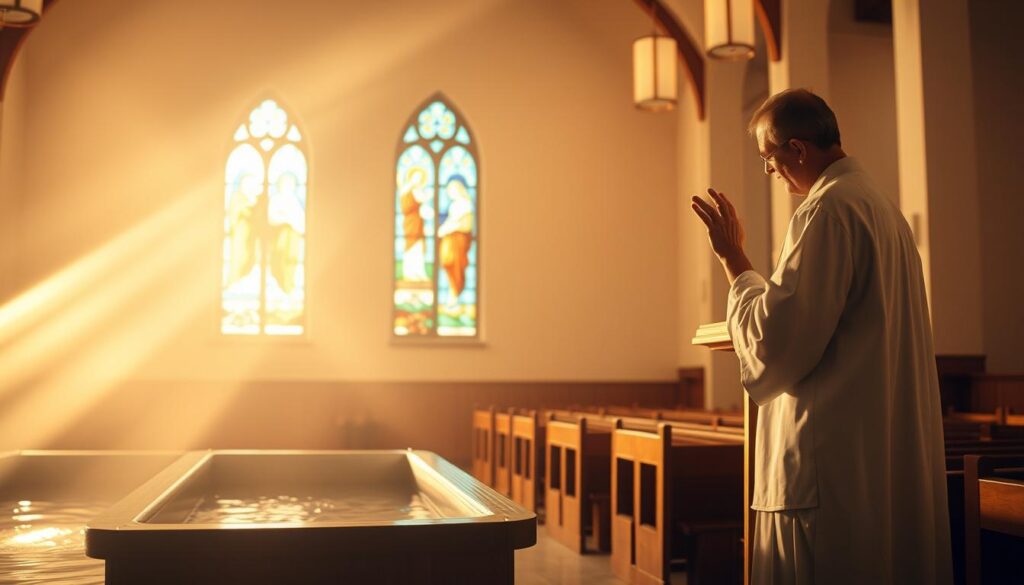
Full-immersion baptism stands as a powerful symbol of spiritual rebirth. Unlike other traditions, this practice is reserved for individuals old enough to consciously embrace their faith. Water immersion mirrors the death and resurrection of Jesus, creating a vivid expression of personal commitment.
Congregational autonomy ensures each church operates independently. Local members make decisions about leadership, budgets, and outreach without external interference. This structure fosters adaptability while preserving unity through shared values.
| Core Principle | Practical Expression | Community Impact |
|---|---|---|
| Scriptural Authority | Bible-based sermons and teachings | Creates doctrinal consistency |
| Believer’s Baptism | Immersion ceremonies for adults | Strengthens personal faith journeys |
| Local Governance | Member-led decision making | Encourages grassroots leadership |
| Worship Liberty | Flexible service formats | Allows cultural adaptation |
Worship services blend structure with spontaneity. Hymns and prayers often flow alongside contemporary music, reflecting both tradition and innovation. This balance between reverence and relevance helps congregations connect across generations.
The emphasis on religious liberty extends beyond church walls. Many advocate for conscience rights in public life, continuing their historical role as champions of faith freedom. These practices continue shaping communities worldwide, maintaining relevance in an ever-changing world.
Formation and Importance of the Local Church
Local congregations form the backbone of Baptist communities, serving as hubs for spiritual growth and collective action. These groups operate like extended families, where members collaborate on worship, outreach, and mutual support. Their structure reflects a centuries-old conviction: churches thrive when empowered to interpret scripture and address local needs.
Autonomy and Congregational Governance
Every congregation governs itself through member-led decisions. Leaders seek guidance through prayer and biblical study rather than external mandates. This approach honors the belief that the Holy Spirit works directly within each community.
Key aspects of self-rule include:
- Voting on pastoral appointments and budgets
- Shaping outreach programs for neighborhood needs
- Interpreting scripture without denominational pressure
This independence extends to theological matters. Churches may adopt different stances on social issues while maintaining core doctrines like the Lord’s Supper as a memorial of Jesus Christ. Such flexibility allows adaptation to cultural shifts without compromising foundational truths.
Historically, this model supported the separation of church and state. Early congregations resisted government interference, paving the way for modern religious liberty protections. Today, this legacy empowers communities to address contemporary challenges while preserving their distinct identity.
Baptism, Communion, and Worship Practices
Two sacred rituals anchor spiritual life for many congregations: immersion baptism and the Lord’s Supper. These practices aren’t mere traditions—they’re vivid expressions of faith that unite communities through shared symbolism.
The Significance of Immersion Baptism
Full-body immersion mirrors Jesus’ burial and resurrection. Participants step into water as a public declaration of leaving old ways behind. This faith practice requires conscious choice, distinguishing it from infant baptism common in other denominations.
Early leaders saw this ritual as essential to the priesthood of all believers. Every member, not just clergy, could testify through baptism. This empowered individuals while strengthening bonds among one another.
| Practice | Symbolic Meaning | Community Role |
|---|---|---|
| Immersion Baptism | Death to sin, rebirth in Christ | Public affirmation of faith |
| Lord’s Supper | Remembrance of sacrifice | Collective spiritual reflection |
| Scripture Reading | Guidance for daily living | Shared learning and growth |
The Lord’s Supper: Symbolism and Practice
Communion services focus on remembrance rather than mystical change. Bread and juice represent Christ’s body and blood, prompting deep reflection on sacrifice. Many churches hold this faith practice monthly, creating regular moments for spiritual renewal.
During these gatherings, members often pray for one another, embodying the priesthood of believers concept. This mutual support system traces back to the baptist movement’s early days, where communal care was vital for survival.
Both rituals connect modern worshipers to baptist history. They serve as living links to centuries of believers who prioritized personal conviction over institutional mandates. Through these acts, communities continually renew their commitment to walking with one another in faith.
The Role of Autonomy and Separation of Church and State
Independence from external control defines both the structure and spirit of many faith communities. For centuries, this principle has shaped how groups organize worship, interpret scripture, and engage with society. At its core lies a conviction: spiritual matters belong to the people, not governments.

Defending Religious Liberty in Practice
Local congregations have long operated as self-directed entities. Early advocates like Roger Williams—founder of Rhode Island—argued that state interference corrupted true faith. His 17th-century writings echoed New Testament teachings, insisting churches thrive when free from political agendas.
This commitment sparked landmark moments. In 1802, Baptist leaders penned the Danbury Letter, urging Thomas Jefferson to uphold a “wall of separation.” Their efforts later influenced First Amendment protections, ensuring religious liberty for all Americans.
Modern communities continue this legacy. Each local congregation votes on leadership, budgets, and outreach—decisions rooted in collective prayer rather than top-down mandates. As one 19th-century minister noted, “A church tied to earthly powers becomes deaf to heavenly callings.”
Belief in personal salvation reinforces this autonomy. Since spiritual accountability rests with individuals, structures exist to support—not dictate—faith journeys. This balance between personal conviction and communal strength remains vital across generations.
Challenges and Growth in Baptist History
Navigating today’s rapidly changing world presents both obstacles and opportunities for faith communities. Congregations balance tradition with innovation as they address shifting cultural norms and evolving member expectations.
Membership trends reveal a mixed picture. While some groups report steady growth through youth programs and digital outreach, others face declines tied to generational divides. One pastor notes, “Our doors stay open, but we’re rethinking how to fill the pews—and hearts.”
Modern Developments and Future Directions
Leadership structures now blend seasoned ministers with tech-savvy teams. Many congregations adopt multi-campus models or streaming services to reach broader audiences. These changes reflect the movement’s historic adaptability while honoring core values like local autonomy.
Cultural debates around social justice and politics test traditional stances. Some churches host community dialogues, while others prioritize unity through shared worship. This tension between engagement and separation echoes the movement’s founding principles of religious liberty.
Future growth may hinge on interdenominational partnerships and creative evangelism. Emerging strategies include:
- Collaborative mission trips with diverse faith groups
- Workshops addressing mental health and family dynamics
- Hybrid worship formats merging in-person and online participation
As time reshapes societal norms, these communities continue proving their resilience. By holding fast to scriptural foundations while embracing fresh methods, they chart a course for meaningful impact in modern times.
Conclusion
Throughout centuries, communities grounded in scripture and autonomy have shaped a distinctive spiritual identity. Their journey—from early resistance to state-controlled religion to modern-day life-centered worship—reflects both steadfast principles and adaptive growth. Core practices like immersion baptism and congregational governance remain pillars, uniting members through shared purpose.
Historical challenges tested these traditions, yet each era sparked renewal. Today, local congregations thrive by balancing ancient rituals with contemporary needs. Every member contributes to this living legacy, fostering connections that transcend generations.
The symbolism of death and rebirth in baptism echoes beyond individual faith. It represents collective hope—a reminder that spiritual resilience outlasts cultural shifts. Communities continue evolving while holding fast to sacred roots.
Curious about this enduring legacy? Engage with local churches to experience firsthand how tradition and innovation coexist. Their story, written by countless hands, invites all to explore its depth and relevance in modern life.
FAQ
How do Calvinist teachings shape Baptist theology?
Early Baptists drew from Calvinist ideas like predestination but later emphasized free will and personal conversion. This blend created a focus on individual faith and evangelism, distinct from strict Calvinism.
Why is immersion baptism central to Baptist practice?
Immersion symbolizes spiritual rebirth and aligns with New Testament examples. It reflects a conscious choice to follow Christ, reserved for those old enough to profess their faith.
What makes congregational governance unique in Baptist churches?
Each congregation operates independently, choosing leaders and managing affairs without external control. This autonomy reflects trust in local communities to interpret Scripture and make decisions collectively.
How do Baptists view the separation of church and state?
They strongly advocate for religious liberty, opposing government interference in spiritual matters. This principle protects freedom of conscience and prevents state-imposed doctrines.
What role does the Lord’s Supper play in worship services?
It serves as a symbolic remembrance of Christ’s sacrifice, not a sacramental ritual. Participants reflect on redemption and unity, often sharing bread and juice during gatherings.
How have modern challenges influenced Baptist growth?
Issues like cultural shifts and doctrinal debates have spurred adaptations in outreach and teaching methods. Many congregations now blend traditional values with contemporary approaches to engage new generations.
Why is Scripture considered the ultimate authority?
Baptists prioritize the Bible over tradition or hierarchy, believing it guides faith and practice. This commitment fosters diverse interpretations while maintaining core teachings like salvation through Christ.