The Episcopalian faith is rooted in the teachings of Jesus Christ, whose life, death, and resurrection are believed to have saved the world. At its core, Episcopalian beliefs emphasize that God loves you – no exceptions.
As a community, Episcopalians follow the path of Jesus, guided by the principles of love, compassion, and forgiveness. The Episcopal Church is known for its inclusive and welcoming nature, embracing diversity and promoting social justice.
Key Takeaways
- Episcopalians believe in the teachings of Jesus Christ.
- The Episcopal Church emphasizes God’s love for everyone.
- Core beliefs include love, compassion, and forgiveness.
- The community is known for its inclusivity and social justice.
- Episcopalian faith is guided by the principles of Christianity.
Understanding the Episcopal Church
With roots in the Anglican Communion, the Episcopal Church has evolved significantly since its establishment in 1789. The Episcopal Church is a Protestant denomination that was formed after the American Revolution, breaking away from the Church of England. This historical context is crucial in understanding the church’s beliefs and practices today.
Historical Background of the Episcopal Church
The Episcopal Church was officially established in 1789, following the American Revolution, which led to the separation of the church from the Church of England. This separation was not just geographical but also theological, as the Episcopal Church sought to create its own identity within the Anglican Communion. The church’s history is marked by its attempt to balance tradition with the needs of a new nation.
Key historical events include:
- The consecration of Samuel Seabury as the first American bishop in 1784.
- The adoption of the Book of Common Prayer, which has been a cornerstone of Episcopal worship.
- The church’s growth and development throughout the 19th and 20th centuries, including its stance on various social issues.
Role of Tradition in Episcopalian Beliefs
Tradition plays a significant role in Episcopalian beliefs, as it connects the church to its historical roots and the broader Anglican Communion. The Episcopal Church seeks a “middle way” between Catholicism and Protestantism, balancing scripture, reason, and tradition. This balance is reflected in its liturgical practices and theological stance.
The role of tradition is evident in:
- The use of the Book of Common Prayer in worship services.
- The sacraments and other liturgical practices that are rooted in tradition.
- The Episcopal Church’s commitment to preserving the apostolic succession.
This blend of tradition and innovation allows the Episcopal Church to maintain its unique identity within the Christian community.
Core Tenets of Episcopalian Faith
At the heart of Episcopalian beliefs lies a harmonious blend of scripture, tradition, and reason. This balance is what shapes the Episcopalian faith and its practices. The Episcopal Church emphasizes a comprehensive approach to understanding God’s will, incorporating various elements to foster a deeper connection with the divine.
Importance of Scripture
Scripture plays a pivotal role in Episcopalian beliefs. The Book of Common Prayer, a central text in the Episcopal Church, is heavily influenced by the Bible. Approximately 70% of the Book of Common Prayer comes directly from biblical sources, highlighting the church’s strong foundation in scripture.
The Role of Reason and Experience
In addition to scripture, reason and experience are vital components of Episcopalian faith. Episcopalians are encouraged to use their reason to understand and interpret religious teachings. Experience, including personal spiritual experiences and the collective experiences of the community, also plays a significant role in shaping beliefs and practices.
This balanced approach allows Episcopalians to engage with their faith in a meaningful and thoughtful manner, embracing both the traditional and the contemporary aspects of their religion.
The Sacraments in Episcopalian Worship
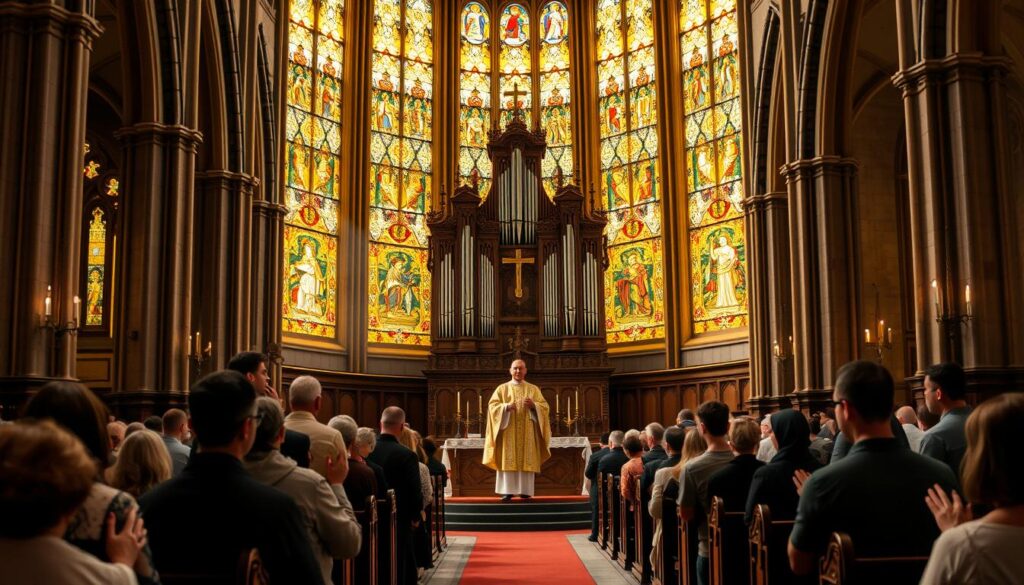
The sacraments, particularly Baptism and the Eucharist, are central to the worship practices of the Episcopal Church. In Episcopalian beliefs, sacraments are considered outward and visible signs of inward and spiritual grace, as stated in the Book of Common Prayer. This understanding underscores the significance of these rituals in the spiritual lives of Episcopalians.
Baptism: Significance and Practices
Baptism is a pivotal sacrament in the Episcopal Church, symbolizing initiation into the Christian community. Through Baptism, individuals are welcomed into the body of Christ, marking the beginning of their Christian journey. The Episcopal Church practices Baptism by sprinkling or immersion, with the Trinitarian formula being a crucial element of the ritual.
The significance of Baptism lies in its representation of spiritual rebirth and the commitment to follow Christ. It is a sacrament that is typically performed once in a person’s lifetime, although the Episcopal Church recognizes Baptisms performed in other Christian traditions, provided they are done with water and in the name of the Trinity.
The Eucharist (Holy Communion): Beliefs and Rituals
The Eucharist, also known as Holy Communion, is another cornerstone of Episcopalian worship. Episcopalians believe that during the Eucharist, Christ is present in the bread and wine, although the nature of this presence is understood in a sacramental rather than a literal sense. The Eucharistic liturgy involves the consecration of bread and wine, which are then consumed by the congregation.
“The Eucharist is the principal act of worship in the Episcopal Church, where the community gathers to give thanks, to remember Christ’s sacrifice, and to be nourished by his presence.”
The Eucharist is seen as a means of grace, where participants receive spiritual nourishment and are reminded of their covenant with God. The ritual is rich in symbolism, drawing on biblical narratives and the traditions of the early Christian church.
The Nature of God in Episcopalian Beliefs
Episcopalians embrace a rich theological perspective on the nature of God. This perspective is deeply rooted in the concept of the Holy Trinity, which is central to their faith and worship practices.
The Holy Trinity: Father, Son, and Holy Spirit
The Episcopalian understanding of God is based on the doctrine of the Trinity, which describes God as three persons: Father, Son, and Holy Spirit. This doctrine is fundamental to Episcopalian beliefs and is reflected in their liturgy and daily life.
“We believe in one God, the Father, the Almighty, maker of heaven and earth; …and in one Lord Jesus Christ, …and in the Holy Spirit.” This affirmation, often recited during worship services, encapsulates the Episcopalian belief in the Trinity.
The concept of the Trinity is not just a theological abstraction but a living reality that guides Episcopalians’ understanding of their relationship with God. It emphasizes the loving, liberating, and life-giving nature of God, as highlighted in Episcopalian teachings.
Episcopalians believe that God is actively involved in the world, working through the Holy Spirit to bring about justice, peace, and love. This belief is reflected in their commitment to social justice and community service.
The Episcopalian faith is characterized by a deep reverence for the sacraments and a commitment to living out their beliefs in daily life. By understanding God as Trinity, Episcopalians are called to embody the love and grace of God in their interactions with others.
Episcopal Governance and Leadership
At the heart of the Episcopal Church’s functioning is its well-defined governance and leadership framework. This structure is designed to facilitate teamwork and spiritual guidance across its dioceses nationwide.
Structure of Church Governance
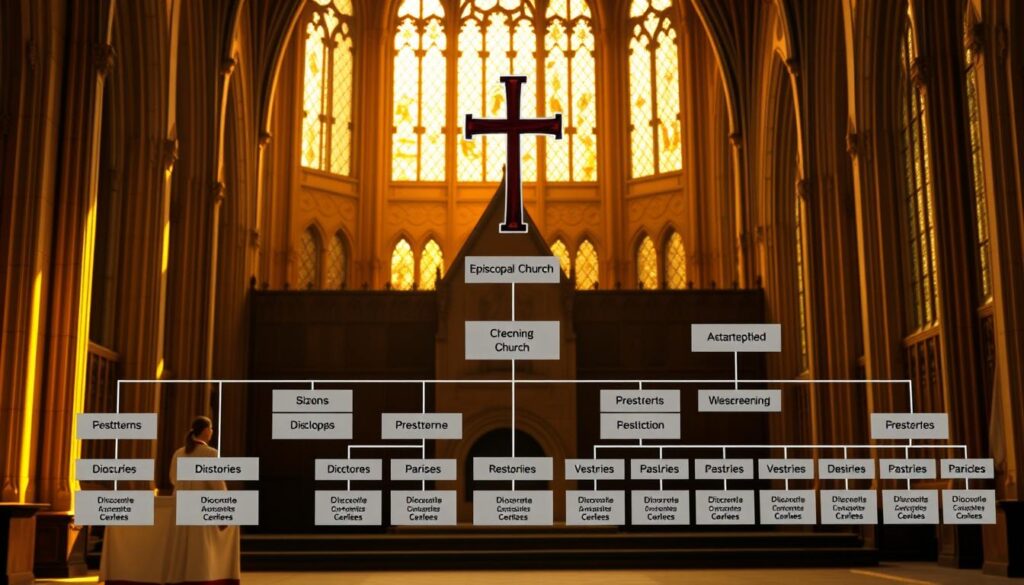
The Episcopal Church operates under a clear episcopal hierarchy. This hierarchy is fundamental to its operation, ensuring that decision-making is both efficient and spiritually grounded. The governance structure includes various levels, starting from the local parish, moving up to the diocese, and finally to the General Convention, which is the church’s national legislative body.
Key Components of Governance:
- The local parish, where community and worship come together.
- The diocese, which oversees multiple parishes and is led by a bishop.
- The General Convention, which meets every three years to make significant decisions for the church.
Role of Bishops in the Community
Bishops play a pivotal role in the Episcopal Church, serving as spiritual leaders and guides. They are responsible for overseeing the dioceses, providing spiritual direction, and ensuring that the church’s doctrine is upheld.
The Role of Bishops:
| Responsibility | Description |
|---|---|
| Spiritual Leadership | Providing guidance and support to clergy and laity. |
| Oversight of Dioceses | Managing the administrative and spiritual aspects of the diocese. |
| Doctrine and Teaching | Ensuring the church’s teachings are adhered to and communicated effectively. |
The Episcopal Church’s governance and leadership structure are designed to support its mission and ensure the continuation of its beliefs and practices. Through its bishops and governance framework, the church maintains its commitment to its doctrine and to serving its community.
Worship Practices in the Episcopal Church
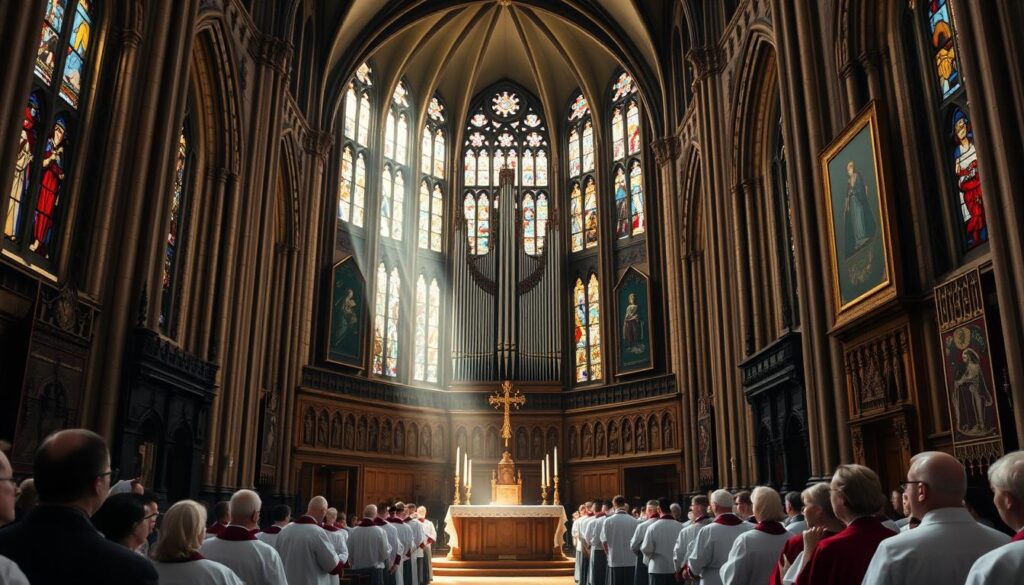
Worship in the Episcopal Church is characterized by a rich liturgical heritage. This heritage is not just about following traditions but is a vibrant expression of Episcopal beliefs that guide the community in their faith journey.
Liturgical Elements of Worship
The liturgical elements in Episcopal worship are multifaceted, incorporating various rituals and practices that have been passed down through generations. These elements include:
- Sacred rituals: Such as baptism and the Eucharist, which are considered sacraments.
- Prayers and readings: Selected from the Book of Common Prayer and the Bible, providing a foundation for worship.
- Music and hymns: Enhancing the worship experience and fostering a sense of community.
These liturgical elements are integral to the worship service, creating a meaningful and spiritual experience for the congregation.
Use of Prayer Books in Services
The Book of Common Prayer is a cornerstone of Episcopal worship, providing a structured format for services and personal devotion. It contains:
- Prayers and liturgies for various occasions.
- Scripture readings for daily devotion and worship services.
- Rituals and sacraments, such as baptism and communion.
The use of the Book of Common Prayer ensures consistency and continuity in worship practices across different Episcopal congregations, reflecting the Episcopalians doctrine and Episcopal faith.
In conclusion, the worship practices in the Episcopal Church are deeply rooted in its liturgical heritage and the use of the Book of Common Prayer. These practices not only reflect the community’s beliefs but also foster a sense of unity and shared faith.
Inclusivity and Social Justice
The Episcopal Church is deeply committed to inclusivity and social justice, values that are fundamental to its doctrine and practices. This commitment is reflected in its welcoming stance towards diverse communities.
The church’s approach to inclusivity is multifaceted, embracing diversity in its membership and leadership, including bishops, priests, and deacons from various backgrounds. This inclusive environment fosters a sense of belonging among its members.
Diversity in the Church
The Episcopal Church actively promotes diversity, recognizing the importance of different perspectives and experiences. This is evident in its:
- Openness to people of all backgrounds
- Support for marginalized communities
- Inclusive worship practices
Advocacy for Social Justice
The church is also a strong advocate for social justice issues, addressing concerns such as equality, environmental stewardship, and human rights. Through its advocacy, the Episcopal Church seeks to make a positive impact on society.
Some key areas of focus for the Episcopal Church’s social justice initiatives include:
- Promoting equality and combating discrimination
- Addressing climate change and environmental degradation
- Supporting human rights and dignity
By embracing inclusivity and advocating for social justice, the Episcopal Church continues to evolve as a progressive and compassionate community, guided by its core beliefs and values.
The Role of Faith in Daily Life
Living out one’s faith daily is a core aspect of the Episcopalian doctrine, influencing both personal spiritual growth and community involvement. For Episcopalians, faith is not just about attending church services or following certain rituals; it’s about integrating spiritual beliefs into every aspect of life.
Personal Spiritual Growth and Community
Personal spiritual growth is a vital component of the Episcopalian faith. Episcopalians are encouraged to cultivate a deep, personal relationship with God through prayer, reflection, and scripture reading. This personal spiritual journey is complemented by active involvement in the community. Episcopalians are called to serve others, engaging in acts of charity, volunteering, and advocating for social justice. By balancing personal spiritual growth with community service, Episcopalians embody their faith in meaningful ways.
Balancing Faith and Modern Life
In today’s fast-paced, often secular world, balancing faith with modern life can be challenging. However, Episcopalians are encouraged to view their faith as a source of strength and guidance. By applying Christian principles to their daily decisions and actions, Episcopalians can navigate the complexities of modern life while remaining true to their spiritual values. This balance is achieved through a commitment to ongoing spiritual growth, community support, and a willingness to engage with the world around them.
Practical ways Episcopalians live out their faith include:
- Engaging in regular prayer and worship
- Participating in community service projects
- Advocating for social justice
- Seeking spiritual guidance from clergy and scripture
By living out their faith in these ways, Episcopalians can experience a deeper sense of purpose and fulfillment. Their faith becomes a living, active part of their daily lives, influencing their relationships, work, and overall well-being.
Relationship with Other Christian Denominations
The Episcopal Church engages in numerous ecumenical activities, fostering unity among diverse Christian traditions. This commitment to ecumenism reflects the church’s belief in the importance of unity among Christians.
Ecumenical Efforts and Collaborations
The Episcopal Church participates in various ecumenical dialogues and collaborations, aiming to strengthen its relationships with other Christian denominations. These efforts include theological discussions, joint community projects, and collaborative worship services. For instance, the church is actively involved with the National Council of Churches and the World Council of Churches, promoting Christian unity and cooperation.
One notable example of ecumenical collaboration is the Porvoo Agreement, which established full communion between the Episcopal Church and several European Anglican churches, as well as some Nordic and Baltic Lutheran churches. This agreement facilitates mutual recognition of sacraments and ministries, enhancing the sense of unity among participating churches.
Differences and Similarities with Catholicism
The Episcopal Church shares a complex history with the Roman Catholic Church, having originated from the Church of England, which was established during the Reformation. While both the Episcopal and Catholic churches have sacramental traditions and a liturgical approach to worship, there are significant differences in their governance and some theological interpretations.
| Aspect | Episcopal Church | Catholic Church |
|---|---|---|
| Governance | Episcopal polity, with a focus on local and national synods | Papal authority, with a centralized hierarchy |
| Sacraments | Recognizes two sacraments (Baptism and Eucharist) as primary, with five additional rites | Recognizes seven sacraments, including Marriage and Anointing of the Sick |
| Clergy | Allows ordination of women and LGBTQ+ individuals | Maintains a male-only clergy, with recent discussions on female deacons |
Despite these differences, both churches share a rich liturgical heritage and a commitment to social justice. The Episcopal Church’s engagement in ecumenical dialogue with Catholicism, as well as other Christian denominations, reflects its dedication to the pursuit of Christian unity.
Family and Community Life
Family and community are at the heart of Episcopalian beliefs, guiding the church’s approach to service and outreach. The Episcopal Church emphasizes the importance of these elements in living out one’s faith.
Importance of Family within the Faith
The Episcopal Church views family as a foundational unit of society and a vital part of its community. Families are encouraged to participate actively in church life, including worship services and community activities. This involvement helps strengthen family bonds and fosters a sense of belonging among members.
Family-friendly practices within the church include providing religious education for children, organizing family-oriented events, and offering support for families in need. By doing so, the church creates an inclusive environment that welcomes families from diverse backgrounds.
Community Outreach and Service
Community outreach and service are critical components of Episcopalian practice. The church encourages its members to engage in various forms of service, from local charity work to advocacy for social justice issues. This commitment to service reflects the church’s belief in the importance of living out one’s faith through action.
Examples of community outreach include food banks, homeless shelters, and environmental conservation projects. These initiatives not only benefit the community but also provide opportunities for Episcopalians to come together in service of others.
By focusing on family and community life, the Episcopal Church creates a vibrant and supportive environment that nurtures the spiritual growth of its members. Through its emphasis on service and outreach, the church demonstrates its commitment to living out its beliefs in meaningful ways.
Future Directions for the Episcopal Church
The Episcopal Church is at a crossroads, facing various challenges while also discovering new opportunities for growth and renewal. At its core, the Episcopalian doctrine emphasizes a commitment to inclusivity and social justice, shaping the church’s future directions.
Challenges and Opportunities
The Episcopal faith is being tested by contemporary societal issues, requiring the church to adapt while remaining true to its core beliefs. The Episcopalian religion is rooted in tradition, yet it is also evolving to meet the needs of its diverse community.
Growth through Inclusivity and Justice
By embracing inclusivity and advocating for social justice, the Episcopal Church is poised for renewal. This approach not only strengthens the community but also aligns with the fundamental principles of the Episcopal faith, ensuring a vibrant future for the church.
As the Episcopal Church moves forward, its commitment to the Episcopalian doctrine will continue to guide its path, fostering a community that is both spiritually grounded and actively engaged in the world.
FAQ
What do Episcopalians believe in?
Episcopalians believe in the core tenets of Christianity, including the Holy Trinity, the importance of scripture, reason, and experience, and the sacraments of baptism and the Eucharist.
What is the historical background of the Episcopal Church?
The Episcopal Church has its roots in the Church of England, which was established in the 16th century. The Episcopal Church in the United States was formed after the American Revolution, and it has since developed its own distinct traditions and practices.
What is the role of tradition in Episcopalian beliefs?
Tradition plays a significant role in Episcopalian beliefs, as the church draws on its rich history and the practices of the early Christian church to inform its current practices and beliefs.
How do Episcopalians understand the nature of God?
Episcopalians understand God as a Holy Trinity, consisting of the Father, Son, and Holy Spirit. They believe in the divinity of Jesus Christ and the importance of the Holy Spirit in guiding the church.
What is the significance of baptism in Episcopalian worship?
Baptism is a sacrament in the Episcopal Church, symbolizing the believer’s union with Christ and their incorporation into the community of faith.
How is the Eucharist practiced in the Episcopal Church?
The Eucharist, also known as Holy Communion, is a central sacrament in Episcopalian worship, in which believers participate in the bread and wine, symbolizing their communion with Christ and with one another.
What is the governance structure of the Episcopal Church?
The Episcopal Church is governed by a hierarchical structure, with bishops playing a key role in leadership and decision-making. The church is also organized into dioceses and parishes, with a General Convention that meets regularly to make decisions for the church.
How does the Episcopal Church approach social justice issues?
The Episcopal Church is committed to promoting social justice and advocating for the rights of marginalized communities. The church has taken a strong stance on issues such as racial justice, LGBTQ+ rights, and environmental protection.
How do Episcopalians balance their faith with modern life?
Episcopalians are encouraged to integrate their faith into their daily lives, balancing their spiritual practices with their responsibilities and activities in the world.
What is the Episcopal Church’s relationship with other Christian denominations?
The Episcopal Church is actively engaged in ecumenical efforts with other Christian denominations, seeking to promote unity and cooperation among different Christian traditions.
What are the future directions for the Episcopal Church?
The Episcopal Church faces various challenges and opportunities for growth and renewal, including adapting to changing demographics and cultural contexts, while remaining true to its core values and traditions.