What if your faith could feel less like a routine and more like a vibrant conversation with the Divine? Many believers think mystical experiences belong only to saints or visionaries. Yet the Church teaches that everyone is invited to cultivate a deeper bond with God through simple, daily practices.
This journey isn’t about supernatural visions. It’s about opening your heart to grace in ordinary moments—whether during prayer, serving others, or reflecting on life’s challenges. The Catechism calls this path an “intimate union” with Christ, nurtured through sacraments and contemplation.
Over time, small steps can transform how you perceive God’s presence. A quiet walk, a shared meal, or even moments of suffering become sacred spaces where love and mercy shine through. You don’t need special talents—just a willingness to let grace shape your soul.
Key Takeaways
- Every Catholic is called to grow closer to God through prayer and sacraments.
- Mystical experiences often arise in everyday moments, not dramatic visions.
- Historical saints offer practical examples of living with spiritual awareness.
- Deepening your faith requires patience, not perfection.
- God’s grace is a free gift available to all believers.
Understanding Mysticism in Catholicism
How have centuries of faith shaped how believers experience divine closeness? Spiritual practices didn’t emerge overnight—they grew from ancient traditions refined by holy men and women. St. John of the Cross described this journey as a “dark night,” where God purifies hearts through temporary spiritual dryness.
Foundations Built by Saints
Early spiritual guides created roadmaps for union with God. Their writings show how prayer and sacrifice prepare the soul for grace. For example:
| Saint | Contribution | Key Concept |
|---|---|---|
| Teresa of Ávila | Stages of prayer | Interior castles |
| John of the Cross | Dark night phases | Purification |
| Ignatius Loyola | Discernment methods | Spiritual exercises |
Culture Meets Worship
Local customs often blend with Church rituals. Mediterranean processions, Celtic blessings, and Hispanic ofrendas all express devotion uniquely. These traditions remind us that sacred moments happen within community—not just private prayer.
Liturgy anchors mystical experiences in tangible actions. Receiving the Eucharist or lighting candles becomes a dialogue between personal longing and eternal truths. As one 16th-century director wrote: “The sacraments are God’s love made touchable.”
Embracing “mysticism in catholicism” in Daily Life
Have you ever noticed how washing dishes or waiting in traffic can become moments of unexpected grace? Spiritual awakening often blooms not in grand gestures, but through small openings we create for the sacred. As St. Teresa of Ávila observed: “God walks among the pots and pans.”
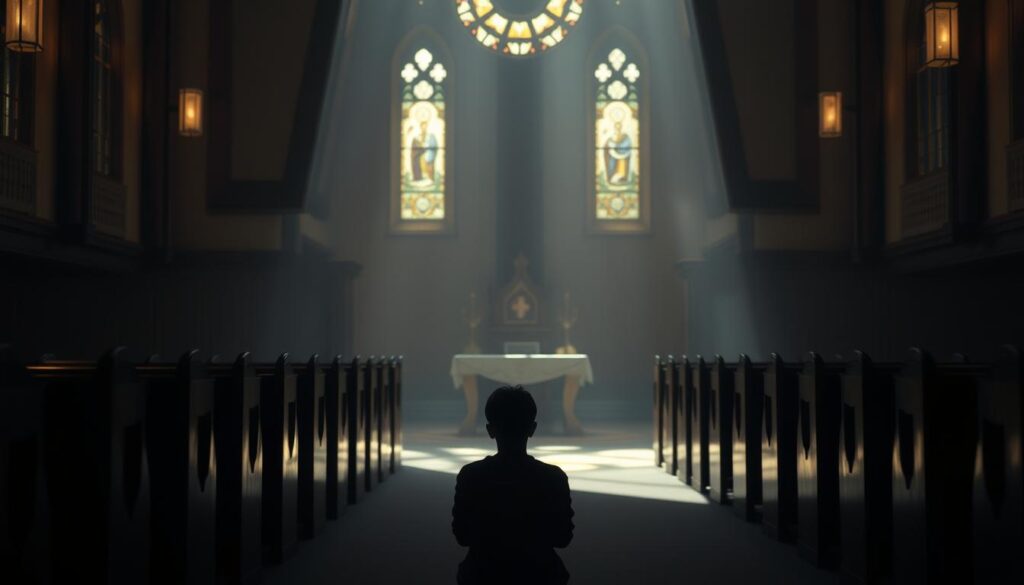
Contemplative Prayer and Union with the Divine
Contemplative prayer works like sunrise – you prepare your heart, but the light comes when ready. Many find these three approaches helpful:
| Practice | Purpose | Outcome |
|---|---|---|
| Lectio Divina | Scripture meditation | Hearing God’s voice |
| Eucharistic Adoration | Silent presence | Heart transformation |
| Rosary | Mystery reflection | Peace in suffering |
These methods aren’t about perfect technique. A teacher once told me: “Prayer is less about speaking, more about letting Love rewrite your story.”
Experiencing God’s Presence and Sacred Traditions
Sacred moments hide in plain sight. That rush of gratitude while holding a friend’s hand. The sudden clarity during a walk. These become doorways when we pause and whisper: “Here I am.”
Ancient traditions anchor us. Lighting candles mirrors our desire for divine light. Breaking bread echoes heavenly nourishment. Over time, these actions reshape our hearts into living tabernacles – places where ordinary life meets eternal love.
Mystical Encounters and the Role of the Saints
What do 20th-century secretaries and 16th-century poets teach us about divine connection? Saints like St. Maria Faustina Kowalska and St. John of the Cross left roadmaps showing how ordinary lives become extraordinary through openness to grace.
Saints as Guides on the Spiritual Journey
Faustina’s diary reveals how God’s presence transformed her daily work into sacred encounters. She wrote: “The Three Divine Persons… make all creation happy.” Her experiences birthed the Divine Mercy devotion, answering modern questions about suffering with hope.
| Saint | Key Teaching | Impact |
|---|---|---|
| St. Faustina | Divine Mercy revelations | Global hourly chaplet prayers |
| St. John of the Cross | Dark night purification | Framework for spiritual growth |
| St. Thérèse of Lisieux | Little Way simplicity | Accessible holiness for all |
The Dark Night and the Bright Dawn of the Soul
St. John’s “dark night” describes God’s gentle work in hearts during dry spells. Like winter preparing soil for spring, these seasons create space for deeper union. A priest once advised: “Emptiness isn’t abandonment—it’s an invitation to trust.”
Transformative Moments and Lasting Impact
When saints experienced divine love, their lives became channels of mercy. Faustina’s visions inspired Pope John Paul II’s prayer: “Help us bear witness to mercy.” Centuries later, their stories still awaken awareness that God dwells within everyone’s daily journey.
Conclusion
What if the key to spiritual depth isn’t found in grand gestures but in daily attentiveness? The path to divine connection thrives in ordinary moments—a shared smile, silent prayer, or acts of kindness. Every believer carries this potential, not just historical saints or visionaries.
Simple practices like meditating on sacred mysteries or noticing God’s presence in relationships can awaken profound awareness. As St. Thérèse of Lisieux showed, holiness grows through small, loving choices—not dramatic signs.
These spiritual friends remind us that dry seasons and joys alike shape our hearts. Their wisdom helps us persist when prayer feels challenging, trusting that grace works beneath the surface.
Begin by pausing to acknowledge the Trinity’s presence during routine tasks. Seek guidance from trusted mentors. Over time, this openness reshapes priorities—from self-focus to becoming channels of mercy.
God’s desire for union with each soul unfolds gently. Like dawn breaking after night, patience and trust reveal love’s quiet work within and around us.
FAQ
How does contemplative spirituality align with Catholic teachings?
Rooted in Scripture and centuries of tradition, practices like silent prayer and meditation aim to deepen one’s relationship with God. The Church recognizes this as a path to holiness, emphasizing humility and guidance from trusted spiritual mentors.
Can ordinary people experience deep spiritual connection through prayer?
Absolutely. While mystical graces are gifts from God, everyone is invited to seek closeness through daily prayer, sacraments, and acts of love. Even small moments of awareness can nurture a sense of divine presence in ordinary life.
What role do saints play in personal spiritual growth?
Saints like Teresa of Ávila and Thérèse of Lisieux exemplify how to live in union with God. Their writings and intercession offer wisdom, encouragement, and companionship, helping believers navigate challenges and stay focused on eternal truths.
How do I navigate periods of spiritual dryness or doubt?
St. John of the Cross called this the “dark night”—a time when God purifies the soul. Persisting in prayer, seeking sacraments, and leaning on community can sustain hope. Trust that these seasons often lead to renewed faith and deeper trust.
Are sacred traditions still relevant for modern believers?
Yes. Rituals like the Eucharist, Adoration, or the Rosary anchor faith in tangible ways. They connect us to a living heritage while inviting personal reflection, helping hearts remain open to grace amid life’s distractions.