Welcome to a journey through one of history’s most transformative moments. In the 16th century, a wave of religious change reshaped Europe—and eventually the world. This movement didn’t just alter churches; it redefined how people viewed faith, authority, and personal freedom.
Everything changed on October 31, 1517. A German monk named Martin Luther nailed his 95 Theses to a church door in Wittenberg. His bold critiques of church practices ignited debates that spread like wildfire. What began as a call for reform soon became a full-blown revolution in Christianity.
This wasn’t just about theology. Political tensions, social unrest, and new ideas all played roles. Rulers saw opportunities to break from Rome. Ordinary people craved spiritual clarity. Printing presses helped spread revolutionary thoughts faster than ever before.
By exploring this era, you’ll uncover how a single act of defiance sparked global change. From Germany to England, and later across oceans, these ideas shaped nations and cultures. Their echoes still influence modern beliefs about individual rights and religious diversity.
Key Takeaways
- The Reformation began in 1517 with Martin Luther’s public critique of church practices
- Political and social factors accelerated the spread of Protestant ideas
- Printing technology played a crucial role in sharing reformist views
- The movement led to lasting changes in Christian traditions worldwide
- Modern concepts of religious freedom trace roots to this period
Historical Context of the Late Medieval Church
The stage was set for religious upheaval long before Luther’s hammer struck wood. By the 15th century, the Roman Catholic Church held unmatched power—both spiritual and political. But cracks were forming in its foundation.
Medieval Church Practices and Abuses
Imagine walking into a church where leaders lived like kings. Popes hosted lavish feasts while poor families starved. One shocking example? Pope Alexander VI reportedly held parties with naked dancers in the Vatican.
The clergy sold forgiveness like market goods through indulgences. “As soon as gold in the basin rings, the soul to heaven springs,” joked critics. Ordinary people grew angry watching leaders ignore Christ’s teachings about humility.
Rise of Nationalism and Early Reform Efforts
Kings and queens saw their chance. Why should foreign popes control local church lands? England’s monarchs began appointing bishops themselves. This clash between national authority and Rome reshaped Europe’s power map.
Brave thinkers lit small fires of change. John Wycliffe translated the Bible into English in the 14th century, declaring scripture belonged to everyone. Though silenced, these voices kept reform alive until Luther’s time.
This article shows how decades of frustration made Europe ready for transformation. From corrupt leaders to patriotic rulers, the old order couldn’t last. The next section of our article reveals how one monk’s protest became a revolution.
The 1517 Spark: Martin Luther’s 95 Theses
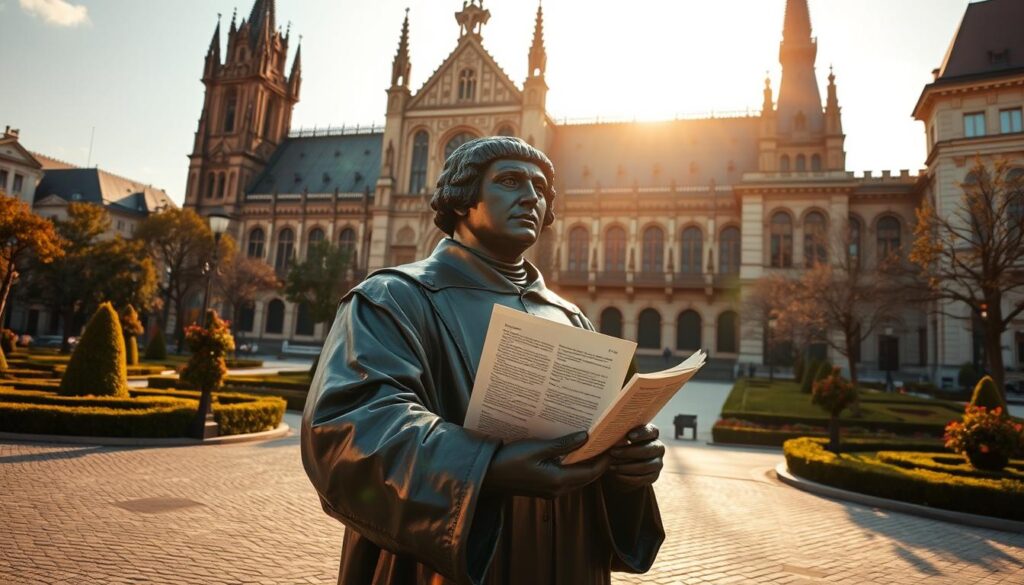
A single document changed Christianity forever in 1517. Martin Luther, an unknown monk, pinned his grievances to a Wittenberg church door. This act of courage questioned practices many saw as unfair. His words traveled faster than anyone imagined.
The Challenge to Indulgences
Luther’s main target? The Catholic Church’s sale of indulgences. These certificates promised reduced punishment for sins—for a price. Wealthy believers could buy their way to heaven, while others struggled. “Why does the pope’s wealth grow while Christ’s people suffer?” Luther asked.
His 95 arguments shredded this system. True forgiveness, he argued, comes through faith—not coins. This idea shook the church’s power structure. Ordinary people began questioning every religious rule they’d followed.
The Debate Over Catholic Doctrine
The article of faith became battleground. Luther claimed scripture alone—not church leaders—should guide believers. This challenged centuries of doctrine. Who gets to interpret God’s word? The debate spread like wildfire.
Printing presses made copies of the Theses in weeks. Soon, farmers and kings alike discussed reform. What began as academic criticism became a revolution. By 1520, Europe’s religious map started shifting.
This time period shows how ideas can outgrow their origins. Luther never planned to split the church. Yet his call for change ignited movements that reshaped nations. The next article section reveals how these sparks became flames.
How protestantism started: Understanding the Reformation Movement
The Reformation Movement reshaped Christianity by tackling core beliefs rather than surface issues. Unlike earlier reformers who focused on corruption, Luther dug into theology. His ideas struck at the heart of medieval religious practice.
The Role of Scriptural Authority
Luther’s sola scriptura principle changed everything. He declared the Bible—not church leaders—as God’s true voice. Farmers could now read scripture themselves, sparking a spiritual revolution.
Another breakthrough came with sola fide—salvation through faith alone. This idea transformed people’s relationship with God. No more endless rituals or payments. Personal belief became the key to grace.
| Catholic Teaching | Protestant View | Impact |
|---|---|---|
| Church interprets scripture | Bible guides believers directly | Empowered individuals |
| Good works earn salvation | Faith alone saves | Simplified spiritual life |
| Pope as supreme authority | Christ as only head | Weakened Rome’s power |
Printing presses spread these ideas faster than ever. By 1521, Luther’s reform efforts led to his excommunication. What began as internal criticism became a new branch of the christian religion.
This article shows how deep movements grow from bold ideas. Luther’s focus on scripture and faith created lasting change—proving that words can indeed remake the world.
Key Figures Who Shaped the Reformation
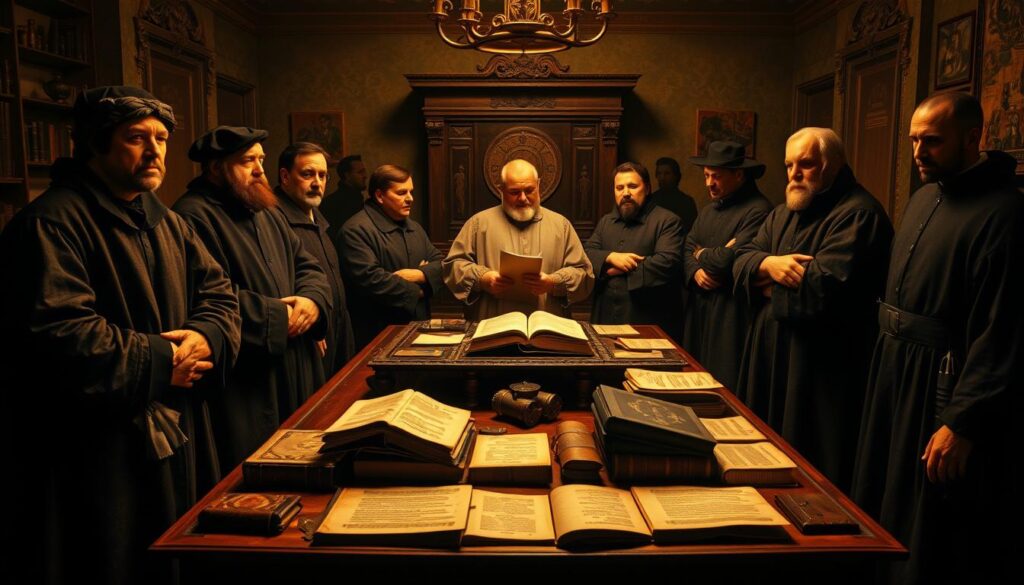
Behind every great movement stand visionary leaders who turn ideas into action. The Reformation’s success relied on courageous thinkers from varied backgrounds. Each brought unique skills to challenge religious norms and inspire lasting change.
Martin Luther and John Calvin
Martin Luther’s personal struggles fueled his reforms. Once tormented by guilt, this German monk found freedom in scripture. His translation of the Bible empowered ordinary people to connect directly with God’s word.
John Calvin brought legal precision to theology. Forced to flee France, he crafted the Institutes of the Christian Religion—a masterwork organizing Protestant beliefs. His teachings on predestination shaped churches from Geneva to New England.
Influential Voices Beyond Germany
Swiss priest Huldrych Zwingli took reform further. He banned music in churches and viewed communion as symbolic—clashing with Luther’s views. His ideas laid groundwork for later Reformed traditions.
Czech scholar Jan Hus paid the ultimate price a century earlier. Burned for criticizing corrupt clergy, his dying words—“You cook a goose now, but a swan will come”—predicted Luther’s rise. Hus’s martyrdom proved reform couldn’t be silenced.
These figures shared grit but differed in approach. From Luther’s emotional breakthroughs to Calvin’s systematic rigor, their combined efforts reshaped Christian life worldwide. Their stories remind us how conviction can alter history’s course.
The Role of Doctrine and Theological Debate
At the heart of religious transformation lay ideas that rewrote centuries of tradition. Protestant reformers didn’t just challenge church practices—they rebuilt Christianity’s foundation stone by stone. Their doctrine reshaped how believers understood divine grace, personal faith, and ultimate salvation.
Sola Scriptura and Sola Fide Explained
Sola scriptura became the Reformation’s battle cry. This principle declared the Bible as God’s ultimate authority—not church leaders. Farmers could now read scripture in their language, discovering truths once locked in Latin texts.
The companion concept sola fide sparked spiritual liberation. Luther taught that faith alone—not rituals or payments—secured salvation. Imagine the relief for believers told they didn’t need to earn God’s love through endless good deeds.
| Catholic Teaching | Protestant View | Key Difference |
|---|---|---|
| Church interprets God’s word | Scripture guides directly | Power shift to individuals |
| Works earn grace | Grace comes through faith | Simplified path to salvation |
| Seven sacraments required | Two sacraments recognized | Fewer mandatory rituals |
John Calvin took these ideas further with his theology of predestination. While controversial, it emphasized God’s sovereignty in granting grace. These debates weren’t just academic—they created new church traditions that still shape worship today.
Through fierce doctrine battles, reformers gave believers tools for spiritual independence. Personal prayer replaced fear-driven rituals. Scripture study became a path to divine connection—a radical shift that echoes in modern Christian practice.
Spread of the Reformation Across Europe
Flames of religious revolution leaped across borders faster than anyone expected. By the 1530s, the protestant reformation transformed from local debate to continental upheaval. Every region added its own flavor—like cooks tweaking a shared recipe to local tastes.
The Expansion in Germany and Switzerland
Northern Europe became Luther’s stronghold. By 1550, over half of Germany’s churches followed his teachings. Kings in Denmark and Sweden declared Lutheranism their state religion, blending faith with national pride.
Switzerland brewed its own reform cocktail. Zwingli turned Zürich into a Bible-driven society—banning music during services. Calvin later transformed Geneva into a model Protestant city. His strict moral code earned it the nickname “Protestant Rome.”
Evolution of Lutheran and Reformed Traditions
Two distinct branches emerged from the reform movement:
- Lutherans: Kept some Catholic rituals like altar candles
- Reformed churches: Stripped services bare to focus on preaching
Printing presses turned laypeople into theologians. Farmers debated predestination while kneading bread. This grassroots energy created new denominations faster than authorities could track them.
Eastern Europe’s mix of weak kings and tolerant nobles allowed radical groups to thrive. From Poland to Hungary, unique Protestant blends took root—proving the 16th century wasn’t just about Luther, but countless voices reshaping faith.
Reformation in England: Politics, Power, and Puritanism
England’s religious revolution began at the royal bedroom door. When Pope Clement VII refused Henry VIII’s marriage annulment in 1534, the king rewrote the rules. His break with Rome created the Church of England—a hybrid of Catholic rituals and Protestant ideas that pleased neither Rome nor reformers.
Henry VIII and the Formation of the Church of England
The Tudor monarch’s quest for a male heir reshaped a nation. Henry kept Latin masses and bishops’ robes but declared himself the church’s supreme head. This political masterstroke let him seize monastery lands while avoiding full Protestant alignment.
Religious whiplash followed for decades:
- Queen Mary (1553-1558) burned Protestants to restore Catholicism
- Elizabeth I crafted a middle path with her 1559 Settlement
- Church attendance became law—absentees faced fines
The Divergence between Separatists and Nonseparatists
Puritans demanded deeper reforms, splitting into two camps:
| Separatists | Nonseparatists |
|---|---|
| Left the Church of England | Stayed to reform from within |
| Founded Plymouth Colony (1620) | Shaped Parliament’s religious policies |
| Rejected all Catholic traces | Accepted some traditional elements |
Both groups influenced America’s founding. Their debates about church-state relations echo in modern laws about religious freedom. England’s messy marriage of politics and faith created denominations that still shape worship today.
Diverse Ideologies: Lutheranism, Calvinism, and Radical Reform
Europe’s religious landscape fractured into competing visions after 1529. That year, German princes and city leaders made history at the Diet of Speyer by formally protesting Roman Catholic authority—coining the term “Protestant.” This defiance birthed three distinct paths forward.
Understanding Calvin’s Institutes and Predestination
John Calvin sharpened Protestant thought with his 1536 masterwork, Institutes of the Christian Religion. Unlike Luther’s focus on faith, Calvin taught God predestined souls for salvation. This idea sparked debate but united followers through its logical rigor.
Radical reformers took ideas further, rejecting infant baptism and state ties. Meanwhile, Lutherans preserved some Roman Catholicism traditions like liturgical music. By the late 16th century, these factions shaped Europe’s spiritual map.
Today’s ecumenical movement traces roots to these divisions. While the Diet of Speyer divided believers, it also planted seeds for future dialogue. From fiery debates emerged a faith mosaic still vibrant in modern worship.
FAQ
What role did indulgences play in sparking the Reformation?
The sale of indulgences—certificates claiming to reduce punishment for sins—angered Martin Luther. He saw them as corrupt and unbiblical, leading him to post his 95 Theses in 1517. This act challenged the Catholic Church’s authority and ignited widespread debate.
How did Henry VIII contribute to religious change in England?
Henry VIII broke from the Roman Catholic Church after the Pope refused to annul his marriage. He established the Church of England in 1534, blending Catholic traditions with new reforms. Political power, rather than theology, drove this shift initially.
What does Sola Scriptura mean for Protestant beliefs?
A: Sola Scriptura (“Scripture alone”) emphasizes the Bible as the ultimate authority over church traditions. Reformers like Luther and Calvin argued that teachings not rooted in scripture—like papal supremacy—lacked legitimacy, reshaping Christian thought.
Why is the Diet of Speyer significant in Reformation history?
At the 1529 Diet of Speyer, German princes protested restrictions on Lutheran teachings, coining the term “Protestant.” This event marked a turning point, as rulers openly defied Catholic authorities to protect reformed ideas.
How did John Calvin’s teachings differ from Martin Luther’s?
Calvin emphasized predestination—the belief God preordains salvation—and structured church governance around elders. Luther focused more on faith’s role in salvation and retained some liturgical practices. Both, however, rejected papal authority.
What early reformers influenced Luther and Calvin?
Figures like Jan Hus (burned at the stake in 1415) and Huldrych Zwingli critiqued church corruption decades before Luther. Their calls for scriptural focus and clergy accountability laid groundwork for the 16th-century Reformation.
How did the Reformation impact everyday people in Europe?
It encouraged literacy (to read the Bible), challenged social hierarchies, and offered alternatives to Catholic rituals. However, conflicts like the Thirty Years’ War also caused upheaval, blending religious fervor with political strife.
Why did the Church of England face internal divisions later?
Puritans sought to “purify” the church of remaining Catholic practices, while Separatists wanted full independence. These tensions led to groups like the Pilgrims leaving England, shaping religious diversity in America.
What was Calvin’s Institutes of the Christian Religion?
Published in 1536, Calvin’s Institutes systematized Reformed theology, covering doctrines like grace, predestination, and church structure. It became a foundational text for Presbyterian and Reformed churches worldwide.
How did nationalism help spread Protestant ideas?
Rulers in Germany, Scandinavia, and England used reformist movements to assert independence from Rome. By controlling regional churches, they strengthened political power while addressing local discontent with Catholic practices.