For over five centuries, a vibrant Christian movement has shaped spiritual journeys worldwide. Rooted in the Protestant Reformation, this tradition combines ancient practices with fresh perspectives on grace and community. Today, it stands as the third-largest Protestant group globally, guiding millions in their daily faith and worship.
Founded through Martin Luther’s efforts to reform church practices in the 1500s, this branch emphasizes Scripture as the ultimate authority. Its teachings focus on forgiveness through divine kindness rather than human effort. This approach creates a unique path for those seeking a meaningful connection to their spiritual life.
What makes this tradition stand out? It balances historical roots with modern applications. Followers value rituals like communion while embracing active engagement in today’s challenges. This blend attracts diverse people, from lifelong members to newcomers exploring its timeless messages.
Whether you’re curious about its history or its role in contemporary society, this guide unpacks the essentials. You’ll discover how ancient ideas remain relevant and why this group continues to grow. Let’s dive into the heart of a tradition built on hope, renewal, and connection.
Key Takeaways
- Originated during the 16th-century Protestant Reformation led by Martin Luther
- Third-largest Protestant movement worldwide with 80 million followers
- Emphasizes salvation through grace rather than personal achievements
- Blends traditional worship practices with modern spiritual engagement
- Maintains core teachings while adapting to contemporary needs
Fundamentals of Evangelical Lutheranism
Understanding this branch of Christianity begins with its commitment to scriptural authority and grace. The evangelical lutheran tradition builds on three pillars known as the “solas” – foundational truths that shape worship and daily life.
Key Principles and Values
Central to the teaching is the belief that salvation comes through divine kindness, not human effort. Followers embrace the idea that God’s love arrives as a free gift, received through personal trust rather than earned by deeds. This approach creates a spiritual path focused on gratitude rather than obligation.
Community and Faith Practice
Weekly gatherings go beyond Sunday services in these congregations. Many participate in small groups where they explore Scripture and support each other’s faith journeys. These connections help people apply their beliefs in practical ways, viewing service as a natural response to divine love.
Educational programs play a vital role across all ages. Young members often join confirmation classes to deepen their understanding, while adults engage in discussions about modern challenges through a spiritual lens. This blend of learning and living keeps the tradition vibrant and relevant.
Historical Roots and the Reformation
Five centuries ago, a single act of protest reshaped Christianity’s landscape. In 1517, a German monk’s bold critique of religious authority sparked a spiritual revolution that still echoes today.
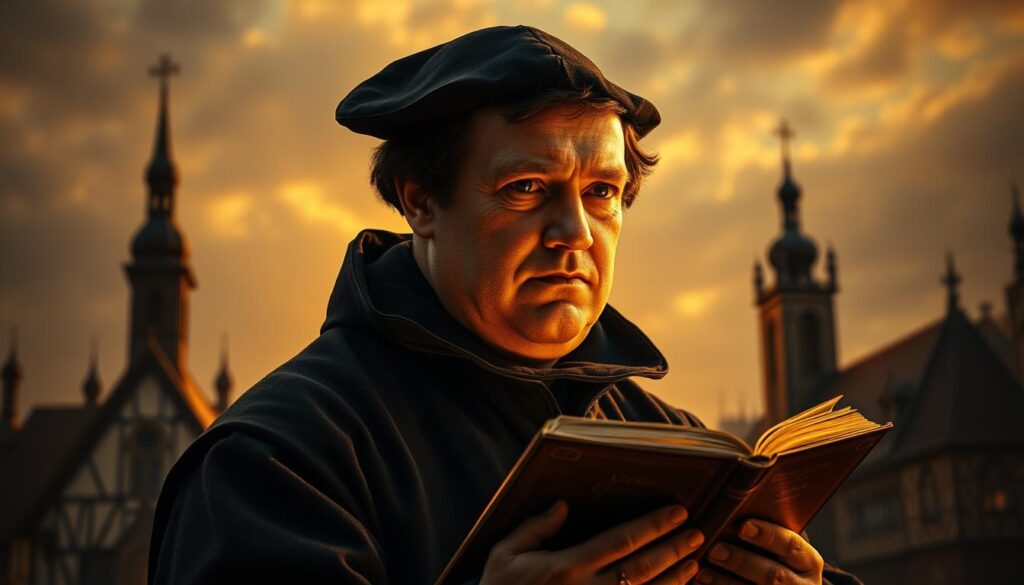
Catalyst for Change
Martin Luther’s 95 Theses challenged the Catholic Church’s sale of forgiveness certificates. His writings questioned whether human effort could earn salvation, proposing instead that divine grace comes freely through faith. This idea spread like wildfire across Europe.
Luther didn’t stop at criticism. He translated Scripture into everyday German, letting ordinary people read God’s word themselves. “A simple layman armed with Scripture,” he wrote, “is greater than the mightiest pope without it.” This empowerment changed how believers approached spiritual life.
Over years, Luther’s teachings grew into a distinct tradition. By 1638, his followers established America’s first Lutheran congregation in Delaware. Today, millions find comfort in his core message: grace isn’t earned through rituals but received as a gift.
Core Doctrines and Sacraments
At the heart of Christian practice lie sacred rituals that bridge divine promise and human experience. These sacraments serve as tangible expressions of spiritual truth, offering believers a direct connection to grace. The tradition recognizes two foundational acts that shape a believer’s journey from initiation to ongoing growth.
Baptism: Gateway to Grace
Water becomes holy when paired with God’s promise. Through baptism, individuals receive forgiveness and enter a lifelong relationship with the divine. This sacrament welcomes infants and adults alike, reflecting the belief that salvation comes through divine initiative rather than human merit.
Martin Luther emphasized its power, stating:
“Baptism delivers from death and gives everlasting salvation to all who believe.”
Churches often use simple fonts or flowing rivers for this rite, symbolizing spiritual rebirth. Parents bringing babies for baptism celebrate howgraceprecedes human understanding.
Lord’s Supper: Communion and Presence
Shared meals take on cosmic significance in this sacred act. During communion, participants receive bread and wine as Christ’s actual body and blood – not mere symbols. This “real presence” sets the tradition apart from other Christian groups.
Preparation involves self-reflection and prayer, creating space for transformation. Regular participation strengthens faith, as Luther described the Lord’s Supper: “A medicine for the weak and weary.” The ritual connects personal spirituality with a global church community spanning centuries.
Together, these sacraments frame the Christian life – baptism marks the starting line, while communion provides sustenance for the journey. Both remind believers that divine love arrives as gift, not reward.
Denominational Landscape: LCMS, ELCA, and Beyond
American Lutheranism branches into distinct paths, each shaped by unique interpretations of faith. The Lutheran Church—Missouri Synod (LCMS) and Evangelical Lutheran Church in America (ELCA) lead this diverse family. These groups share historical roots but differ in how they apply ancient teachings to modern life.
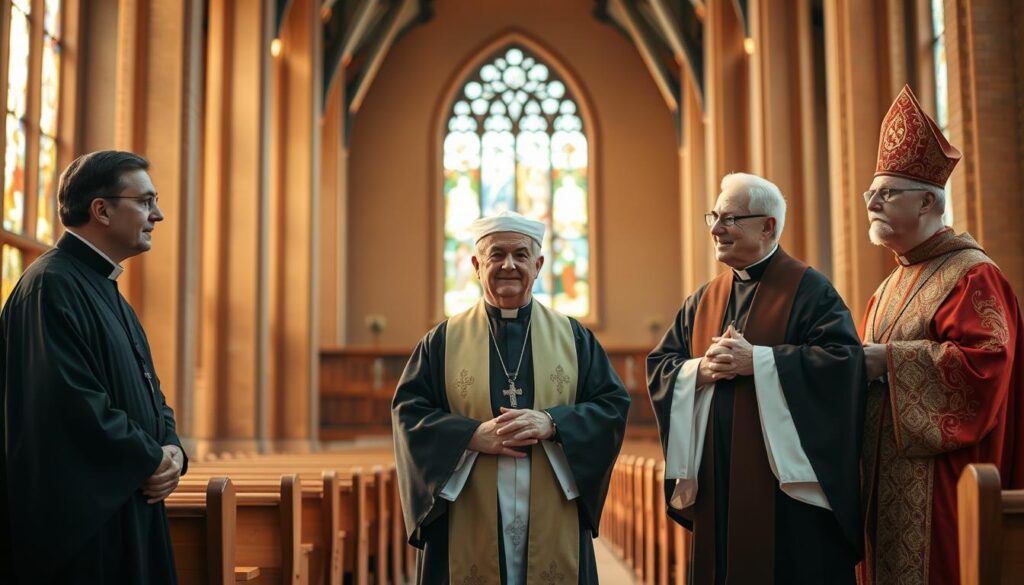
Distinct Beliefs and Practices
The LCMS stands as the more traditional group, viewing Scripture as flawless divine instruction. “The Bible contains no errors,” their teachings state, guiding everything from worship styles to social positions. Over 6,000 churches follow this approach across the U.S.
ELCA congregations take a different path. Formed in 1988 through a merger of three American Lutheran bodies, this church America network embraces modern biblical scholarship. Their openness to reinterpretation led to significant changes, like the 2009 decision on same-sex relationships.
| Aspect | LCMS | ELCA |
|---|---|---|
| Scripture View | Inerrant Word | Contextual Interpretation |
| Membership Trend | Stable | Declined by 250,000+ |
| Social Issues | Traditional | Progressive |
| Church Structure | Synod-Based | Synod-Based |
Beyond these giants, smaller Lutheran denominations cater to specific needs. Some preserve 19th-century immigrant traditions, while others experiment with contemporary worship styles. All maintain the core emphasis on grace, though interpretations vary widely.
The number of active churches continues evolving as believers seek communities aligning with their values. From urban parishes to rural congregations, these Lutheran Church America branches keep redefining what ancient faith looks like today.
Worship Practices, Tradition, and Modern Influences
Sunday mornings reveal a beautiful tension between ancient rhythms and fresh expressions. Congregations across America balance time-honored patterns with creative approaches to spiritual connection. This blend honors tradition while speaking to modern hearts.
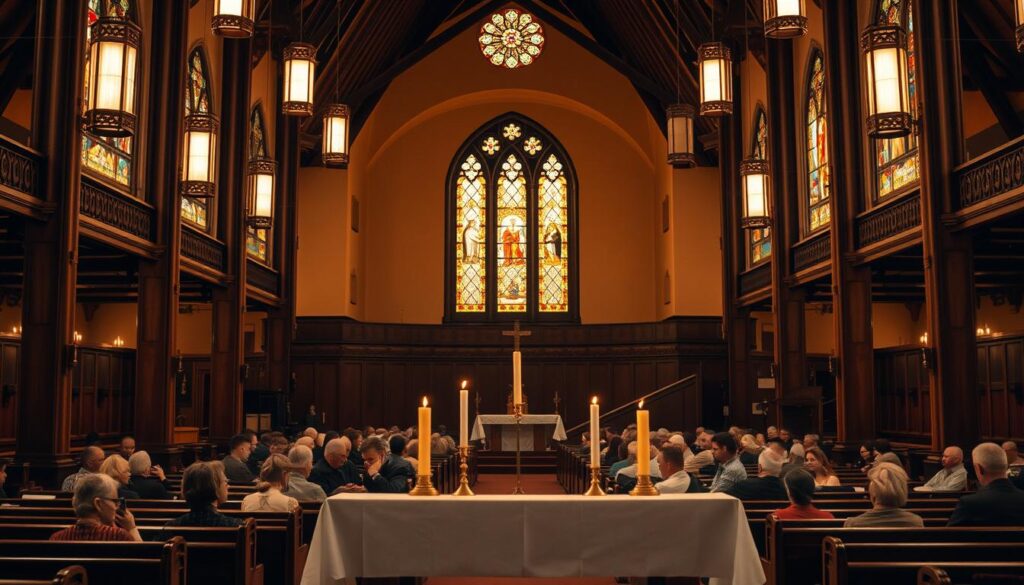
Evolving Worship: From Traditional to Contemporary
Liturgical patterns remain central, with centuries-old prayers and creeds shaping services. Many churches now weave in modern music and visual elements. A typical service might pair pipe organs with projection screens, creating spaces where people of all ages feel at home.
Research shows our brain engages differently with varied worship styles. Familiar hymns activate memory centers, while new songs stimulate creative regions. One pastor notes:
“Mixing old and new helps faith sink deeper into daily life.”
Tradition and Apologetics: The Role of Confessions
Historical documents like the Augsburg Confession serve as compasses, not shackles. These texts guide teaching while allowing fresh applications. They answer modern questions using timeless truths, showing how divine love meets human needs across generations.
Many congregations highlight saints not as perfect heroes, but as flawed people who trusted grace. Their stories inspire practical responses to today’s challenges. This approach keeps the tradition rooted yet responsive, like a tree bending in wind without breaking.
The process of updating worship requires careful balance. Leaders often test new ideas in small groups before wider use. This method respects heritage while making space for innovation that serves changing communities.
The Role of Sacred Texts and Confessional Documents
Foundational writings shape how communities understand their beliefs and live out their values. These texts serve as living guides, offering clarity amid life’s complexities while preserving core principles across generations.
The Book of Concord Explained
Published in 1580, the Book of Concord unites key documents like the Augsburg Confession and Smalcald Articles. It addresses debates about divine grace and human responsibility, providing a shared framework for teaching. Members often study its pages to connect historical insights with modern questions.
The Augsburg Confession and the Small Catechism
Philip Melanchthon’s Augsburg Confession remains central to Lutheran identity. This 1530 document outlines beliefs about forgiveness and community in straightforward terms. Paired with Luther’s Small Catechism, it helps families explore faith through simple Q&A formats.
These resources aren’t dusty relics. The Large Catechism breaks down core teachings for deeper study, while the Formula of Concord resolves doctrinal disputes. Together, they create a tapestry of wisdom that adapts to new challenges without losing its timeless heart.
FAQ
What distinguishes the LCMS from other Lutheran denominations?
The Lutheran Church—Missouri Synod (LCMS) emphasizes strict adherence to historic confessions like the Book of Concord, prioritizing traditional worship and literal biblical interpretation. In contrast, groups like the ELCA often embrace progressive social stances and interdenominational collaboration.
How do sacraments like baptism shape Lutheran identity?
Baptism is seen as a transformative act of God’s grace, marking entry into the faith community. The Lord’s Supper is also central, with many Lutherans affirming Christ’s real presence in communion, rooted in teachings from the Small Catechism.
Why are documents like the Augsburg Confession important?
The Augsburg Confession outlines core Lutheran beliefs, defending practices like congregational singing and justification by faith. It remains a unifying text, alongside the Apology of the Augsburg Confession, clarifying doctrinal stances post-Reformation.
How has worship evolved in modern Lutheran churches?
While many congregations retain hymns and liturgical rituals, others blend contemporary music or informal styles. This balance reflects efforts to honor tradition while engaging younger generations, guided by confessions like the Formula of Concord.
What role did Martin Luther play in shaping Lutheran theology?
Martin Luther’s teachings on grace and scripture sparked the Reformation. His writings, including the Smalcald Articles, challenged medieval Catholic practices and laid the groundwork for doctrines like sola fide (faith alone).
Do Lutherans emphasize saints or Mary in their teachings?
Saints are respected as models of faith, but Lutherans reject praying to them. The focus remains on Christ’s mediation, as affirmed in the Apology of the Augsburg Confession, which critiques veneration practices.
How do Lutheran confessions address modern ethical debates?
Documents like the Book of Concord provide theological frameworks rather than direct answers. Denominations like the LCMS often uphold traditional views, while others, such as the ELCA, adapt interpretations through communal discernment.
Is the Bible the sole authority in Lutheran teaching?
Scripture is primary, but Lutherans also value historic confessions like the Large Catechism as faithful summaries of biblical truth. These texts guide preaching and practice without equaling the Bible’s authority.