The Presbyterian Church in America (PCA) is a denomination rooted in the Reformed tradition, established in 1973 in the United States and Canada. As a significant part of the Presbyterian community, the PCA is guided by its core beliefs and practices that shape its identity and inform its members.
The PCA’s theological foundation is built upon the Reformed tradition, influencing its stance on various theological and social issues. This article aims to provide an in-depth exploration of the PCA’s core beliefs and practices, offering insights into its theological underpinnings.
Key Takeaways
- Understanding the PCA’s founding and its Reformed tradition.
- Exploring the core beliefs that define the PCA.
- Examining the practices that shape the PCA community.
- Gaining insights into the PCA’s theological stance on various issues.
- Discovering the significance of the PCA within the broader Presbyterian community.
Overview of the Presbyterian Church in America
The Presbyterian Church in America (PCA) has a rich history that dates back to its formation in 1973. This significant event marked a new chapter in American Presbyterianism, driven by theological and philosophical differences with the existing Presbyterian Church in the United States (PCUS).
History and Formation
The PCA was established by congregations that chose to separate from the PCUS, primarily due to disagreements over theological interpretations and church governance. The formation of the PCA was a result of a complex process involving theological debates and ecclesiastical decisions.
Key events in the PCA’s history include:
- The initial separation from the PCUS in 1973.
- The establishment of a new governing structure based on Presbyterian polity.
- The adoption of the Westminster Confession of Faith as a doctrinal standard.
Key Distinctions from Other Denominations
The PCA distinguishes itself from other Presbyterian denominations, such as the Presbyterian Church (USA), through its conservative theological stance and adherence to traditional Presbyterian practices. Some of the key distinctions include:
- A strong commitment to the authority of Scripture.
- A conservative interpretation of the Westminster Confession of Faith.
- A focus on evangelism and church planting.
These distinctions reflect the PCA’s commitment to preserving traditional Presbyterian theology while engaging in contemporary evangelical efforts.
Core Doctrines of the PCA
Understanding the PCA requires an examination of its core doctrines, which are rooted in Reformed theology. The Presbyterian Church in America (PCA) is a denomination that adheres to the principles of the Reformation, emphasizing the authority of Scripture and the sovereignty of God.
The Authority of Scripture
The PCA holds the Bible as the inspired and authoritative Word of God, guiding all matters of faith and practice. This doctrine is foundational, meaning that the church looks to Scripture as the final authority in all theological debates and decisions.
The implications of this doctrine are far-reaching:
- The Bible is considered inerrant and infallible, providing a solid foundation for faith.
- Scripture is seen as sufficient for all matters related to salvation and Christian living.
- The authority of Scripture shapes the PCA’s approach to worship, governance, and mission.
The Confession of Faith
The PCA subscribes to the Westminster Confession of Faith and the Larger and Shorter Catechisms as its doctrinal standards. These documents, formulated in the 17th century, provide a comprehensive summary of Reformed theology.
The Westminster Confession of Faith covers a wide range of theological topics, including:
- The nature of God and the Trinity.
- The work of creation and providence.
- The doctrine of salvation, including the role of faith and grace.
The Role of Grace
Grace is a central theme in PCA theology, emphasizing God’s unmerited favor towards humanity. The PCA teaches that salvation is a gift from God, received through faith alone, and not earned by human works.
The role of grace is highlighted in several key areas:
- Salvation by grace through faith, as opposed to works or human merit.
- The perseverance of the saints, where believers are kept secure by God’s grace.
- The transforming power of grace, enabling believers to live out their faith in obedience to God.
In summary, the PCA’s core doctrines provide a robust framework for understanding God’s sovereignty, the authority of Scripture, and the role of grace in salvation. These doctrines shape the PCA’s worship, governance, and mission, grounding its practices in a rich theological heritage.
The Sovereignty of God
The sovereignty of God is a central tenet of the Presbyterian Church in America, influencing its teachings on salvation, providence, and the Christian’s trust in God. This doctrine is foundational to understanding the PCA’s beliefs and practices.
Definition of Sovereignty
The PCA affirms that God’s sovereignty means He is the supreme authority over all creation, governing all things according to His will. This understanding is rooted in biblical teachings that portray God as the all-powerful, all-knowing Creator who sustains and directs His creation.
Key aspects of God’s sovereignty include:
- Omnipotence: God’s all-powerful nature, enabling Him to accomplish His purposes.
- Omniscience: God’s all-knowing character, ensuring that His sovereignty is exercised with perfect wisdom.
- Providence: God’s ongoing involvement in His creation, guiding events to achieve His intended ends.
Implications for Believers
The doctrine of God’s sovereignty has profound implications for believers within the PCA. It fosters a deep trust in God’s providence, encouraging believers to rely on His sovereign care in all circumstances.
Practical implications include:
- A sense of security and comfort in the face of uncertainty, knowing that God is sovereign over all events.
- A motivation to prayer and trust, recognizing that God is working all things according to His purpose.
- A call to humility and dependence on God, acknowledging His sovereignty in salvation and daily life.
The PCA’s emphasis on God’s sovereignty underscores the importance of revering and trusting in God’s absolute authority. This doctrine is not just a theological concept but a living reality that shapes the lives of believers.
Salvation and Redemption
The PCA’s perspective on salvation is deeply influenced by Reformed theology, emphasizing the role of grace alone. This foundational doctrine is central to understanding the Presbyterian Church in America’s approach to salvation and redemption.
The Concept of Grace Alone
The concept of “grace alone” (sola gratia) is a cornerstone of Reformed theology, asserting that salvation is a gift from God that cannot be earned by human works or merit. Instead, it is through God’s sovereign grace that individuals are saved.
This understanding is rooted in the belief that humanity is inherently sinful and incapable of saving itself. Thus, salvation is entirely a work of God’s grace, from initiation to completion.
Faith and Works in Salvation
While the PCA emphasizes that salvation is by faith alone, it also acknowledges the importance of works as a manifestation of that faith. Good works are considered a fruit of salvation, not a means to achieve it.
The relationship between faith and works is seen as integral to the Christian life. Faith is not merely a mental assent but a living trust in Jesus Christ that results in a transformed life, characterized by obedience to God’s commands and service to others.
In summary, the PCA’s doctrine of salvation underscores the primacy of God’s grace and the significance of faith in Jesus Christ. This understanding shapes the community’s approach to evangelism, discipleship, and the Christian life.
Sacraments in the PCA
Sacraments hold a revered place in the Presbyterian Church in America, with a particular focus on baptism and the Lord’s Supper as means of grace.
The Presbyterian Church in America recognizes two sacraments: baptism and the Lord’s Supper. These practices are not merely rituals but are deeply significant in the spiritual lives of believers, serving as tangible means through which God’s grace is conveyed to His people.
Baptism Practices
Baptism in the PCA is understood as a sacrament of initiation into the Christian faith. It symbolizes the washing away of sin and the believer’s union with Christ in His death and resurrection.
The mode of baptism is not strictly prescribed, allowing for both sprinkling and immersion, reflecting the diversity of practice within the Reformed tradition.
The significance of baptism lies in its role as a covenantal sign and seal, marking the individual as a member of the covenant community.
The Lord’s Supper
The Lord’s Supper, also known as Communion, is observed as a sacrament of nourishment and remembrance. It is a celebration of Christ’s sacrifice on behalf of His people, with the elements of bread and wine symbolizing Christ’s body and blood.
“For as often as you eat this bread and drink the cup, you proclaim the Lord’s death until he comes.” – 1 Corinthians 11:26
The PCA views the Lord’s Supper as a means of grace, where believers are spiritually fed by Christ through their participation in the sacrament.
| Sacrament | Significance | Practice |
|---|---|---|
| Baptism | Initiation into the Christian faith, symbolizing cleansing from sin and union with Christ. | Performed using water, with the mode being either sprinkling or immersion. |
| The Lord’s Supper | Nourishment and remembrance of Christ’s sacrifice. | Observed with bread and wine, symbolizing Christ’s body and blood. |
The Role of the Church Community
The church community is fundamental to the Presbyterian Church in America’s approach to faith, providing a supportive environment for worship and discipleship. This community is not just a gathering of individuals but a vital component of their spiritual journey.
Importance of Worship
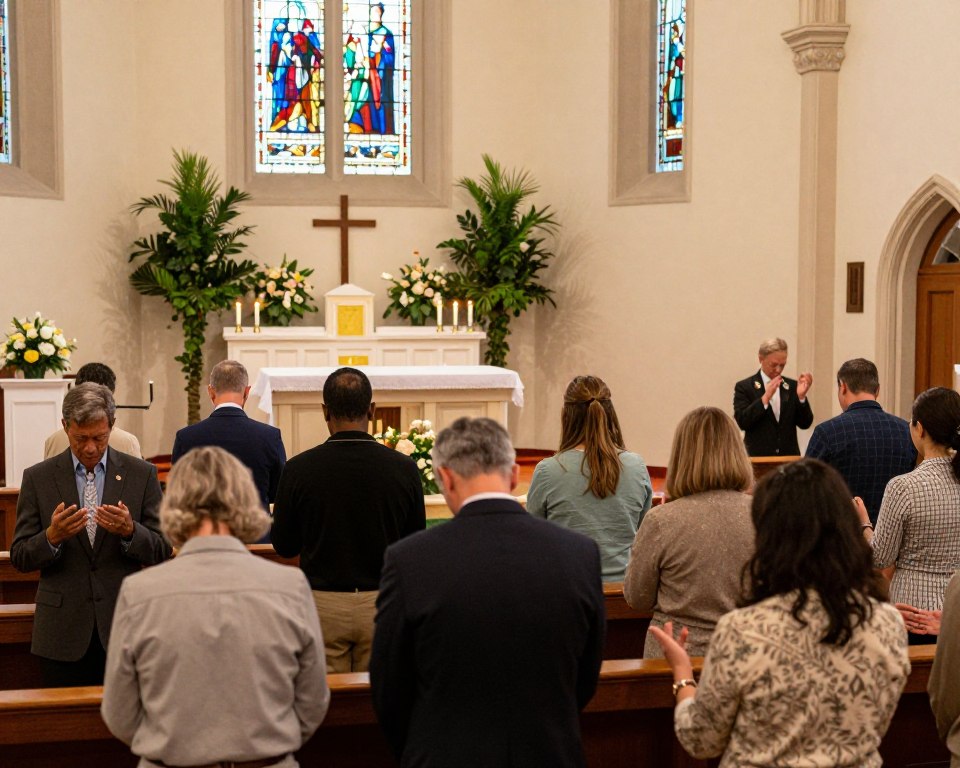
Worship is a central aspect of the PCA’s community life. It is through corporate worship that believers come together to praise God, hear His Word, and participate in sacraments like baptism and the Lord’s Supper. The PCA emphasizes the importance of reverent and biblically grounded worship services.
The church community in the PCA is designed to foster an atmosphere where believers can grow in their faith through regular worship. This includes not just the Sunday services but also mid-week Bible studies and prayer meetings.
Fellowship and Discipleship
Beyond worship, the PCA places a strong emphasis on fellowship and discipleship within the church community. Believers are encouraged to support one another through various ministries and programs aimed at spiritual growth.
The PCA believes that fellowship is essential for living out one’s faith. It is through sharing life together, serving one another, and engaging in community activities that believers can truly experience the love of Christ.
Discipleship programs within the PCA are designed to help believers deepen their understanding of Scripture and live out their faith in practical ways. This includes mentorship, Bible studies, and service projects.
By focusing on worship, fellowship, and discipleship, the Presbyterian Church in America creates a vibrant community that supports the spiritual growth of its members.
Mission and Evangelism
Mission and evangelism are integral to the PCA’s identity, driving its engagement with both local and global communities. The PCA has a strong emphasis on missions and evangelism, both locally and globally.
Committing to Outreach
The PCA’s commitment to outreach is reflected in its various mission programs and evangelistic efforts. This includes:
- Supporting missionaries around the world
- Organizing community events to share the Gospel
- Providing resources for churches to engage in local outreach
The PCA believes that outreach is not just about global missions but also about engaging with the local community.
Engaging with the Local Community
Engaging with the local community is a vital aspect of the PCA’s mission and evangelism strategy. This involves:
- Building relationships with local organizations
- Participating in community service projects
- Creating opportunities for dialogue and sharing the Gospel
By engaging with the local community, the PCA aims to demonstrate its commitment to serving others and sharing its beliefs.
The PCA’s approach to mission and evangelism is multifaceted, involving both local and global initiatives. Through its commitment to outreach and community engagement, the PCA seeks to fulfill its mission of spreading the Gospel.
Presbyterian Governance Structure
The Presbyterian Church in America operates under a unique governance structure that is both presbyterian and connectional. This system is designed to balance the autonomy of local churches with the benefits of a broader, unified church body.
Connectionalism Explained
Connectionalism is a key feature of the PCA’s governance. It refers to the way in which individual churches are connected to and interact with one another through various governing bodies. This connectional system facilitates cooperation, mutual support, and a unified approach to mission and ministry across the denomination.
Key aspects of connectionalism include:
- Regional and national assemblies that bring together representatives from local churches.
- A system of checks and balances that ensures no single church or entity has undue authority.
- Shared resources and expertise to support churches in their missions.
The Role of Elders and Deacons
In the PCA, elders and deacons play crucial roles in the governance and ministry of local churches. Elders are responsible for the spiritual leadership and governance of the church, while deacons focus on serving the congregation’s physical and social needs.
The selection and duties of these church leaders are guided by the PCA’s constitution and the principles outlined in the Bible. Together, elders and deacons work to ensure that the church is both well-governed and actively serving its community.
The Understanding of Eschatology
Delving into the PCA’s understanding of eschatology reveals a rich tapestry of theological thought centered on the end times. The Presbyterian Church in America holds a distinct view on eschatology that is deeply rooted in its Reformed theology.

Views on End Times
The PCA’s views on end times are shaped by its commitment to Reformed theology. This perspective emphasizes the sovereignty of God in all aspects of history, including the culmination of human events. The PCA adheres to a historic premillennial or amillennial view, with some members holding to a postmillennial perspective, all grounded in a careful reading of Scripture.
The church’s eschatological stance is not merely speculative but is deeply connected to its understanding of God’s redemptive plan. This plan is seen as unfolding through the already but not yet framework, where the ‘already’ refers to the accomplished work of Christ and the ‘not yet’ to the future consummation of God’s kingdom.
Hope in Resurrection
A central aspect of the PCA’s eschatology is the hope in resurrection. This hope is rooted in the belief in the bodily resurrection of Jesus Christ, seen as the firstfruits of the resurrection to come for believers. The PCA affirms that just as Christ was raised from the dead, believers will also be raised to eternal life, transformed to be like Him.
This hope is not just a future expectation but has present implications for how believers live their lives. It encourages a life of faithfulness and obedience, motivated by the promise of eternal life and the prospect of being in the presence of God forever.
The PCA’s eschatology, therefore, is not just about the end times but about living in light of the end times. It calls believers to a life of hope, rooted in the confident expectation of the resurrection and the ultimate triumph of God’s kingdom.
Social Issues and Ethics
The Presbyterian Church in America engages with modern social challenges through the lens of biblical ethics. This approach is rooted in the church’s commitment to traditional Christian values and its understanding of scripture.
PCA’s Stance on Contemporary Issues
The PCA maintains a conservative stance on various social issues, aligning its positions with biblical teachings. This includes its views on human life, marriage, and family, which are considered essential aspects of Christian ethics.
Key Positions:
- Sanctity of Human Life: The PCA advocates for the protection of human life from conception to natural death.
- Marriage and Family: The church supports traditional views on marriage and family, emphasizing the importance of these institutions in society.
- Human Sexuality: The PCA adheres to a biblical understanding of human sexuality, promoting chastity and fidelity.
Engaging with Culture
The PCA recognizes the importance of engaging with contemporary culture while remaining faithful to its theological convictions. This involves a thoughtful and nuanced approach to social issues, balancing compassion with biblical truth.
| Issue | PCA’s Stance | Biblical Basis |
|---|---|---|
| Human Life | Protects life from conception to natural death | Psalm 139:13-14 |
| Marriage & Family | Supports traditional marriage and family values | Ephesians 5:22-33; 6:1-4 |
| Human Sexuality | Promotes chastity and fidelity | 1 Corinthians 6:18-20; Hebrews 13:4 |
The PCA’s engagement with culture is characterized by a commitment to grace and truth, seeking to reflect the love of Christ in its interactions with the world.
Theological Education in the PCA
The Presbyterian Church in America (PCA) places a significant emphasis on theological education, recognizing its crucial role in shaping the faith and practice of its members. The PCA’s commitment to theological education is reflected in its institutions dedicated to training leaders and fostering a deep understanding of Christian doctrine.
Importance of Seminaries
The PCA has established renowned seminaries, such as Covenant Theological Seminary, to provide comprehensive theological education. These institutions are vital for preparing individuals for ministry and equipping them with a robust understanding of Reformed theology.
The seminaries within the PCA offer a range of programs designed to foster spiritual growth, theological insight, and practical skills necessary for effective ministry. By investing in theological education, the PCA ensures that its leaders are well-prepared to serve the church and engage with contemporary issues.
Lifelong Learning Opportunities
Beyond formal seminary education, the PCA encourages lifelong learning among its members. This includes ongoing biblical study, theological reflection, and engagement with the church’s confessional standards.
The PCA provides various resources and opportunities for continued education, recognizing that theological growth is a lifelong journey. By promoting a culture of learning, the PCA aims to empower its members to live out their faith effectively in all aspects of life.
Conclusion: Embracing PCA Beliefs Today
The Presbyterian Church in America (PCA) offers a rich and robust theological framework that guides its members in their faith journey. As we have explored, the PCA’s beliefs are rooted in a deep commitment to Scripture and the Reformed tradition.
For Those New to the PCA
For those new to the PCA, embracing its beliefs means understanding the importance of the sovereignty of God, the authority of Scripture, and the role of grace in salvation. It involves being part of a community that values worship, fellowship, and discipleship.
Practical Faith
Living out the PCA beliefs in daily life means applying these principles in practical ways. It involves sharing the gospel with others, engaging in acts of service, and striving to reflect the character of Christ in all aspects of life. By doing so, members of the PCA can deepen their faith and contribute to the growth of the church.
As the PCA continues to navigate the complexities of the modern world, its commitment to its core beliefs remains unwavering. By embracing these beliefs, individuals can find a meaningful and fulfilling path in their spiritual journey.
FAQ
What is the Presbyterian Church in America (PCA), and when was it founded?
The Presbyterian Church in America (PCA) is a conservative Presbyterian denomination that was founded in 1973. It was formed as a result of a separation from the Presbyterian Church in the United States (PCUS) due to theological differences.
What are the core doctrines of the PCA?
The PCA is founded on the authority of Scripture, the Westminster Confession of Faith, and the principle of “grace alone” in salvation. It emphasizes the sovereignty of God, the importance of the sacraments, and the role of the church community in worship, fellowship, and discipleship.
How does the PCA understand the sovereignty of God?
The PCA believes that God’s sovereignty is the foundation of all things, and it is biblically based. This doctrine has significant implications for believers, as it shapes their understanding of God’s control over all aspects of life and their trust in His providence.
What is the PCA’s view on salvation?
The PCA adheres to the doctrine of “grace alone,” affirming that salvation is a gift from God that is received through faith alone. While good works are not the means of salvation, they are a natural consequence of a living faith.
How does the PCA practice the sacraments?
The PCA recognizes two sacraments: baptism and the Lord’s Supper. Baptism is administered to believers and their children as a sign of God’s covenant, while the Lord’s Supper is observed as a commemoration of Christ’s death and resurrection, with the elements being considered spiritual nourishment for believers.
What is the role of the church community in the PCA?
The church community is vital in the PCA, with worship, fellowship, and discipleship being essential aspects of church life. The community is seen as a body of believers united in their commitment to Christ and to one another.
How does the PCA approach mission and evangelism?
The PCA is committed to outreach and evangelism, with a focus on engaging with the local community and sharing the gospel. This involves various strategies, including church planting, missions, and community service.
What is the governance structure of the PCA?
The PCA operates under a connectional system, with churches being governed by elders and deacons. This system emphasizes the interdependence of churches within the denomination and the importance of collective decision-making.
What are the PCA’s views on eschatology?
The PCA holds to a historic Christian view of eschatology, affirming the hope of resurrection and the return of Christ. While there may be variations in understanding the end times, the focus is on the ultimate triumph of God and the believer’s future with Him.
How does the PCA engage with social issues?
The PCA is committed to biblical ethics and engages with social issues from a conservative, Christian perspective. This involves applying biblical principles to contemporary issues and promoting a Christian worldview.
What is the importance of theological education in the PCA?
The PCA places a high value on theological education, with seminaries playing a crucial role in the training of ministers and leaders. The denomination also emphasizes the importance of lifelong learning for all believers.
How can newcomers understand and embrace PCA beliefs?
Newcomers can start by learning about the PCA’s core doctrines, its history, and its practices. Engaging with the church community, attending worship services, and participating in Bible studies can also provide a deeper understanding of PCA beliefs and how to live them out in daily life.