For over a thousand years, spiritual traditions have woven through the fabric of Eastern Europe’s largest nation. The Catholic Church has played a quiet yet persistent role in this story, adapting to shifting political winds and cultural changes. Today, its followers represent less than 1% of the population, but their impact stretches far beyond numbers.
Recent surveys reveal fascinating details about these communities. Nearly half of adherents pray daily – a rate nearly triple that of other major religious groups. Ethnic diversity marks these congregations, with nearly half identifying as ethnically Russian alongside German, Armenian, and Eastern European members.
This spiritual journey hasn’t been easy. From imperial restrictions to Soviet-era persecutions, Catholic communities faced immense challenges. Yet they preserved traditions through underground networks and family rituals. Modern believers now navigate complex relationships with both government policies and majority religious institutions.
Key Takeaways
- Less than 1% of Russia’s population identifies with this ancient faith tradition
- Ethnic diversity defines modern congregations across the country
- Daily prayer rates significantly outpace other religious groups
- Historical challenges shaped unique survival strategies
- Current communities balance tradition with modern realities
- Church organization reflects both local and global connections
Historical Origins of the Catholic Church in Russia
Diplomatic overtures by a visionary princess set in motion a centuries-long dance between Eastern and Western Christianity. In the 10th century, Princess Olga of Kyiv made history by sending envoys to Holy Roman Emperor Otto I. This bold move sparked the first organized attempts to bridge spiritual divides across Europe’s emerging kingdoms.
Early Missionary Efforts and Contacts
Bishop Adaldag of Bremen took charge of this groundbreaking mission, appointing monk Libutius as spiritual leader for the Rus’. Tragically, Libutius died before reaching his destination. His successor Adalbertus faced worse – fleeing after local resistance turned deadly for his companions.
These early conversion efforts reveal a stark truth. Missionaries risked everything to spread their faith in unfamiliar territory. Their struggles laid bare the complex relationship between religious authority and political power in medieval Europe.
The Role of Princess Olga and Early Emissaries
Prince Vladimir later sent his own emissaries to Rome, catching papal attention. Popes John XV and Sylvester II responded with three diplomatic missions to Kyiv. But the most dramatic chapter came in 1002, when a Saxon archbishop and 18 followers met violent ends while preaching.
This clash of competing Christian traditions shaped future conflicts. As Western clergy pushed eastward, tensions with the Russian Orthodox Church began simmering. These encounters created patterns that would influence religious history for generations.
Conversion and Early Encounters between East and West
Long before formal divisions split Christianity, the lands of Rus’ became a crossroads for competing spiritual traditions. While later generations would see clear lines between Roman Catholic and Orthodox Church practices, 10th-century believers navigated a fluid religious landscape.
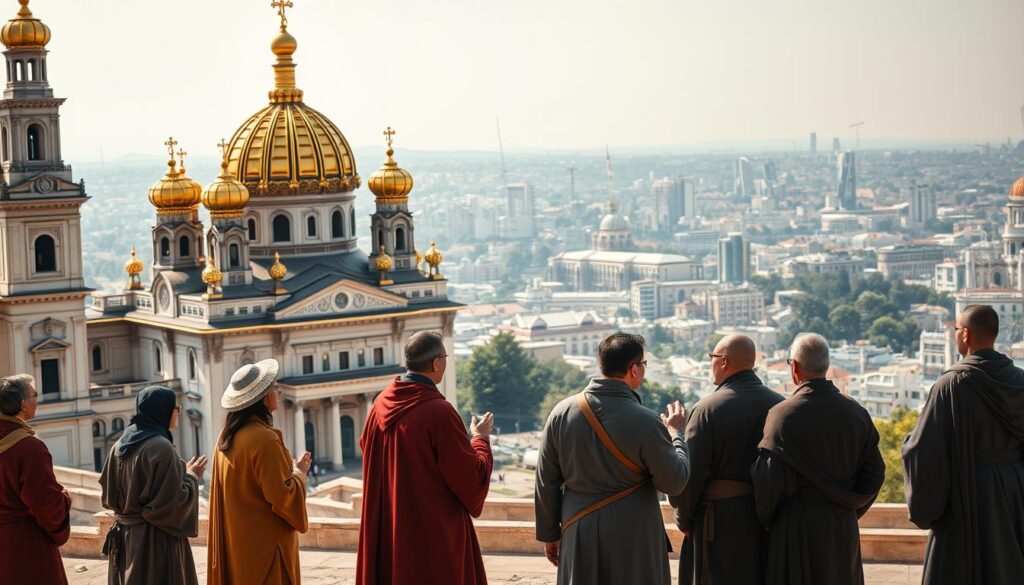
Embassies from Rome and Early Proselytization
Prince Vladimir’s legendary search for faith wasn’t just folklore. Historical records confirm his envoys visited German churches representing Western Christianity. These scouts reported back about rituals they found less captivating than Byzantine services.
The famous chronicle account describes emissaries being “awestruck” by Hagia Sophia’s grandeur. This cultural mismatch shaped Rus’ spiritual direction. Though Roman Catholic missionaries kept trying, their efforts faced uphill battles against established traditions.
Conflicts and Cooperation in Medieval Rus’
Tensions between Christian branches began simmering long before 1054. The 9th-century Photian schism created rifts that influenced Vladimir’s decision. Byzantine clergy emphasized shared roots with Rus’ people, while Western bishops struggled with language barriers.
Despite competition, surprising cooperation occurred. Some churches blended elements from both traditions before strict divisions hardened. These early relations show how politics and faith intertwined in shaping a nation’s spiritual identity.
The Evolution of catholicism russia Through the Centuries
As the first millennium ended, religious boundaries in Eastern Europe began crystallizing into divisions that would shape centuries of conflict. Church leaders increasingly framed theological disagreements as matters of spiritual survival rather than scholarly debate.
Shifting Perceptions of Spiritual Authority
Metropolitan Ivan II set the tone in 1089 by rejecting a papal unity proposal. His detailed letter outlined differences in sacraments and leadership structures. This established a pattern of formal opposition that later hierarchs would expand.
Archbishop Nifont’s 12th-century decree shocked many believers. He declared:
“A mother seeking Catholic baptism for her child commits equal sin as one visiting pagan sorcerers.”
This radical stance reveals how Orthodox leaders viewed Western practices. Three key factors fueled this hostility:
- Growing political alliances with Constantinople
- Disputes over liturgical practices
- Competition for converts in border regions
| Leader | Position | Action | Impact |
|---|---|---|---|
| Metropolitan Ivan II | Rejected papal unity | 1089 letter | Formalized opposition |
| Archbishop Nifont | Novgorod | Equated Catholic/Pagan rites | Deepened cultural divide |
| Metropolitan Isidor | Kyiv | 1430s Rome contact | Ended 400-year isolation |
By the 15th century, these developments created lasting barriers. The Russian Orthodox Church saw itself as guardian of true Christian tradition, while viewing the Catholic Church through lenses of suspicion. This mindset would influence interfaith relations for 800 years.
The Role of Catholic Orders and Crusades in Shaping History
Medieval Europe’s religious landscape was shaped by both sword and sermon. The Catholic Church employed military campaigns and peaceful missions to expand its influence, creating lasting tensions with Orthodox Christians. These efforts left deep marks on cultural memory and political relationships.
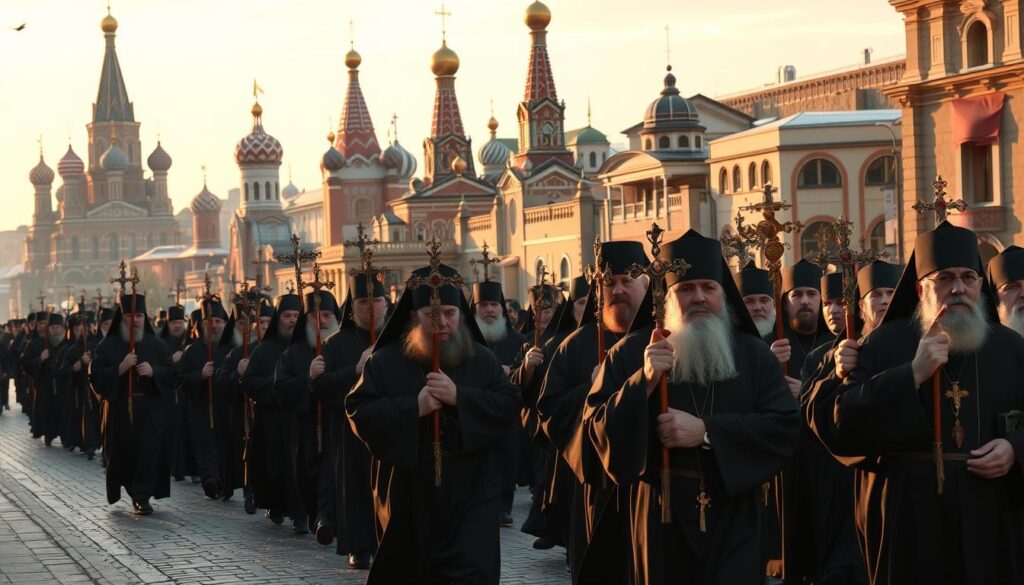
Teutonic Knights and Northern Crusades
The Teutonic Knights stormed northwestern towns like Pskov and Novgorod in the 13th century. Locals resisted fiercely – not just over faith, but taxes. As one chronicler noted: “Better our own princes’ rule than foreign coffers.”
Sweden’s King Magnus Eriksson continued this pattern in the 1330s. His “crusades” masked land grabs, fueling Russian distrust of Western motives. Lithuania’s 1387 conversion to Catholicism created a powerful rival bloc next door.
Influence of Dominicans and Jesuits
Not all expansion involved violence. Pope Alexander IV sent Dominican friars to central regions in the 1300s. These clergy focused on education, establishing schools alongside churches.
Later Jesuit missionaries adopted local customs, showing flexibility in their efforts. This dual approach – force and persuasion – set the stage for complex relations in the Russian Empire era. As Pope Pius later observed: “Truth travels best on two roads – reason and example.”
Catholic Dioceses and Ecclesiastical Structures in Russia
Russia’s Catholic communities are supported by a network of dioceses stretching from Europe to Asia. At its heart lies the Moscow Archdiocese, overseeing three suffragan dioceses in Saratov, Irkutsk, and Novosibirsk. This structure ensures spiritual care across 11 time zones, from bustling cities to remote Siberian towns.
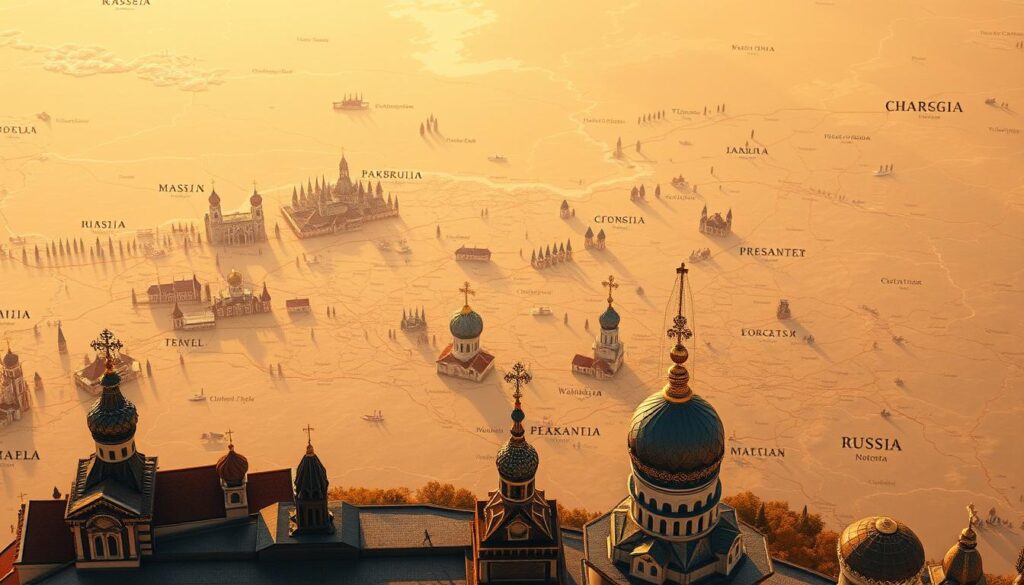
Latin Church Jurisdictions and Parishes
The Latin Church serves most Catholics through 200+ parishes. Each suffragan diocese covers strategic regions:
- Saratov: Volga River basin communities
- Irkutsk: Siberian mining towns
- Novosibirsk: Central Asian border areas
Sakhalin Island forms its own apostolic prefecture – a recognition of its unique needs as Russia’s easternmost territory.
Eastern Rites and the Byzantine Exarchate
The Russian Greek Catholic Church maintains Byzantine traditions while honoring papal authority. With only 3,000 members, this minority within a minority faces special challenges. Since 2004, Latin-rite Bishop Joseph Werth has doubled as their ordinary – a practical solution for limited resources.
Though small, these Eastern-rite communities preserve ancient liturgies. As one parishioner notes: “Our faith connects us to both Rome and our ancestors’ spiritual roots.”
Impact of the
Today’s Catholic communities quietly shape spiritual landscapes through everyday actions. Their daily prayer rates – three times higher than other religious groups – reveal deep personal commitments. These practices sustain traditions in kitchens and living rooms as much as in formal worship spaces.
Modern challenges test these tight-knit groups. Government regulations require careful navigation, while cultural differences create unique opportunities. Many parishes now blend multiple languages in services, reflecting their diverse membership.
The Catholic Church maintains influence through education and charity work. Soup kitchens and language classes build bridges across communities. These efforts showcase faith in action rather than doctrinal debates.
Looking ahead, younger generations bring fresh energy to ancient rituals. Their digital fluency helps preserve traditions while adapting to new realities. This balance between heritage and innovation may define the community’s future path in the nation’s evolving spiritual mosaic.
FAQ
How did early missionary efforts shape the Catholic Church’s presence in Russia?
Early missionaries, like those sent by Princess Olga of Kyiv, built bridges between Eastern and Western Christian traditions. Their work laid the groundwork for later religious exchanges, even as political tensions sometimes overshadowed spiritual connections.
What role did the Teutonic Knights play in Russia’s religious history?
The Teutonic Knights, active during the Northern Crusades, sought to spread Latin Christianity into Baltic and Slavic regions. Their campaigns often clashed with local rulers and the Russian Orthodox Church, leaving a legacy of both conflict and cultural exchange.
How did the Great Schism affect Catholic-Orthodox relations in medieval Rus’?
The 1054 split between Rome and Constantinople deepened theological and political divides. While trade and diplomacy continued, differences in practices like liturgy and clerical authority created lasting barriers between communities.
What are Eastern Catholic Churches, and do they exist in Russia?
Eastern Catholic Churches follow Byzantine traditions while recognizing papal authority. In Russia, small communities like the Byzantine Exarchate maintain this unique identity, though they face challenges in a majority-Orthodox society.
How did the Jesuits influence religious life in the Russian Empire?
Jesuit missionaries established schools and promoted dialogue with Orthodox thinkers during the 16th–18th centuries. Their focus on education and intellectual engagement left a lasting mark, even after their expulsion by Catherine the Great.
What happened to Catholic parishes under Soviet rule?
The Soviet regime suppressed religious institutions, confiscating churches and imprisoning clergy. Many Catholic parishes went underground, preserving rituals in secret until the late 1980s, when restrictions eased.
How have recent popes engaged with the Russian Orthodox Church?
Pope John Paul II prioritized ecumenical dialogue, while Pope Francis has collaborated with Patriarch Kirill on issues like Ukraine. These efforts aim to heal centuries-old rifts, though differences remain on topics like jurisdiction and doctrine.
Are there still tensions between Catholic and Orthodox communities today?
While cooperation has grown, disputes over property and missionary activity occasionally arise. Both sides emphasize shared values, but historical grievances and modern politics still influence interactions.
What is the status of the Greek Catholic Church in Russia?
The Greek Catholic Church, which blends Eastern rites with loyalty to Rome, has faced restrictions in Russia. Its small congregations often operate discreetly, navigating complex relationships with both state and Orthodox authorities.
How do Catholic dioceses function within Russia’s legal framework?
Catholic dioceses must register with the government, which regulates religious activity. While they can worship openly, proselytizing is limited, and leaders often balance faith with cautious diplomacy to avoid conflicts.