Welcome to your guide to one of Christianity’s most influential movements. With over 833 million followers globally, this branch of the Christian church has shaped spiritual, cultural, and social landscapes for centuries. From its Reformation-era beginnings to its modern-day diversity, we’ll unpack what makes this tradition unique.
This exploration starts with foundational ideas that sparked dramatic changes in the 16th century. You’ll discover how concepts like sola scriptura (Scripture alone) and salvation through faith redefined worship. We’ll also look at how these principles evolved into thousands of denominations, each adapting to local cultures while keeping core teachings intact.
Why does this matter today? Beyond its historical roots, this movement continues to influence art, education, and social justice efforts worldwide. Whether you’re curious about Sunday services or global missionary work, understanding these patterns helps explain modern Christianity’s dynamic nature.
Our journey will stay grounded and conversational. Complex terms get simple explanations, and dry facts transform into relatable stories. You’ll walk away knowing how a 500-year-old revolution still impacts Sunday mornings—and global communities.
Key Takeaways
- Represents 30% of global Christians with 833+ million members
- Originated from 16th-century Reformation principles
- Emphasizes direct engagement with Scripture
- Features diverse worship styles across denominations
- Continues to shape modern culture and ethics
Introduction to This Ultimate Guide
This guide offers a clear path to understanding Christianity’s diverse expressions. Whether you’re exploring your spiritual roots or studying religious movements, we’ll walk through 500 years of transformation. Our approach blends historical context with modern relevance, showing how ancient ideas shape today’s churches.
Purpose and Scope
Designed for both curious newcomers and lifelong members, this resource unpacks complex teachings in simple terms. You’ll see how 16th-century reforms sparked new ways of practicing the Christian faith. We’ve organized the content to answer three key questions:
| Section Focus | Key Themes | Practical Insights |
|---|---|---|
| Historical Foundations | Reformation origins | Impact on modern worship |
| Theological Principles | Core doctrines | Denominational comparisons |
| Modern Applications | Ecumenical dialogue | Global influence |
What Readers Will Learn
By the final chapter, you’ll recognize patterns connecting Protestant Christians across continents. The guide highlights:
- How Martin Luther’s protests reshaped European society
- Why baptism practices vary between denominations
- Ways modern churches collaborate across traditions
You’ll also discover surprising connections. For example, early reformers’ emphasis on scripture literacy paved the way for public education systems. This blend of history and current events makes the material vital for understanding Western culture.
Historical Origins of Protestantism
The roots of Protestant thought stretch deeper than many realize. Long before the 16th century, critics within Roman Catholicism laid groundwork for change. Their ideas simmered for 200 years, waiting for the right moment to boil over.
Seeds of Change: Pre-Reformation Voices
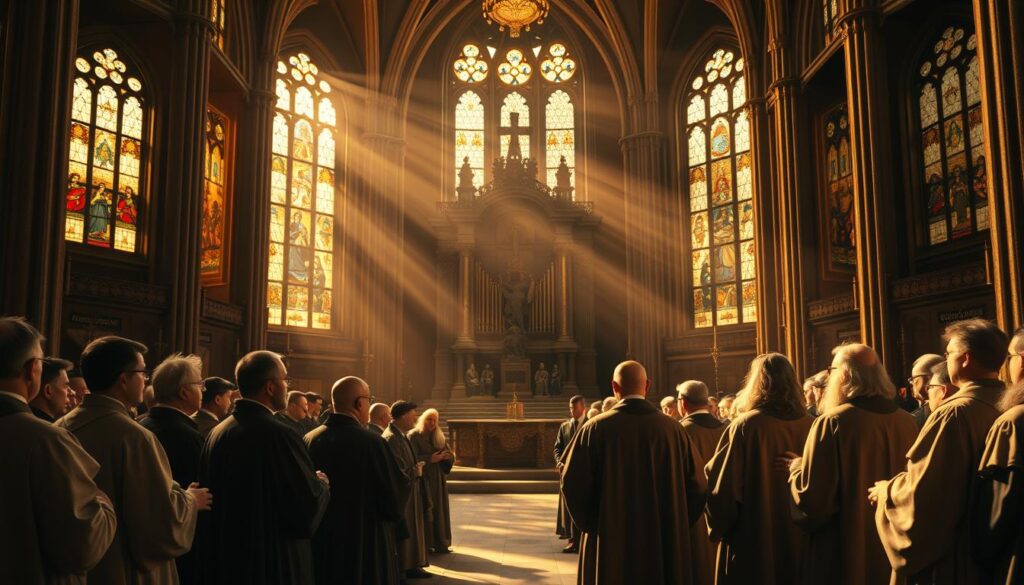
John Wycliffe’s Bible translations challenged church authority in the 1300s. Jan Hus burned at the stake in 1415 for questioning indulgences. William of Ockham argued scripture outweighed papal decrees. These reformers stayed within medieval traditions but planted revolutionary ideas.
The Protest That Named a Movement
Everything changed at the 1529 Diet of Speyer. German princes refused to revoke Luther’s reforms, declaring: “In matters of conscience, majority rule has no power.” Their formal protest birthed the term Protestant, marking a decisive break from Rome.
Three factors fueled this movement:
- National pride resisting foreign papal control
- Scholars like Erasmus exposing church corruption
- Printing presses spreading reform ideas rapidly
By the mid-16th century, what began as scattered criticism became a continent-wide Protestant Reformation. The Diet of Speyer proved ideas could become actions—and actions could reshape Christianity forever.
Understanding protestantism beliefs and practices
At the heart of Christian renewal movements lie revolutionary ideas about divine connection. Unlike systems requiring human intermediaries, these teachings prioritize direct spiritual access. This shift transformed how millions approach sacred texts and personal devotion.
Key Doctrines and Practices Explained
Central to protestant theology is the concept of salvation by grace through faith alone. Martin Luther famously compared this to a “beggar receiving a crown” – unearned yet transformative. This contrasts with merit-based systems where rituals dictate spiritual standing.
The principle of sola scriptura (Scripture as ultimate authority) reshaped religious life. As one reformer declared:
“God’s Word stands above popes, councils, and traditions.”
This belief birthed vernacular Bibles and congregational singing – tools for personal engagement with divine truth.
| Principle | Protestant Approach | Catholic Approach |
|---|---|---|
| Religious Authority | Bible as sole source | Scripture + tradition |
| Salvation | Faith alone | Faith + works |
| Interpretation | Individual discernment | Church guidance |
These beliefs empower laypeople as spiritual equals. Sunday schools and home Bible studies became common, reflecting the “priesthood of all believers” ideal. Even church governance models – from Episcopal structures to congregational voting – mirror this democratic impulse.
Modern applications show lasting impact. Over 67% of US Protestants report daily prayer, while 41% engage in personal scripture reading weekly. This hands-on faith continues shaping communities through volunteerism and ethical business practices rooted in protestant theology.
Influential Reformation Figures and Their Impact
Two revolutionary thinkers reshaped Christianity forever. Their ideas sparked movements that still influence Sunday services and theological debates today.
Martin Luther and the Ninety-Five Theses
In 1517, a German theology professor nailed 95 arguments to a church door. Martin Luther‘s protest against indulgence sales became Christianity’s most famous memo. His writings emphasized:
- Salvation through faith rather than purchased forgiveness
- Scripture’s authority over church traditions
- The “priesthood” of every believer
Luther hated the term “Lutheran,” preferring “evangelical” – from the Greek euangelion meaning “good news.” His Bible translation let ordinary people engage directly with God’s Word, a radical shift in religious freedom.
John Calvin and Reformed Theology
While Luther sparked change, John Calvin built systems. His 1536 Institutes outlined Reformed Theology’s core ideas:
“True wisdom consists in knowing God and knowing ourselves.”
| Thinker | Focus | Lasting Influence |
|---|---|---|
| Luther | Individual faith | Modern evangelical movements |
| Calvin | Divine sovereignty | Presbyterian governance |
Calvin’s concept of an “invisible church” – believers united beyond physical buildings – reshaped how Protestant reformers understood community. His Geneva became a laboratory for church-state relations.
Though differing in approach, both men’s writings created lasting branches of Christian thought. Luther’s passionate protests and Calvin’s logical frameworks continue shaping how millions worship worldwide.
Denominational Diversity Within Protestantism
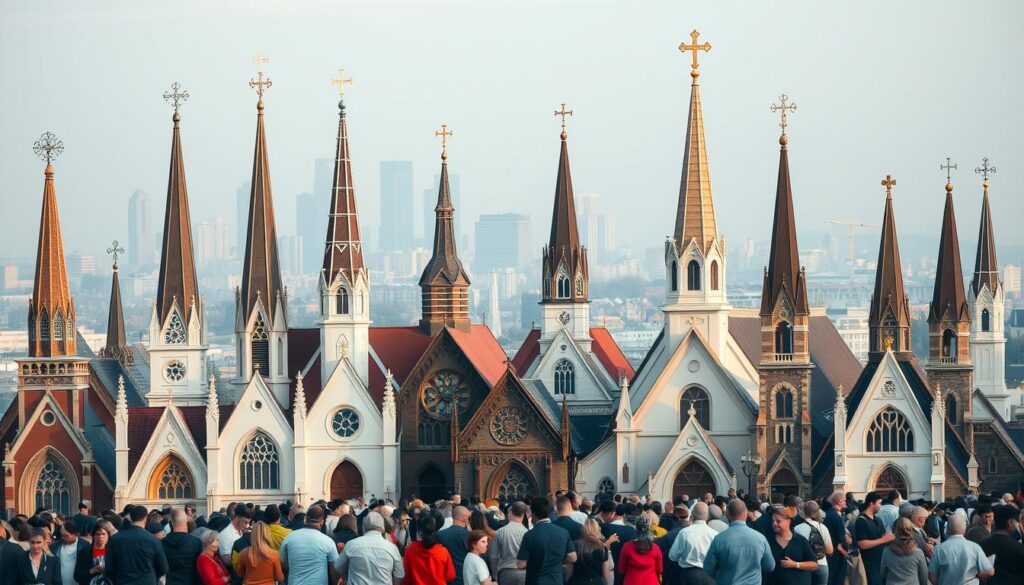
From grand cathedrals to storefront chapels, Protestant communities showcase remarkable variety while sharing foundational ideas. Over 200 denominations exist today, each adapting Reformation principles to local cultures and new generations.
Roots of Historic Traditions
The Church of England began as a political move. When Henry VIII broke from Rome in 1534, he unknowingly created Anglicanism – a tradition blending Catholic rituals with Reformed theology. Meanwhile, Lutheran denominations flourished across Scandinavia, emphasizing congregational singing and baptismal grace.
| Tradition | Governance | Worship Style |
|---|---|---|
| Lutheran | Synod-based | Liturgical |
| Anglican | Episcopal | Sacramental |
| Assemblies of God | Congregational | Charismatic |
New Shapes of Faith
Modern movements prioritize flexibility. Non-denominational churches – now 13% of US congregations – avoid formal labels while using contemporary music and casual dress. The Assemblies of God, founded in 1914, grew into the world’s largest Pentecostal group through spirited worship and global missions.
This diversity reflects different readings of scripture. Some groups value structured liturgy; others embrace spontaneous prayer. Yet all maintain core commitments to scripture’s authority and salvation through faith – proving unity thrives alongside variety.
Sacraments and Worship Practices
Sunday mornings in Protestant churches blend ancient rituals with modern expressions of faith. At the heart of these gatherings lie two sacred acts: baptism and communion. These church traditions connect believers to Jesus Christ’s teachings while reflecting theological priorities from the Reformation.

The Eucharist and Baptism as Central Sacraments
Protestants recognize baptism and communion as the only sacraments directly commanded by Jesus Christ. Unlike medieval traditions, these acts aren’t seen as magical rituals but as visible expressions of God’s good news. As one reformer noted:
“Sacraments are seals of God’s promises, not containers of divine power.”
Communion interpretations vary widely. Lutherans teach Christ’s presence exists alongside bread and wine (consubstantiation). Reformed churches emphasize spiritual nourishment through the Holy Spirit. Baptists view it as a symbolic memorial.
| Baptism Practice | Denominations | Theological Basis |
|---|---|---|
| Infant baptism | Lutheran, Anglican | Covenant with church family |
| Believer’s baptism | Baptist, Pentecostal | Personal faith commitment |
Worship services prioritize active participation. Congregational singing replaced Latin chants during the Reformation. Today, 78% of Protestant churches feature contemporary music alongside sermons explaining scripture’s relevance to daily life.
The Holy Spirit’s role remains central. From spontaneous prayers in charismatic churches to quiet reflection in liturgical settings, believers seek divine connection without human mediators. This approach reflects the Reformation ideal: every person’s direct access to God through Christ.
Core Doctrinal Principles: The Five Solas
Imagine holding a theological compass from the 1500s. The Five Solas serve this purpose, guiding Christian thought through Reformation storms. These Latin phrases crystallized reformers’ arguments against medieval church practices, offering fresh directions for spiritual navigation.
Scripture and Faith: Twin Pillars
Sola Scriptura (Scripture alone) made the Bible Christianity’s GPS. Reformers argued divine truth lived in pages, not papal decrees. As Luther declared:
“A simple layman armed with Scripture is greater than the mightiest pope without it.”
Sola Fide (faith alone) shifted salvation’s source. Good deeds became thank-you notes for God’s gift, not admission tickets to heaven. This doctrine untangled grace from human performance metrics.
Grace’s Triple Crown
Three remaining principles complete the set:
| Principle | Meaning |
|---|---|
| Solus Christus | Jesus as sole bridge to God |
| Sola Gratia | Salvation as divine gift |
| Soli Deo Gloria | Life’s purpose: God’s honor |
Together, they form an unbroken chain. God’s grace flows through Christ to believers who access it by faith, guided by Scripture – all reflecting divine glory. This framework rejects human mediators like saints, emphasizing direct spiritual relationships.
Modern churches still lean on these five solae. Over 80% of Protestant denominations reference them in founding documents. They remain guardrails against legalism, reminding believers that salvation starts and ends with divine initiative.
Protestantism and Its Relationship with the Roman Catholic Church
Six German nobles changed Christian history forever at the 1529 Diet of Speyer. Their protest against religious restrictions birthed a new identity – and a 500-year conversation between traditions. What began as opposition evolved into complex relationships shaping global Christianity.
Historical Conflicts and Key Differentiators
The Roman Catholic Church first used “Protestant” as a label for reformers rejecting papal authority. Early disputes centered on three core issues:
| Area | Roman Catholic View | Protestant View |
|---|---|---|
| Authority | Pope + Tradition | Scripture alone |
| Salvation | Faith + Works | Grace through faith |
| Leadership | Hierarchical clergy | Priesthood of believers |
These differences sparked Europe’s Thirty Years’ War (1618-1648), where princes used religious loyalty to gain political power. As one historian notes:
“The Reformation reshaped maps more than prayer books.”
Ecumenical Dialogue in the Modern Era
Since 1965’s Vatican II reforms, Roman Catholic and Protestant leaders have built bridges. Joint Bible translations and shared social justice projects show growing unity. Over 75% of US churches now participate in interdenominational initiatives.
Key areas of cooperation include:
- Human rights advocacy
- Disaster relief efforts
- Climate change responses
While sacraments and church governance still differ, both traditions increasingly focus on common ground. This shift proves ancient divisions can transform into partnerships for the common good.
Cultural and Global Impact of Protestantism
Protestant ideas didn’t just reshape churches—they transformed societies. The movement’s emphasis on personal responsibility and scripture engagement sparked changes in education, governance, and daily life. These shifts created patterns still visible in modern culture.
Shaping Modern Systems
Early reformers prioritized literacy to help people read scripture. This led to public education systems across Europe. By 1600, Lutheran areas had twice the literacy rates of Catholic regions. Today, many Ivy League schools trace their roots to Protestant founders.
Political structures also felt the impact. The concept of individual conscience over institutional authority influenced democratic ideals. American colonists used these principles to argue for religious freedom and representative government.
Economically, the Protestant work ethic shaped capitalism’s growth. Max Weber famously linked Reformed teachings to disciplined entrepreneurship. Modern social programs and nonprofits like the Red Cross reflect this blend of faith and practical service.
From school boards to stock markets, Reformation values continue shaping how communities organize. Their global spread through missions and trade created shared cultural frameworks that still drive progress.
FAQ
How did the term “Protestant” originate?
The name comes from the 1529 Diet of Speyer, where German princes protested restrictions on reforming church practices. This event marked a turning point in the Reformation, solidifying resistance against Roman Catholic authority.
What distinguishes Protestant theology from Catholic teachings?
Key differences include sola scriptura (Scripture alone as authority) and sola fide (faith alone for salvation). Protestants reject papal supremacy and emphasize direct access to God through Christ, unlike Catholic sacramental traditions.
Why are Martin Luther and John Calvin central to Protestant history?
A: Martin Luther sparked the Reformation by challenging indulgences in his Ninety-Five Theses. John Calvin shaped Reformed theology, stressing God’s sovereignty and predestination. Both reshaped Christian thought and church structures.
Do all Protestant denominations share the same practices?
No—groups like Lutherans, Baptists, and Assemblies of God vary in worship styles and doctrines. For example, Anglicans retain liturgical elements, while non-denominational churches often prioritize informal, contemporary services.
How do Protestants view sacraments like baptism?
Most recognize only baptism and communion as sacraments, seen as symbolic acts of faith rather than channels of grace. Views differ—Lutherans affirm Christ’s presence in the Eucharist, while others see it as purely memorial.
What role do the “Five Solas” play in Protestant belief?
These principles—Scripture, faith, grace, Christ, and God’s glory—form the foundation of Reformed theology. They reject human merit in salvation, emphasizing divine action and biblical authority.
Has Protestantism influenced culture beyond religion?
Yes! The Reformation shaped education, democracy, and capitalism. Luther’s writings promoted literacy, while Calvinist ideas on work ethic influenced economic systems. Modern human rights concepts also trace roots to Protestant thought.
Are there efforts to bridge gaps between Protestants and Catholics today?
Absolutely. While historical conflicts persist, ecumenical dialogues since the 20th century focus on shared beliefs like the Trinity. Joint initiatives address social justice, though doctrinal differences on authority and salvation remain.