What does it mean to be part of a universal faith community? The concept traces back to the Ancient Greek word katholikós, meaning “universal.” This idea of shared beliefs across cultures and generations remains central to Christian identity today.
For centuries, followers have interpreted this universality through different lenses. The 5th-century Vincentian Canon defined it as “what has been believed everywhere, always, and by all.” Yet across continents, local customs and historical developments created distinct expressions of worship.
From Eastern liturgical practices to modern independent movements, these groups share core elements like apostolic succession. They also maintain unique traditions that reflect their cultural contexts. This blend of unity and diversity forms the heartbeat of the global faith community.
Key Takeaways
- The term “catholic” originates from Greek, emphasizing universal beliefs embraced by diverse groups
- Over 20 distinct churches maintain communion with Rome while preserving unique traditions
- Apostolic succession remains a unifying thread across most denominations
- Cultural heritage shapes liturgical practices in different regions worldwide
- Independent movements demonstrate ongoing evolution within the faith
Introduction to the Diverse Catholic Denominations
How do global believers express shared spiritual roots through distinct practices? The answer lies in the rich variety of churches united by core Christian faith principles. From ancient Eastern rites to modern reform movements, these groups maintain sacraments and apostolic succession while celebrating unique cultural identities.
Three major branches form the foundation of this spiritual mosaic. The Eastern Orthodox churches preserve early Christian rituals with Byzantine influences. Anglican communities blend traditional liturgy with localized governance structures. Independent movements often reinterpret ancient practices for contemporary contexts.
What unites these diverse expressions? Four key elements stand out:
- Sacramental worship rooted in early church traditions
- Connection to historical apostolic leadership
- Structured liturgical frameworks
- Commitment to serving local communities
| Denomination | Liturgical Style | Cultural Influence |
|---|---|---|
| Eastern Orthodox | Byzantine chant | Greek/Slavic traditions |
| Anglican Communion | Book of Common Prayer | English heritage |
| Independent Catholic | Modern adaptations | Local community needs |
These faith communities demonstrate how universal teachings adapt to regional histories. A Coptic Orthodox service in Egypt feels distinct from a Lutheran Mass in Minnesota, yet both honor the same essential creed. This balance between unity and diversity continues to shape Christian faith experiences worldwide.
History and Evolution of Catholic Traditions
How did ancient rituals evolve into the diverse practices we see today? The answer lies in two millennia of spiritual development shaped by cultural shifts and theological debates. Early believers laid foundations that still influence modern worship patterns.
Foundations in Early Christianity
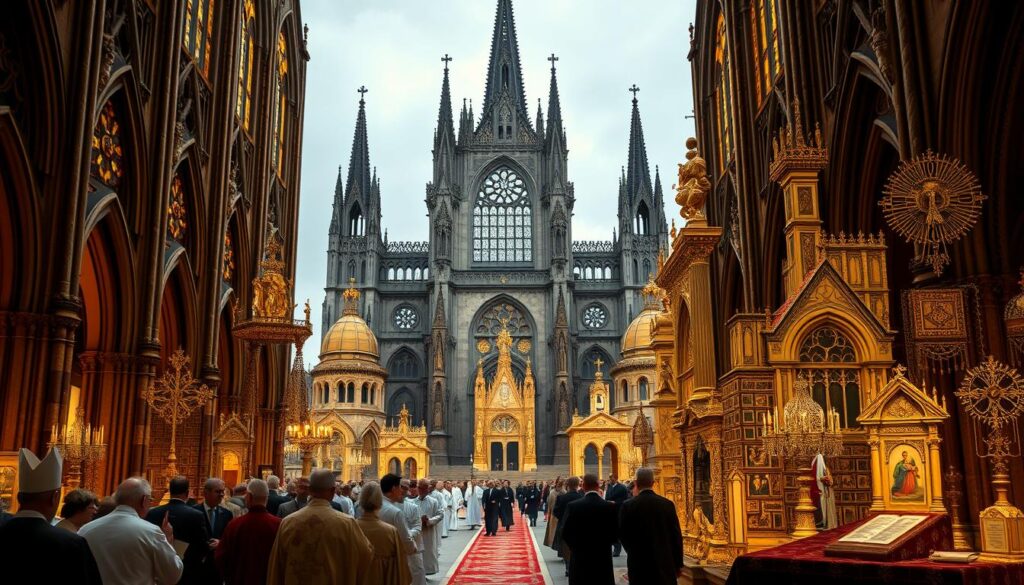
The New Testament communities established core traditions through shared meals and baptismal rites. By the 4th century, five patriarchates guided the growing church under the Pentarchy system. “The church fathers built upon apostolic teachings like layers of sacred architecture,” notes historian Robert Louis Wilken.
- Episcopal leadership structures
- Standardized liturgical formulas
- Doctrinal statements about Jesus Christ’s nature
Major Schisms and Reformation Impact
The 11th-century East-West split created distinct approaches to sacraments and authority. Centuries later, the Protestant Reformation challenged medieval practices, leading to new churches being founded across Europe. Each division forced communities to clarify their core beliefs.
Landmark councils like Ephesus (431 CE) settled crucial debates about Mary’s title as “God-bearer.” These decisions preserved unity while allowing regional variations. Today’s global faith landscape reflects centuries of such adaptations – proof that tradition grows through both preservation and change.
Key Doctrines and Beliefs in Catholicism
What unites millions of believers across different cultures and continents? Shared spiritual principles form the bedrock of their faith journey. These teachings create a common language for communities separated by geography but connected through ancient traditions.
The Nicene Creed and Apostolic Succession
The 4th-century Nicene Creed remains Christianity’s most universal statement of belief. It clarifies core ideas about the Trinity and Jesus Christ’s divine-human nature. Nearly all major churches recite this creed during worship, preserving doctrinal unity.
Apostolic succession acts as a living bridge to early Christian leaders. Bishops trace their authority through an unbroken line of ordination stretching back to Christ’s original followers. This system maintains continuity while allowing cultural adaptations in practice.
- Seven sacraments mark life’s milestones with sacred rituals
- Eucharistic worship affirms Christ’s real presence in communion
- Mary’s role as God-bearer inspires special devotion
| Core Doctrine | Significance | Key Elements |
|---|---|---|
| Nicene Creed | Defines essential beliefs | Trinity, Incarnation, Church unity |
| Apostolic Succession | Ensures historical continuity | Bishop ordination lineage |
| Real Presence | Central to Eucharistic worship | Transformed bread and wine |
These teachings shape how communities understand their relationship with the divine. The Holy Spirit’s work through sacraments creates what many describe as “heaven touching earth” during worship. Such shared experiences reinforce the global Christian faith while honoring local expressions.
Sacraments and Ritual Practices in the Catholic Church
Sacred rituals shape spiritual journeys in profound ways. Through symbolic actions and shared traditions, believers connect with divine mysteries that transcend time. These practices form a living bridge between ancient roots and modern faith experiences.
Pathways to Spiritual Growth
Seven sacred rites mark key moments in a believer’s life. Baptism opens this journey, cleansing the soul and welcoming new members into the faith community. “Through water and spirit, we become children of God,” explains theologian Scott Hahn.
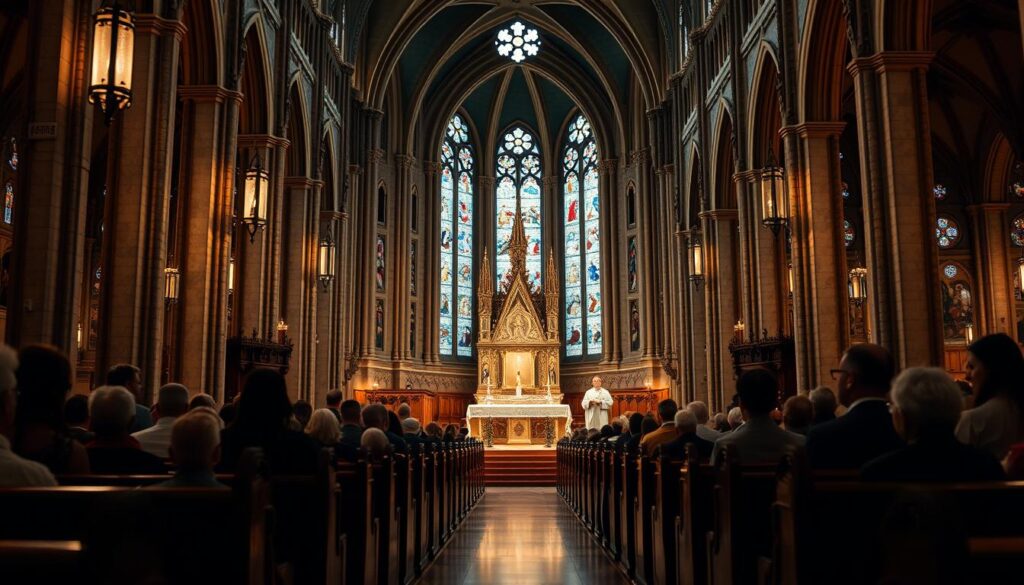
The Eucharist stands as the heart of worship. Participants receive what they believe to be Christ’s body blood through consecrated bread and wine. This meal strengthens communal bonds while offering personal nourishment.
| Sacrament | Purpose | Key Elements |
|---|---|---|
| Baptism | Spiritual rebirth | Water, oil, white garment |
| Confirmation | Strengthening faith | Chrism oil, laying on hands |
| Eucharist | Divine nourishment | Bread, wine, altar |
| Penance | Reconciliation | Confession, absolution |
Language of Symbols
Ritual actions speak louder than words in many services. The Sign of the Cross begins prayers, tracing Christ’s sacrifice from brow to heart. Incense rising like prayers creates multisensory worship experiences.
Vestments and sacred art tell stories through color and texture. Gold represents divine glory, while purple signals penitence. These visual cues help worshippers engage with timeless truths in fresh ways.
Through these means of grace, ordinary objects become channels for extraordinary encounters. Water cleanses, oil heals, and flame illuminates – transforming daily life into sacred space.
Influences of the Second Vatican Council on Catholic Life
The Second Vatican Council reshaped modern faith communities in ways still felt today. From 1962 to 1965, leaders reimagined how ancient beliefs could thrive in a changing world. This historic gathering sparked reforms that touched everything from Sunday services to global relationships.
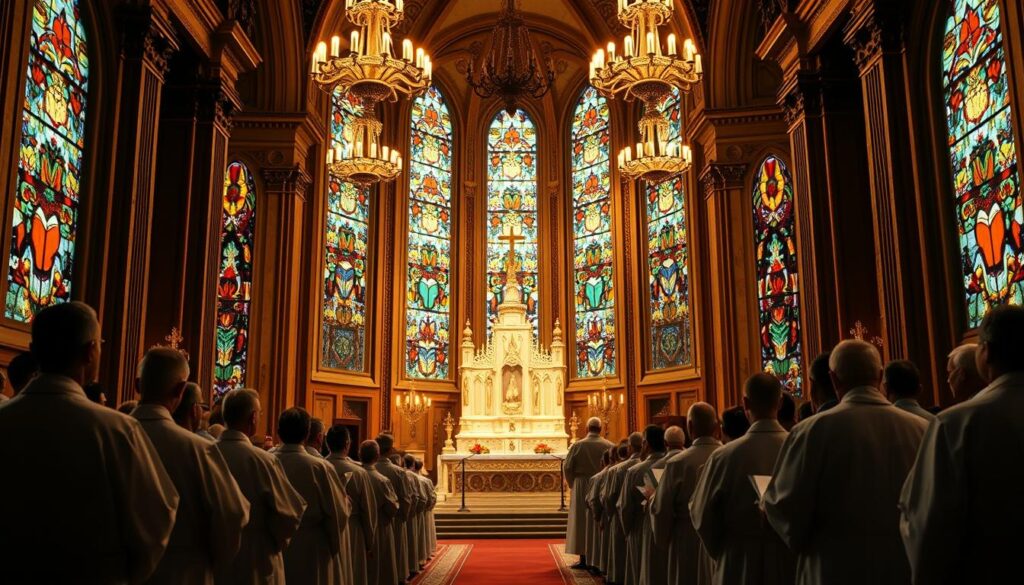
Worship transformed as altars turned toward congregations and local languages replaced Latin. Laypeople gained new roles – reading scriptures or distributing communion. “The liturgy became a conversation rather than a performance,” observed one parish volunteer.
Modern Interpretations and Traditional Responses
Not everyone welcomed these changes. Some communities embraced fresh approaches to social justice and interfaith dialogue. Others clung to familiar rituals, fearing loss of sacred identity. This tension birthed two main perspectives:
- Progressives pushing for gender equality in leadership
- Traditionalists preserving Latin Mass and strict doctrines
The Council’s vision of a church engaged with contemporary issues continues to evolve. Recent popes have balanced innovation with ancient practices, like Francis encouraging environmental care while upholding core teachings. This dance between old and new keeps the global community both rooted and responsive.
As time passes, believers face the same challenge: honoring shared heritage while addressing modern life’s complexities. The Council’s legacy reminds us that growth often springs from respectful dialogue between different viewpoints.
Overview of Liturgical Practices Across Denominations
Worship styles across Christian communities reveal a beautiful paradox – shared faith expressed through distinct cultural lenses. From incense-filled Byzantine chapels to guitar-accompanied modern services, believers celebrate the same core truths in strikingly different ways.
The Roman Rite dominates Western churches with its Latin-rooted structure. Think solemn processions, Gregorian chants, and priests facing altars. Yet even here, variations emerge. “Our Spanish parish uses castanets during feast days,” shares Maria Gonzalez from New Mexico. Local flavors blend seamlessly with ancient patterns.
Eastern traditions offer sensory-rich experiences. Coptic services feature hand-held cymbals, while Syrian churches use curtained sanctuaries. These practices aren’t just aesthetic – they’re theological statements about God’s mystery. As Father Markos explains: “Our liturgy isn’t performed, it’s lived.”
Three key elements unite these diverse expressions:
- Scripture-centered worship rhythms
- Sacramental focus on Christ’s presence
- Communal participation in sacred rituals
Modern communities creatively adapt these foundations. Some blend ancient hymns with projection screens, others host outdoor Eucharistic picnics. This flexibility keeps traditions alive while speaking to new generations. Whether through whispered Latin or upbeat gospel choirs, the heart of worship remains unchanged – a people united across time and culture.
Cultural Impacts on Catholic Faith and Community
Cultural diversity breathes life into shared spiritual practices across the globe. From vibrant processions in Latin America to contemplative chants in Asia, local churches weave their heritage into worship while honoring universal truths. This dynamic interplay keeps ancient teachings relevant in modern contexts.
Local Expressions, Universal Heart
Faith communities worldwide demonstrate how sacred traditions adapt without losing their essence. In Kenya, some parishes blend traditional dance into Sunday services. Filipino devotees drape statues in indigenous fabrics during feast days. These practices show how ecclesial traditions grow through cultural dialogue.
Balancing unity with diversity requires creativity. Many churches now use native instruments during Mass or incorporate local art into sacred spaces. Such adaptations help faith resonate deeply while maintaining core doctrines. A priest in New Mexico notes: “Our Navajo members feel Christ’s presence more fully when rituals reflect their worldview.”
This approach strengthens community bonds and nurtures spiritual growth. By honoring both global connections and regional identities, believers create a living tapestry of worship. The result? A richer, more inclusive expression of shared truths that spans the world.
FAQ
What defines a denomination within the Church founded by Jesus Christ?
Denominations often emerge from differences in interpreting scripture, traditions, or governance. Groups like the Eastern Orthodox or Anglican Communion split historically over authority disputes, yet many share core beliefs like the Nicene Creed and sacraments.
How did the Second Vatican Council change worship practices?
The Council (1962–1965) encouraged using local languages in liturgy instead of Latin, promoted lay participation, and fostered dialogue with other faiths. While some embraced these reforms, others preserved pre-Vatican II traditions, like the Tridentine Mass.
Why do rituals like the Eucharist vary between communities?
Cultural contexts and historical developments shape practices. For example, Byzantine rites use leavened bread, while Roman rites use unleavened hosts—both affirming the Real Presence of Christ but reflecting distinct ecclesial traditions.
Are teachings like apostolic succession accepted by all believers?
Apostolic succession—the unbroken lineage of bishops from the original apostles—is central to Roman Catholicism and Orthodoxy. However, Protestant groups, born from the 16th-century Reformation, often reject it, prioritizing scripture alone (*sola scriptura*).
How do local customs influence universal doctrines?
Core doctrines remain consistent, but expressions adapt. For instance, Marian devotions in Mexico (Our Lady of Guadalupe) or Poland (Black Madonna) blend theology with cultural identity, showing how faith interacts with regional heritage.
What role do the Seven Sacraments play across different rites?
Sacraments like Baptism and Eucharist are universal, but their celebration differs. Eastern Churches emphasize mysticism (e.g., Chrismation post-baptism), while Western rites focus on catechetical preparation, reflecting diverse theological emphases.
Did the Protestant Reformation impact Catholic traditions?
Yes. The Council of Trent (1545–1563) reaffirmed doctrines like transubstantiation and clerical celibacy in response to Reformation critiques. This solidified distinct identities between Protestant churches and those maintaining communion with Rome.