Welcome to a journey through one of humanity’s oldest spiritual traditions. Hinduism’s approach to the divine is as vast as the universe itself, blending philosophy, ritual, and storytelling into a vibrant tapestry. Unlike many religions, it embraces diverse interpretations of the sacred, offering both unity and multiplicity in its worldview.
At its core, this tradition recognizes a single ultimate reality while celebrating countless deities. Each represents unique aspects of existence—creation, preservation, destruction—and connects to daily life through festivals, art, and ethics. These figures aren’t just symbols; they shape cultural values and inspire personal growth.
Over history, these beliefs have evolved alongside societal changes, yet their essence remains timeless. From ancient texts to modern practices, the interplay between devotion and inquiry continues to define Hindu spirituality. This balance makes it a living, adaptable path for millions worldwide.
Key Takeaways
- Hinduism views divinity through both universal oneness and diverse forms
- Deities represent different aspects of existence and human experience
- Spiritual practices blend philosophy with cultural traditions
- The religion has evolved while maintaining core principles over millennia
- Personal connection to the divine varies across communities and individuals
Introduction to Hindu Spirituality
At the heart of South Asian culture lies a spiritual framework embracing both unity and diversity. This tradition sees the sacred in everyday life, from sunrise rituals to family celebrations. Its flexibility lets people connect with the divine through personalized paths while sharing core principles.
Overview of Hindu Beliefs
Central to this religion is Brahman—the ultimate reality flowing through all existence. Devotees honor various deities representing cosmic functions: Brahma shapes the world, Vishnu sustains it, and Shiva renews it through transformation. These figures help believers understand life’s cycles while offering relatable symbols for meditation and prayer.
Historical Evolution and Cultural Context
Over 35 centuries, spiritual practices evolved from Vedic fire rituals to vibrant temple ceremonies. Unlike many religions, this path grew through countless teachers adapting to cultural shifts. Ancient texts like the Vedas blend with local traditions, creating a living faith that respects regional customs while maintaining philosophical depth.
This approach lets communities worldwide embrace shared values through unique expressions—from Bollywood-inspired festivals to eco-conscious rituals honoring nature’s balance.
Understanding god in hinduism: Historical and Cultural Perspectives
The roots of Hindu spirituality stretch deep into humanity’s quest for cosmic understanding. Early Vedic traditions reveal a world where natural forces shaped divine identities. Deities like Indra (storm), Agni (fire), and Soma (ritual drink) embodied elemental powers that governed life’s rhythms.
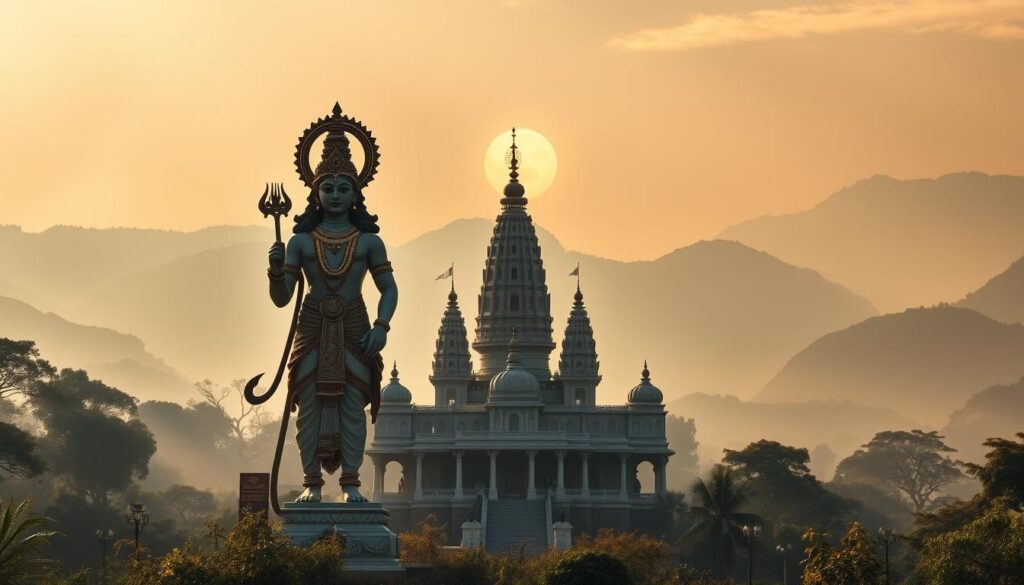
During the Vedic period, these figures maintained cosmic order through reciprocal relationships. Worshipers offered prayers and sacrifices, believing their devotion influenced divine actions. Indra, celebrated for conquering chaos and bringing rain, became central to agricultural communities.
Three key traits defined early spiritual thought:
- Deities represented natural phenomena and social values
- Rituals bridged human and divine realms
- Stories explained creation and moral codes
| Deity | Role | Cultural Symbolism |
|---|---|---|
| Indra | Storm & Warfare | Strength, leadership |
| Agni | Sacred Fire | Transformation, purity |
| Soma | Ritual Offering | Spiritual connection |
| Varuna | Cosmic Law | Moral balance |
| Vishnu | Universal Sustainer | Protection, continuity |
Over time, philosophical ideas expanded beyond nature-based gods. Later texts explored abstract concepts like Brahman – the ultimate reality permeating all existence. This shift allowed personal devotion and meditative practices to coexist.
Regional traditions and cross-cultural exchanges further enriched these beliefs. From village festivals to temple arts, diverse expressions of faith continue to honor both ancient roots and evolving interpretations of the sacred.
Major Deities and Their Divine Roles
Hinduism’s divine landscape dazzles with celestial figures who maintain cosmic balance. Each deity embodies essential energies that shape existence—from nurturing life to sparking transformation. Let’s explore two pillars of this spiritual ecosystem.
Vishnu: The Preserver and Protector
Known as Narayana, Vishnu sustains the universe like sunlight nourishes Earth. His ten avatars—including Rama and Krishna—appear during crises to restore harmony. Devotees celebrate him through festivals like Diwali, where lamps symbolize light overcoming darkness.
Three key aspects define Vishnu’s role:
- Maintains order through compassionate intervention
- Connects ancient solar symbolism with modern devotion
- Embodies hope through future incarnations like Kalki
Shiva: The Destroyer, Creator, and Source of Duality
This multifaceted deity dances between creation and renewal. While often called “the destroyer,” Shiva clears space for new beginnings—like fire revitalizes a forest. His third eye represents wisdom that burns through illusion.
Shiva’s divine partners reveal nature’s contrasts:
- Kali: Fierce transformer of negative energy
- Parvati: Nurturing force of relationships
- Durga: Warrior goddess protecting moral order
Together, these gods and goddesses form a dynamic spiritual network. They remind us that growth requires both stability and change—a truth as timeless as the stars.
Creation, Preservation, and Destruction in Hindu Thought
Hindu cosmology presents a rhythmic dance of cosmic forces that shape existence. Unlike linear origin stories, this tradition sees creation as an ongoing cycle where energy transforms rather than disappears. Ancient sages envisioned this process through three pillars: emergence, sustenance, and renewal.
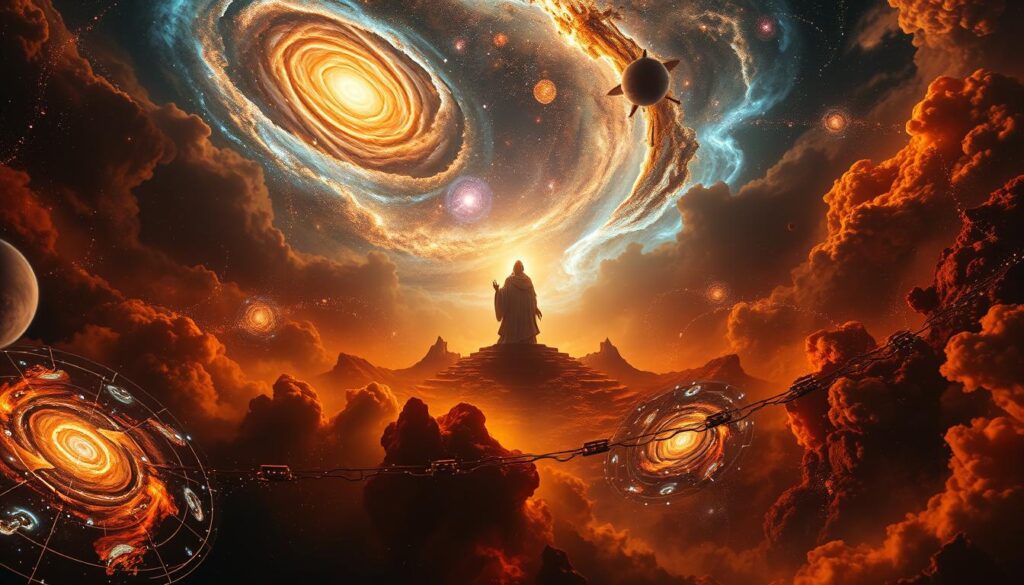
At the heart of this system stands Prajapati, the primordial architect. Through self-sacrifice, he divided his essence to form the entire universe. “The creator becomes the creation,” ancient texts reveal, showing how divine energy fuels all life. This act left Prajapati exhausted—a reminder that even cosmic forces need rejuvenation.
Three principles maintain balance:
- Vishnu sustains dharmic order like roots nourish a tree
- Shiva wields transformative fire to clear space for growth
- Natural movements—seasons, tides, breath—mirror cosmic rhythms
This framework explains why decay fuels rebirth. A forest fire destroys old growth but enriches soil—similar to how spiritual practices burn away limitations. Modern science echoes this view, observing how stars die to spread elements for new planets.
These ideas remain visible today in rituals celebrating life’s cycles. From harvest festivals to meditation techniques, they remind us that change isn’t loss—it’s the universe rewriting itself.
Vedic Literature and Sacred Texts: Foundations of Belief
Ancient wisdom echoes through the verses of Vedic hymns, revealing a world where fire bridges earth and sky. These sacred texts form Hinduism’s oldest philosophical bedrock, blending poetic devotion with cosmic insights. At their core lies a profound truth: rituals sustain relationships between people and celestial forces.
The Rigveda, Agni, and Mythic Rituals
The Rigveda’s 1,028 hymns sparkle like embers in the fire of spiritual discovery. Agni, the flame-deity, dominates these verses as the divine messenger. His ram-shaped form symbolizes strength, carrying offerings to other realms through crackling flames.
Three key elements defined Vedic worship:
- Invitations to gods as honored guests at ritual banquets
- Chants transforming simple meals into cosmic exchanges
- Fire ceremonies maintaining universal balance
Sacred Narratives and the Role of Prajapati
Beyond rituals, the texts introduce Prajapati—the ultimate architect. This creator figure embodies existence itself, shaping worlds through self-sacrifice. “From his breath came the winds,” one hymn declares, illustrating how divine energy fuels life’s tapestry.
These narratives reveal sophisticated theology:
- Sacrifice as cosmic glue binding all existence
- Ethical codes woven into nature’s rhythms
- Eternal principles adapting across periods
Today, Vedic content still guides modern practices—from wedding vows to meditation techniques. Their timeless wisdom proves ancient flames still light our path.
Rituals, Offerings, and Worship Practices
Daily spiritual practices weave sacred moments into ordinary life. From quiet home altars to bustling temple courtyards, these traditions connect individuals to shared values. They turn routine actions into opportunities for reflection and community bonding.
Domestic Puja and Home Worship Traditions
Morning light often reveals home shrines glowing with fresh flowers and incense. Families gather to offer water, sweets, or fruit to deities, creating personal bridges to the divine. These intimate religious practices reinforce dharma through small, consistent acts of devotion.
Temple Rituals, Pilgrimage, and Festival Celebrations
Temples hum with energy during major festival seasons. Pilgrims travel miles to witness rituals like aarti—the circling of lamps before sacred icons. Seasonal events, such as harvest celebrations, honor nature’s fertility while uniting generations through music and dance.
Whether at home or in grand temple spaces, these practices remind us that spirituality thrives through participation. They transform ancient tradition into living wisdom, one offering at a time.
FAQ
How do sacred texts like the Vedas shape Hindu practices?
The Vedas form the foundation of rituals, philosophy, and spiritual guidance. They include hymns, myths, and teachings that inspire daily worship, festivals like Holi, and concepts like dharma. Later texts, such as the Upanishads, explore deeper truths about the universe and self-realization.
Why are deities like Vishnu and Shiva central to worship?
Vishnu symbolizes preservation and compassion, often appearing in forms like Krishna to restore balance. Shiva represents transformation—destroying old cycles to enable renewal. Together, they reflect Hinduism’s focus on life’s interconnected rhythms of creation, sustenance, and change.
What role do rituals play in connecting with the divine?
Practices like puja (offerings), meditation, and pilgrimage foster personal devotion. Lighting lamps for Diwali or bathing in the Ganges during Kumbh Mela are acts of reverence that honor traditions while inviting blessings and spiritual growth.
How does caste relate to Hindu spirituality today?
While ancient texts mention varna (social roles), modern interpretations emphasize dharma—ethical duty—over rigid hierarchies. Many reformers, like Gandhi, advocated equality, and contemporary practices focus more on personal faith than caste distinctions.
Are Hindu beliefs compatible with scientific ideas?
Concepts like cosmic cycles (yugas) and the universe’s interconnectedness often align with scientific theories. The Rigveda’s Nasadiya Sukta even ponders creation’s mysteries in ways that resonate with philosophical and cosmological debates today.
What’s the significance of festivals in daily life?
Celebrations like Navaratri or Diwali blend storytelling, community bonding, and gratitude. They mark seasonal changes, honor deities, and reinforce values like triumph of good (Durga defeating Mahishasura) or the joy of inner light over darkness.