Let’s begin a journey into one of humanity’s oldest spiritual traditions. Rooted in the Indian subcontinent, this vibrant way of life has shaped cultures and inspired millions for thousands of years. Often described as a living tapestry of philosophies, its practices stretch back to ancient civilizations that thrived over 4,000 years ago.
Unlike many world religions, this tradition has no single founder or rigid doctrine. Instead, it embraces diverse paths to spiritual growth. British scholars in the 1800s first used the term we recognize today, but its core principles—like karma and dharma—have guided followers across generations.
Today, nearly one billion people identify with this faith, making it the third-largest religion globally. Its teachings continue to evolve while staying rooted in timeless wisdom. From temple rituals to yoga practices, its influence spans continents and century-old traditions.
Key Takeaways
- Originated in ancient South Asia, with roots tracing back over 4,000 years
- Emphasizes multiple spiritual paths rather than a single doctrine
- Core concepts include karma, dharma, and pursuit of enlightenment
- Third-most practiced faith worldwide with nearly one billion adherents
- Cultural practices blend philosophy, ritual, and daily living
- Modern adaptations coexist with ancient traditions
Understanding Hinduism Beliefs: A Comprehensive Overview
Three powerful ideas shape daily practices and ultimate goals in this ancient tradition. These concepts form a roadmap for ethical living while addressing life’s biggest questions. Let’s explore how they work together to create meaning.
Essential Guides for Living
Dharma acts as your personal compass for right action. It changes based on age, responsibilities, and situations. A student’s duties differ from a parent’s, showing the flexibility of this principle.
Karma explains how choices ripple through time. Good deeds create positive outcomes, while harmful actions bring challenges. This law of cause and effect encourages mindful living.
“A man may not believe in God and still call himself a Hindu.”
Three Pillars of Spiritual Growth
These principles connect daily life to eternal truths. While artha (prosperity) and kama (passion) matter, three goals stand above:
| Concept | Role | Ultimate Impact |
|---|---|---|
| Dharma | Moral foundation | Balances social order |
| Karma | Action tracker | Shapes future experiences |
| Moksha | Liberation goal | Ends rebirth cycle |
Together, they create a flexible path. The soul progresses through lifetimes until achieving freedom. This system allows diverse interpretations while maintaining unity.
Ancient Origins and the Vedic Influence
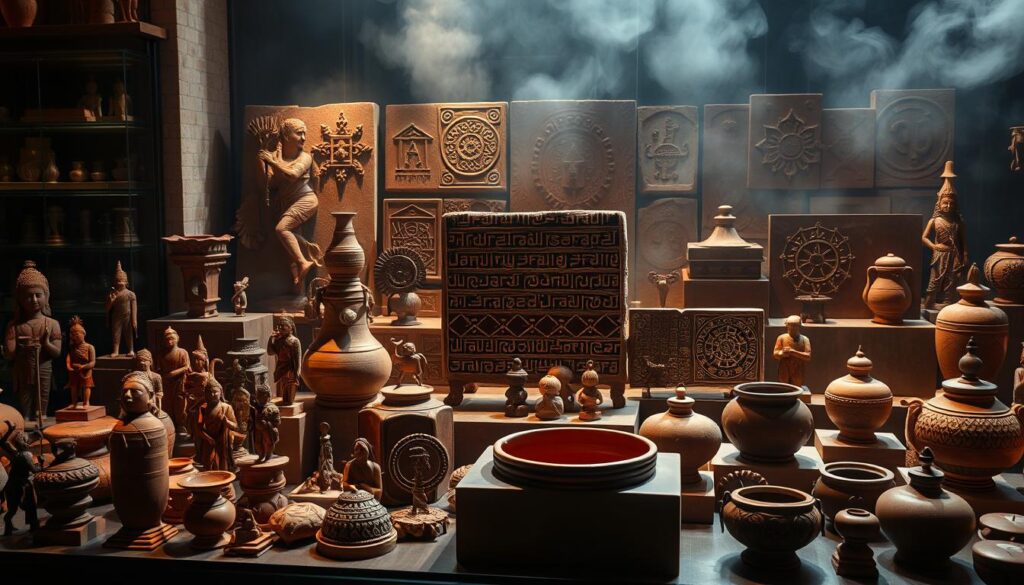
Imagine walking through cities built 5,000 years ago with advanced drainage systems and public baths. This was daily life in the Indus Valley, where one of humanity’s first urban cultures thrived between 3300-1300 BCE. Their clay seals featuring yogic postures and proto-Shiva figures hint at spiritual practices that still resonate today.
Exploring the Indus Valley and Early Civilizations
Archaeologists found something surprising in Harappa and Mohenjo-Daro cities. Grid-pattern streets and standardized bricks show remarkable planning skills. Over 2,000 excavated sites reveal fire altars and water rituals that mirror modern temple customs.
Three key discoveries connect past and present:
- Seals depicting meditative figures
- Terracotta goddess figurines
- Sacred animal symbols like bulls
The Emergence of the Vedic Tradition
Around 1500 BCE, nomadic groups brought new ideas that blended with local customs. The Vedic period saw oral teachings become written texts in Sanskrit. Priests chanted hymns to natural forces like Agni (fire) and Indra (storms).
| Era | Key Development | Modern Connection |
|---|---|---|
| Indus Valley | Urban ritual spaces | Temple architecture |
| Vedic Period | Rigveda composition | Mantra recitations |
| Post-Vedic | Upanishad philosophy | Yoga practices |
This 3,000-year journey shows how early symbols evolved into complex traditions. From fire ceremonies to meditation techniques, these roots continue shaping spiritual life across generations.
Sacred Texts and Philosophical Schools
The wisdom of ages whispers through ancient manuscripts and oral traditions. These sacred texts form a living library spanning poetry, ethics, and cosmic inquiry. Divided into Śruti (revealed truths) and Smṛti (human interpretations), they guide both spiritual seekers and everyday life.
Key Hindu Scriptures and Their Impact
Four Vedas stand as humanity’s oldest complete texts, with Rigveda hymns still chanted today. The Upanishads shifted focus inward, asking bold questions about consciousness. Epic tales like Ramayana teach through story—Rama’s exile models righteous leadership, while Mahabharata’s Bhagavad Gita explores duty during moral crises.
Modern readers find surprising relevance in these works. A CEO might apply Krishna’s advice to focus on action over results. Parents use Panchatantra animal fables to teach children about cleverness and kindness.
Major Schools: Vedanta, Yoga, and Beyond
Six philosophy systems emerged to interpret the texts. Vedanta explores ultimate reality, while Yoga outlines eight steps for self-mastery. Samkhya philosophy categorizes existence into 25 principles—from pure consciousness to physical matter.
“The world is a wheel—upon it are all creatures who are subject to birth and death.”
| School | Focus | Key Text |
|---|---|---|
| Samkhya | Cosmic dualism | Samkhya Karika |
| Yoga | Mind discipline | Yoga Sutras |
| Vedanta | Non-dual truth | Brahma Sutras |
These systems aren’t competing theories but different lenses. A farmer might follow Mimamsa rules for ritual accuracy, while a monk embraces Advaita’s “all is one” perspective. This diversity allows personal paths within shared frameworks.
Major Deities and Traditions
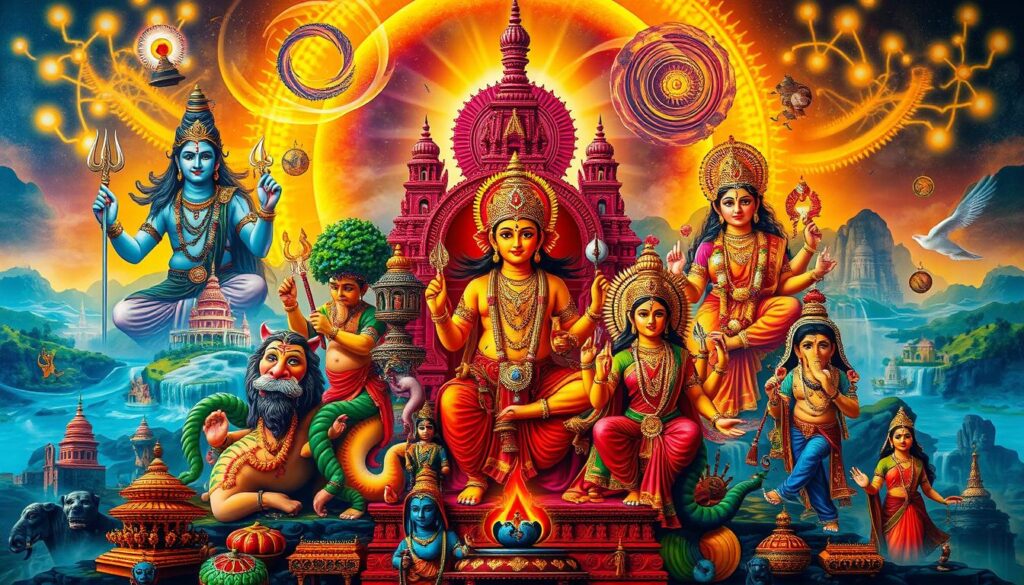
Picture a cosmic dance where divine figures embody life’s endless cycles. This vibrant spiritual landscape features thousands of gods and deities, each representing unique aspects of existence. At its heart lies a dynamic trio maintaining universal balance.
The Divine Trinity and Cosmic Balance
Three powerful forces shape reality’s rhythm. Brahma sparks creation, Vishnu preserves harmony, and Shiva transforms through renewal. Together, they form a sacred cycle mirroring nature’s patterns.
| Divine Role | Symbol | Modern Connection |
|---|---|---|
| Creation | Lotus | New beginnings |
| Protection | Conch shell | Environmental care |
| Transformation | Trident | Personal growth |
Regional Expressions and Sacred Paths
Four major sects guide spiritual journeys while honoring diversity:
- Shaivites focus on Shiva’s transformative power
- Vaishnavites celebrate Vishnu’s loving protection
- Shaktas honor feminine divine energy
- Smartas embrace multiple deities
In Kerala, temple elephants lead colorful processions. Bengal artists create intricate Durga statues for autumn festivals. These traditions all point to one truth – every god reflects facets of the supreme reality permeating all life.
Cultural Practices and Rituals in Daily Life
Morning light filters through home shrines across India as families begin their day with fresh flowers and whispered prayers. These religious practices blend ancient ritual with modern life, creating a sacred rhythm that unites generations.
Puja, Festivals, and Daily Offerings
Home altars glow with oil lamps and incense during worship ceremonies. Offerings like ripe fruits or fragrant sandalwood paste symbolize gratitude. Temples amplify this energy through group chanting and priest-led aarti ceremonies with flaming lamps.
| Offering | Symbolism | Modern Use |
|---|---|---|
| Flowers | Beauty’s impermanence | Home shrines |
| Incense | Purification | Meditation spaces |
| Sweets | Life’s sweetness | Festival sharing |
Nine major festivals dot the calendar, from Diwali’s light celebrations to Holi’s colorful joy. These events strengthen family bonds through shared meals and storytelling. Pilgrimages to sacred rivers or mountain temples create lifelong memories while honoring tradition.
Modern adaptations keep practices vibrant. Office workers meditate during lunch breaks using ancient techniques. Yoga studios worldwide teach poses once reserved for spiritual seekers. Through these living traditions, the way of life remains relevant today while preserving its soul.
The Role of the Caste System and Social Hierarchy
How does a 3,000-year-old social structure shape lives in the modern world? The caste system, rooted in concepts of dharma and karma, began as a way to organize skills and responsibilities. Over time, it grew into a complex hierarchy influencing everything from jobs to marriage customs.
Historical Context and Modern Perspectives
Four main groups formed the original framework. Brahmins guided spiritual practices, Kshatriyas protected communities, Vaishyas managed trade, and Shudras performed essential labor. Those outside this system faced harsh exclusion, often handling tasks considered impure.
For centuries, birth determined one’s place in society. While early texts suggested flexibility, rigid rules later limited social mobility. The 20th century brought legal reforms—India’s constitution now bans caste discrimination. Yet debates continue about its impact on education and family life today.
Modern activists work to address lingering inequalities while preserving cultural identity. As global conversations about fairness evolve, this ancient system faces new scrutiny. Its story reminds us how traditions adapt—or resist change—across generations.
FAQ
What are dharma, karma, and moksha?
Dharma refers to one’s ethical duties and righteous living. Karma is the principle of cause and effect, where actions shape future experiences. Moksha represents liberation from the cycle of rebirth, uniting the soul with the divine.
How did the Vedic period shape traditions?
The Vedic era (1500–500 BCE) introduced rituals, hymns, and philosophies found in texts like the Rigveda. These ideas laid the foundation for practices such as meditation, yoga, and fire ceremonies still observed today.
What role do the Vedas and Upanishads play?
The Vedas are ancient scriptures detailing rituals and hymns, while the Upanishads explore deeper philosophical concepts like Brahman (ultimate reality) and Atman (soul). Together, they guide spiritual and ethical growth.
Why are there so many deities in this tradition?
Deities like Brahma, Vishnu, and Shiva represent different aspects of the divine. This diversity allows followers to connect with the sacred in ways that resonate personally, reflecting universal energies.
How do daily rituals like puja influence life?
Practices such as puja (worship), lighting lamps, or chanting mantras foster mindfulness and gratitude. Festivals like Diwali celebrate light over darkness, reinforcing community bonds and cultural values.
Is the caste system still relevant today?
While historically tied to social roles, modern thinkers like Mahatma Gandhi challenged caste-based discrimination. Today, many focus on its original intent—promoting societal harmony—rather than rigid hierarchies.
How does this philosophy differ from Buddhism or Jainism?
While all three emphasize non-violence and spiritual growth, traditions rooted in the Indian subcontinent often prioritize rituals and householder duties. Buddhism and Jainism, however, lean toward monastic practices.