Step into a living tradition that spans millennia. With over 1.25 billion followers worldwide, this faith ranks as Earth’s third-largest spiritual path. Its global presence stretches from bustling Indian cities to quiet meditation centers in California.
What makes this belief system unique? Diversity thrives at its core. Unlike many religions, it embraces countless philosophies without rigid dogma. You’ll find fire ceremonies in Nepal, yoga studios in New York, and digital temples connecting devotees across continents.
Modern practitioners balance ancient rituals with contemporary life. Morning mantras coexist with smartphone apps for scripture study. Sacred texts written centuries ago now inspire environmental activism and tech ethics discussions.
This tradition’s adaptability explains its enduring relevance. Temple architecture evolves while preserving symbolic meanings. Classical dance forms gain new audiences through social media. Yet the essence remains unchanged – seeking truth through personal experience.
Key Takeaways
- Third-largest global faith with 1.25 billion followers
- Blends ancient practices with modern innovations
- No single founder or centralized doctrine
- Celebrates diverse paths to spiritual growth
- Cultural expressions span art, music, and philosophy
- Continues evolving while preserving core principles
Introduction to Hinduism: An Ultimate Guide
Imagine a spiritual path where personal exploration and ancient customs coexist. This tradition stands apart from other major religions through its emphasis on diverse truths. Rather than a single doctrine, it offers countless philosophical approaches tailored to individual seekers.
Four key aspects shape daily life:
- Karma (action shaping destiny)
- Dharma (moral responsibility)
- Moksha (spiritual liberation)
- Bhakti (devotional practices)
Families maintain sacred bonds through shared rituals. Morning prayers, festive celebrations, and ethical teachings pass wisdom between generations. These traditions create unity while honoring regional variations.
What makes this faith unique? It functions as a family of religions, embracing multiple paths to enlightenment. Some followers meditate in mountain caves while others serve communities through social work. Temples host vibrant ceremonies, yet personal shrines in homes remain equally important.
Modern adaptations keep practices relevant. Yoga studios blend physical wellness with spiritual growth. Digital platforms share sacred texts globally. This flexibility explains why the tradition thrives across continents and eras.
Indus Valley Civilisation and Early Influences
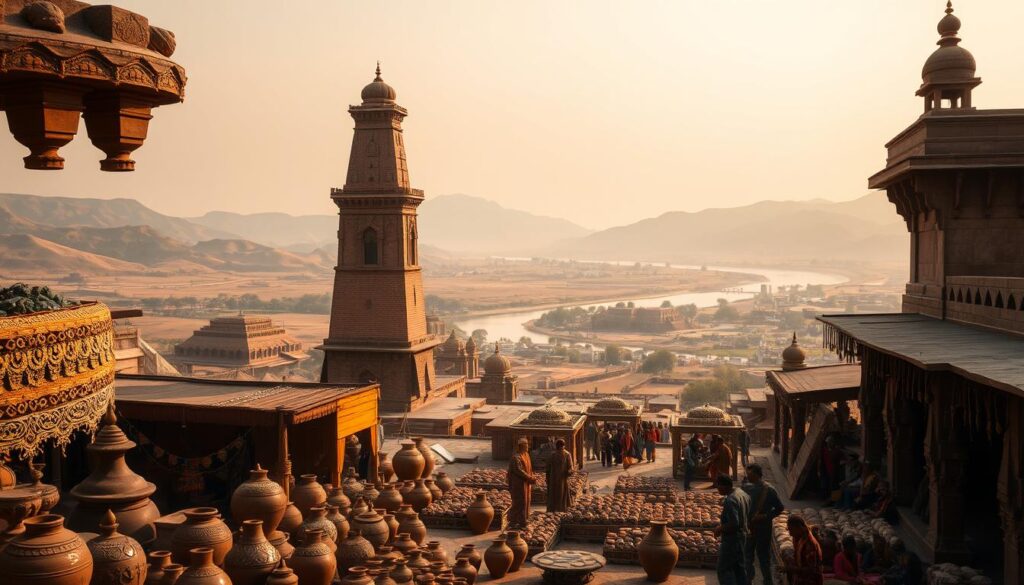
Long before skyscrapers dominated skylines, the Indus Valley culture built cities that would impress modern engineers. Between 2500-1500 BCE, nearly 40,000 people thrived in planned urban centers like Mohenjo-Daro and Harappa. These ancient metropolises featured grid layouts and advanced drainage systems – some homes even had indoor toilets connected to street sewers.
“The Great Bath of Mohenjo-Daro shows how water rituals shaped community life centuries before modern pools existed.”
Archaeologists discovered artifacts suggesting spiritual practices familiar today. Seals depict cross-legged figures resembling yogic postures, while terracotta statues hint at mother goddess worship. One mysterious seal shows a horned deity surrounded by animals – scholars call it Proto-Shiva, linking it to later traditions.
| Feature | Indus Valley | Modern Cities |
|---|---|---|
| Water Management | Covered drains & wells | Underground piping |
| Urban Planning | Grid street layouts | Zoning regulations |
| Standardization | Uniform brick sizes | Building codes |
This culture vanished mysteriously after nearly 1,000 years, but its legacy endured. Ritual bathing tanks evolved into temple ponds, and early meditation practices shaped spiritual disciplines. The Indus Valley people proved urban living could coexist with nature – their cities stood feet above flood levels yet relied on river fertility.
The Aryan Migration and Vedic Origins
Nomadic horsemen thundered across ancient landscapes between 1500-1000 BCE, reshaping India’s cultural fabric. These Aryan tribes brought fire rituals and warrior traditions that blended with existing Indus Valley practices. Their arrival marked a turning point in spiritual history.
Vedism emerged through this cultural fusion. Elaborate yajna ceremonies honored deities like Agni (fire) and Indra (war). Early social structures began forming, laying groundwork for future societal systems. Sacred chants in Vedic Sanskrit united communities through shared sound vibrations.
Linguistic connections reveal surprising links. This ancient language shares roots with Greek and Latin, tracing back to Proto-Indo-European. Scholars compare words like “deva” (divine) with Latin “deus,” showing how cultures grew from common origins.
| Cultural Element | Aryan Influence | Indus Valley Legacy |
|---|---|---|
| Religious Practices | Fire rituals | Water ceremonies |
| Social Structure | Early hierarchies | Urban organization |
| Language | Sanskrit hymns | Undeciphered scripts |
Debates continue about this transformative period. Some experts emphasize cultural blending, while others note distinct traditions. What’s clear? These interactions created spiritual foundations that still resonate today.
Modern technology helps unravel migration patterns. DNA studies and linguistic analysis offer fresh insights into how ancient peoples shaped civilization’s course. Each discovery adds pieces to humanity’s shared puzzle.
Composition of the Vedas and Sacred Rituals
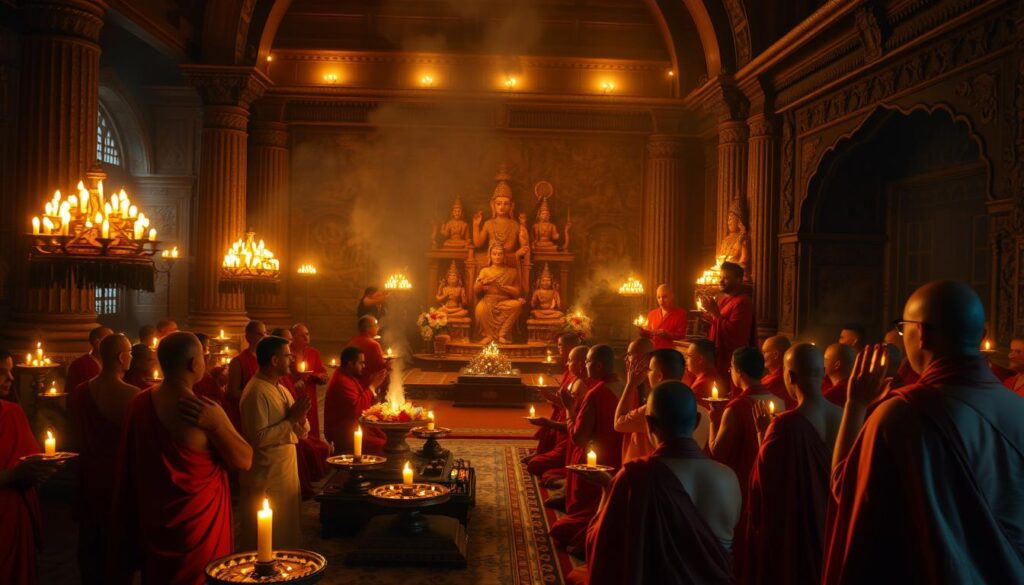
Ancient voices still whisper through four sacred texts that shaped spiritual practices. The Vedas emerged from oral traditions, memorized with precision by generations of priests. These works form humanity’s oldest living scriptural collection.
Rig Veda and Sacred Hymns
The Rig Veda’s 1,028 hymns reveal cosmic mysteries through poetic verses. Composed over 3,000 years ago, these songs honor deities like Agni (fire) and Indra (storms). Remarkably, priests preserved every syllable through chant techniques before writing existed.
Each hymn serves dual purposes – praising gods while explaining natural phenomena. Morning prayers celebrated dawn’s beauty as divine revelation. Night chants transformed star patterns into celestial maps.
Sacrificial Rites and Ritual Offerings
Vedic ceremonies centered on yajna – sacred fire rituals fostering cosmic balance. Offerings ranged from fragrant ghee to harvested grains. Communal participation turned meals into spiritual acts, with smoke carrying prayers skyward.
| Veda | Focus | Modern Influence |
|---|---|---|
| Rig | Hymns | Religious chants |
| Sama | Melodies | Classical music |
| Yajur | Rituals | Ceremony structure |
| Atharva | Charms | Folk traditions |
The Atharva Veda’s spells show practical spirituality – from healing herbs to house blessings. These texts prove ancient people sought divine help in daily struggles, just as we do today.
Modern yoga practitioners unknowingly echo Vedic concepts when chanting “Om.” Fire ceremonies continue at weddings and festivals, connecting present rituals to primordial traditions.
Evolution of Philosophical Thought in the Upanishads
Deep in India’s forests, ancient thinkers began asking radical questions. Between 600-200 BCE, sages composed revolutionary texts called Upanishads that transformed spiritual traditions. These works shifted focus from fire rituals to cosmic mysteries – a seismic shift in religious development.
Three types of scriptures emerged:
- Brahmanas: Detailed ritual manuals
- Aranyakas: Wilderness meditation guides
- Upanishads: Philosophical explorations
One groundbreaking idea united them all: Brahman (universal spirit) and Atman (individual soul) are identical. As the Chandogya Upanishad states:
“Tat tvam asi – You are that.”
New spiritual paths emerged from these ideas:
| Approach | Method | Impact |
|---|---|---|
| Renunciation | Abandoning possessions | Monastic traditions |
| Yoga | Mind-body discipline | Modern wellness |
| Bhakti | Personal devotion | Temple worship |
These texts sparked debates about reality’s nature. Some sages saw the universe as divine play, others as cosmic consciousness. Urban scholars and forest hermits alike contributed diverse perspectives.
Modern physicists find parallels in Upanishadic ideas about energy and interconnectedness. From Silicon Valley boardrooms to yoga studios, these ancient concepts continue shaping humanity’s search for meaning.
Epics and Ancient Narratives: Mahabharata and Ramayana
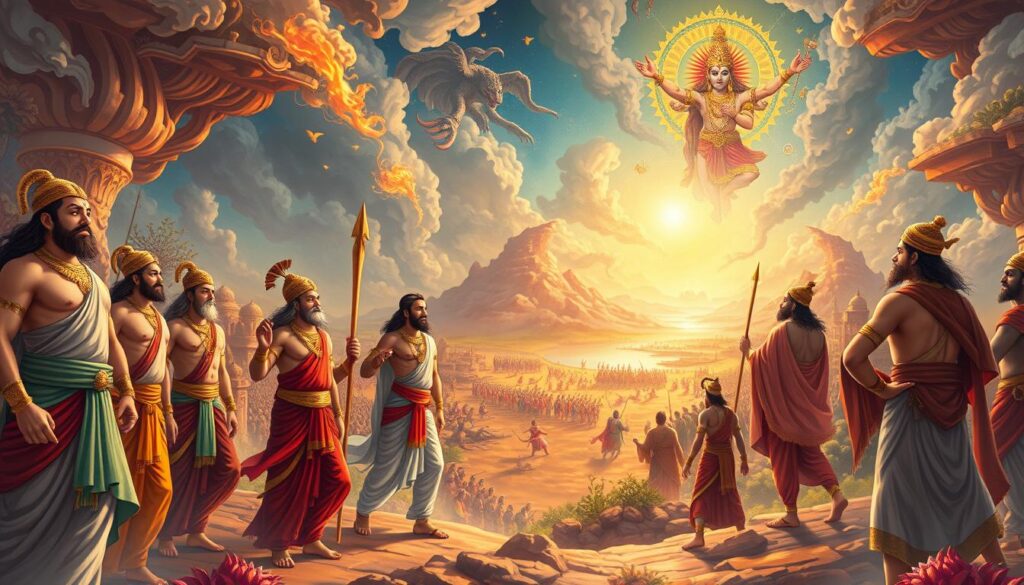
Picture ancient storytellers weaving tales so powerful they shaped entire civilizations. Two legendary works – the Mahabharata and Ramayana – continue guiding millions through life’s complexities. These narratives blend cosmic drama with practical wisdom, offering something for warriors and philosophers alike.
Insights from the Mahabharata
This colossal epic spans 100,000 verses – eight times longer than Homer’s Iliad and Odyssey combined. At its heart lies the Bhagavad Gita, where divine charioteer Krishna counsels conflicted archer Arjuna. Their battlefield dialogue merges three spiritual paths:
| Tradition | Focus | Modern Parallel |
|---|---|---|
| Upanishadic | Inner wisdom | Mindfulness practices |
| Kshatriya | Ethical action | Leadership training |
| Bhakti | Loving devotion | Community service |
Families still debate its characters’ choices like reality TV drama. A gambling match destroys a kingdom. A queen’s courage challenges injustice. These stories teach dharma through relatable human struggles.
The Ramayana: Lore and Legacy
Prince Rama’s quest to rescue his wife Sita spawned countless adaptations across Asian culture. From shadow puppets in Indonesia to comic books in New Delhi, this 24,000-verse journey explores loyalty and moral leadership.
Key differences emerge when comparing India’s twin epics:
| Aspect | Mahabharata | Ramayana |
|---|---|---|
| Central Conflict | Family feud | Good vs evil |
| Hero’s Journey | Complex choices | Ideal conduct |
| Length | 100,000 verses | 24,000 verses |
Both texts remain living traditions. Children learn values through comic versions, while scholars mine them for psychological insights. Street plays and Netflix shows prove these stories still speak our language.
Major Deities and Worship Practices
Millions of lamps flicker daily before sacred images, revealing a spiritual ecosystem where countless divine forms coexist. This faith celebrates many gods as facets of one ultimate reality, allowing personal connections through preferred deities.
Popular Gods and Goddesses
Three cosmic forces form the divine trinity. Brahma sparks creation, Vishnu sustains life, and Shiva transforms through destruction. Alongside them, powerful goddess figures command devotion – Lakshmi brings prosperity, Saraswati fuels wisdom, while Durga embodies protective strength.
Temple and Home Rituals
Morning bells ring in temples as devotees offer flowers and chant prayers. Home altars glow with oil lamps, creating intimate spaces for daily worship. Whether in grand stone temples or corner shrines, rituals blend sensory beauty with symbolic meaning.
Pilgrims journey to sacred sites, carrying offerings for beloved deities. These practices show how ancient traditions thrive through adaptable worship styles. From whispered mantras to festive processions, every act celebrates life’s divine connections.
FAQ
How did the Indus Valley Civilisation influence early religious practices?
Artifacts like seals depicting yogic postures and ritual baths suggest early connections to later spiritual traditions. These findings highlight a cultural continuity in symbols and practices tied to nature worship.
What role did the Aryan migration play in shaping Vedic traditions?
The integration of Aryan rituals with indigenous customs led to the development of Vedic hymns and fire sacrifices. This fusion laid the groundwork for concepts like dharma and cosmic order found in texts like the Rig Veda.
Why are the Upanishads significant to philosophical thought?
These texts shifted focus from external rituals to inner exploration, introducing ideas like karma, moksha, and the unity of the individual soul (atman) with universal consciousness (Brahman).
How do the Mahabharata and Ramayana impact daily life?
Stories like the Bhagavad Gita (part of the Mahabharata) offer moral guidance, while the Ramayana’s emphasis on duty and righteousness shapes cultural values. Both epics are recited in festivals and household rituals.
Which deities are most widely worshipped today?
Vishnu (preserver), Shiva (destroyer), and Devi (goddess) remain central. Regional traditions also celebrate forms like Krishna, Lakshmi, and Durga through temple festivals, devotional songs, and home altars.
What distinguishes temple rituals from home worship?
Temples involve elaborate ceremonies led by priests, including offerings of flowers and food. Home practices focus on personal devotion, like lighting lamps, chanting mantras, or maintaining a sacred space for daily prayers.
How has the caste system evolved over time?
Originally tied to occupational roles in Vedic society, caste became rigid over centuries. Modern reforms and movements emphasize social equality, though its influence varies across communities.
Are yoga and meditation rooted in ancient texts?
Yes! The Upanishads and later works like Patanjali’s Yoga Sutras systematized meditation and breath control as paths to spiritual liberation. These practices remain vital to global wellness trends today.