Walking through Sweden’s picturesque towns, you’ll likely spot steeples rising above red wooden houses. These landmarks belong to the Church of Sweden, a vibrant institution blending centuries-old traditions with modern values. With over half the population still connected to this evangelical Lutheran community, its influence remains woven into the nation’s cultural fabric.
Originally established as the state religion in the 16th century, the church transitioned to independent status in 2000. This shift reflects Sweden’s journey toward religious diversity while preserving its spiritual heritage. The organization maintains unique practices like ordained clergy and formal worship styles—features that distinguish it from other Protestant groups.
Today, the Church of Sweden balances ancient rituals with progressive stances on social issues. Nearly 5.4 million members participate in everything from traditional baptisms to climate action initiatives. This adaptability helps it stay relevant in a society where personal choice shapes faith experiences more than ever before.
Key Takeaways
- The Church of Sweden remains the country’s largest Christian denomination, serving over half the population
- Its high-church traditions include liturgical practices rarely seen in other Lutheran communities
- Membership became voluntary in 2000, reflecting Sweden’s commitment to religious freedom
- Modern initiatives blend theological foundations with contemporary social engagement
- Historic architecture and cultural events keep the church central to Swedish identity
Historical Roots of the Lutheran Tradition in Sweden
Centuries before becoming a Protestant stronghold, Scandinavia’s largest nation underwent dramatic spiritual transformations. The shift from Norse mythology to Christianity began around AD 1000 when King Olof embraced baptism, marking the start of organized religion in the region.
Medieval Christianization and Early Church Formation
By the 11th century, the catholic church began shaping Sweden’s spiritual identity. Uppsala’s elevation to an archdiocese in 1164 created an ecclesiastical province that unified religious authority. This medieval framework would later form the backbone of the church sweden we know today.
During the middle ages, monasteries like Vadstena Abbey became cultural powerhouses. Saint Bridget’s visionary teachings demonstrated how local traditions blended with roman catholic practices. “Our faith grows strongest when rooted in familiar soil,” observed one chronicler of the era.
The Impact of the Reformation and King Gustav’s Role
Everything changed in 1536 when king gustav Vasa severed ties with Rome. His political gamble created a national church that answered to Stockholm rather than the Vatican. The 1571 Church Ordinance formalized this break while preserving ancient rituals.
Unlike other Reformations, Sweden’s version kept ornate altars and priestly vestments. Theologians like Olaus Petri adapted Lutheran ideas without erasing centuries of tradition. This balanced approach helped the church sweden maintain cultural relevance through turbulent times.
Core Beliefs and Liturgical Practices
Swedish Lutherans blend ancient rituals with fresh perspectives. At the heart of their beliefs lies a unique mix of Protestant theology and medieval traditions. This fusion creates worship experiences that feel both timeless and deeply personal.
Lutheran Doctrines and the Three Creeds
The Church of Sweden anchors its teachings in three foundational statements. The Apostolic, Athanasian, and Nicene Creeds connect modern worshippers to early Christians. These texts answer life’s big questions while honoring centuries of faith traditions.
In 1593, the Uppsala Synod adopted the Augsburg Confession. This document shaped their evangelical Lutheran identity. “Scripture remains our compass,” explains a parish priest, “but we walk paths cleared by generations before us.”
| Practice | Catholic Roots | Lutheran Adaptation |
|---|---|---|
| Apostolic Succession | Papal authority | Bishops maintain lineage |
| Communion | Transubstantiation | Real presence theology |
| Vestments | Ornate priestly garb | Simplified ceremonial robes |
High Church Practices and Traditional Vestments
Sunday services might surprise visitors expecting plain Protestant worship. Priests wear chasubles resembling Catholic vestments. Incense swirls around stone altars during communion, creating multisensory experiences.
The church maintains 5,000 ordained clergy across three roles. Bishops oversee dioceses, while deacons focus on community service. This structure preserves continuity with early Christian practice while addressing modern needs.
Seasonal celebrations follow patterns established centuries ago. From Advent wreaths to Easter vigils, these rituals help members connect with their spiritual heritage through familiar rhythms.
The Impact of lutheranism in sweden on Society
Sweden’s spiritual landscape has transformed dramatically in recent decades. Where nearly everyone once belonged to the Church of Sweden, membership now reflects personal choice rather than obligation. This shift reveals how modern values reshape traditional institutions.
Membership Trends and Demographic Shifts
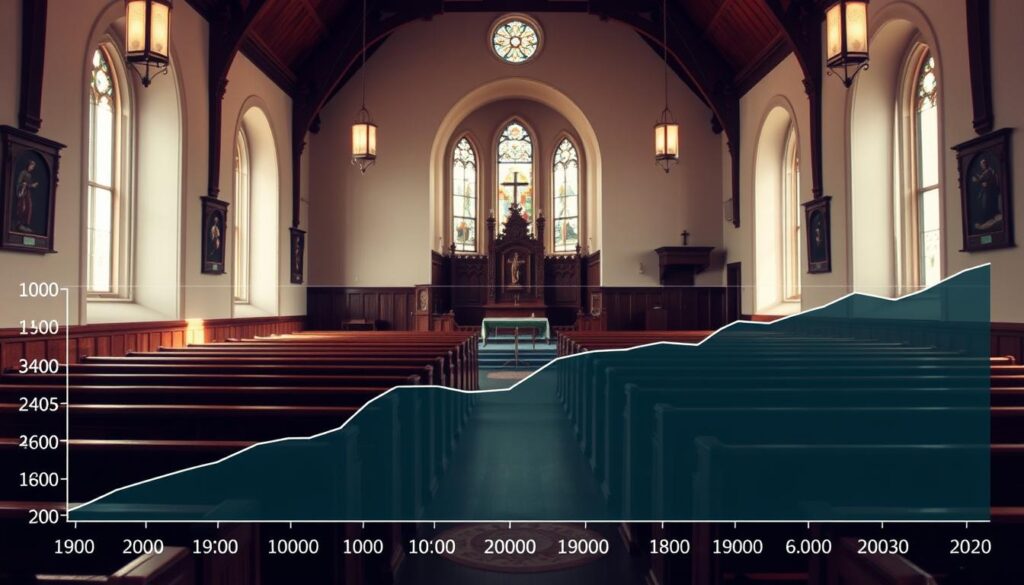
Only half the population remains registered with the church today—a stark drop from 95% in 1972. Automatic enrollment ended in 1996, letting families decide about religious affiliation. Young adults now often join later when planning weddings or baptisms.
Surprisingly, 40% of 14-year-olds still undergo confirmation. “These rites connect people to heritage,” notes a Stockholm pastor. Though weekly attendance sits at 2%, cultural ties remain strong through seasonal events and historic traditions.
Modern Practices and Social Engagement
The Church of Sweden reinvented itself after losing state church status in 2000. It now runs food banks, shelters, and climate projects nationwide. Over 5,000 staff members support communities through practical aid and spiritual care.
- First Lutheran body to perform same-sex marriages (2009)
- Trains deacons for prison outreach and refugee support
- Hosts interfaith dialogues in 130 historic cathedrals
This blend of ancient roots and modern missions keeps the institution relevant. As one volunteer puts it: “We’re not just preserving the past—we’re building hope for the future.”
Architectural and Cultural Legacy of the Church
Sweden’s skyline tells stories of faith through stone spires and crimson-painted wood. The Church of Sweden preserves over 900 historic buildings, each blending medieval craftsmanship with practical design. These structures serve as living museums, connecting modern visitors to centuries of spiritual heritage.
Iconography, Cathedrals, and Historic Landmarks
Uppsala Cathedral dominates the landscape as the church’s spiritual headquarters. Completed in 1435, its Gothic arches house royal tombs and a golden reliquary honoring Saint Eric. The building’s coat of arms—a red cross with a golden crown—symbolizes both divine authority and national pride.
Rural regions showcase simpler beauty through 600 red wooden churches. These 18th-century buildings used iron-rich paint to protect timber from harsh winters. Their unadorned interiors reflect Lutheran values of humility, while exterior bell towers guide travelers through dense forests.
- Medieval wall paintings depicting biblical scenes in Gotland’s country chapels
- The ancient Uppsala temple site, where pagan and Christian histories collide
- Contemporary worship spaces using light-filled designs to foster community
From Romanesque fortresses to modernist glass sanctuaries, these churches adapt to their times while honoring tradition. As one architect notes: “We build not just for today’s congregation, but for generations yet to sing here.”
Role of the Church in Education and Community Life
The Church of Sweden extends its mission beyond Sunday services through hands-on community support. Its network of social programs touches lives across cities and countryside alike, proving faith and action go hand-in-hand.
Social Services and Diakonia Programs
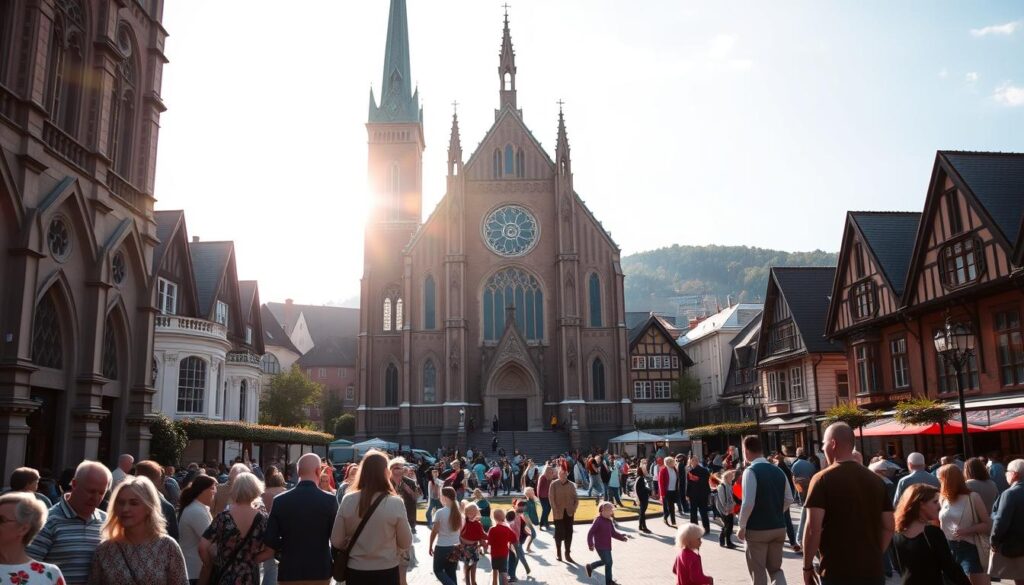
Over 15,000 deacons form the backbone of Svenska kyrkan‘s outreach efforts. These trained professionals run food banks, addiction recovery centers, and elder care initiatives. Their work shows how ancient Christian values address modern struggles.
Educational programs bridge generations through literacy classes and vocational training. The church partners with local communities to offer courses on parenting, digital skills, and environmental stewardship. “We meet people where they are,” says a Malmö-based deacon.
Rural areas benefit most from these services. In regions with limited government resources, church volunteers deliver meals and host youth activities. Immigrant integration projects help newcomers learn Swedish customs while preserving cultural roots.
Svenska kyrkan also advocates for systemic change. Recent campaigns pushed for affordable housing reforms and climate action policies. By blending charity with activism, the institution remains a trusted voice in public debates.
Norse Roots and the Transition to Christianity
Long before steeples dotted the landscape, ancient Swedes gathered under open skies to honor forces of nature. Their spiritual system intertwined daily life with sacred rites, creating a tapestry of beliefs that shaped Scandinavia for centuries. At sites like Gamla Uppsala, evidence reveals how these traditions evolved into one of Europe’s last pagan strongholds.
Pre-Christian Rites and Norse Beliefs
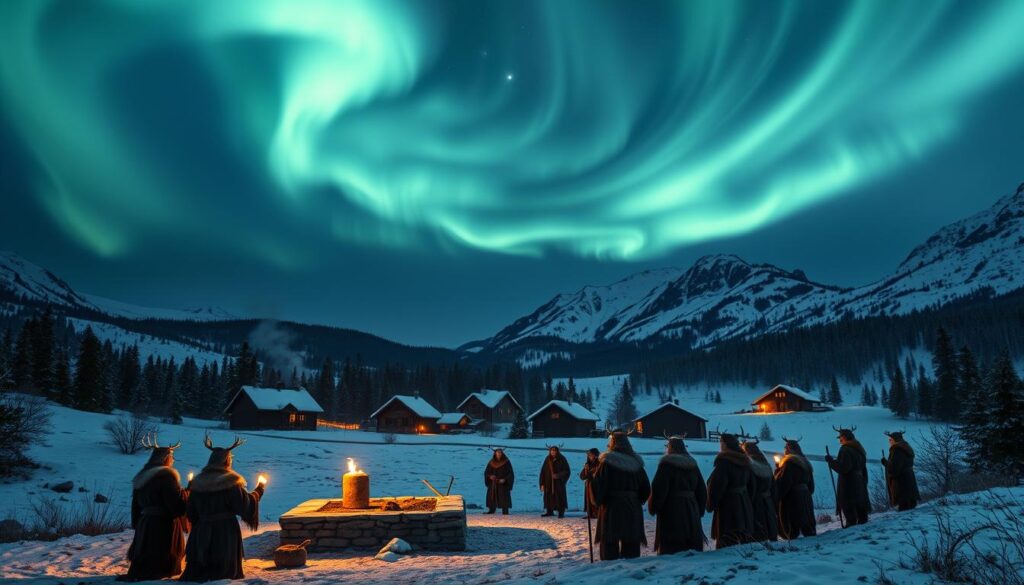
Ancient Scandinavians saw their gods in thunderstorms and harvests—Thor’s hammer echoing across skies, Freyr blessing fertile fields. Communities celebrated seasonal cycles through feasts and sacrifices, blending practical needs with spiritual meaning. Archaeologists found animal bones and ceremonial artifacts at ritual sites, proof of a religion deeply rooted in nature’s rhythms.
Every eight years, crowds flocked to Uppsala’s temple for grand festivals. “These gatherings weren’t just worship,” notes a historian, “but vital social events binding tribes together.” Offerings to Odin and Freyja ensured protection and prosperity, showing how beliefs addressed both cosmic mysteries and earthly struggles.
Conversion Processes and Early Ecclesiastical Structures
Christianity’s spread took generations, with missionaries often blending local customs into new rites. By the 12th century, Uppsala’s pagan temple became a church—a physical symbol of shifting spiritual loyalties. Early priests adapted Norse winter festivals into Christmas traditions, making the foreign faith feel familiar.
Kings played key roles in this transformation. When rulers adopted Christianity, their subjects often followed, reshaping community structures around church teachings. Former pagan leaders sometimes became deacons, bridging old and new systems of authority. This gradual shift created a unique form of Christianity that still echoes in church sweden practices today.
Key Figures and Milest
Gustav Vasa‘s bold reforms reshaped spiritual identity during the nation’s pivotal Reformation era. This monarch severed papal ties in 1527, establishing a national church that blended medieval traditions with Protestant theology. His collaborator Olaus Petri translated scriptures into Swedish, making faith accessible through language modernization.
The 2000 separation from state control marked a modern milestone. This shift empowered the Church of Sweden to address contemporary issues while preserving heritage. Notable leaders like Archbishop Antje Jackelén later championed climate justice and interfaith dialogue.
Key developments include:
• First female priests ordained in 1960
• Landmark 2009 decision to perform same-sex marriages
• Digital worship expansion during the 2020 pandemic
These moments reveal an institution adapting to cultural shifts while honoring its evangelical Lutheran roots. Through visionary leadership and transformative events, the church maintains relevance across generations.
FAQ
How did the Evangelical Lutheran Church become Sweden’s state church?
After the Reformation in the 16th century, King Gustav Vasa broke ties with the Roman Catholic Church. By 1593, the Church of Sweden adopted Lutheran doctrines, merging faith with governance. It remained the official state religion until 2000, when legal separation from the government occurred.
What role do traditional vestments play in worship today?
High Church practices, like chasubles and stoles, remain common in many congregations. These vestments reflect historical ties to medieval rites while emphasizing sacramental traditions, such as communion, central to Lutheran theology.
How has membership in the Church of Sweden changed over time?
In the mid-20th century, nearly 95% of Swedes were members. Today, around 55% belong, reflecting secularization and diverse beliefs. However, it remains the largest religious community, offering rites like baptisms and funerals even to non-active members.
Are historic cathedrals still culturally significant?
Absolutely. Landmarks like Uppsala Cathedral blend Gothic architecture with Lutheran heritage. These spaces host worship, concerts, and public events, preserving medieval iconography while serving modern communities.
Does the church engage in social services?
Yes. Diakonia programs support refugees, homeless populations, and youth initiatives. Parishes also partner with schools to teach ethics and history, maintaining a role in education despite Sweden’s secular education system.
How did Norse beliefs influence early Christian practices?
A> Pre-Christian rituals, like seasonal festivals, were adapted into Christian holidays. Early ecclesiastical structures often built churches on Norse sacred sites, easing the transition during the 11th-century conversion.
Can women serve as priests in the Church of Sweden?
Yes. Since 1958, women have been ordained, and today, many hold leadership roles. This shift reflects broader societal changes toward gender equality within the church’s framework.
What connects the Church of Sweden to other Lutheran communities?
It belongs to the Lutheran World Federation and the Porvoo Communion, fostering ties with Anglican and Baltic Lutheran churches. Shared doctrines, like justification by faith, unite these global communities.