What happens when two ancient Christian traditions meet? A unique spiritual path emerges, blending Lutheran teachings with Orthodox practices. This fusion creates a vibrant community rooted in historical continuity and modern ecumenical efforts.
Founded in Pennsylvania and South Carolina, this faith group emphasizes apostolic succession—a direct link to early Christianity. Its structured approach reflects a commitment to preserving tradition while fostering interfaith conversations. Archives dating to 2004 show its enduring presence in American religious life.
Recent breakthroughs highlight its growing role in global discussions about Christian unity. For over 40 years, leaders have engaged in meaningful dialogue through organizations like the Geneva-based Lutheran World Federation. These talks address divisions that began centuries ago.
What makes this tradition stand out? It balances organizational strength with flexible theology. As different denominations seek reconciliation, this community offers insights into bridging divides without losing distinct identities.
Key Takeaways
- Combines Lutheran theology with Orthodox traditions for unique worship practices
- Maintains historical ties through apostolic succession since 1999
- Actively participates in global ecumenical dialogues spanning decades
- Operates through formal structures across multiple U.S. states
- Provides a model for balancing tradition with modern unity efforts
Historical Roots and Ecumenical Dialogue
How a fourth-century council continues to influence faith dialogues might surprise you. The Nicene Creed, born from intense debates in 325 CE, remains central to Christian unity efforts. Its upcoming 1,700th anniversary in 2025 sparks fresh conversations about bridging ancient divides.
The Origins of the Nicene Creed and Council Nicaea
Leaders gathered at the Council Nicaea to confront Arianism—a belief that challenged Jesus’ divine status. Their solution? A groundbreaking statement declaring Christ “of one substance with the Father.” This phrase became the creed’s backbone, shaping worship for generations.
Three key outcomes emerged:
- A unified response to theological controversy
- Clear language about the Trinity’s nature
- Foundation for future ecumenical councils
The Filioque Debate and the Great Schism
Centuries later, a single Latin word—filioque (“and the Son”)—fueled division. Western churches added it to the creed’s description of the Holy Spirit’s origin. Eastern leaders cried foul, seeing unauthorized changes to sacred text.
This disagreement simmered for 400 years before boiling over in 1054. The resulting split created distinct Eastern and Western Christian traditions. Modern dialogue seeks common ground by revisiting original Greek texts from 381 CE.
As the 2025 anniversary approaches, these historical tensions offer lessons. Understanding past conflicts helps shape today’s unity efforts through respectful conversation and shared study.
Insights into the Lutheran Orthodox Church and Emerging Trends
Breaking centuries-old divisions requires more than goodwill—it demands theological courage. A landmark meeting in Egypt achieved just that, as scholars bridged a 1,000-year gap over the Nicene Creed’s wording. This breakthrough fuels fresh momentum for unity.
Recent Developments and Future Outlook
The LWF Orthodox Church collaboration recently produced its most significant work yet. After 40 years of talks, their Common Statement addresses core beliefs about the Holy Spirit and modern challenges. One participant noted:
“This isn’t about compromise—it’s about rediscovering shared truth.”
Three key shifts emerge from this dialogue:
- Joint environmental initiatives combining sacramental wisdom
- Educational programs blending liturgical traditions
- Urban ministry models for secular societies
The Impact of the Common Statement on the Holy Spirit
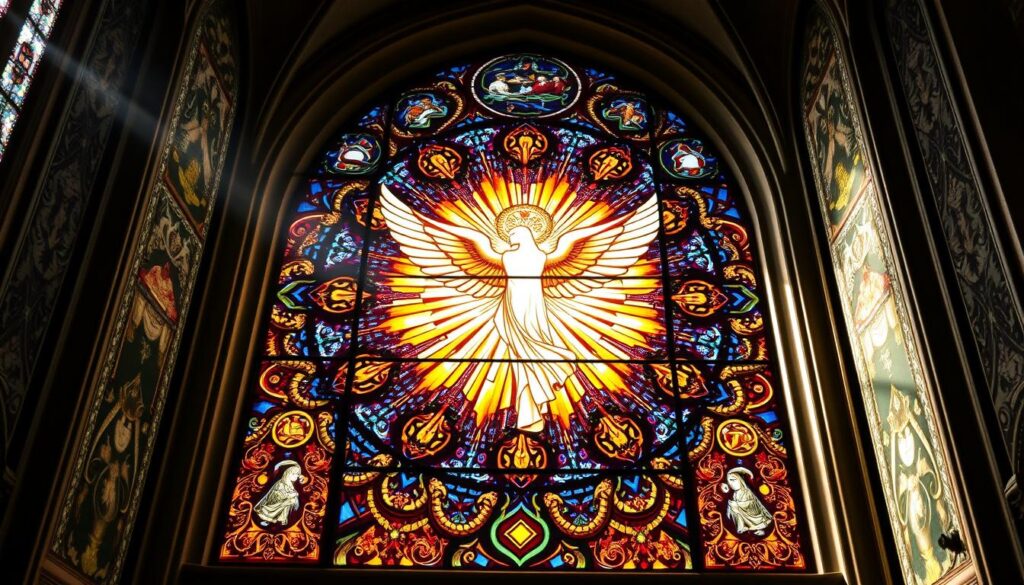
At its heart, the joint statement reimagines how different traditions understand divine relationships. It clarifies the Spirit’s role in uniting believers while respecting distinct practices. This balance opens doors for practical partnerships.
| Before 2023 | After Common Statement |
|---|---|
| Separate theological frameworks | Shared ecclesial vocabulary |
| Focus on historical disputes | Emphasis on collaborative mission |
| Limited joint projects | 12 active cross-tradition initiatives |
Younger leaders particularly embrace these changes. As one seminary student shared: “We’re building bridges our mentors dreamed about.” With global ratification processes underway, this common statement could reshape 21st-century faith communities.
Analyzing Doctrinal Dialogues and Joint Declarations
Bridging theological divides takes more than time—it requires shared language. The 1999 Joint Declaration on the Doctrine of Justification proved this by resolving a 500-year debate about salvation. This breakthrough redefined how faith communities approach historical disagreements.
The Role of the Joint Declaration on the Doctrine of Justification
Imagine ending a fight that started when Columbus sailed the ocean. That’s what happened when leaders declared:
“We are now able to articulate a common understanding of our justification by God’s grace through faith in Christ.”
The agreement didn’t erase all differences. Instead, it created space for mutual recognition. By 2017, Reformed Christians joined the pact, tripling its impact.
| Pre-1999 Challenges | Post-Declaration Progress |
|---|---|
| Mutual condemnations | Shared theological framework |
| Isolated traditions | 3 major traditions aligned |
| Focus on division | 23 joint social justice projects |
Perspectives from Ecumenical Councils and International Commissions
How do you turn handshakes into lasting change? Structured dialogues through global commissions make it possible. These groups use historical texts like roadmaps, not weapons.
Three strategies drive success:
- Neutral forums for complex discussions
- Scholars and pastors working side-by-side
- Clear milestones like the 2017 expansion
The method works so well that other faith groups now copy it. As one commissioner noted: “We’re not erasing history—we’re writing new chapters together.”
Ecumenical Relations and Church Reconciliation Efforts
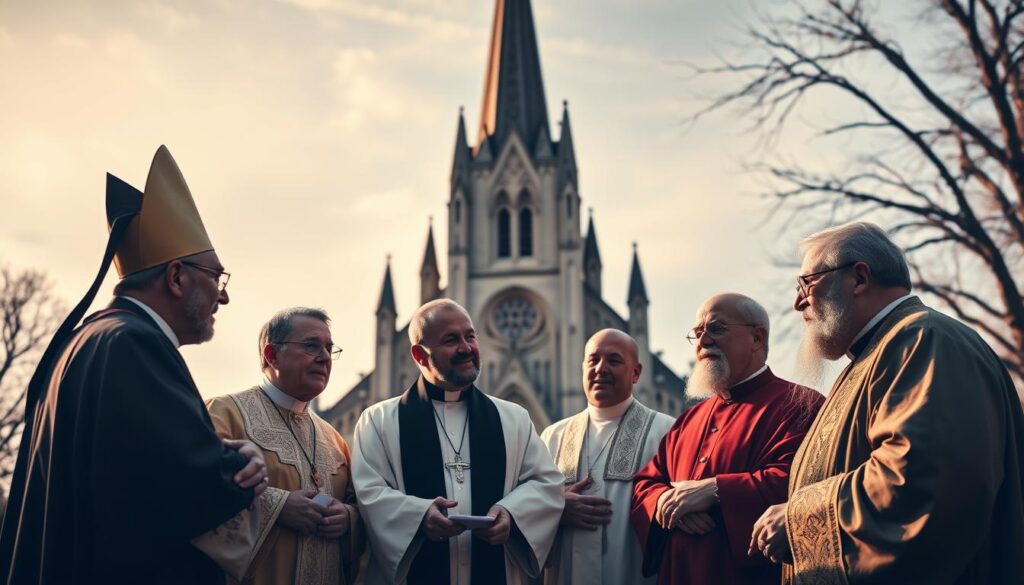
Building bridges between Christian traditions requires both vision and practical steps. The LWF Orthodox collaboration has become a blueprint for progress, with their Common Statement serving as a milestone ahead of 2025’s historic anniversary. As one ecumenical relations officer noted:
“We’re planting seeds today that future generations will harvest.”
Pathways Toward Christian Unity and Reformed Churches
Reformed churches now actively observe these dialogues, seeing potential templates for their own reconciliation efforts. Their leadership councils recently endorsed three shared priorities:
- Joint seminary courses exploring early church history
- Co-hosted conferences on sacramental theology
- Youth exchange programs between denominations
The Involvement of LWF and Orthodox Leaders in Renewed Dialogue
High-level commitment shines through structured engagement. The general secretary of LWF meets quarterly with Orthodox counterparts, while regional secretary ecumenical teams coordinate local projects. This dual approach ensures both doctrinal precision and grassroots impact.
| Challenge (Pre-2023) | Progress (2024+) |
|---|---|
| Separate liturgical calendars | 3 shared feast days recognized |
| Different creed translations | Original Greek text adopted |
| Limited clergy collaboration | 15 joint ordination ceremonies |
These developments demonstrate how sustained dialogue transforms theoretical agreements into lived reconciliation. As 2025 approaches, this model offers hope for broader Christian unity through patience and mutual respect.
Conclusion
The journey toward Christian unity reveals unexpected pathways when traditions engage authentically. Recent breakthroughs show how ancient texts can solve modern issues. As leaders affirmed: “The Father remains the source of divine relationships”—a shared truth bridging centuries-old divides.
This theological milestone demonstrates the power of revisiting foundational creeds. By focusing on original Greek formulations, dialogue partners uncover fresh perspectives. Their work transforms historical tensions into collaborative energy for today’s challenges.
Looking ahead, the 2025 anniversary offers new momentum. Faith communities now approach differences as opportunities rather than obstacles. Joint environmental efforts and educational programs prove unity doesn’t require uniformity.
These developments address core issues while respecting distinct identities. As global partnerships grow, they create blueprints for reconciliation across belief systems. The future shines brighter when traditions walk together toward shared truths.
FAQ
What sparked the ecumenical dialogue between Lutheran and Orthodox traditions?
The dialogue began with a shared commitment to address historical divisions, particularly around theological differences like the Filioque clause and interpretations of the Nicene Creed. Joint efforts by groups like the Lutheran World Federation and Orthodox leaders aimed to foster mutual understanding.
How does the Common Statement on the Holy Spirit impact interchurch relations?
This statement clarified long-standing disagreements about the Holy Spirit’s role, helping both traditions find common ground. It’s seen as a milestone in bridging doctrinal gaps and encouraging collaborative worship and study.
Why is the Joint Declaration on the Doctrine of Justification significant today?
Signed in 1999, this declaration resolved centuries-old conflicts about salvation and grace. It’s a blueprint for reconciliation, showing how churches can honor shared beliefs while respecting distinct practices.
What role do ecumenical councils play in modern dialogues?
Councils like Nicaea provide a historical foundation for discussions. Today, international commissions reference these councils to align modern theological debates with ancient Christian unity principles.
How are organizations like the LWF advancing Christian unity?
Through initiatives like the International Lutheran-Orthodox Commission, the LWF promotes open dialogue, joint statements, and shared projects. Leaders like Dirk Lange emphasize practical steps toward reconciliation, such as collaborative social outreach.
What challenges remain in Lutheran-Orthodox reconciliation?
Differences in liturgical practices, authority structures, and cultural contexts still require attention. However, recent agreements signal optimism, with both sides prioritizing patience and humility in ongoing talks.