Let’s step back to 16th-century Europe, where a wave of religious change began reshaping spiritual life. What started as critiques of established practices grew into a transformative movement that altered global religious landscapes. This shift didn’t just challenge doctrines—it sparked debates about authority, tradition, and individual faith.
At its core, this reform sought to simplify worship and prioritize personal connection with scripture. Leaders like Martin Luther and John Calvin became voices for those questioning long-held norms. Their ideas spread rapidly, thanks to the printing press and growing dissatisfaction with rigid structures.
By the 17th century, these principles crossed oceans, reaching America’s shores. Here, they evolved into diverse expressions of faith that valued community and self-governance. The ripple effects influenced everything from education to governance, leaving lasting marks on modern society.
Key Takeaways
- The Reformation began in 16th-century Europe as a response to doctrinal disagreements
- Printing technology accelerated the spread of reformist ideas globally
- Early Protestant leaders emphasized personal scripture interpretation
- American colonies became testing grounds for new religious models
- These changes laid groundwork for modern concepts of religious freedom
Historical Context of the Reformation
The roots of religious transformation stretch deep into medieval soil. By the 1400s, the Roman Catholic institution wielded unmatched influence over spiritual and political affairs. Yet cracks in its foundation were already visible through widespread calls for accountability.
Late Medieval Foundations and Early Critics
Two popes became symbols of systemic issues. Innocent VIII hosted weddings for his children at the Vatican, while Alexander VI secured his position through bribes. Such scandals fueled public anger across Spain, Germany, and England.
Jan Hus emerged as a fiery voice for change decades before Luther. At Prague University, he condemned lax clergy and demanded adherence to scripture. His 1415 execution at Constance only amplified calls for reform.
National Pride Challenges Spiritual Authority
Kings saw an opportunity as distrust grew. Monarchs in France and England began resisting papal taxes and appointments. This clash between national identity and religious power reshaped Europe’s political map.
By the 1490s, three forces converged: frustrated believers, ambitious rulers, and bold thinkers. Together, they created fertile ground for questioning centuries-old church teachings. The stage was set for seismic shifts in spiritual practice.
The Catalyst: Martin Luther and the 95 Theses
On October 31, 1517, a single act in Wittenberg ignited a spiritual wildfire across Europe. Martin Luther, an Augustinian monk, nailed his 95 Theses to a local church door—a common practice for academic debates. But this document questioned something explosive: the Roman Catholic Church’s authority over salvation.
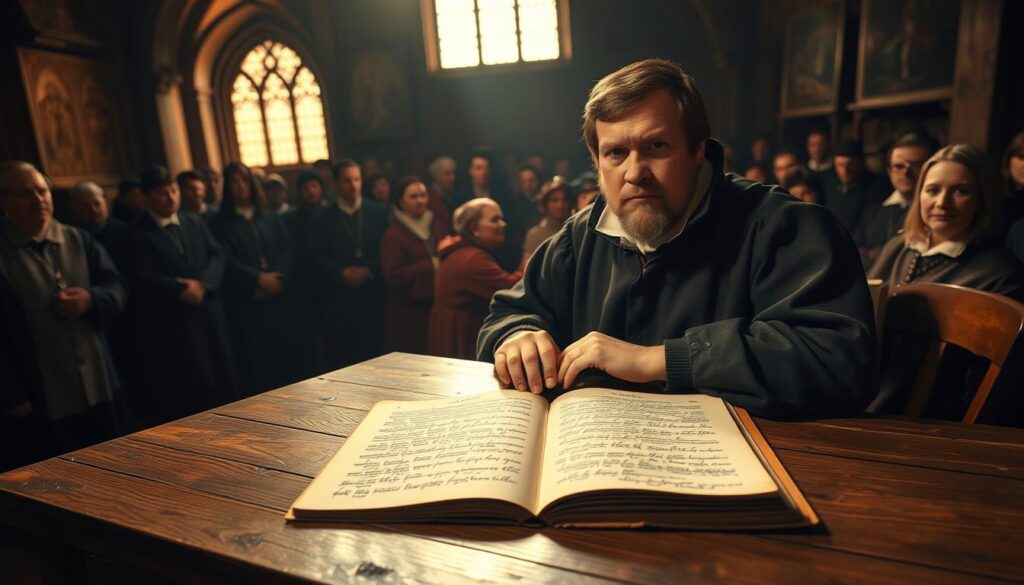
Luther’s arguments targeted the sale of indulgences, where people paid to reduce punishment for sins. He called this practice a distortion of scriptural truth, insisting forgiveness couldn’t be bought. “When money clinks in the chest,” he wrote, “greed and avarice increase.” His radical idea? Salvation comes through faith alone, as emphasized in many biblical teachings about spiritual freedom.
Martin Luther’s Bold Challenge to Catholic Doctrine
The 95 Theses weren’t just criticism—they offered a new vision. Luther argued ordinary believers could understand scripture without priests as middlemen. This struck at the heart of Catholic doctrine, which held the Roman Catholic institution as God’s sole interpreter.
By 1521, his writings forced a confrontation at the Diet of Worms, where he defended his views before imperial authorities. “Unless I’m convinced by Scripture,” he declared, “my conscience is captive to God’s Word.”
The Impact of the 95 Theses on European Christianity
Summoned again to the Diet of Worms months later, Luther refused to recant: “Here I stand; I can do no other.” Excommunicated but undeterred, he translated the Bible into German—democratizing access to sacred texts.
The printing press amplified his voice. Between 1518-1525, Luther published more works than the next 17 reformers combined. His ideas spread like lightning, challenging centuries of tradition and reshaping spiritual practice forever.
Understanding Protestant Church Formation Through the Eyes of Reformers
The 1529 Diet of Speyer became a turning point where spiritual rebellion took political shape. Six German princes and fourteen cities boldly declared their right to follow conscience over imperial commands. This act birthed the term “Protestant”—not just a label, but a manifesto for personal spiritual responsibility.
Defining the Process and Its Core Doctrines
Reformers reshaped Christianity through three radical beliefs. First, scripture alone—not tradition—guided true faith. Second, every believer became their own priest, capable of understanding God’s word. Third, salvation flowed from grace, not rituals.
Martin Luther’s German Bible translation empowered ordinary people. Suddenly, farmers could debate theology as fiercely as scholars. “The Holy Spirit needs no interpreter,” argued reformers, dismantling centuries of clerical control.
The Shift from Catholic Control to Individual Faith
Where once priests mediated divine connection, reformers placed Bibles in calloused hands. This reform movement turned kitchens into chapels and families into congregations. Believers began keeping spiritual journals, wrestling directly with scripture’s meaning.
John Calvin later codified these ideas in Geneva. His Institutes declared church structures unnecessary for salvation. The focus shifted: personal piety over papal decrees, heartfelt prayer over hollow ceremonies.
Exploring Key Figures and Movements in the Reformation
While Luther’s actions sparked change, other reformers built lasting frameworks for spiritual renewal. Their distinct approaches created diverse traditions that still shape beliefs today.
John Calvin’s Theological Contributions and Reformed Doctrine
John Calvin transformed Geneva into a laboratory for religious ideas. His concept of predestination—that God chooses who receives salvation—became central to Reformed theology. “Human will gains no triumph,” he wrote, emphasizing divine authority over earthly matters.
Under Calvin’s leadership, Geneva enforced strict moral codes. Dancing and flashy clothing faced bans, while Bible study became mandatory. This model attracted exiled believers from across Europe, turning the city into a training hub for reform-minded leaders.
Henry VIII and the Establishment of the Church of England
England’s break from Rome began with Henry VIII‘s personal crisis. When the Pope refused to annul his marriage to Catherine of Aragon, the king declared himself head of England’s religious life. This bold move birthed the Church of England, blending Catholic rituals with Protestant principles.
Unlike Calvin’s strict reforms, this new way kept ornate churches and hierarchical structures. Yet it rejected papal authority, creating a unique middle ground. Huldrych Zwingli in Switzerland took different steps, arguing communion symbolized Christ’s presence rather than embodying it—a view that further diversified Reformation thought.
Impact of the Printing Press and Political Forces
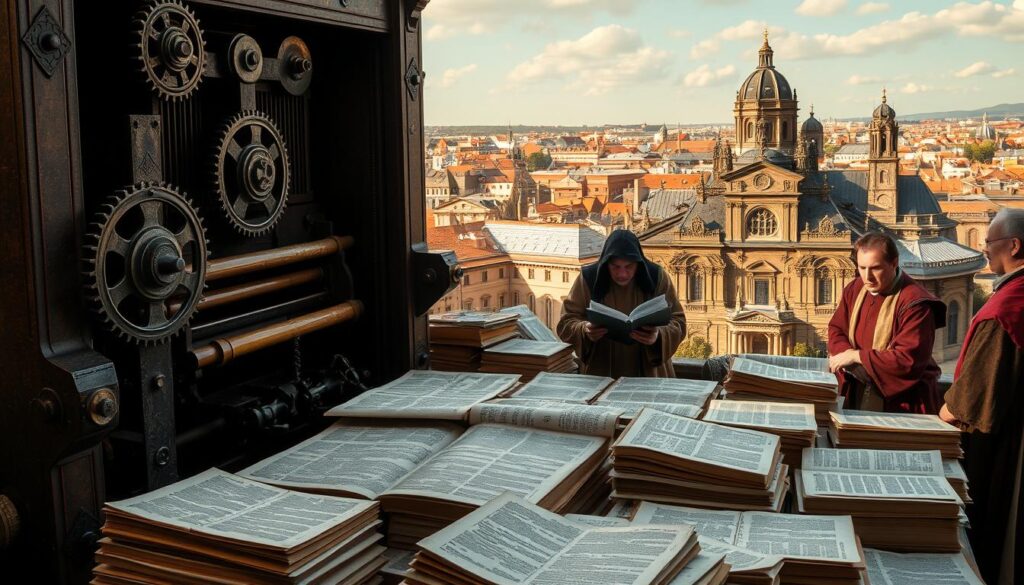
Imagine a world where information moved at the speed of horse and sail—until a technological breakthrough changed everything. The printing press became the Reformation’s megaphone, amplifying ideas across borders faster than ever before.
The Role of the Printing Press in Spreading Reformation Ideas
Martin Luther understood the power of mass communication. His pamphlets sold like wildfire—over 300,000 copies circulated in just three years. For the first time, farmers debated theology using printed German Bibles instead of relying on priests.
The press bypassed traditional authority, letting reformers speak directly to people. By 1525, Luther’s works made up a third of all German-language prints. This tech revolution turned local debates into continent-wide movements.
Political Maneuverings and Their Effect on Religious Change
Kings saw opportunity in the chaos. The 1555 Peace of Augsburg let German princes choose their state religion—Lutheranism or Catholicism. Later, the Treaty of Westphalia (1648) ended decades of war by recognizing multiple Christian branches.
| Era | Communication Method | Reach | Speed |
|---|---|---|---|
| Pre-Press | Handwritten manuscripts | Local | Months |
| Post-Press | Printed pamphlets | Continental | Weeks |
Rulers used religious shifts to strengthen their power. When monarchs broke from Rome, they gained control over lands and taxes once managed by clergy. This dance between faith and politics reshaped Europe’s map forever.
Legacy and Modern Influences of the Reformation
The echoes of 16th-century reforms still shape daily life in unexpected ways. When English dissenters sailed to America, they brought more than religious zeal—they carried blueprints for self-governance and education. The Massachusetts Bay Colony became a testing ground where reform principles evolved into community-driven values.
Cultural, Educational, and Economic Repercussions
Early settlers built schools before towns. Harvard College opened just six years after Boston’s founding, showing their commitment to movement literacy. This focus on education laid groundwork for America’s public school system.
Work ethics from reform church teachings influenced colonial economies. Communities valued thrift and hard work, creating patterns that shaped today’s business culture. Even the Book of Common Prayer found new expressions in democratic town meetings.
The Enduring Spirit of Religious Freedom in the United States
Dissenters who fled Europe planted seeds for America’s United States identity. The First Amendment’s religious clauses mirror reformers’ demands for personal conscience rights. Over 300 denominations now thrive here—a direct result of those early battles.
This legacy lives in today’s debates about individual rights and community needs. From free speech to healthcare, the movement’s ripple effects continue shaping our world.
FAQ
What sparked the movement against the Roman Catholic Church in the 16th century?
Growing social unrest, political tensions, and critiques of practices like the sale of indulgences fueled dissent. Figures like Jan Hus had already challenged church authority decades earlier, setting the stage for broader reform.
How did Martin Luther’s actions challenge existing religious authority?
By nailing his 95 Theses in 1517, Luther openly criticized doctrines like papal infallibility. His stance at the Diet of Worms—refusing to recant—defied both the pope and Emperor Charles V, prioritizing scripture over tradition.
What core ideas defined the reformers’ break from traditional teachings?
Key doctrines included sola fide (faith alone for salvation) and the priesthood of all believers. Reformers like John Calvin emphasized predestination, while others pushed for scripture translation into local languages.
Why did Henry VIII create the Church of England?
Henry sought to annul his marriage to Catherine of Aragon, which the pope denied. This led to the 1534 Act of Supremacy, making him head of a new national church. The Book of Common Prayer later standardized Anglican worship.
How did the printing press accelerate religious change?
It allowed rapid spread of reformist writings, like Luther’s German Bible and Calvin’s Institutes. Pamphlets and debates reached wider audiences, empowering grassroots movements and literacy.
What lasting impacts did the Reformation have on modern societies?
It reshaped education, governance, and individual rights. Concepts like religious freedom influenced the United States’ founding principles, while Reformed work ethics shaped economic growth in Europe.