The 1600s were a time of intense change for religious communities across Europe. Power struggles between rulers and reformers reshaped beliefs, while ordinary people navigated shifting rules about worship and faith. This era saw kingdoms torn apart by conflicts rooted in theology, with leaders using religion to justify both unity and division.
Imagine living in a world where your beliefs could spark wars or determine your rights. That was reality for many during this period. Monarchs like England’s James I and revolutionaries such as Oliver Cromwell clashed over control of religious practices, creating ripple effects that reached local churches. These battles weren’t just about power—they shaped how individuals interpreted sacred texts and connected with their faith.
Behind the grand politics, everyday life transformed too. New translations of the Bible made scripture accessible, while revised rituals redefined community gatherings. What did it mean to worship freely when your choices could anger the crown? The answers forged during this time laid groundwork for modern ideas about religious tolerance and individual liberty.
Key Takeaways
- The 1600s brought radical shifts in religious practices and political alliances across Europe
- Monarchs and reformers clashed over control of faith communities, reshaping national identities
- Accessible scripture translations empowered ordinary people to engage with religious texts
- Wars and policies from this era influenced later concepts of freedom of worship
- Local churches became battlegrounds for both spiritual and societal change
Overview of the 17th Century Protestant Movement
Northern Europe became a crucible of faith-driven transformation during the 1600s. People witnessed unprecedented clashes between established traditions and emerging spiritual ideas, with regions from Scandinavia to Hungary becoming battlegrounds for belief systems. This movement reshaped not just worship practices but entire societies.
Introducing the Era of Change
As conflicts like the Thirty Years’ War erupted, ordinary individuals found themselves caught between rival powers. Territories in Germany and the Low Countries saw the heaviest fighting, while England and Scotland grappled with internal religious tensions. New translations of sacred texts empowered common people to interpret faith independently.
The true church lives not in stone walls, but in the hearts of believers.
Key Themes and Trends
Three revolutionary ideas defined this time:
- Scripture as the ultimate authority over tradition
- Every believer’s right to spiritual leadership
- Personal faith outweighing ritual observance
Communities experimented with self-governance models, shifting from top-down hierarchies to collaborative systems. The table below shows how different regions embraced these changes:
| Region | Governance Model | Notable Development |
|---|---|---|
| England | Episcopal | Anglican reforms under monarchy |
| Scotland | Presbyterian | Local elder councils |
| Low Countries | Congregationalist | Community-led worship |
This period’s legacy lives on through modern concepts of religious liberty and participatory governance. While churches faced immense challenges, their adaptations during this time created lasting frameworks for spiritual democracy.
Historical Context: The Post-Reformation Landscape
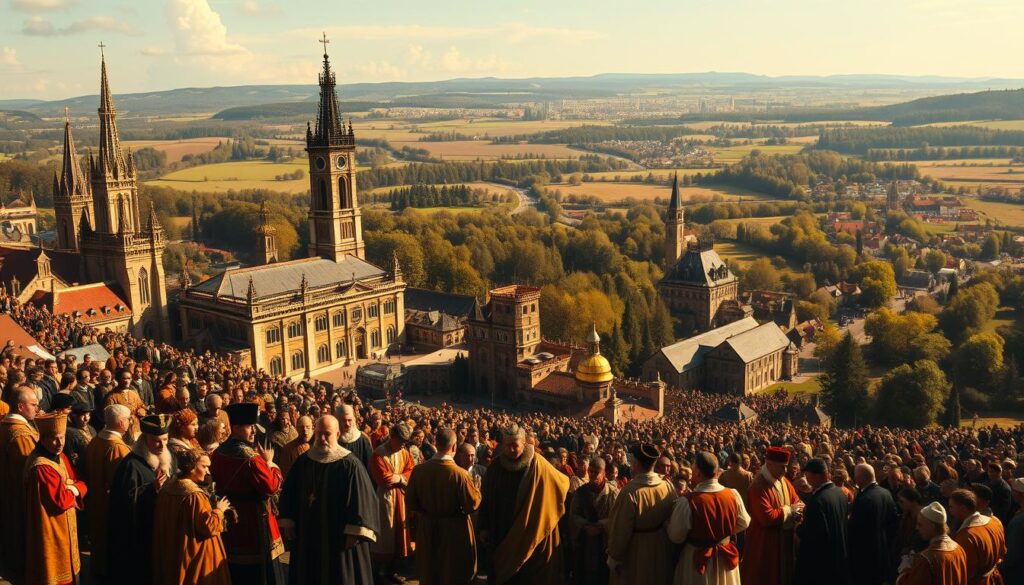
By the 1600s, the religious upheavals of the past century had reshaped entire nations. People found themselves living in a patchwork of belief systems, where Lutheran strongholds in Scandinavia contrasted with Calvinist regions in Switzerland. The Peace of Westphalia in 1648 finally drew borders reflecting these divisions, creating safer spaces for worship but deepening cultural divides.
This era brought fresh challenges for communities trying to balance faith and governance. Local leaders wrestled with questions earlier reformers never fully answered: Who controls religious education? How should congregations handle disputes? Churches became laboratories for testing ideas about shared decision-making and individual conscience.
Imagine traveling through Germany during this time. You might hear French hymns in one town and German catechisms in the next, each region guarding its hard-won traditions. A merchant from Amsterdam noted: “We built our identity not just on what we believed, but what we refused to repeat.”
| Region | Dominant Faith | Key Feature |
|---|---|---|
| Northern Germany | Lutheran | State-supported churches |
| Geneva | Reformed | Council-led governance |
| England | Anglican | Monarch-led reforms |
These arrangements gave people stability after decades of conflict, but tensions simmered beneath the surface. The work of 16th-century thinkers now required practical applications—transforming abstract theology into Sunday services and community rules. This delicate dance between preservation and progress would define religious life for generations.
Religion and Politics in Early 17th Century England
England’s rulers faced a delicate balancing act in the 1600s. Kings sought to unite spiritual and political authority, while people demanded freedom to shape their own beliefs. This tension between crown and congregation defined an era where faith determined loyalty to the throne.
The Rise of Monarchical Power
James I declared religious unity essential for national stability. His 1606 proclamation stated: “No bishop, no king”—linking church structure to royal power. The monarch controlled appointments, liturgy, and even Bible translations. Yet dissenting voices grew louder as Puritans and Catholics challenged this centralized system.
The Role of the Anglican Establishment
The Church of England became a bridge between traditions. Its blend of reformed theology and ceremonial practices aimed to satisfy diverse groups. Key features included:
- Royal supremacy over spiritual matters
- English-language Book of Common Prayer
- Bishops appointed by the king
| Ruler | Policy | Impact |
|---|---|---|
| James I | Religious conciliation | Reduced open conflicts |
| Charles I | Enforced uniformity | Increased dissent |
| Local Leaders | Customized practices | Regional divisions |
This system worked—until it didn’t. By 1625, cracks appeared as people questioned whether the Church of England served God or the throne. These debates planted seeds for future upheavals, proving that mixing faith and governance remained risky business.
James I and the Transformation of Worship
When James VI of Scotland ascended England’s throne in 1603, he inherited a divided spiritual landscape. Though raised Calvinist, the new king surprised many by embracing the Church of England’s traditions. This decision disappointed reformers hoping for Presbyterian reforms but set the stage for lasting changes in how people engaged with scripture.
The King James Bible and Its Impact
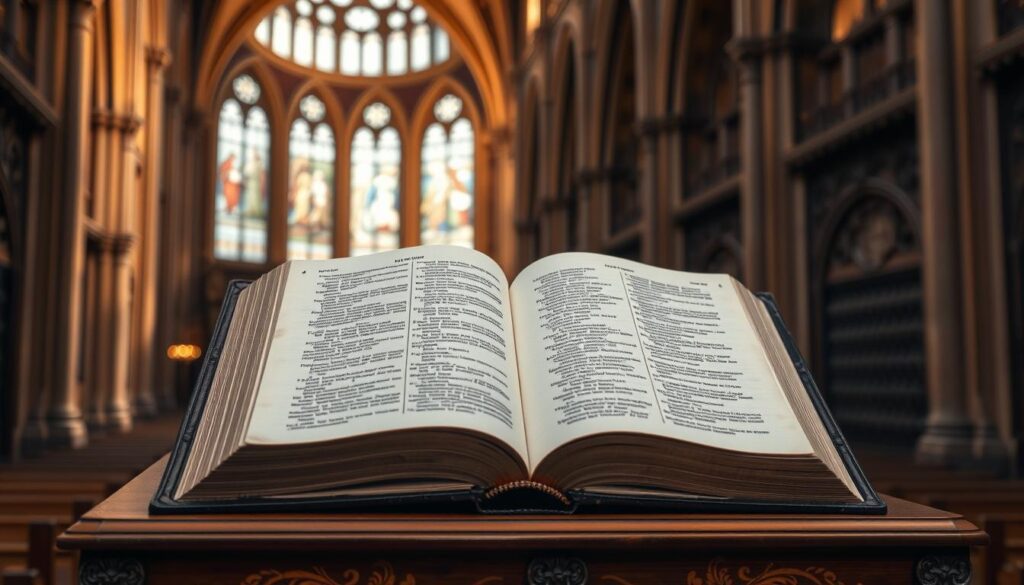
James I’s most enduring legacy began with a bold project: replacing the popular Geneva Bible. He assembled 47 scholars to create a translation that balanced accuracy with poetic language. The result became the standard text for the Church of England—and eventually, English-speaking communities worldwide.
The king‘s approach showed unexpected flexibility. While maintaining traditional rituals, he granted priests freedom in service details. Those who avoided practices like kneeling faced no punishment—a rare tolerance for the time.
| Aspect | Geneva Bible | King James Bible |
|---|---|---|
| Translation Style | Plain, Calvinist notes | Poetic, neutral tone |
| Authority Source | Reformers | Monarchy & Scholars |
| Long-Term Influence | Faded after 1640s | Dominant until 1900s |
This masterpiece did more than unify worship—it shaped English culture. Phrases like “labour of love” and “skin of teeth” entered daily speech. As one London printer noted: “The words lived in taverns and palaces alike.”
By blending royal authority with scholarly collaboration, James created a way to honor tradition while inviting people into deeper engagement with their faith. The Bible’s enduring popularity proved that spiritual unity could thrive without suppressing individual freedom.
Uniting Scotland and England in Faith
Crowns merged but beliefs clashed when James VI of Scotland became England’s king in 1603. Many hoped this political union would create religious harmony. Instead, it revealed how deeply spiritual traditions differed between nations.
Scottish people expected their Presbyterian roots to influence the Church of England. English reformers dreamed of Calvinist reforms. Both groups felt betrayed when James embraced Anglican rituals instead. “We sought a brother, but found a stranger,” wrote one disappointed London preacher.
The table below shows key differences that hindered unity:
| Aspect | Scotland | England |
|---|---|---|
| Leadership | Elected elders | Bishops appointed by king |
| Worship Style | Simple services | Formal liturgy |
| Scripture Focus | Community interpretation | Royal-approved texts |
Charles I later worsened tensions by forcing Anglican practices on Scottish churches. When ministers refused the new prayer book in 1637, protests turned violent. A Edinburgh baker’s wife famously threw her stool at a bishop—sparking nationwide rebellion.
This time proved that shared faith couldn’t erase cultural divides. The Church of England‘s attempts to standardize worship only deepened divisions. Yet these struggles planted early seeds for modern ideas about religious freedom and self-governance.
Charles I and the Intensification of Religious Reform
Religious tensions reached a boiling point under Charles I’s rule. The king saw strict uniformity as essential to national stability, appointing William Laud to enforce his vision. Their partnership transformed worship practices in ways that alarmed many people.
Changes in Liturgy and Ritual
Laud’s reforms demanded exact use of the prayer book, down to specific gestures and priestly garments. Congregations now knelt during communion and traced crosses in the air—actions resembling Catholic traditions. Stained glass windows reappeared in Church of England buildings, fueling fears of a Rome-inspired reversal.
These changes hit hardest at local levels. A Yorkshire farmer noted: “Our plain services became theater shows overnight.” Calvinist groups faced fines for refusing ornate rituals, pushing some to form underground networks. The king‘s policies turned quiet dissent into open rebellion.
By 1637, Laud’s crackdowns sparked violent protests. When Edinburgh crowds threw stones at bishops enforcing the new rules, it marked a turning point. The Church of England‘s attempt to control faith practices ultimately weakened royal authority—and reshaped ideas about religious freedom for generations.
FAQ
How did the Anglican Church shape England’s religious identity during the 1600s?
The Anglican Church, led by the monarchy, became central to England’s spiritual and political life. Its rituals, like the Book of Common Prayer, unified worship but also sparked debates over tradition versus reform.
Why was the King James Bible significant beyond its religious role?
Commissioned by James I, this translation aimed to bridge divides between factions. Its elegant language influenced English culture, education, and law, leaving a legacy far beyond church walls.
What caused tensions between Charles I and religious reformers?
Charles’s push for stricter rituals, like mandatory altar placements, clashed with reformers who sought simpler worship. His alliance with figures like William Laud deepened distrust, fueling conflicts that led to civil war.
How did Oliver Cromwell’s rule affect religious freedom?
After the English Civil War, Cromwell’s government allowed more dissenters to worship openly. However, groups seen as radical still faced restrictions, showing the era’s complex balance of power and belief.
Were Scotland and England successfully united under one faith?
Despite efforts like the Act of Uniformity, differences in practice and governance persisted. Scotland’s Presbyterian roots often resisted Anglican influences, creating ongoing friction.
What role did ordinary people play in shaping 17th-century religious movements?
Grassroots groups, like the Puritans and Quakers, challenged authority through pamphlets, protests, and alternative congregations. Their activism reshaped debates about individual conscience and community norms.
How did the Restoration of 1660 change England’s religious landscape?
With Charles II on the throne, the Anglican Church regained dominance. Laws like the Clarendon Code barred dissenters from public office, solidifying the church’s political influence well into the 1700s.