In a nation steeped in ancient spiritual traditions, a modern movement has reshaped the country’s religious landscape. Over the past century, a vibrant community of believers has grown rapidly, blending global influences with local customs. Their story begins with a surprising twist: a nickname meant to mock became a source of pride.
The term P’ent’ay, now embraced by millions, carries a history of transformation. Originally coined in the 1960s as a slur, it now unites diverse groups under a shared identity. Today, this movement represents nearly one-fifth of the nation’s population, according to recent international reports.
What makes this spiritual community unique? Unlike Western counterparts, local traditions shape worship styles and social outreach. Music pulses with regional rhythms, while teachings address both timeless truths and contemporary challenges. These groups have become catalysts for change, launching schools, health clinics, and poverty-alleviation programs.
This guide will unpack how these communities preserve core beliefs while adapting to their cultural context. We’ll explore their historical roots, evolving practices, and growing influence across society. From bustling cities to rural villages, their impact continues to expand in unexpected ways.
Key Takeaways
- The term P’ent’ay evolved from a derogatory label to a unifying identity
- Nearly 20% of the population identifies with these spiritual communities
- Local culture deeply influences worship styles and traditions
- Social programs drive significant community development
- Growth continues through adaptation to modern challenges
Historical Overview of Christianity in Ethiopia
The roots of faith run deep in this ancient land, where biblical connections shaped national identity. Stories of the Queen of Sheba’s visit to Jerusalem created a spiritual bridge between Judaism and emerging Christian traditions. This foundation set the stage for a remarkable religious journey spanning seventeen centuries.
Early Beginnings and the Aksumite Legacy
In the 4th century, the Aksumite Kingdom made history as one of the first to adopt Christianity as its state religion. A Phoenician educator named Frumentius—later known as Abune Selama—played a pivotal role, guiding King Ezana’s conversion. The Ethiopian Orthodox Tewahedo Church emerged from this era, blending African traditions with early Christian teachings.
Unique practices developed over time, including Saturday Sabbath observance and Monophysite theology emphasizing Christ’s divine nature. Geographical isolation after the 7th century allowed these traditions to flourish independently. Ancient manuscripts and rock-hewn churches still testify to this enduring legacy.
Transition from Ancient Traditions to Evangelical Movements
For over 1,500 years, the Orthodox Church dominated the country’s spiritual life. This changed in the 19th century when European missionaries arrived, sparking new dialogues about faith. Though initially met with resistance, their efforts found traction in communities already deeply familiar with biblical texts.
The Orthodox Church’s rich history of scripture study created unexpected opportunities for newer interpretations. This cultural readiness, combined with shifting social needs, allowed fresh expressions of Christianity to take root while honoring the past.
Emergence and Growth of Evangelical Movements
New spiritual currents began reshaping Ethiopia’s religious fabric during the 1800s. Foreign missionaries arrived with Bibles instead of swords, planting seeds that would grow into a transformative spiritual awakening.
The Role of Foreign Missionaries and Early Converts
German missionary Peter Heyling started this quiet revolution in 1634. Though his early efforts faced fierce opposition, his legacy inspired later groups like the Sudan Interior Mission. These 20th-century workers focused on southern regions, where traditional beliefs created openings for new teachings.
Their strategy proved brilliant:
| Focus Area | Strategy | Outcome |
|---|---|---|
| Language | Bible translations | 65% literacy boost |
| Healthcare | Mobile clinics | 300+ facilities by 1950 |
| Education | Village schools | 1.2M students trained |
Early believers paid a steep price for their faith. Many faced exile from families, yet their numbers kept swelling. “We expected resistance,” noted SIM leader Albert Brant, “but never imagined such rapid growth.”
Evolution Amidst Orthodox Traditions
These new communities didn’t reject Ethiopia’s spiritual heritage. They blended ancient fasting practices with lively worship music, creating something uniquely local. Traditional prayer staffs found new purpose in evangelical gatherings.
This cultural fusion helped the movement thrive. By 1974, over 15% of the population identified with these groups. Their growth continues today through social programs addressing modern needs like urban poverty and youth education.
Understanding the Protestant Church Ethiopia Landscape
What does unity look like in a land of 80 languages? Ethiopia’s spiritual communities answer through a vibrant tapestry of traditions. The Evangelical Church Fellowship coordinates 22 groups representing 11.5 million members, from Baptists to Pentecostals. Locally called Abiate kristianat, these believers emphasize shared purpose over labels.

Key Denominations and Regional Influences
Southern and western regions host most evangelical gatherings, while northern areas maintain stronger Orthodox Tewahedo ties. Oromo-speaking zones developed distinct worship music using traditional drums, contrasting with Amharic hymns accompanied by krar string instruments. “Our diversity strengthens us,” explains ECFE leader Tilahun Yohannes. “Like threads in financial stewardship, each group contributes uniquely.”
Addis Ababa serves as the movement’s nerve center, housing seminaries and interdenominational offices. Rural areas see creative adaptations – some congregations meet under acacia trees using portable sound systems. Despite variations, all groups prioritize community development, mirroring early missionary efforts in education and healthcare.
Relations with Orthodox communities range from cooperative food drives to theological debates. This dynamic reflects Ethiopia’s broader cultural dialogue – honoring ancient roots while nurturing new growth. As urban populations surge, these spiritual networks adapt rapidly, proving faith traditions can evolve without losing their core.
Denominations and Diversity in Ethiopian Protestantism
How do spiritual communities thrive in a land of 90+ languages? Ethiopia’s faith groups answer through vibrant diversity. Four major movements lead this mosaic, each blending global theology with local traditions.
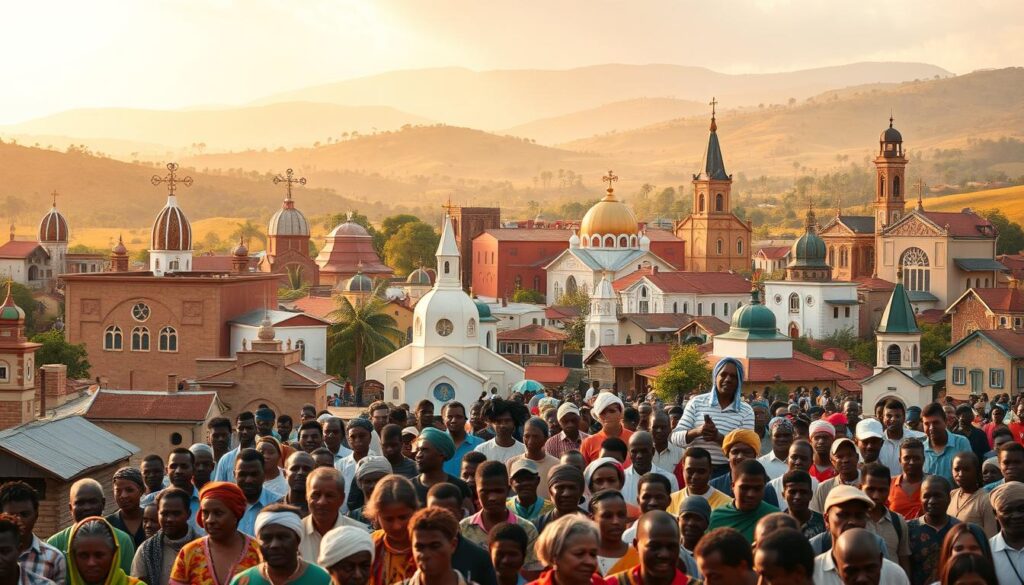
Major Groups: Kale Heywet, Mekane Yesus, and More
The Ethiopian Kale Heywet Church merges Pentecostal passion with Baptist teachings. Originating from 1920s missionary work, it now serves over 8 million members. Their clinics and schools operate in 15 regions, proving faith and action go hand-in-hand.
Standing tall among Lutheran groups, the Evangelical Church Mekane Yesus claims 6.3 million followers. As the world’s largest independent Lutheran body, it balances European roots with African leadership. “Our synod structure lets local voices shape doctrine,” explains Addis Ababa-based pastor Alem Gebre.
| Denomination | Focus | Theological Roots | Social Impact |
|---|---|---|---|
| Kale Heywet | Spiritual gifts | Pentecostal/Baptist | 8,000+ schools |
| Mekane Yesus | Community development | Lutheran/Presbyterian | 350 health centers |
| Meserete Kristos | Peacebuilding | Mennonite/Pentecostal | Conflict resolution training |
| Full Gospel | Divine healing | Pentecostal/Mennonite | Microfinance programs |
Smaller groups add unique flavors. The Meserete Kristos Church mixes Mennonite pacifism with lively worship. Meanwhile, the Full Gospel Believers’ emphasize healing services using traditional music instruments. Together, they show how global faith adapts to local soil.
These communities share a common thread: serving beyond Sunday gatherings. From drought relief to tech training centers, their work impacts millions. This practical faith keeps attracting young members seeking both spiritual depth and social change.
Worship Practices and Cultural Influences
Rhythmic drumbeats echo through packed halls as voices rise in harmony. This vibrant soundscape defines spiritual gatherings where music bridges generations and cultures. At its heart lies Mezmur—sacred songs blending ancient traditions with modern faith expressions.
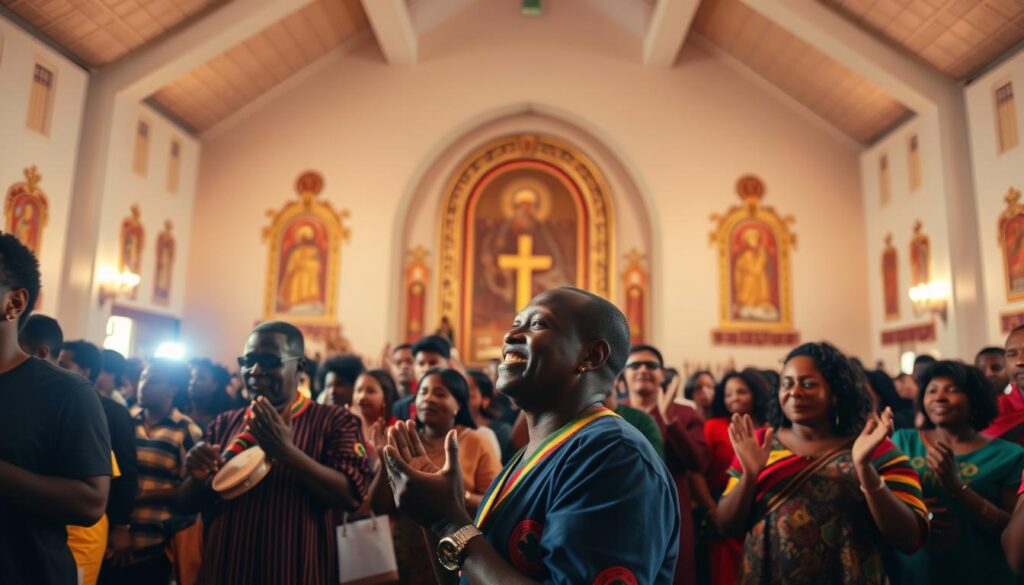
The Significance of Mezmur and Hymnody
These melodic prayers break barriers, using everything from traditional krar lutes to electric guitars. Early pioneers like Addisu Worku crafted songs still sung decades later. “Music isn’t just accompaniment,” explains choir director Selamawit Bekele. “It’s how we carry truth into daily life.”
Modern artists based in Addis Ababa continue this legacy. Kalkidan Tilahun’s soulful vocals and Dagmawi Tilahun’s rhythmic compositions attract millions of followers online. Their work shows how cultural roots deepen spiritual messages rather than limit them.
Churches nurture this creative energy through dedicated ministries. The Meserete Kristos ensemble, formed in the 1970s, now trains young musicians across eight regions. Their albums mix regional dialects with universal themes of hope and redemption.
This musical freedom shapes unique worship experiences. Spontaneous dancing might follow a hymn, while prayer sessions flow into a cappella harmonies. Such practices create deep connections, proving melody can unite people across linguistic and social divides.
Impact of Persecution and Social Change on Protestant Communities
Adversity has a way of shaping faith communities in profound ways. Spiritual groups often thrive under pressure, developing creative solutions to maintain their practices. This pattern appears clearly in historical records and modern experiences alike.
Historical Struggles and Community Resilience
The 1970s brought dark days for many believers. A Marxist government banned gatherings and imprisoned leaders. One survivor recalls: “We memorized scriptures in whispers – our only light in prison cells.”
Despite crackdowns, membership grew threefold during this period. Underground networks used coded messages and night meetings in caves. These secret strategies kept the movement alive when official channels failed.
| Period | Challenges | Survival Strategies | Outcome |
|---|---|---|---|
| 1974-1991 | Mass arrests | Home churches | 300% growth |
| 1990s-present | Social stigma | Public outreach | 15M+ members |
| 2010s | Extremist threats | Security training | 85% safety rate |
Modern Challenges and Increasing Tolerance
Urban areas now enjoy greater freedom, but rural regions face different tests. Some villages still shun families who change spiritual practices. Organizations like Voice of the Martyrs provide legal aid and emergency supplies.
Recent years show promising shifts. The state recognizes most groups officially, allowing open construction of gathering spaces. Interfaith dialogues help reduce tensions with others in the population.
New threats emerge from radical factions in border zones. Leaders balance caution with hope: “We teach peace but stay vigilant.” Through these changes, communities maintain their core values while adapting to evolving realities.
Missionary Work and Global Connections
Spiritual communities once receiving missionaries now send their own across continents. Training centers in Addis Ababa fuel this shift, with institutions like Meserete Kristos College shaping future leaders. These hubs blend academic rigor with practical skills for cross-cultural engagement.
Bridging Nations Through Faith
Over 120 congregations thrive in diaspora hubs from Stockholm to Sydney. Many host cultural festivals featuring traditional coffee ceremonies alongside modern worship styles. A Nairobi-based group recently funded clean water projects in three rural regions.
Educational institutions play a crucial role. The Evangelical Theological College partners with 14 global universities for exchange programs. Their graduates lead multicultural work teams addressing issues from refugee support to climate justice.
Young members drive digital outreach, streaming services in eight languages. This global network maintains strong ties to Addis Ababa, where strategy meetings shape worldwide initiatives. As one coordinator notes: “Our local roots make global work authentic.”
FAQ
How did Christianity first arrive in Ethiopia?
Christianity’s roots trace back to the 4th century Aksumite Empire, influenced by traders and early missionaries. The Ethiopian Orthodox Tewahedo Church became central to spiritual life, blending ancient traditions with local culture over centuries.
What sparked the growth of evangelical movements?
Foreign missionaries in the 19th and 20th centuries introduced reformed teachings, focusing on literacy and community development. These efforts, alongside local leadership, helped establish groups like the Ethiopian Evangelical Church Mekane Yesus.
Which denominations are prominent today?
Kale Heywet and Mekane Yesus are among the largest. Regional diversity shapes practices, with congregations adapting worship styles to reflect local languages and cultural values while maintaining core beliefs.
How does music influence worship practices?
Mezmur (hymns) blend traditional melodies with biblical messages, creating emotional connections during services. This musical tradition strengthens community bonds and preserves cultural identity within congregations.
Have communities faced significant challenges?
Yes, historical tensions with Orthodox institutions and political shifts led to periods of discrimination. However, grassroots resilience and gradual social acceptance have fostered stronger interfaith relationships in recent years.
What global ties exist for these groups?
Partnerships with international organizations support education and healthcare initiatives. The diaspora also plays a role, funding projects and spreading awareness about Ethiopia’s diverse religious landscape.