In a world where spiritual choices abound, one movement has reshaped America’s religious landscape. Independent congregations, free from traditional denominational ties, now represent one of the fastest-growing expressions of Christianity. What began as a grassroots shift in the 1990s has blossomed into a major force, with over 21 million people embracing this approach today.
These communities prioritize flexibility and personal connection. Unlike structured denominations, they often form around shared values rather than formal doctrines. Many find this appealing because it allows worship styles and teachings to adapt to modern needs. Leaders in these churches frequently emphasize practical faith experiences over rigid traditions.
The growth is staggering. From fewer than 200,000 followers three decades ago, this movement now includes over 44,000 congregations nationwide. Its rise reflects changing attitudes toward organized religion, with seekers valuing authenticity and local leadership. This guide unpacks how these churches operate, what they believe, and why they resonate with millions.
You’ll learn how these groups maintain unity without central oversight and explore their impact on broader Christian culture. Whether you’re curious about their practices or considering joining one, this exploration offers clarity on a faith journey that’s rewriting the rules of spiritual community.
Key Takeaways
- Independent congregations have grown from 200,000 to 21 million adherents since 1990
- Flexible worship styles adapt to modern needs and local preferences
- Focus on community values over formal denominational structures
- 44,000+ congregations operate across the United States today
- Appeal stems from authenticity and personalized spiritual experiences
Introduction to the Protestant Non-Denominational Movement
A fresh wave of religious expression is redefining how Americans connect with their faith. This approach blends ancient truths with modern flexibility, creating spaces where personal experience shapes spiritual practice.
Defining Standalone Congregations
Independent faith communities operate outside traditional organizational structures. Unlike groups tied to specific denominations, they craft their own identity through local leadership and adaptable practices. Many share these key features:
- Self-governance without external oversight
- Customizable worship styles matching community needs
- Focus on biblical teachings over inherited customs
Roots of the Modern Movement
The late 20th century saw growing dissatisfaction with rigid religious frameworks. By 2000, over 12,000 independent congregations had formed nationwide – a 600% increase from 1970. This growth mirrors America’s cultural emphasis on individualism and grassroots innovation.
Early pioneers often started small home gatherings. Their success proved people craved authentic connections more than institutional approval. Today’s thriving communities continue this legacy by prioritizing relational faith over bureaucratic structures.
Core Beliefs and Practices of Non-Denominational Churches
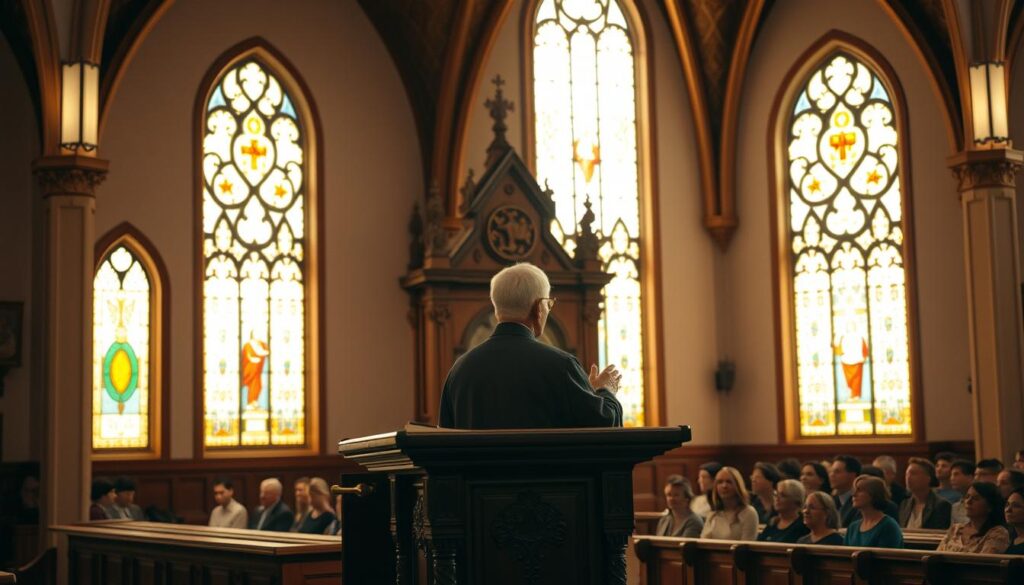
At the heart of these congregations lies a simple yet powerful principle: scripture first. Communities build their identity around direct engagement with biblical teachings rather than inherited customs. This approach creates spaces where ancient texts meet modern life.
Guiding Principles and Community Expression
Leadership structures reflect this commitment to localized decision-making. Most groups operate under elder-led governance, allowing swift adaptation to neighborhood needs. One pastor notes: “Our playbook comes from Matthew to Revelation, not organizational handbooks.”
Worship experiences showcase remarkable diversity. Below illustrates how services differ while maintaining core values:
| Traditional Approach | Contemporary Style | Hybrid Model |
|---|---|---|
| Hymns & organ music | Band-led praise songs | Blend of old and new |
| Formal liturgy | Casual atmosphere | Interactive elements |
| Verse-by-verse teaching | Topical sermons | Life application focus |
Adult baptism remains common, viewed as personal commitment rather than ritual. Teaching emphasizes practical wisdom – how scriptural truths address daily challenges. Food banks, mentorship programs, and neighborhood cleanups often become extensions of Sunday gatherings.
This flexibility attracts diverse crowds. College students and retirees might share pews, united by shared values rather than similar backgrounds. As one attender explains: “We’re not perfect people, just trying to live what we read.”
Modern Growth and Trends of Protestant Non Denominational Churches
America’s spiritual map is being redrawn by an unexpected force. Over 44,000 self-governing religious groups now operate nationwide – more than some major retail chains. This explosion happened mostly in the last ten years, reshaping how people experience community faith.
Statistical Increase and Regional Spread
The numbers tell a stunning story. From 2010 to 2020, these groups added 9,000 new locations – that’s 2.5 new communities every day. By comparison:
| Faith Group | Total Congregations | National Coverage |
|---|---|---|
| Independent Communities | 44,319 | 86% of counties |
| Presbyterian (USA) | 8,800 | 73% of counties |
| Episcopal | 6,400 | 68% of counties |
Urban centers and rural towns alike host these gatherings. You’ll find them in tech hubs like Seattle and farming communities across Iowa. This spread shows their knack for adapting to local cultures.
Impact of Generational Shifts
Young adults drive much of this change. 67% of attendees under 35 say they chose these groups for their flexible approach. Traditional structures feel restrictive to many who value hands-on service and relatable teachings.
The model keeps evolving. Some communities meet in coffee shops, others stream services globally. What unites them? A shared focus on practical faith that works in real life – from job stress to family challenges.
Comparing Denominational and Non-Denominational Identities
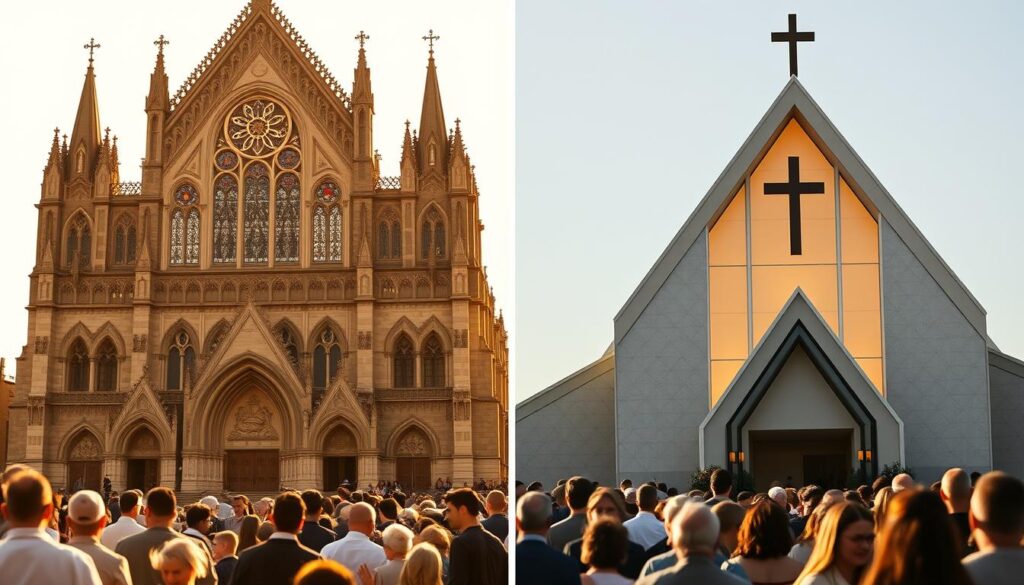
Religious communities thrive on shared values, but their structures tell different stories. Traditional denominations and independent congregations approach organization and outreach in distinct ways that shape spiritual experiences.
Differences in Organization and Doctrine
Governance models reveal core contrasts. Denominations typically use multi-layered leadership, while independent groups make decisions locally. Consider these key distinctions:
| Aspect | Denominational Model | Independent Approach |
|---|---|---|
| Leadership | Regional/national oversight | Local pastoral teams |
| Teaching Sources | Historical confessions | Direct scripture interpretation |
| Resource Access | Shared denominational assets | Self-funded initiatives |
This autonomy allows swift adaptation: A Phoenix congregation recently redesigned its youth program in three weeks – a process that might take years in hierarchical systems. “We answer to our neighborhood’s needs first,” explains Pastor Miguel Reyes.
Adaptive Worship and Community Focus
Modern gatherings often mirror their communities’ pulse. Many blend casual atmospheres with tech-friendly elements like LED screens and app-based giving. In Denver, one group transformed a former warehouse into a space hosting both Sunday services and weekday job training.
Localized outreach drives impact. Food pantries and tutoring programs often address specific neighborhood challenges. While denominations offer nationwide campaigns, independent churches craft hyper-targeted solutions. Both models serve vital roles, but their methods reflect different priorities in today’s spiritual landscape.
The Impact of “protestant non denominational” Churches on American Religion
America’s religious hierarchy is undergoing a seismic shift. Independent congregations now rank as the nation’s second-largest Christian group, trailing only the Catholic Church. This transformation impacts how communities worship and organize their spiritual lives.
Redrawing Denominational Borders
Traditional powerhouses face unprecedented challenges. The Southern Baptist Convention reports 3.4 million fewer attendees than independent churches despite operating 7,000 more locations. Consider these comparisons:
| Religious Group | Adherents | Churches |
|---|---|---|
| Catholic Church | 62 million | 17,000 |
| Independent Congregations | 21 million | 44,000 |
| Southern Baptist Convention | 17.6 million | 51,000 |
| United Methodist Church | 8 million | 30,000 |
“People crave faith that feels immediate,” notes Dr. Emily Carter, a religious studies professor. “Many find older structures too disconnected from daily struggles.”
Shaping Tomorrow’s Spiritual Landscape
Local communities feel this change acutely. In regions once dominated by the Methodist Church or Baptist Convention, self-governing churches now lead outreach efforts. Their adaptable models influence how all religious groups approach:
- Community service programs
- Multigenerational worship styles
- Technology integration
This evolution reflects broader cultural values. As Americans prioritize personal connection and local impact, independent congregations often become laboratories for innovative spiritual practices that eventually spread nationwide.
Spotlight on Notable Congregations and Organizations
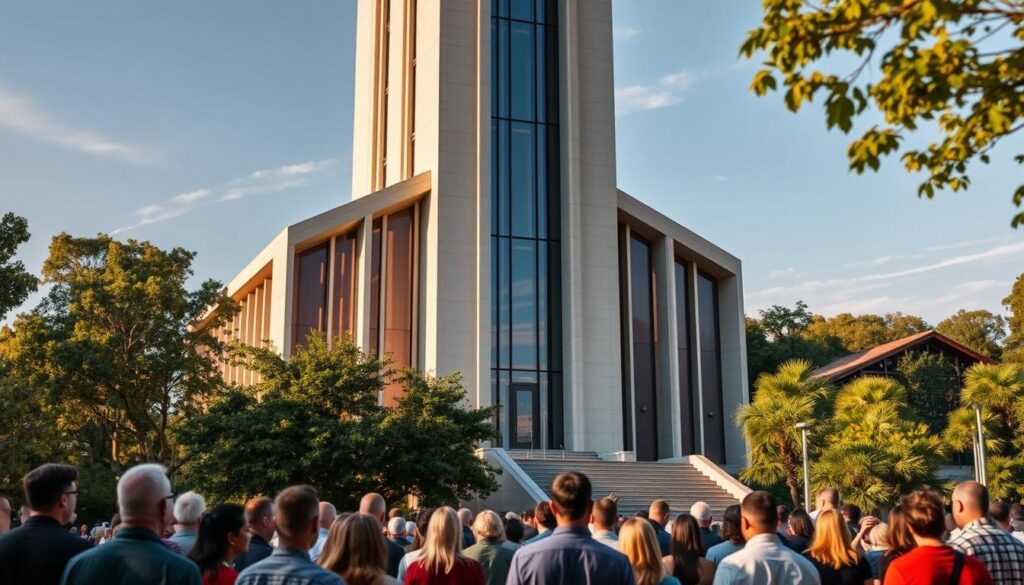
From urban centers to rural towns, innovative faith communities are making waves through localized action. These groups prove that independence doesn’t mean isolation – many create national networks while keeping decision-making local.
Case Studies and Real-Life Examples
Churches of Christ stand out for their acapella worship and elder-led governance. With roots in the Restoration Movement, they prioritize baptism for adults as personal commitment. Their music-free services create a distinctive worship atmosphere.
Independent Christian Churches share similar origins but embrace modern expressions. Instruments accompany hymns, and multimedia enhances teachings. Both models show how groups adapt ancient practices to contemporary settings.
| Feature | Churches of Christ | Independent Christian Churches |
|---|---|---|
| Worship Music | Vocal-only | Instrumental |
| Leadership | Local elders | Pastoral teams |
| Community Work | Neighborhood tutoring | Disaster relief |
Community Engagement and Social Impact
Hope Haven transforms lives through job training for people with disabilities. Since 1964, this Iowa-based group has helped thousands gain workplace skills. Their thrift stores fund programs while providing employment opportunities.
In Central America, the Association for a More Just Society tackles corruption through legal advocacy. Their faith-driven mission improves public safety in high-crime regions. Both organizations prove that local focus creates global impact.
Challenges and Future Opportunities in the Movement
Modern faith communities stand at a crossroads, balancing rapid growth with evolving expectations. Their independence fuels both innovation and complexity, requiring thoughtful navigation of new frontiers.
Strengths and Growing Pains
Self-directed congregations thrive through adaptability. Local leaders can reshape worship styles overnight or launch neighborhood programs without bureaucratic delays. This agility helps address contemporary issues like mental health and social justice with fresh approaches.
Yet autonomy brings hurdles. Smaller groups often lack training resources available to established denominations. Theological differences sometimes cause confusion – a Dallas pastor notes: “Two churches on the same street might teach opposing views on communion.” Critics argue this model risks oversimplifying complex doctrinal histories.
Paths Forward for Dynamic Communities
Forward-thinking groups are building networks to share resources while preserving local control. Many now partner with neighboring churches for staff training and youth programs. Tech solutions help bridge gaps, with apps connecting isolated rural congregations to urban mentors.
Younger attendees push for deeper theological engagement alongside practical outreach. As one millennial leader observes: “We want faith that feeds both the soul and the hungry.” By embracing collaboration while honoring their grassroots roots, these communities could redefine spiritual connection for coming decades.
FAQ
What makes a church “non-denominational”?
These congregations prioritize scripture over formal traditions, avoiding alignment with established groups like the Southern Baptist Convention or United Methodist Church. They often focus on flexible worship styles and local leadership.
Why have these churches grown so quickly in recent years?
Younger generations often seek less structured spiritual experiences. Groups like Crossroads Church or Hillsong attract attendees through modern music, relatable messaging, and community-driven outreach programs.
How do they differ from traditional Baptist or Methodist congregations?
Unlike groups tied to historic doctrines, independent churches adapt teachings to cultural shifts. For example, many avoid rigid hierarchies, letting pastors tailor sermons to local needs rather than denominational guidelines.
Are non-denominational churches affecting membership in older groups?
Yes. The Catholic Church and mainline bodies like the Evangelical Lutheran Church have seen declines, partly as attendees gravitate toward adaptable, community-focused worship spaces.
What challenges do these congregations face?
Without centralized support, some struggle with leadership training or financial stability. However, networks like the Association of Related Churches now provide resources to address these gaps.
Do they participate in social causes?
Many do. For instance, Lakewood Church in Houston runs food drives and disaster relief efforts, blending spiritual guidance with hands-on aid to strengthen local ties.
How do they handle theological disagreements?
Emphasis on biblical unity often overrides doctrinal debates. Leaders might collaborate across networks while maintaining autonomy on issues like baptism or end-times beliefs.
Are all non-denominational churches similar in style?
No. Some mimic megachurches with production-heavy services, while others, like House of Mercy in Minnesota, adopt intimate, liturgy-inspired formats. The common thread is flexibility.