What began as a bold stance against religious authority in 1529 grew into one of the most influential movements of the 17th century. At the Diet of Speyer, a group of German leaders refused to let political power dictate their faith, sparking a wave of change. Their defiant act gave birth to a term that would reshape Europe: Protestant.
Over the next hundred years, this religious revolution evolved in surprising ways. While early reformers like Martin Luther and John Calvin laid the groundwork, the 1600s saw new ideas take root. Communities across England and beyond developed distinct practices, blending theology with local traditions. This wasn’t just about church doctrine—it reshaped laws, art, and daily life.
Royal courts and village squares alike became battlegrounds for spiritual identity. Leaders debated how to structure worship, while families passed down handwritten prayer books. Even politics shifted, as nations grappled with balancing unity and religious diversity. Through it all, ordinary people found innovative ways to express their beliefs.
Key Takeaways
- The term “Protestant” originated from a 1529 protest against religious restrictions
- 17th-century reforms introduced new organizational structures and theological ideas
- Political power struggles deeply influenced religious practices and policies
- Protestant ideas spread through both official channels and grassroots movements
- This era’s religious changes continue to impact modern Christianity and Western culture
Historical Context and Overview
The 17th century dawned on a continent wrestling with profound questions of faith and power. Europe stood at a crossroads, where aging institutions clashed with fresh ideas about human dignity and divine connection. Royal courts buzzed with debates about who should control spiritual life – kings, priests, or ordinary believers.
A Continent in Transition
Three forces shaped this era: rising literacy, political rivalries, and technological change. The printing press let ideas spread faster than ever before. By 1620, over 200 million printed items circulated across Europe – many challenging traditional beliefs.
Local rulers saw religious choice as a way to assert independence. In German states and Scandinavian kingdoms, leaders used faith debates to resist foreign influence. Meanwhile, merchants and artisans embraced new teachings that valued hard work and personal scripture study.
| Region | Key Political Factors | Social Impact |
|---|---|---|
| Spain/Italy | Strong Catholic monarchy | Limited reform acceptance |
| France | Edict of Nantes compromises | Growing urban dissent |
| German States | Peace of Augsburg divisions | Localized religious wars |
| England | Monarch-led reforms | Parish-level innovations |
Foundations for Modern Belief
This period redefined Christianity’s core concepts. Theologians argued that salvation came through faith rather than rituals. Ordinary people began keeping family Bibles – a radical act in a time when clergy once controlled scripture access.
These changes planted seeds for democratic thought. When reformers claimed “every believer a priest,” they unknowingly set the stage for later arguments about individual rights. Church music shifted from Latin chants to vernacular hymns, making worship more accessible.
By century’s end, Europe’s spiritual landscape had fractured into competing visions. Yet this very diversity forced new conversations about tolerance – messy beginnings of ideas we now consider fundamental to modern society.
Origins and Early Influences of Protestant Reform
Long before Luther’s 95 Theses, voices of dissent echoed through Europe’s monasteries and universities. Visionary thinkers laid groundwork for religious change by challenging established power structures. Their bold critiques of spiritual authority would later fuel sweeping reforms.
Medieval Church Critique and Reform Ideals
William of Ockham sparked debates in the 14th century by accusing Pope John XXII of heresy. The Franciscan philosopher argued church leaders betrayed Christ’s example of poverty. “No earthly power,” he insisted, “should contradict scripture.”
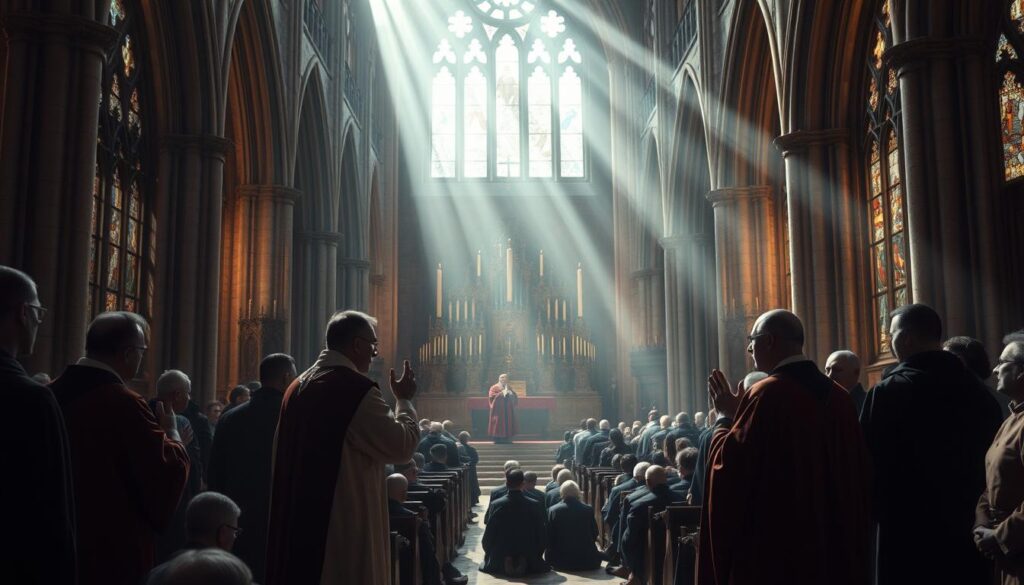
John Wycliffe took this further by translating the Bible into English. His followers – called Lollards – spread handwritten copies, undermining clergy control over scripture. This radical act made faith personal rather than priest-mediated.
Pre-Reformation Efforts and Dissent
Jan Hus blended religious reform with Czech pride in Bohemia. His sermons against corrupt clergy drew massive crowds. When burned at the stake in 1415, Hus became a martyr symbolizing resistance.
Christian humanists used scholarship to expose church flaws. Lorenzo Valla proved the Donation of Constantine – a key papal land claim – was forged. Erasmus mocked empty rituals in The Praise of Folly, urging a return to Biblical roots.
These pioneers created networks through:
- Secret Bible study groups
- University debates
- Printed pamphlets
Their ideas about individual faith and institutional accountability became cornerstones of later reforms. Though often silenced, their legacy lived on in handwritten notes and whispered teachings.
Key Figures and Leaders of the Reformation
Dynamic thinkers and determined leaders forged paths that millions would follow. Their bold ideas challenged old systems while creating new ways to practice faith. Let’s meet the architects of religious change who left lasting marks on history.
Influential Reformers and Preachers
Martin Luther’s 95 Theses shook Europe’s religious foundations. His translation of the Bible into German let ordinary people engage directly with scripture. Swiss reformers like Huldrych Zwingli took this further, arguing churches should reflect local communities rather than distant authorities.
John Calvin’s teachings sparked global movements. His concept of predestination became central to Reformed churches. “True faith,” Calvin wrote, “shines through action rather than ceremony.” These ideas crossed oceans, shaping colonies and cultures.
Notable Personalities in Church England
James I’s reign marked a turning point for the Church of England. Though raised Calvinist, he embraced Anglican traditions to unify his kingdom. His successor Charles I appointed William Laud as archbishop, whose strict rules angered many worshippers.
| Leader | Role | Lasting Impact |
|---|---|---|
| Oliver Cromwell | Military ruler | Established Puritan reforms |
| William Laud | Archbishop | Fueled religious tensions |
| John Cotton | Colonial preacher | Shaped American church models |
Cromwell’s New Model Army defended Parliament during England’s civil wars. As Lord Protector, he promoted “saints’ governance” – blending faith with politics. Across the Atlantic, John Cotton blended English and colonial practices, proving reformers could adapt to new frontiers.
Political Dynamics and Power Struggles in Church England
Crowns and crosses collided as English rulers sought divine validation for earthly rule. James I declared himself “God’s lieutenant,” merging religious leadership with royal authority. His vision of absolute power faced resistance from Parliament and local congregations demanding self-governance.
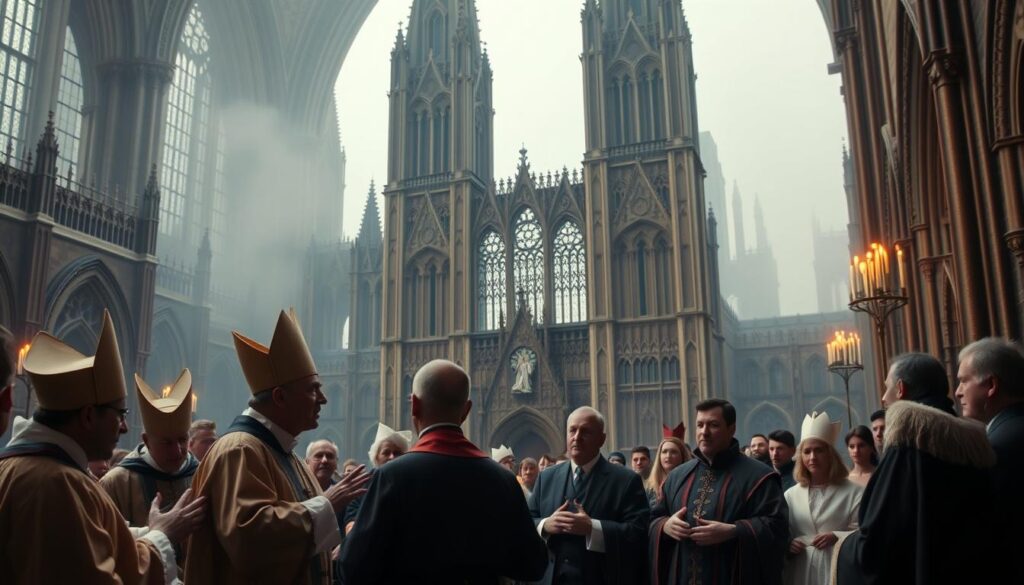
Monarchs as Spiritual Authorities
Charles I intensified royal control by appointing William Laud as Archbishop of Canterbury. Laud’s rigid reforms – ornate altars and strict prayer books – angered worshippers accustomed to simpler services. This top-down approach sparked rebellions from Scotland to Cornwall.
When Worship Became Warfare
Scottish Presbyterians revolted when forced to use Anglican prayer books in 1637. Their resistance inspired English dissenters, creating alliances between religious groups and political opponents of the crown. The resulting civil war divided communities:
- Cavaliers defended royal divine rights
- Roundheads fought for parliamentary sovereignty
Charles’ eventual execution shocked Europe, proving no king stood above collective faith. These clashes reshaped relationships between governments and religious institutions, planting early seeds for constitutional governance.
Impact on Religious Practices and Liturgical Changes
Imagine holding a book that sparked both unity and rebellion. The Book of Common Prayer became exactly that—a text shaping worship while fueling fiery debates. Royal decrees turned altars into political stages, with rituals revealing deeper struggles over spiritual identity.
Evolution of Worship and the Prayer Book
James I took a flexible approach, letting clergy adapt services to local needs. Priests could skip making the sign of the cross if congregations objected. This tolerance fostered creative interpretations of the common prayer traditions.
Charles I flipped this policy entirely. His 1633 decree demanded strict adherence: “Every word shall be read as printed, without omission or alteration.” Special robes and ornate church decorations became mandatory, alarming worshippers who saw Catholic influences creeping in.
Transition in Clergy and Administrative Reforms
Civil war upheavals reshaped church leadership overnight. Parliament scrapped bishops in 1646, replacing them with Presbyterian committees. The dramatic shift left many asking: Who truly holds spiritual authority?
| Policy Change | James I Era | Charles I Era |
|---|---|---|
| Prayer Book Use | Flexible interpretations | Strict enforcement |
| Clergy Requirements | No persecution for dissenters | Mandatory rituals |
| Church Decor | Simple spaces | Elaborate religious art |
The 1662 Act of Uniformity forced ministers to swear allegiance to updated prayer books. Nearly 2,000 Puritan leaders refused, losing their positions. This church purge created lasting divisions, proving that worship practices could reshape entire communities.
Influence of Protestant 1600s on National Identity
When crowns merged but faiths clashed, Britain’s map redrew itself through spiritual struggle. The 1603 union of England and Scotland under James I created a shared throne but competing visions of religious identity. While leaders sought unity, local traditions deepened divides – setting the stage for centuries of cultural negotiation.

Shifts in Religious Authority and National Pride
Charles I’s attempt to impose Anglican practices on Scotland ignited a firestorm. The 1637 introduction of the Scottish Prayer Book sparked riots, with worshippers hurling stools at clergy. This rebellion became a rallying cry for Scottish independence, blending faith with fierce national pride.
During England’s Civil War, religious alliances shaped political battles. Scottish Presbyterians backed Parliament against the crown, while English Puritans sought to “purify” church practices. These conflicts transformed worship into a marker of cultural identity:
| Policy | England | Scotland |
|---|---|---|
| Prayer Book Use | Mandatory under Charles I | Rejected as foreign imposition |
| Civil War Alignment | Split between Royalists and Parliamentarians | United Presbyterian support for anti-royal forces |
| Post-War Outcome | Anglican dominance restored | Kirk maintained independence |
The 1689 Act of Toleration changed the game. Non-conformist groups gained legal worship rights if they pledged loyalty to the crown. “This wasn’t freedom for all,” notes historian Margaret Weston, “but it let minority faiths exist within national borders.” Catholics remained excluded, reinforcing Protestant identity as a requirement for full citizenship.
By century’s end, religious and national identities had fused. England viewed itself as a Protestant nation standing against Catholic powers like France. Scotland’s Kirk became central to its cultural separation from southern neighbors. These patterns still echo in debates about British identity today.
Transformations in Church Structures and Governance
The clash of beliefs reshaped more than theology—it reinvented how communities organized their spiritual lives. As traditional hierarchies crumbled, new systems emerged that reflected evolving ideas about authority and participation.
Breaking Chains of Hierarchy
England’s Civil War sparked dramatic changes when Parliament abolished bishops in 1646. The short-lived Presbyterian system only took root in London and Lancashire, revealing how regional needs shaped religious government. Oliver Cromwell championed local autonomy, envisioning a “reign of saints” where congregations self-governed without centralized power.
Blueprint for Pure Communities
Puritan leaders like John Cotton redefined membership rules. His churches required personal stories of spiritual awakening—a radical filter ensuring only the “elect” could join. This approach prioritized moral order over quantity.
The 1648 Cambridge Platform codified these ideas, creating a manual for self-governed congregations. Its principles spread beyond England, influencing colonial churches and future democratic structures. These changes showed how religious reformation could reshape societal organization at its core.
FAQ
What factors defined religious change in 17th-century Europe?
The era saw intense shifts due to the Reformation’s spread, political rivalries, and rising nationalism. Conflicts like the Thirty Years’ War reshaped borders, while reformers challenged Roman Catholic traditions. The Book of Common Prayer and vernacular scripture also played key roles in reshaping worship.
How did earlier movements set the stage for the Reformation?
Pre-Reformation figures like John Wycliffe and Jan Hus critiqued church corruption, inspiring later dissent. Movements such as the Lollards emphasized scripture over clergy authority, laying groundwork for reformers like Martin Luther to demand systemic change.
Who were influential leaders in church England during this period?
Thomas Cranmer, architect of the Book of Common Prayer, and John Knox, a driving force in Scottish reform, were pivotal. Puritan leaders like William Perkins also pushed for deeper doctrinal and structural changes within the church.
How did monarchs shape religious policies in England?
Kings like James I and Charles I often clashed with reformers over control of doctrine. The English Civil War and Acts of Uniformity highlighted tensions between crown authority and demands for congregational autonomy.
What liturgical reforms emerged from this era?
Worship shifted from Latin Mass to English services, emphasizing congregational participation. The Book of Common Prayer standardized rituals, while clergy roles evolved to focus on preaching and pastoral care over sacramental duties.
How did religious changes influence national identity?
Breaking from Roman Catholic dominance, nations like England tied faith to cultural pride. The Church of England became a symbol of independence, while events like the Glorious Revolution reinforced Protestant ideals in governance.
What structural changes occurred in church governance?
Episcopal hierarchies faced challenges from Puritan-led congregational models. Groups like the Presbyterians advocated for elder-led systems, decentralizing power and emphasizing local community input in spiritual matters.