What happens when a king’s personal drama reshapes an entire nation? The 16th-century religious shift that swept through England began not with fiery sermons, but with a royal quest for a male heir. This movement, often called England’s break from Rome, started as a political chess game before evolving into a cultural earthquake.
Unlike other European religious changes driven by theology, this transformation centered on power struggles. Royal authority clashed with papal influence, creating a chain reaction that altered worship practices, laws, and daily life. By the end of the century, England had a new national church—one that blended old traditions with emerging ideas.
Ordinary citizens found themselves navigating shifting rules about faith while nobles jockeyed for influence. The changes sparked debates about identity, loyalty, and what it meant to be English. From village churches to royal courts, no corner of society remained untouched.
Key Takeaways
- England’s religious transformation began as a political maneuver by Henry VIII
- The Church of England became the nation’s official faith by the late 1500s
- Changes affected everyone from farmers to nobility
- Religious practices blended old traditions with new Protestant ideas
- This period shaped England’s cultural identity for generations
Historical Background: From Medieval Roots to Tudor Turmoil
Imagine a kingdom rebuilding after decades of bloody civil wars. The Tudor dynasty rose to power in 1485, but their grip on the throne felt shaky without a clear male successor. “A crown without an heir is like a ship without a rudder,” one chronicler wrote, capturing the era’s anxiety.
War’s Shadow Shapes a New Era
The Wars of the Roses (1455-1487) left deep scars. Noble families had slaughtered each other for control, making stability the new dynasty‘s top priority. Henry VII spent his early years crushing rebellions and filling royal coffers—but everyone knew lasting peace required a male heir.
Faith Woven Into Daily Life
Before religious changes swept through, 90% of people attended weekly Catholic services. The church wasn’t just about religion—it ran schools, cared for the poor, and owned one-third of England’s land. Even King Henry VIII once earned the title “Defender of the faith” for attacking Martin Luther’s ideas.
But cracks were forming. Renaissance thinkers questioned old traditions, while commoners grumbled about church taxes. This mix of political tension and spiritual questioning created fertile ground for change—though no one yet guessed how radical it would become.
The protestant reformation in england: Political and Religious Causes
Royal bedrooms rarely decide national destinies, but one king’s personal crisis did just that. What began as a private struggle over succession rights became England’s gateway to religious independence.
Henry VIII’s Marital Dilemma and Quest for a Male Heir
Catherine of Aragon’s marriage to Henry VIII faced biblical scrutiny. After 18 years and only one surviving daughter, the king sought an annulment. “No man ever needed a son more desperately,” wrote a court observer in 1527.
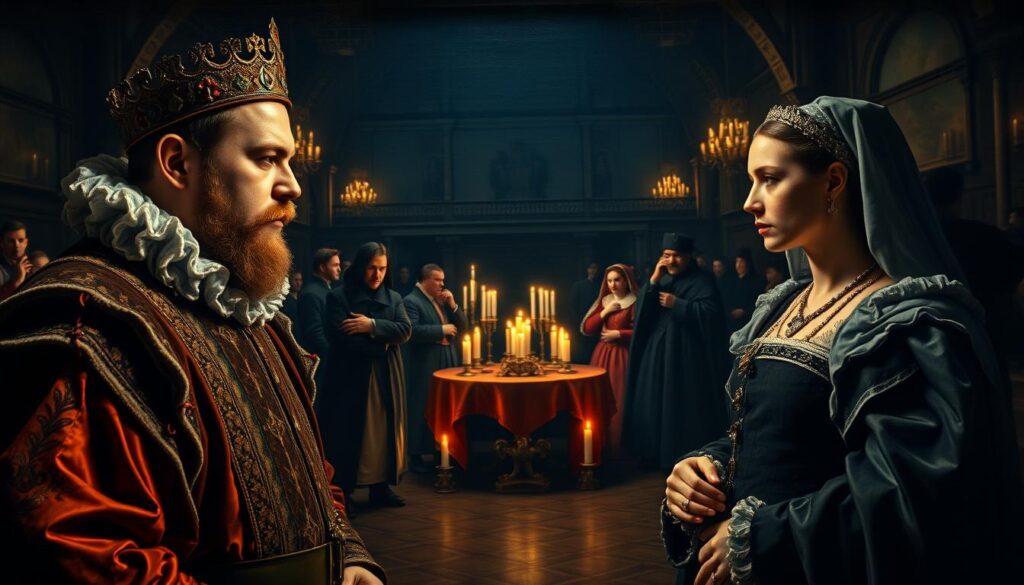
The Pope faced impossible demands. Catherine’s powerful nephew, Emperor Charles V, controlled Rome. Legal debates raged about whether her first marriage to Henry’s brother had been consummated—a detail that shaped Europe’s religious future.
Challenges to Papal Authority and the Act of Supremacy
Henry’s advisors crafted a bold solution. Thomas Cromwell argued kings held natural authority over church matters. Parliament’s 1534 Act of Supremacy made this theory law, declaring Henry “the only Supreme Head on Earth of the Church of England.”
| Henry’s Position | Papal Stance |
|---|---|
| Needed male heir for stability | Bound by Emperor Charles V’s influence |
| Claimed original marriage violated divine law | Couldn’t reverse earlier papal dispensation |
| Sought divorce through English courts | Insisted on Rome’s exclusive authority |
This legal revolution transformed worship and governance. Parish priests suddenly taught that loyalty to the crown defined true faith—a concept reshaping English identity for centuries.
Prominent Figures and Their Influences
Powerful personalities clashed and collaborated to reshape a kingdom’s spiritual landscape. At the heart of this drama stood determined monarchs, clever advisors, and defiant thinkers whose choices rippled through generations.
Key Roles of Henry VIII, Catherine of Aragon, and Anne Boleyn
Henry VIII‘s transformation shocked Europe. Once celebrated as Rome’s defender, he became the force behind England’s religious independence. His obsession with securing a male heir drove the marriage to Catherine Aragon into crisis, sparking a chain reaction.
Catherine’s refusal to quietly disappear proved pivotal. Her Spanish royal ties and deep faith turned divorce proceedings into an international showdown. Meanwhile, Anne Boleyn brought fresh perspectives from French courts, whispering reform ideas that shaped Henry’s policies.
Contributions of Reformers like Thomas Cranmer and Thomas Cromwell
Thomas Cranmer reimagined English worship as Archbishop of Canterbury. His prayer books blended tradition with innovation, creating a new spiritual language for the nation. “We must plant seeds of understanding in common tongues,” he reportedly told the king’s council.
Behind the scenes, Thomas Cromwell engineered practical changes. His inspectors documented monastery wealth, paving the way for their dissolution. This redistribution of land and power forever altered England’s social fabric.
Opponents like Sir Thomas More and nun Elizabeth Barton remind us that not everyone embraced these shifts. Their resistance—though ultimately fatal—highlighted the high stakes of religious transformation.
Major Events and Legislative Changes Shaping the Reformation
Laws can reshape nations faster than armies—England’s 1530s proved it. Within six years, parliament passed groundbreaking measures that rewrote spiritual rules and redistributed centuries-old wealth. These events didn’t just alter church services—they changed who held power and property.
The Dissolution of the Monasteries and Redistribution of Wealth
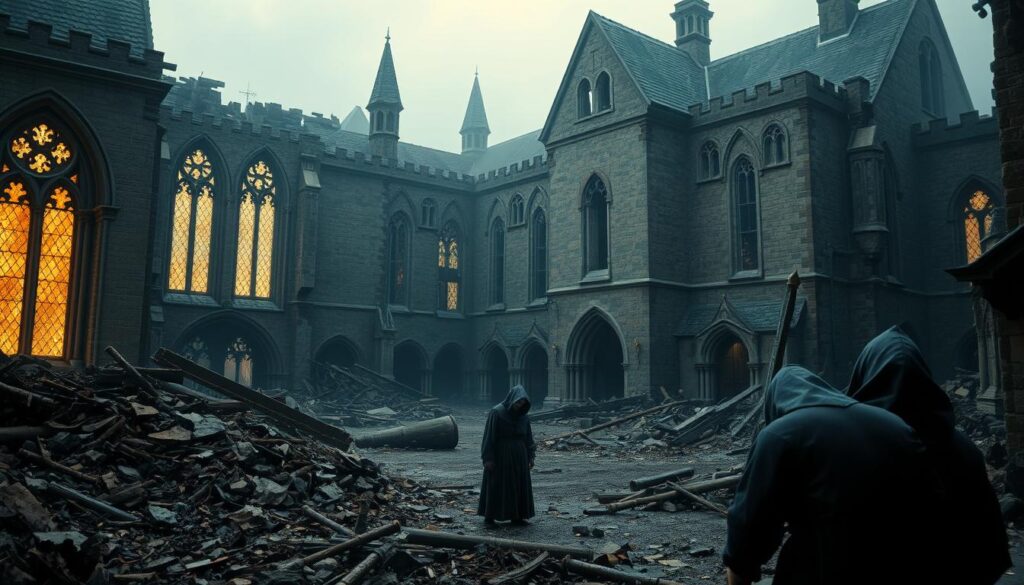
Thomas Cromwell’s inspectors arrived unannounced at religious houses in 1535. By 1540, 800 monasteries stood empty. Their lands—15% of England’s territory—flowed to the crown through the Court of Augmentations.
This dissolution of monasteries created instant millionaires. Loyal nobles bought abbey lands for pennies, while former monks received small pensions. The shift broke the church’s economic dominance, funding royal projects and creating a new landlord class.
Parliamentary Acts and the New Structure of the Church
Lawmakers worked overtime in the 1530s. Key measures included:
- Act of Supremacy (1534): Made the king “head church england”
- Treasons Act: Death for denying royal religious authority
- Ten Articles (1536): Mixed Catholic rituals with Protestant ideas
English Bibles soon appeared in churches—Miles Coverdale’s 1535 translation paved the way. As one bishop noted, “Now plowboys quote scripture as readily as priests.”
| Law | Impact |
|---|---|
| Act of Supremacy | Severed papal ties |
| Dissolution Acts | Transferred monastic wealth |
| Treasons Act | Enforced royal control |
Social and Economic Repercussions in Tudor England
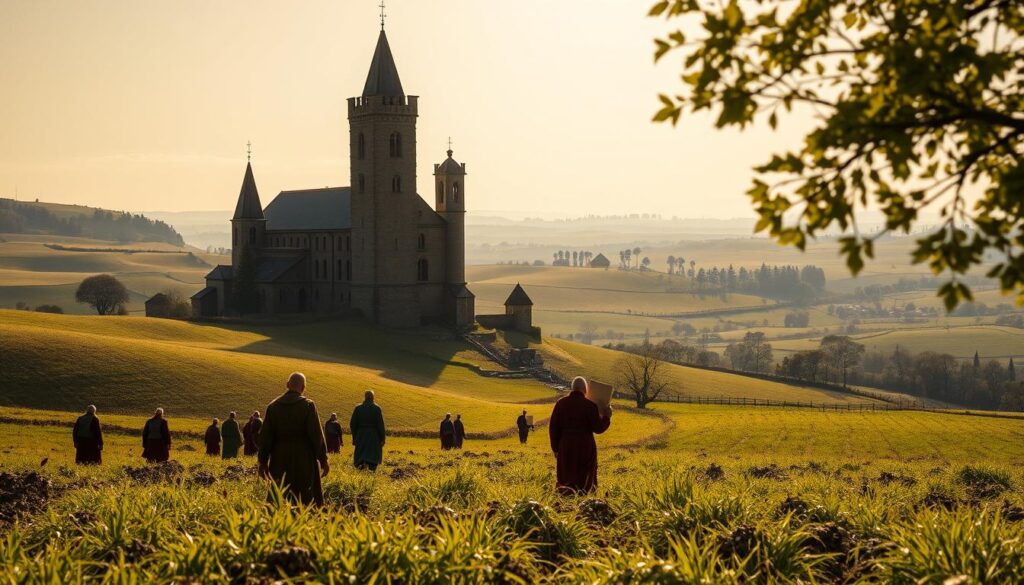
Landscapes transformed overnight as sacred properties became bargaining chips. The dismantling of religious houses reshaped communities more dramatically than any royal decree. Former monks watched as nobles converted centuries-old monasteries into lavish estates, while farmers plowed fields once deemed holy ground.
Impact on Land Ownership and Wealth Accumulation
Henry VIII’s treasury swelled with 1.3 million pounds from seized assets—equal to 12 years of royal income. Opportunistic buyers snapped up 15% of the nation‘s land at bargain prices. A London merchant boasted, “I bought an abbey for less than my townhouse!”
The sudden shift created two Englands:
- Newly rich landowners invested in wool production
- Former monastic tenants faced eviction or rent hikes
Communities lost their safety net overnight. Church institutions had fed 10% of the population during famines. Without them, beggars crowded city gates. Authorities scrambled to create poor laws—the first welfare system run by local governments.
| Winners | Losers |
|---|---|
| Nobles gaining estates | Charity-dependent families |
| Merchants buying land | Monastic employees |
| Royal treasury | Local craftsmen |
This way of redistributing wealth bound the elite to the crown’s religious changes. As one advisor noted, “Loyalty follows land titles now.” The upheaval became a part of daily life, reshaping social hierarchies for generations.
Comparative Perspectives: European Movements vs. English Transformation
When spiritual revolutions swept Europe, England charted its own course. While reformers like Luther and Calvin sparked theological debates abroad, the king‘s personal needs drove change across the Channel. This unique blend of politics and faith created a national identity distinct from continental counterparts.
Continental Reformist Ideas and Their Influence in England
German and Swiss ideas trickled into England through scholars and merchants. Yet Henry VIII’s break with the pope lacked Luther’s focus on salvation through faith. Instead, the Church of England became a tool for consolidating royal power—a sharp contrast to grassroots movements abroad.
English bishops borrowed selectively from Protestant thought. Services kept ornate elements to ease transitions, unlike stripped-down continental practices. This pragmatic approach helped maintain social order during the turbulent 16th century.
Unique Cultural and Political Adaptations in England
No other nation made its monarch the head church. The 1534 Act declaring Henry VIII supreme leader blended medieval kingship with new religious authority. This fusion created lasting tensions between state control and personal belief.
Unlike Europe’s bloody religious wars, England’s reform unfolded through laws and land deals. By century’s end, the Church of England stood as both ancient and reinvented—a mirror reflecting the nation’s complex journey from Rome’s shadow to self-defined religion.
FAQ
Why did Henry VIII break away from the Roman Catholic Church?
Henry VIII sought to annul his marriage to Catherine of Aragon after she failed to produce a male heir. When Pope Clement VII refused, Henry used Parliament to pass laws like the Act of Supremacy, declaring himself head of the Church of England to bypass papal authority.
How did Anne Boleyn influence religious changes in England?
Anne Boleyn supported reformist ideas and introduced Henry VIII to works critical of papal power. Her marriage to Henry accelerated the split from Rome, leading to the dissolution of monasteries and the rise of figures like Thomas Cranmer, who reshaped church practices.
What role did Thomas Cromwell play in reshaping the church?
Thomas Cromwell spearheaded policies to dismantle monastic institutions, redistributing their wealth to the crown and nobility. He also helped draft legislation like the Act of Supremacy, centralizing royal control over religious and political affairs.
How did the dissolution of monasteries affect society?
The closure of monasteries disrupted local economies but transferred vast lands to the crown and elites. This shifted wealth and power, eroding traditional Catholic practices while funding Henry’s government and military ambitions.
Were English reforms similar to those in Europe?
While inspired by figures like Luther, England’s changes were driven more by politics than theology. The monarchy retained many Catholic rituals but rejected papal authority, creating a unique hybrid faith under the Book of Common Prayer.
How did ordinary people react to these changes?
Responses varied—some embraced new doctrines, while others resisted. Rebellions like the Pilgrimage of Grace erupted against reforms, but royal authority and propaganda gradually enforced compliance, especially under Elizabeth I’s reign.
What long-term impacts did the Tudor reforms have?
The crown’s control over religion centralized governance, weakened feudal structures, and laid groundwork for modern statehood. It also fueled tensions between Catholics and Protestants, shaping England’s identity for centuries.