What does it mean to build a spiritual foundation rooted in unwavering conviction? For over 8,000 individuals across 33 congregations, this question finds its answer in a tradition that prioritizes scriptural authority and divine sovereignty. This community traces its theological heritage to the 16th-century Reformation, drawing inspiration from leaders who reshaped Christianity through bold adherence to biblical truth.
Central to this belief system are the Three Forms of Unity—documents that distill core teachings about grace, salvation, and God’s eternal plan. These principles aren’t just historical artifacts but living guides shaping worship, doctrine, and daily life. Members find comfort in the assurance that their relationship with God rests on His promises rather than human effort.
Today, this denomination maintains a close-knit identity while engaging modern challenges. Weekly gatherings focus on deep scriptural study, heartfelt prayer, and mutual support. The emphasis on God’s complete control over salvation creates a unique perspective on Christian living—one that balances reverence with joyful confidence.
Key Takeaways
- A tradition grounded in Reformation-era principles of biblical authority and divine sovereignty
- 33 congregations united through shared confessions and worship practices
- Core teachings summarized in historic documents called the Three Forms of Unity
- Focus on God’s grace as the sole basis for salvation and spiritual security
- Active community life built around scriptural study and mutual encouragement
Historical Roots and Formation
Every religious movement carries a story shaped by pivotal moments. For this community, its journey began with passionate debates about divine grace—a discussion that would redefine its path for generations.
Beginning and Formation of the Movement
In 1924, three ministers made waves within their denomination by challenging popular teachings. Herman Hoeksema, George Ophoff, and Henry Danhof stood firm against ideas they believed diluted scriptural truths about God’s grace. Their bold stance led to expulsion but sparked a new beginning.
The First Protestant Reformed Church in Grand Rapids became their spiritual homebase. Originally called “Protesting Christian Reformed Churches,” the group adopted its current name while expanding across Michigan. Early growth showed how conviction could fuel community building.
Schisms and Denominational Divergences
By the 1950s, fresh debates emerged about God’s promises. Hubert DeWolf’s teachings caused a major split, with 60% of members forming a new group. This “DeWolf controversy” proved even close-knit communities face growing pains.
Recent years saw another division. Between 2021-2022, several congregations left over doctrinal interpretations, affecting multiple states and Canada. Yet through each challenge, the core group maintained its focus on biblical fidelity—a testament to resilient faith.
Distinctive Doctrine and Beliefs
Foundational beliefs act as anchors, guiding communities through theological and cultural shifts. At the core of this tradition stand two pillars: ancient confessional documents and a distinctive view of divine relationships.
Embracing the Three Forms of Unity
The Three Forms of Unity serve as a theological compass, blending doctrinal precision with heartfelt devotion. These historic texts—the Heidelberg Catechism, Belgic Confession, and Canons of Dordt—translate biblical teachings into practical guidance for daily living.

One catechism question famously asks: “What is your only comfort in life and death?” Its answer reassures believers of God’s complete care through Christ. The confession systematically explains creation, salvation, and church practice, while the canons emphasize grace as God’s gift rather than human achievement.
Understanding the Covenant and Creation
This framework views God’s promises as unbreakable bonds with chosen people. The covenant remains secure because God initiates and sustains it—though members actively respond through worship and repentance.
Genesis 1 shapes their creation perspective. They affirm a literal six-day formation of a mature universe, seeing evolutionary theories as conflicting with scriptural accounts. Micro-level adaptations are acknowledged, but major biological transitions are attributed solely to divine design.
Through these teachings, adherents find stability in shifting times. The Word of God remains supreme, with confessional documents serving as trusted maps rather than replacement roadways. This balance between ancient truth and modern application continues defining their spiritual journey.
Worship Practices and Community Life
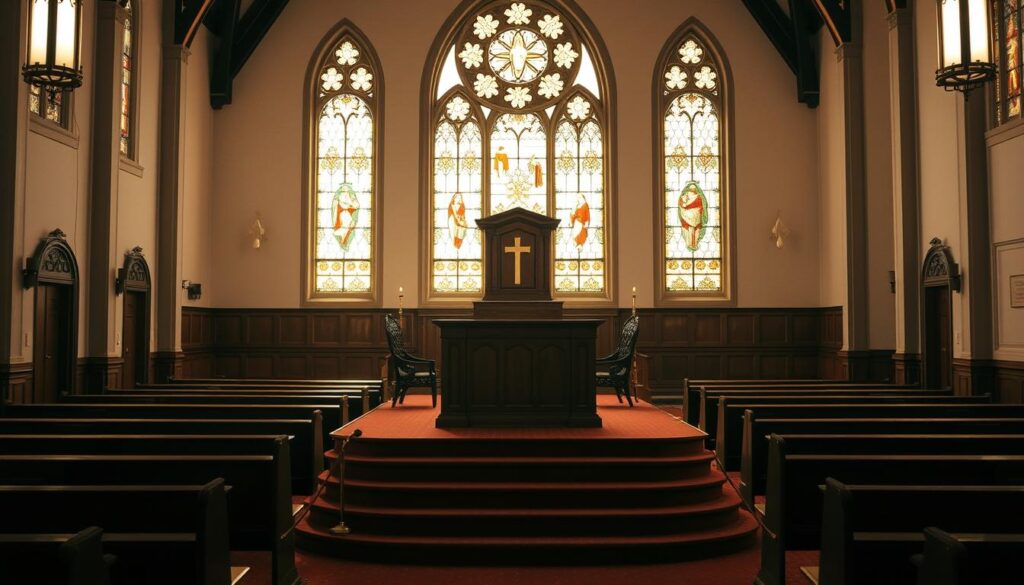
Sunday mornings hum with organ melodies as voices unite in ancient lyrics. Across these congregations, worship follows a deliberate rhythm—scripture-shaped singing meets expository teaching. This pattern creates spaces where reverence meets relational warmth.
Psalmody, Hymns, and Preaching Emphasis
The Psalms form the backbone of musical worship. Accompanied by organ music, these scriptural songs carry prayers and praises preserved for millennia. While hymns find their place in study groups or home settings, formal services reserve song selections for texts directly inspired by scripture.
Preaching occupies center stage during gatherings. “Through the sermon, God addresses us personally,” explains a Pittsburgh congregation member. Services typically open with the “Praise God” doxology—a tradition linking modern worshippers to Reformation-era practices. Evening services repeat this pattern, offering dual opportunities for spiritual nourishment.
Fostering Fellowship and Community Outreach
Beyond Sunday services, communities thrive through shared meals and volunteer initiatives. Youth groups organize service projects while adult study circles explore doctrinal topics. Annual conferences bring members from multiple states together for deeper connection.
Outreach efforts focus on practical support and theological education. Food drives partner with neighborhood centers, while lecture series invite curious visitors. Two weekly services (9:30 AM and 5:00 PM) allow flexible participation, accommodating varied schedules without compromising commitment to collective worship.
Understanding the Protestant Reformed Church Structure
How do communities maintain unity while preserving local identity? This balance defines the structural approach of congregations rooted in Reformation principles. Their system blends regional cooperation with grassroots decision-making.
Local Leadership and Regional Cooperation
Each congregation operates independently under elected elders. Self-governance allows communities to address specific needs while upholding shared doctrines. Leaders emerge from within membership through voting processes limited to qualified male participants.
The regional structure divides congregations into two administrative zones. Classis East and Classis West meet multiple times yearly, with Illinois marking their boundary. These gatherings foster collaboration on ministerial training and doctrinal matters without overriding local authority.
| Governance Level | Frequency | Primary Role |
|---|---|---|
| Local Session | Weekly | Daily operations & spiritual care |
| Classis Meetings | 2-3 times/year | Regional coordination |
| Annual Synod | Once/year | Denominational unity |
Accountability and Spiritual Oversight
Disciplinary matters remain local responsibilities. “The keys of the kingdom belong to each congregation,” notes a leader from Grand Rapids. This principle ensures communities address membership issues through elder-led processes rather than top-down directives.
Annual synods bring delegates together to strengthen connections across the federation. These meetings confirm shared commitments while respecting each group’s autonomy. Through this layered structure, participants balance collective identity with localized practice.
Missions, Education, and Publishing Initiatives
Communities thrive when they invest in future generations and global connections. This tradition demonstrates its vitality through educational institutions, international partnerships, and thoughtful theological discourse.
Global Missions and Sister Church Relationships
Over thirty congregations across the United States and Canada collaborate with like-minded groups worldwide. Partnerships in Singapore, Australia, and the Philippines foster shared learning and mutual support. Regular radio broadcasts extend these connections, offering biblical teachings to broader audiences.
Christian Education and Theological Publishing
Twelve elementary schools and three high schools serve 1,500 students, blending academic rigor with spiritual formation. A seminary in Michigan trains leaders through in-depth study of historic confessions and practical ministry skills.
The Reformed Free Publishing Association fuels theological engagement, producing books and a bimonthly magazine. Their flagship publication, The Standard Bearer, has sparked conversations for nearly a century. Through these efforts, members equip themselves and others to navigate faith in a changing world.
FAQ
What led to the formation of the Protestant Reformed Churches?
The group emerged in the 1920s after theological disagreements over God’s grace and election within the Christian Reformed Church. This split emphasized a strict adherence to specific Calvinist doctrines.
How do the Three Forms of Unity shape their beliefs?
The Heidelberg Catechism, Belgic Confession, and Canons of Dort serve as foundational texts. These documents guide teachings on salvation, Scripture’s authority, and humanity’s relationship with God.
Do they use instruments in worship services?
Traditional a cappella psalm singing is common, reflecting a focus on biblical simplicity. Some congregations may incorporate hymns or limited instrumentation, depending on local practices.
What makes their approach to church governance unique?
Each congregation operates independently but collaborates through synods. Decisions on doctrine, discipline, and missions are made collectively while maintaining local autonomy.
Are there educational resources available for members?
Yes! They operate schools for youth and publish materials through organizations like the Reformed Free Publishing Association. The Standard Bearer magazine also offers theological insights.
How do they engage with communities beyond their denomination?
Missions focus on planting congregations globally and nurturing relationships with like-minded groups. Local outreach often includes Bible studies, charity work, and evangelism efforts.
What role does creationism play in their teachings?
A literal six-day creation is upheld as central to understanding God’s covenant. This belief influences views on science, education, and humanity’s purpose within their theological framework.