Welcome to a journey through one of the world’s most influential spiritual traditions. With over 1.3 billion followers, this faith community forms the largest branch of the Catholic Church. Its practices and rituals have shaped Western civilization for centuries, blending ancient customs with modern worship.
This tradition operates as an autonomous body within a global network of 24 churches united under papal leadership. While sharing core beliefs with other Catholic groups, it stands apart through its distinct liturgical heritage and organizational structure. Geographic influences and cultural evolution created unique expressions of faith across different regions.
The community’s historical roots trace back to early Christian practices in Rome. Today, it maintains strong connections to its origins while adapting to contemporary spiritual needs. Leadership comes directly from the Pope, who serves as both spiritual guide and administrative head.
Understanding this tradition helps explain many modern religious practices. From art and music to holidays and family customs, its impact reaches far beyond Sunday services. Let’s explore how centuries-old traditions continue to shape lives in our fast-paced world.
Key Takeaways
- Represents the largest group within global Catholicism
- Maintains distinct practices while sharing core beliefs with other Catholic churches
- Operates under direct papal leadership and guidance
- Blends historical traditions with modern spiritual needs
- Influences art, culture, and societal values worldwide
- Differs from Eastern Catholic churches in liturgical style
Introduction to the Rich Traditions of Latin Catholicism
Step into a living tradition that has shaped cultures for two thousand years. This spiritual community thrives under papal leadership while adapting to modern life. At its heart lies the Archbasilica of Saint John Lateran in Rome – the Pope’s official cathedral since the 4th century.
Known by several names, this branch of the catholic church reveals its multifaceted identity:
| Name | Significance | Common Usage |
|---|---|---|
| Roman Church | Emphasizes connection to Rome | Historical documents |
| Western Church | Highlights cultural influence | Academic discussions |
| Latin Catholic | Refers to liturgical language | Everyday conversations |
Three key elements unite followers worldwide. Shared rituals create familiarity across continents. Papal authority provides consistent guidance. Local customs add regional flavors to universal practices.
This tradition balances ancient roots with modern needs. Historical prayers meet contemporary social outreach. Centuries-old art inspires new generations. Through this blend, it maintains relevance in a changing world while preserving its core sense of sacred continuity.
Historical Foundations of Latin Catholicism
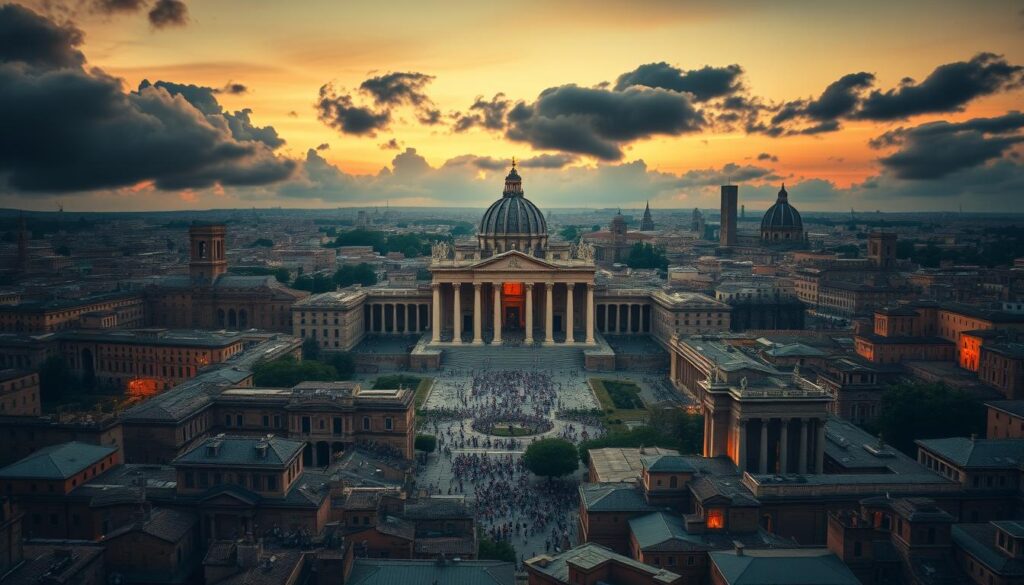
From the ashes of a divided empire rose a religious tradition that would span continents. The roots of Western Christianity intertwine with pivotal moments in ancient history, where political shifts shaped spiritual identity.
Early Christian Roots and the Roman Empire
When Emperor Theodosius split the Roman Empire in 395 AD, it sparked lasting changes. Greek initially dominated worship, reflecting the New Testament’s origins. As Latin spread through Western provinces, it became the voice of local believers.
Church leaders like Jerome made scripture accessible by translating texts into everyday Latin. His Vulgate Bible became standard for over a thousand years. This shift helped Western communities develop distinct practices from their Eastern counterparts.
Medieval Developments and Schism
The Great Schism of 1054 created two enduring branches of Christianity. Differences in leadership styles and theological debates finally severed ties between Rome and Constantinople. Western churches solidified their structure around papal authority.
| Period | Development | Impact |
|---|---|---|
| 4th-5th Century | Latin replaces Greek in Western liturgy | Created unified worship language |
| 11th Century | East-West Schism | Separated administrative structures |
| 12th-13th Century | Rise of Scholasticism | Strengthened theological education |
Medieval thinkers like Thomas Aquinas blended faith with reason through Scholastic philosophy. Cathedral schools evolved into Europe’s first universities, preserving knowledge through turbulent times. These innovations helped Western Christianity thrive during the Middle Ages.
The Evolution of the Latin Church within the Catholic Church
A living tradition constantly reshapes itself while holding to ancient roots. The Latin Church demonstrates this balance through centuries of adaptation, maintaining its core identity as the largest branch of the Catholic Church.
From Ancient Rites to Global Reach
For over 1,600 years, the Roman Rite guided worship in Western Christianity. The mid-20th century brought historic changes when the Second Vatican Council approved vernacular languages for Mass. This shift made rituals more accessible while preserving Latin for special occasions.
Missionary efforts transformed the Western Church into a worldwide community. From 16th-century explorers to modern outreach programs, these efforts spread traditions across six continents. Today, over 1 billion members participate in shared rituals adapted to local cultures.
| Era | Development | Impact |
|---|---|---|
| 4th-15th Century | Latin-only liturgy | Unified European worship |
| 1960s | Vatican II reforms | Vernacular translations introduced |
| 21st Century | Digital outreach | Global community connection |
“The liturgy is the summit toward which the activity of the Church is directed,” states Vatican II’s Sacrosanctum Concilium. This principle guides how churches today blend ancient prayers with modern communication methods. Livestreamed Masses and interactive faith apps now complement candlelit processions and Gregorian chants.
The Catholic Church continues finding new ways to honor its heritage. From updated music styles to eco-friendly parish initiatives, these innovations show how timeless traditions meet contemporary needs.
Core Beliefs and Rituals in Latin Catholicism
At the heart of daily spiritual life lie practices that connect millions across continents. The Roman Catholic tradition unites believers through seven sacred ceremonies called sacraments. These rituals mark life’s milestones, from welcoming newborns to comforting the ill.
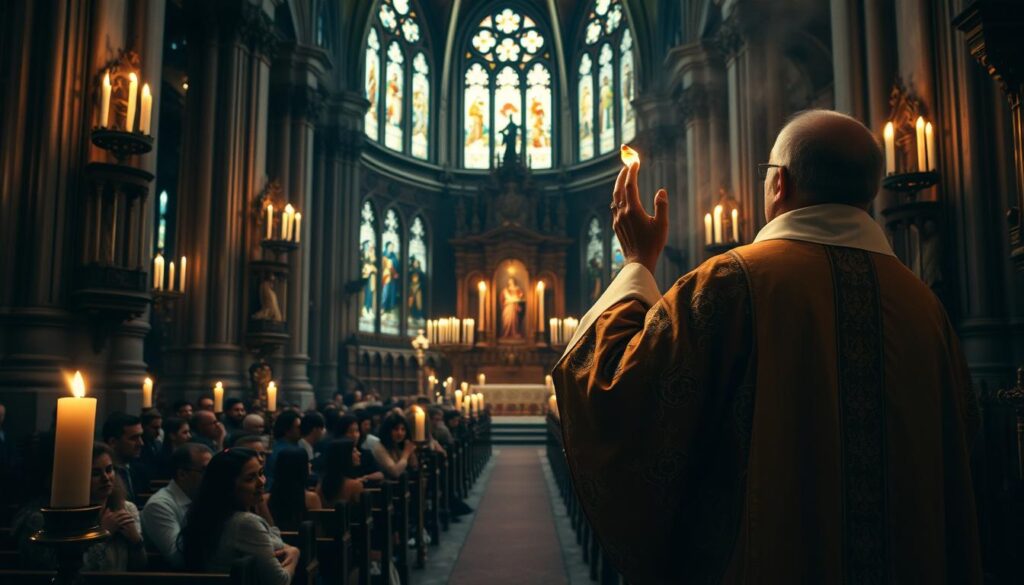
Central to worship is the Eucharist, celebrated during Mass. This ritual reenacts Jesus’ Last Supper, using bread and wine transformed into sacred elements. Many consider it the “source and summit” of their spiritual journey.
Faith communities organize through dioceses – local churches led by bishops. Each diocese maintains unique customs while following universal teachings. This structure ensures unity with Rome while respecting regional traditions.
| Sacrament | Purpose | Symbol |
|---|---|---|
| Baptism | Spiritual rebirth | Water, white garment |
| Confirmation | Strengthening faith | Chrism oil, laying on hands |
| Eucharist | Divine nourishment | Bread and wine |
Devotional practices like the Rosary and Stations of the Cross help believers reflect on sacred stories. These rites blend ancient liturgical texts with personal meditation. Saints serve as role models, inspiring acts of charity and hope.
Modern challenges find guidance in centuries-old teachings. Issues like environmental care and social justice draw from theological wisdom. This balance keeps traditions alive while addressing today’s needs.
Understanding Canon Law and Church Governance
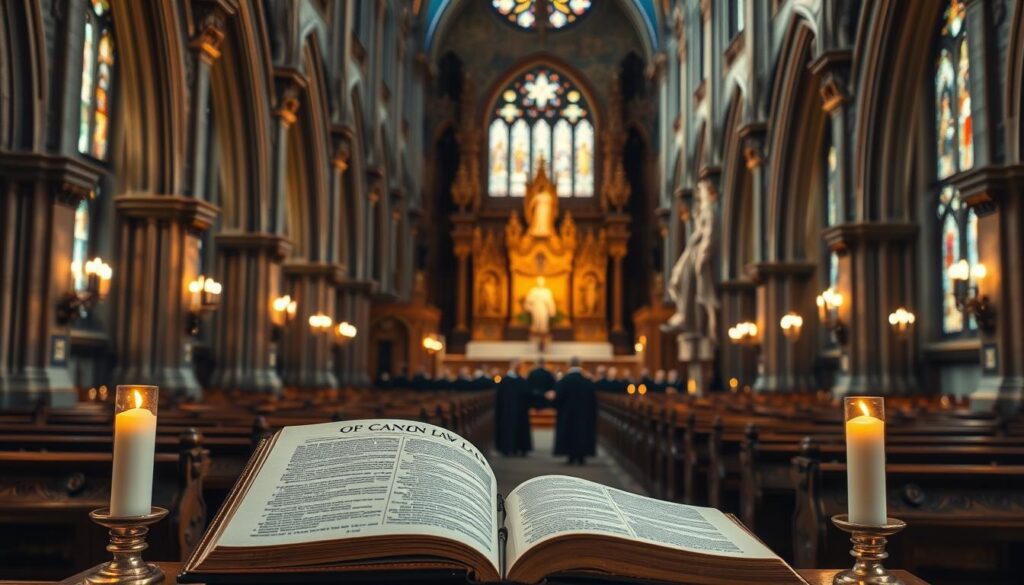
Every organization needs rules – even one with two millennia of history. The 1983 Code of Canon Law serves as the modern playbook for church operations. This legal framework guides everything from worship practices to financial management.
Papal Supremacy and Episcopal Structure
The Pope acts as both spiritual leader and chief administrator. He holds final authority over canon law interpretations while empowering bishops to manage local needs. This balance keeps global communities united yet responsive.
Church leadership flows through clear ranks. Cardinals advise the Pope, archbishops oversee regions, and bishops manage dioceses. Parish priests handle day-to-day spiritual care. This system maintains order across 3,000 ecclesiastical territories worldwide.
The Holy See coordinates activities through specialized departments. Offices like the Congregation for Divine Worship ensure consistent practices. Local churches adapt rules for cultural contexts while preserving core teachings.
Modern updates address contemporary issues. Recent changes clarify marriage protocols and religious education standards. Pope Benedict XVI refined guidelines for handling clergy matters, showing how timeless principles meet new challenges.
This living legal system proves ancient traditions can thrive in modern times. By blending structure with flexibility, it helps communities stay faithful to their roots while growing into the future.
Exploring Key Liturgical Rites and Practices
Sacred ceremonies form the heartbeat of spiritual life across global communities. While sharing core beliefs, worship styles vary through distinct rites developed over centuries. These traditions showcase how unity in faith coexists with diverse expressions of devotion.
The Roman Rite and Tridentine Mass
The Roman Rite dominates Western worship, celebrated in two primary forms. The Ordinary Form follows Vatican II reforms, using local languages for broader understanding. The Extraordinary Form preserves the 1962 Tridentine Mass, cherished for its Latin prayers and traditional gestures.
| Form | Language | Focus |
|---|---|---|
| Ordinary | Vernacular | Community participation |
| Extraordinary | Latin | Historical continuity |
Both versions share identical theological foundations. The Tridentine Mass features intricate priestly movements, while the modern format encourages congregational responses. This duality lets communities choose worship styles that resonate personally.
Alternative Rites: Mozarabic and Ambrosian Traditions
Beyond the mainstream practice, ancient rituals survive in specific regions. Spain’s Mozarabic Rite dates to the 6th century, blending Visigothic and Roman influences. Its chants and blessings differ markedly from standard ceremonies.
| Rite | Location | Unique Feature |
|---|---|---|
| Ambrosian | Milan | Longer Advent season |
| Mozarabic | Toledo | Separate Eucharistic prayers |
Milan’s Ambrosian tradition honors Saint Ambrose with distinctive liturgical texts. Its Lenten practices and priestly vestments showcase regional identity. These rites prove ancient customs still thrive within the Latin Church, preserving cultural heritage while maintaining global unity.
The Influence of Ecclesiastical Latin in Worship
Sacred words bridge centuries through carefully preserved sounds and meanings. This specialized form of speech evolved to express spiritual concepts that shaped religious thought across generations. Its structured cadence continues to unite global communities during sacred ceremonies.
Pronunciation and Vocabulary Development
Charlemagne’s 8th-century reforms standardized how we speak sacred words today. Scholars created uniform pronunciation rules during the Carolingian Renaissance, blending regional accents into one cohesive system. This “Italianate” style remains preferred in modern worship.
The language adapted to express new theological ideas. Early writers borrowed Greek terms like “baptisma” (baptism) and reshaped classical terms. Consider these creative adaptations:
| Classical Latin | Ecclesiastical Meaning |
|---|---|
| Sacramentum | Military oath → Sacred ritual |
| Caritas | High price → Divine love |
Living Texts and Modern Practice
Essential liturgical texts maintain Latin as their primary language. The Roman Missal and papal documents first appear in this ancient tongue before translation. This ensures precise meanings across 1,000+ modern languages.
Three key features keep this tradition relevant:
- Simpler grammar than classical versions
- Specialized terms for sacraments
- Consistent pronunciation guides
Today’s choirs and clergy learn these patterns to preserve audible connections to early worshippers. Through careful study, modern voices echo prayers first spoken 1,600 years ago.
Cultural and Artistic Legacy of the Latin Church
The artistic fingerprints of the Latin Church adorn cities worldwide, telling stories in stone and stained glass. From soaring Gothic cathedrals to delicate illuminated manuscripts, its creative legacy shaped the way Western societies express beauty and faith.
During the Age of Discovery, explorers carried these traditions across oceans. Spanish and Portuguese ships brought not just religion but architectural blueprints to the Americas and Philippines. Mission complexes became cultural hubs, blending European styles with local craftsmanship.
Three key contributions define this culture-shaping force:
1. Architectural marvels: Vaulted ceilings and flying buttresses transformed skylines, turning worship spaces into community landmarks.
2. Musical innovation: Gregorian chant evolved into polyphonic masterpieces that still inspire composers today.
3. Literary preservation: Monastic scribes saved classical knowledge while creating new spiritual content.
This creative explosion during the medieval period still impacts modern design. The Western Church‘s patronage system supported artists like Michelangelo while establishing art as a form of sacred communication. Today, restored cathedrals draw millions, proving ancient stones still speak to contemporary hearts.
FAQ
How did the Great Schism impact the Latin Church?
The 1054 split between Eastern Orthodox and Western churches solidified the Latin Church’s identity. It emphasized papal authority and shaped distinct liturgical practices, governance, and theological focus in Western Christianity.
What role does Canon Law play in church governance?
Canon Law provides a legal framework for administration, sacraments, and clergy roles. It upholds unity under the Holy See while addressing modern pastoral needs through updates like Pope Benedict XVI’s 2009 reforms.
Why is the Tridentine Mass significant?
This form of the Roman Rite, standardized after the Council of Trent (1545–1563), preserved traditional liturgy in ecclesiastical Latin. Pope Benedict XVI later expanded its use to honor historical worship practices.
Are non-Roman rites still practiced today?
Yes! The Mozarabic (Spain) and Ambrosian (Milan) rites maintain unique traditions approved by the Holy See. These reflect regional diversity while staying in communion with Rome.
How does ecclesiastical Latin influence modern worship?
Though less common post-Vatican II, Latin remains in official documents, hymns, and papal events. Its precise vocabulary ensures theological clarity and connects worship to ancient roots.
What cultural contributions stem from the Latin Church?
From Gothic cathedrals to Renaissance art, the Church inspired masterpieces by figures like Michelangelo and Thomas Aquinas. Gregorian chant and liturgical music also emerged from its traditions.