Welcome to a journey through the sacred practices that have guided millions in their spiritual lives. For centuries, the Catholic Church has fostered connection through structured traditions, blending ancient wisdom with modern relevance. These customs range from daily gestures like folded hands during prayers to grand celebrations marking life’s milestones.
At their core, these practices aim to deepen faith and unite communities. The seven sacraments, such as baptism and communion, serve as spiritual anchors. Each ritual carries layered symbolism – from the water representing rebirth to shared bread symbolizing unity.
You’ll discover how generations have preserved these traditions while adapting to cultural shifts. Whether you’re part of a local church or exploring from afar, these customs reveal universal truths about hope and belonging. Our guide breaks down complex ceremonies into relatable insights, perfect for both newcomers and lifelong adherents.
Key Takeaways
- Sacred practices create bridges between personal devotion and community connection
- The seven sacraments form foundational milestones in Catholic spiritual life
- Everyday gestures like the sign of the cross carry deep historical meaning
- Liturgical celebrations follow annual cycles tied to biblical events
- Symbolic objects like rosaries and holy water reinforce spiritual focus
- Traditions balance preservation with cultural adaptation over time
Introduction to Catholic Sacred Practices
At the heart of Catholic spiritual life lies a dynamic interplay between faith and action. These sacred practices aren’t just routines – they’re living connections to something greater. “Through visible signs, we touch the invisible God,” as many believers describe their experiences.
Overview of Catholic Beliefs
The Catholic Church teaches that God’s grace flows through seven sacraments. These include baptism (spiritual rebirth), communion (shared sacred meal), and marriage (lifelong covenant). Each combines physical elements like water or oil with spiritual meaning.
A priest typically leads these ceremonies, acting as a spiritual guide. For instance, during confession, believers find renewal through spoken prayers and forgiveness. These moments strengthen both personal devotion and community bonds.
The Historical Context of the Rituals
Many practices trace back to Jesus’ teachings and early Christian communities. The Eucharist, for example, evolved from Jewish Passover meals. Over centuries, traditions adapted to local cultures while keeping core meanings intact.
Today’s church services blend ancient patterns with modern needs. Sunday worship maintains structured liturgy yet feels personal. This balance helps believers across generations feel rooted yet relevant in their spiritual journeys.
The Role of Sacraments in Catholic Life
Catholic practices transform everyday moments into sacred connections. The seven sacraments act like spiritual milestones, marking key phases of life’s journey. Through these ceremonies, believers experience God’s presence in tangible ways.

Baptism and Its Spiritual Significance
This initiation sacrament welcomes new members into the faith community. Water poured over a person’s head symbolizes cleansing and rebirth. The priest’s words – “In the name of the Father, Son, and Holy Spirit” – create an unbreakable bond.
Parents often choose godparents to guide the child’s spiritual growth. Adults converting to the faith also undergo this rite. It’s considered the first step toward receiving other sacraments.
Eucharist: Celebrating the Holy Communion
Known as the communion, this sacrament forms the centerpiece of Catholic worship. Consecrated bread and wine become spiritual nourishment during Mass. Many believers receive it weekly, sometimes daily.
The ritual echoes Jesus’ Last Supper with his disciples. “This is my body given for you,” priests recite during the ceremony. Regular participation strengthens community ties and personal devotion.
| Sacrament | Purpose | Key Element | Frequency |
|---|---|---|---|
| Baptism | Spiritual rebirth | Holy water | Once per lifetime |
| Eucharist | Communal nourishment | Consecrated bread/wine | Daily/weekly |
| Confirmation | Strengthening faith | Holy oil | Once after baptism |
These sacred practices blend physical actions with deep meaning. Whether through water or shared meals, they make divine grace accessible to all.
Deep Dive into catholicism rituals
Sacred actions bridge daily life and divine connection in Catholic practice. The Mass stands as the central act of communal worship, blending ancient patterns with modern relevance. Led by a priest, this weekly gathering transforms ordinary moments into encounters with the sacred.
Understanding the Significance of Ritual Acts
Every gesture in Catholic practice carries layered meaning. Kneeling expresses humility, while raised hands symbolize openness to grace. The priest’s motions during Mass – breaking bread, lifting the chalice – retell sacred stories through movement.
These actions create a spiritual language deeper than words. As one believer notes, “When I bow my head in prayer, my body speaks what my heart feels.” Rituals turn abstract beliefs into tangible experiences shared by the entire congregation.
How Rituals Shape Faith and Community
Weekly gatherings forge unbreakable bonds. Shared responses during worship create unity, while communal singing lifts individual voices into harmony. The table below shows key elements that build this collective identity:
| Practice | Personal Impact | Community Effect |
|---|---|---|
| Sunday Mass | Renews spiritual focus | Strengthens shared purpose |
| Group Prayer | Deepens personal reflection | Creates collective energy |
| Holy Communion | Nourishes individual faith | Symbolizes universal connection |
Through these patterns, believers find stability in life’s chaos. Children learn through observation, while elders pass down wisdom – creating living traditions that span generations.
Holy Water, Holy Oils, and Their Symbolism
Sacred elements transform ordinary moments into spiritual encounters. Two substances stand out for their symbolic power – blessed holy water and consecrated oils. These materials carry centuries of meaning while remaining deeply relevant today.
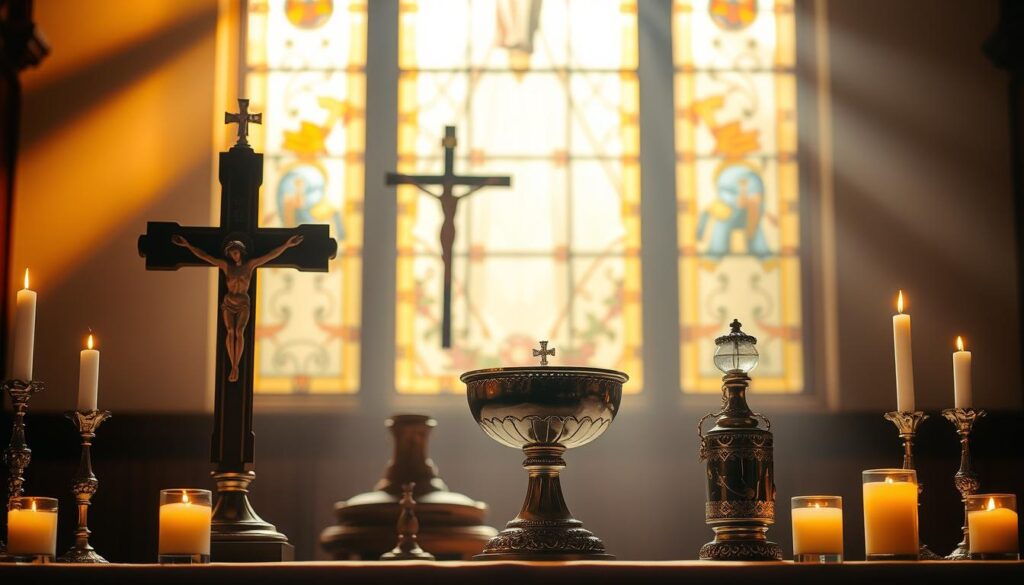
The Purifying Role of Holy Water
You’ll find holy water fonts at every church entrance. Dipping fingers in this blessed water reminds believers of their baptismal promises. The simple act of making the sign of the cross becomes a mini-renewal of faith.
This sacred liquid plays key roles in major life events:
- Baptismal ceremonies (poured over heads)
- Funeral rites (sprinkled on caskets)
- Home blessings (used to sanctify spaces)
One priest describes its power: “Like morning dew refreshes grass, holy water renews the soul.” Its cleansing symbolism helps people release burdens and refocus on spiritual priorities.
Holy Oils: Anointment and Blessings
Three special oils mark critical moments in believers’ lives. Each blend gets consecrated during Holy Week, creating a tangible link to Easter’s transformative message.
| Oil Type | Purpose | Key Use |
|---|---|---|
| Catechumens | Spiritual strength | Pre-baptism preparation |
| Anointing | Healing comfort | Sick/elderly ministry |
| Chrism | Consecration | Confirmations/ordinations |
The fragrant holy oil used in confirmations leaves a visible cross on foreheads. This anointing becomes a lifelong reminder of divine connection. For the ill, oil brings both physical comfort and hope for spiritual healing.
The Power of Prayers and Devotional Acts
Spiritual connection thrives through diverse expressions of devotion. Catholics use prayers like musical notes – each form creating unique harmony with the divine. From whispered requests to joyful hymns, these practices turn ordinary moments into sacred dialogues.

Different Forms of Catholic Prayers
The Lord’s Prayer serves as the bedrock of daily devotion. Many recite it during church services and personal meditation. As one believer shares: “These words feel like coming home – familiar yet always fresh.”
Communal worship strengthens bonds through shared rhythms. Sunday gatherings feature:
- Psalms sung in unison
- Responsive readings
- Silent reflection periods
Private devotion allows personal expression. Some use rosary beads, counting prayers while meditating on spiritual mysteries. The physical act of moving beads helps focus wandering thoughts.
| Prayer Type | Form | Setting | Purpose |
|---|---|---|---|
| Liturgical | Structured texts | Church services | Communal unity |
| Personal | Spontaneous words | Home/work | Individual connection |
| Meditative | Rosary/beads | Quiet spaces | Mental focus |
Folded hands during prayer form a universal gesture. This posture symbolizes offering one’s whole self – work-worn palms and hopeful heart together. Whether in church pews or hospital rooms, this simple act bridges earthly and divine realms.
Through these varied practices, believers find strength for life’s challenges. As day turns to night, prayers mark sacred times – morning gratitude, midday requests, evening peace. Each whispered word weaves another thread in the tapestry of faith.
Celebrating Mass: The Heart of Worship
Gathering in shared devotion forms the pulse of Catholic spiritual life. The Sunday Mass stands as a weekly anchor, blending ancient patterns with personal meaning. Through carefully designed moments, believers reconnect with their community and renew their commitment to faith.
The Structure and Flow of a Sunday Mass
The service begins with a solemn procession. A priest carries the Gospel book to the altar, signaling sacred time. Participants then move through three key phases:
First comes the Liturgy of the Word. Biblical readings span Old Testament wisdom to Gospel stories. The homily bridges these texts to modern challenges, making ancient lessons feel fresh.
Next unfolds the Liturgy of the Eucharist. Simple bread wine become sacred through consecration prayers. This moment recreates the Last Supper, transforming ordinary elements into spiritual nourishment.
Variations in Daily and Special Masses
Weekday services offer quieter reflection. These shorter gatherings maintain core elements but skip processions. The priest still consecrates the body blood of Christ, preserving the sacrament’s power.
Special occasions bring vibrant adaptations. Easter Vigil features candlelight, while Christmas Mass bursts with song. Yet every service keeps its central purpose – uniting people through shared sacred moments.
FAQ
What are the seven sacraments in the Catholic Church?
The seven sacraments are Baptism, Eucharist, Confirmation, Reconciliation, Anointing of the Sick, Holy Orders, and Matrimony. Each represents a sacred act that strengthens a person’s relationship with God and the Church community.
Why is the Eucharist central to Sunday Mass?
The Eucharist commemorates Jesus’ Last Supper, where bread and wine become His Body and Blood. This act unites worshippers in faith and renews their spiritual connection to Christ’s sacrifice.
How is holy water used in Catholic practices?
Holy water symbolizes purification and renewal. It’s sprinkled during blessings, baptisms, or as worshippers enter church, reminding them of their baptismal vows and God’s grace.
What role do holy oils play in anointment ceremonies?
Holy oils, like chrism oil, are blessed by bishops and used in sacraments such as Baptism, Confirmation, and Anointing of the Sick. They signify strength, healing, and the Holy Spirit’s presence.
How does the structure of Sunday Mass differ from daily Mass?
Sunday Mass includes more prayers, Scripture readings, a homily, and Communion. Daily Mass is shorter, focusing on core elements like the Liturgy of the Word and Eucharist.
What is the purpose of Confirmation in the Catholic faith?
Confirmation deepens baptismal gifts, strengthening a person’s bond with the Church. Through anointment with chrism oil, the Holy Spirit empowers them to live their faith boldly.
Why do Catholics pray to saints or Mary?
These prayers ask saints or Mary to intercede with God on their behalf. It reflects belief in a spiritual community united across heaven and earth, not worship of the saints themselves.