The Presbyterian tradition places significant emphasis on the role of elders in the governance and spiritual guidance of the congregation. According to the Presbyterian Church in Canada, having elders is considered faithful to the organizational structure of the early churches established by the apostles of the New Testament.
The role of these elders is deeply rooted in the church’s history and biblical teachings, playing a crucial part in the life of the congregation. Their responsibilities and contributions are multifaceted, impacting both the spiritual and operational aspects of the church.
Key Takeaways
- The Presbyterian tradition emphasizes the importance of elders in church governance.
- Elders play a crucial role in the spiritual guidance of the congregation.
- The role of elders is rooted in biblical teachings and church history.
- Elders contribute to both the spiritual and operational aspects of the church.
- Their responsibilities are multifaceted, impacting the congregation in various ways.
Understanding the Structure of Presbyterian Governance
At the heart of the Presbyterian Church’s organizational framework is a governance system that includes multiple layers of leadership. This system is designed to ensure that the church is guided by a collective decision-making process that involves various governing bodies.
The Presbyterian Church in Canada, for instance, is governed by a system that includes sessions, presbyteries, synods, and the General Assembly. Each of these entities plays a crucial role in the overall governance of the church.
Overview of Presbyterian Polity
Presbyterian polity is characterized by a connectional system, where local churches are connected through a series of governing bodies. This connectionalism allows for a balance between local autonomy and denominational unity.
The session, composed of elders and the pastor, is responsible for the governance of the local church. The session oversees the spiritual life of the congregation and makes decisions regarding the church’s activities and operations.
The Role of Deacons and Elders
In the Presbyterian Church, both deacons and elders play vital roles in the governance and ministry of the church. While deacons are primarily involved in service and care ministries, elders are responsible for the spiritual governance of the church.
Elders are chosen for their spiritual maturity and leadership abilities. They work closely with the pastor to provide spiritual guidance and oversight to the congregation.
How Elders Fit into Church Leadership
Elders are integral to the leadership structure of the Presbyterian Church. They serve on the session, which is the governing body of the local church. The session is responsible for making important decisions regarding the church’s direction and operations.
Elders also participate in higher governing bodies, such as presbyteries and synods, where they help to make decisions that affect the broader denomination.
| Governing Body | Description | Key Responsibilities |
|---|---|---|
| Session | Local church governing body | Spiritual oversight, decision-making |
| Presbytery | Regional governing body | Oversight of local churches, ordination |
| Synod | Multi-presbytery governing body | Coordination between presbyteries, policy-making |
| General Assembly | Highest governing body | Denominational decision-making, constitutional amendments |
What Are the Responsibilities of Presbyterian Elders?
The responsibilities of Presbyterian elders are multifaceted, encompassing spiritual guidance, administrative duties, and conflict resolution. These individuals are chosen for their spiritual maturity and leadership skills, playing a crucial role in the life of the congregation.
Spiritual Oversight and Guidance
One of the primary responsibilities of Presbyterian elders is to provide spiritual oversight and guidance to the congregation. This involves:
- Leading Bible studies and prayer meetings
- Providing pastoral care to members
- Guiding the congregation in matters of faith and practice
Elders are expected to be spiritually mature and equipped to offer wise counsel and support to the congregation.
Administrative Duties within the Church
In addition to spiritual guidance, Presbyterian elders are also involved in the administrative duties of the church. This includes:
- Participating in church council meetings to make decisions on church operations
- Overseeing the management of church properties and finances
- Coordinating with other church leaders to implement decisions
Elders work closely with the pastor and other church leaders to ensure the smooth operation of the church.
Conflict Resolution and Mediation
Another critical role of Presbyterian elders is conflict resolution and mediation. Elders are often called upon to:
- Mediate disputes between members
- Provide counsel in times of crisis
- Help resolve issues in a fair and compassionate manner
Their ability to listen and offer wise and compassionate guidance is essential in maintaining harmony within the congregation.
The Historical Context of Eldership in Presbyterianism
The role of elders in the Presbyterian Church has its historical foundations in the Reformation movement of the 16th century. This period marked a significant shift in church governance, moving away from hierarchical structures towards a more presbyterian form of leadership.
The concept of eldership, rooted in biblical teachings, was further developed during the Reformation. Leaders such as John Calvin and John Knox played crucial roles in shaping the governance structure of the Presbyterian Church, emphasizing the importance of elders in church leadership.
Origins of Eldership in Reformation
The Reformation brought about a renewed focus on biblical governance, with the office of elder being a key component. The ordination process for elders was established to ensure that those serving in this capacity were spiritually mature and equipped to provide spiritual oversight.
“The government of the Church is a mixed one, partly aristocratic, partly democratic; for the Church is governed by the elders, who are chosen by the people, and are not necessarily ministers.” – John Calvin
Changes Over Time in Governance Structure
Over the centuries, the governance structure of the Presbyterian Church has evolved. While the core principles of eldership remain unchanged, the ordination process and the roles of elders have adapted to meet the needs of the church in different contexts.
Today, the Presbyterian Church continues to value the role of elders, recognizing their importance in providing spiritual guidance and leadership. The historical context of eldership serves as a foundation for understanding the significance of this office in contemporary Presbyterianism.
Qualifications Required for Elders in the Presbyterian Church
Ruling elders play a pivotal role in the Presbyterian Church, and their selection is based on demonstrated spiritual maturity, leadership abilities, and a strong commitment to community service. The Presbyterian Church places a high value on the qualities that make an individual suitable for this significant role.
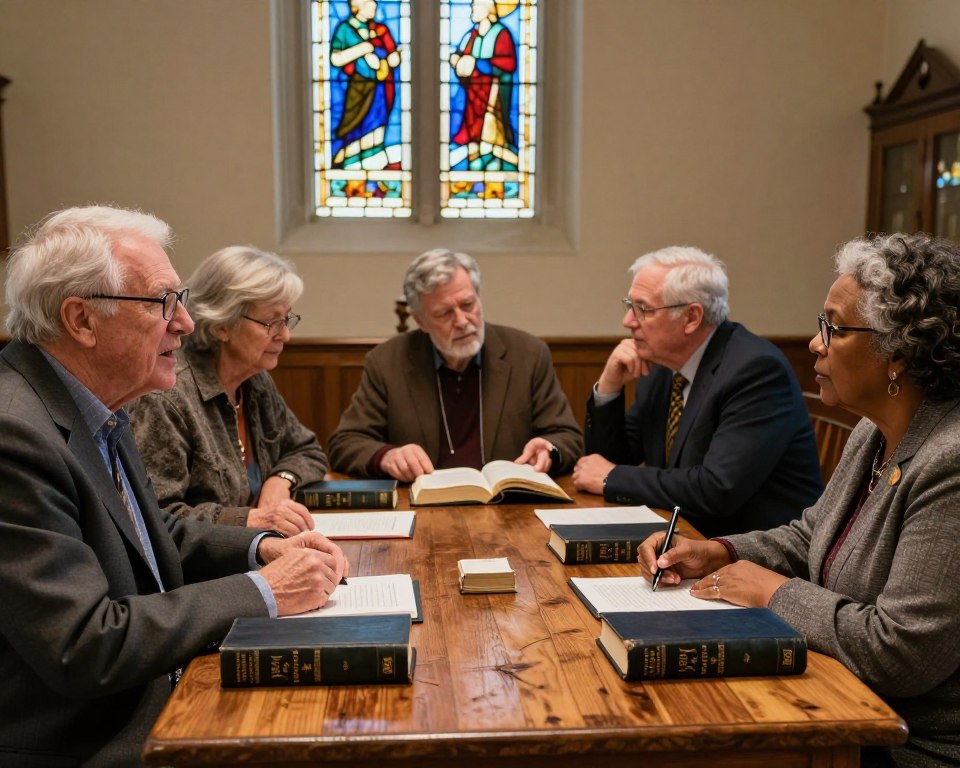
Spiritual Maturity and Life Experience
Elders are expected to demonstrate a deep understanding of their faith and a commitment to spiritual growth. This involves:
- A personal commitment to prayer and Bible study
- Active participation in church activities and services
- A demonstrated ability to mentor and guide others in their spiritual journeys
Life experience is also considered crucial, as it provides a foundation for wisdom and empathy. Elders are often individuals who have been active in the church for some time and have shown a capacity to navigate various life challenges with faith and resilience.
Leadership Skills and Community Involvement
Effective elders possess strong leadership skills, which enable them to guide the congregation and make informed decisions. This includes:
- The ability to work collaboratively with others, including pastors and other church leaders
- Strong communication skills, both in speaking and listening
- A capacity for conflict resolution and mediation
Community involvement is another critical aspect, as elders are expected to be actively engaged with the community, understanding its needs, and fostering connections between the church and the broader community.
By combining spiritual maturity, life experience, leadership skills, and community involvement, the Presbyterian Church ensures that its ruling elders are well-equipped to serve and lead the congregation effectively.
The Selection Process for Presbyterian Church Elders
The selection of elders in the Presbyterian Church involves a thorough evaluation to ensure their spiritual maturity and leadership capabilities. This process is crucial as it identifies individuals who will provide spiritual guidance and oversight within the congregation.
Nominations and Elections
The process begins with nominations, where members of the congregation are identified as potential elders based on their demonstrated commitment to their faith and their service within the church. Nominations are typically made by the congregation or a nominating committee, ensuring a broad representation of the church’s membership.
Once nominations are received, the church proceeds to elections. Elections are usually conducted by secret ballot, allowing members to vote for their preferred candidates. This method ensures that the selection is both democratic and confidential.
Evaluating the Readiness of Candidates
Before being elected, candidates undergo an evaluation process to assess their readiness for the role. This includes examining their spiritual maturity, leadership skills, and understanding of the church’s doctrine and practices. The evaluation may involve interviews with church leaders, background checks, and discussions with the candidates about their willingness to serve.
The role of teaching elders, who are typically ordained ministers, is also significant in this process. They provide guidance and oversight, ensuring that the elected elders are well-prepared to fulfill their responsibilities. Teaching elders work closely with the newly elected elders, providing them with the necessary support and resources to excel in their roles.
By carefully evaluating the readiness of candidates and involving the congregation in the selection process, the Presbyterian Church ensures that its elders are equipped to provide effective spiritual leadership.
Training and Development for Elders
To equip elders with the necessary skills and knowledge, Presbyterian churches offer various training and development programs. These initiatives are designed to enhance their ability to fulfill their session responsibilities and leadership roles within the church.
Orientation Programs and Workshops
Upon selection, elders typically undergo an orientation program to familiarize themselves with their roles and responsibilities. Workshops are also conducted to provide hands-on training and insights into effective church leadership.
These programs cover a range of topics, including conflict resolution, spiritual guidance, and administrative duties. By participating in these workshops, elders gain a deeper understanding of their duties and how to effectively serve their congregation.

Ongoing Education and Resources
Beyond initial training, Presbyterian churches often provide ongoing education and resources to support the continued development of their elders. This may include regular seminars, leadership retreats, and access to relevant literature.
The table below outlines some common resources and educational opportunities available to elders:
| Resource/Education | Description | Frequency |
|---|---|---|
| Leadership Retreats | Focused on enhancing leadership skills and spiritual growth | Annually |
| Seminars | Covering topics such as conflict resolution and pastoral care | Quarterly |
| Literature and Online Courses | Providing insights into church governance and theology | Ongoing |
By leveraging these resources, elders can continue to grow in their roles, ensuring they remain effective and supportive leaders within their congregations.
How Elders Support Congregational Life
Elders in the Presbyterian church are instrumental in supporting congregational life, focusing on spiritual growth and community engagement. Their role is multifaceted, involving both spiritual oversight and the organization of church activities.
Spiritual Growth Initiatives
Elders are crucial in encouraging spiritual growth among congregation members. They achieve this through various means, including providing spiritual guidance, supporting members in times of need, and facilitating opportunities for spiritual development. The qualifications required to become an elder, such as demonstrating spiritual maturity, ensure that they are well-equipped for this responsibility.
The process of ordination also plays a significant role in preparing elders for their duties. Through ordination, elders are consecrated to their role, committing to serve the congregation with dedication and integrity. This sacred commitment underpins their efforts to foster a spiritually vibrant community.
Organizing Church Activities
In addition to promoting spiritual growth, elders are actively involved in organizing church activities and events. These events can range from worship services and Bible studies to community outreach programs and social gatherings. By doing so, elders help create a sense of community and belonging among congregation members.
| Activity Type | Description | Role of Elders |
|---|---|---|
| Worship Services | Central to congregational life, these services involve prayer, hymns, and sermons. | Elders assist in service preparation and participate in leading prayers. |
| Bible Studies | Groups that delve into scripture, fostering spiritual growth and understanding. | Elders often lead or facilitate these groups, guiding discussions. |
| Community Outreach | Programs aimed at serving the local community, such as food banks or charity drives. | Elders help organize and coordinate these efforts, ensuring effective service. |
Through their involvement in both spiritual guidance and the organization of church activities, elders significantly contribute to the vitality of congregational life. Their work is a testament to the importance of elder qualifications and the ordination process in enabling them to serve effectively.
Collaboration between Elders and Pastors
Collaboration between elders and pastors is a cornerstone of Presbyterian governance, ensuring a balanced approach to church leadership. This partnership is essential for the effective functioning of the church, as it brings together the spiritual guidance of pastors, or teaching elders, and the governance expertise of ruling elders.
Team Dynamics in Church Leadership
The relationship between elders and pastors is built on mutual respect and a shared commitment to the church’s mission. As noted by a prominent Presbyterian leader, “The strength of the Presbyterian Church lies in its balanced governance, where ruling elders and teaching elders work together in harmony.” This harmony is crucial for creating a cohesive leadership team that can address the diverse needs of the congregation.
The dynamics of this team are characterized by open communication, trust, and a willingness to collaborate. Ruling elders bring their expertise and insights from various professional backgrounds, while teaching elders provide spiritual guidance and theological expertise. Together, they form a well-rounded leadership team capable of making informed decisions.
Joint Decision-Making Processes
Joint decision-making is a critical aspect of the collaboration between elders and pastors. In the Presbyterian Church, important decisions are typically made through a consensus-driven process involving both ruling elders and teaching elders. This ensures that decisions reflect a broad range of perspectives and are in the best interest of the congregation.
As highlighted in a Presbyterian Church document, “The governing body of the church, composed of ruling elders and teaching elders, is responsible for making decisions that guide the congregation.” This collaborative approach to decision-making fosters a sense of unity and shared responsibility among church leaders.
“The Presbyterian Church’s governance structure is designed to ensure that power is distributed evenly, preventing any one individual or group from dominating the decision-making process.”
This balanced approach to governance is a hallmark of the Presbyterian Church and is seen as a key factor in its ability to adapt to changing circumstances while remaining true to its core values.
Challenges Faced by Presbyterian Elders
The role of Presbyterian elders is vital, but it is not without its challenges, including conflicts and change. As leaders in their congregations, elders must navigate a variety of issues that can impact the harmony and effectiveness of their church community.
Navigating Church Conflicts
One of the significant challenges faced by Presbyterian elders is navigating church conflicts. Conflicts can arise from various sources, including differences in opinion on church governance, theological interpretations, or personal disagreements among members.
“Conflict is an inevitable part of any community, and the church is no exception. Effective elders must be equipped to manage and resolve conflicts in a way that promotes healing and maintains the unity of the congregation.”
Elders must be skilled in mediation and conflict resolution, often requiring a deep understanding of the congregation’s dynamics and the issues at hand. Their role in addressing these conflicts is crucial to maintaining a positive and supportive church environment.
| Conflict Resolution Strategies | Description | Benefits |
|---|---|---|
| Mediation | Involves a neutral third party to facilitate a resolution. | Promotes understanding and respect among parties. |
| Active Listening | Ensures that all parties feel heard and understood. | Reduces misunderstandings and promotes empathy. |
| Collaborative Problem-Solving | Encourages collective effort to find a solution. | Fosters a sense of community and shared responsibility. |
Managing Change within the Congregation
Managing change is another significant challenge faced by Presbyterian elders. Changes within the congregation, whether due to growth, demographic shifts, or theological discussions, require careful handling to ensure a smooth transition.
Elders must be adaptable and forward-thinking, often needing to balance tradition with innovation. Their ability to lead the congregation through periods of change is essential to the church’s continued vitality and relevance.
In fulfilling their session responsibilities, elders must be proactive in addressing the challenges that arise within their congregation. By doing so, they can help ensure that their church remains a vibrant and supportive community for its members.
The Significance of Elder Service in the Community
Serving the community is a fundamental aspect of being an elder in the Presbyterian Church, reflecting their dedication to faith in action. Elders are instrumental in organizing and participating in various outreach and service projects that benefit the broader community.
Outreach and Service Projects
Elders are involved in a wide range of service initiatives, from food drives and volunteer work at local shelters to supporting community development programs. These activities not only provide essential services but also foster a sense of connection and compassion within the community.
Examples of successful outreach projects include community clean-up initiatives, health fairs, and educational workshops. These projects are often developed in collaboration with local organizations, amplifying their impact.
Building Relationships with Local Organizations
Building strong relationships with local organizations is a key aspect of elder service. By partnering with community groups, elders can identify areas of need and develop targeted initiatives to address them.
This collaborative approach not only enhances the effectiveness of their service projects but also helps to build a more cohesive and supportive community. Effective communication and mutual respect are foundational to these partnerships, ensuring that efforts are coordinated and beneficial to all parties involved.
Through their service and leadership, Presbyterian Church elders demonstrate a profound commitment to living out their faith in meaningful ways, making a tangible difference in the lives of those they serve.
Celebrating the Contributions of Elders
The Presbyterian Church recognizes the vital role of its elders in maintaining the spiritual health and governance of the congregation. The ordination process, which involves a solemn commitment to serve, marks the beginning of an elder’s dedicated service. Ruling elders play a crucial part in this process, guiding the church with wisdom and compassion.
Service Milestones
Recognizing service milestones is essential to acknowledging the dedication and hard work of elders. Whether it’s a decade or more of service, these milestones represent a significant commitment to the church and its community. Celebrating these achievements encourages continued leadership and fosters a sense of appreciation among congregation members.
Fostering New Leadership
Encouraging new leaders is vital for the continued growth and vitality of the Presbyterian Church. By mentoring and guiding potential future elders, current leaders can ensure a smooth transition and maintain the church’s mission. The experience gained through the ordination process and service as a ruling elder provides invaluable insight for emerging leaders.
FAQ
What is the role of Presbyterian church elders in the governance of the church?
Presbyterian church elders play a crucial role in the governance and spiritual guidance of the congregation, working together with pastors and deacons to lead the church.
What are the qualifications required for elders in the Presbyterian Church?
Elders in the Presbyterian Church are required to have spiritual maturity, life experience, leadership skills, and community involvement, as well as meet specific biblical and denominational requirements.
How are elders selected in the Presbyterian Church?
Elders are selected through a process of nominations and elections, with candidates being evaluated for their readiness to serve based on their qualifications and character.
What is the role of teaching elders in the Presbyterian Church?
Teaching elders, also known as ministers, are responsible for preaching, teaching, and providing spiritual guidance to the congregation, working closely with ruling elders to lead the church.
What training and development opportunities are available to elders?
Elders have access to orientation programs, workshops, and ongoing education and resources to help them fulfill their session responsibilities and leadership roles.
How do elders contribute to the life of the congregation?
Elders promote spiritual growth among members, organize church activities and events, and provide guidance and support to the congregation, playing a vital role in the church’s ministry.
What is the relationship between elders and pastors in the Presbyterian Church?
Elders and pastors work together in a collaborative partnership, sharing decision-making responsibilities and working together to lead the church and provide spiritual guidance to the congregation.
How do elders navigate conflicts within the congregation?
Elders are responsible for resolving conflicts and mediating disputes within the congregation, using their spiritual maturity and leadership skills to guide the church through challenging situations.
What is the significance of elder service in the community?
Elders play a vital role in outreach and service projects, building relationships with local organizations and demonstrating the church’s commitment to serving others.
How are the contributions of elders recognized and celebrated?
The contributions of elders are recognized and celebrated through service milestones and other forms of acknowledgement, encouraging new leaders to emerge and continue the church’s mission.
What is the ordination process for elders in the Presbyterian Church?
The ordination process for elders involves a formal ceremony in which they are set apart for their role, committing to serve the church and fulfill their responsibilities as spiritual leaders.
What are the responsibilities of the session in the Presbyterian Church?
The session, composed of elders and the pastor, is responsible for governing the church, making decisions, and providing spiritual guidance to the congregation.