Many believers find the third person of the Blessed Trinity both fascinating and puzzling. A 2008 statement by Pope Benedict XVI captures this tension perfectly: “The Holy Spirit has been in some ways the neglected person of the Blessed Trinity.” This observation invites us to look beyond common symbols and explore the Spirit’s profound role in faith.
At its core, this divine presence represents pure relationship—the eternal bond of love between God the Father and Son. Unlike abstract ideas, it’s a living force that connects believers to this sacred unity. Think of it as the breath that animates spiritual life, weaving through prayer, sacraments, and daily acts of compassion.
While the Trinity’s mystery defies full human grasp, the Catholic Church teaches that we can still grow in understanding. The Spirit isn’t a distant figure but an active guide. From creation to modern worship, this person of the Trinity shapes how communities experience grace and transformation.
Key Takeaways
- The Holy Spirit completes the Trinity as the bond of love between Father and Son
- Pope Benedict XVI highlighted the need to deepen our connection with this divine person
- Mystery and clarity coexist in Catholic teachings about the Spirit’s role
- This presence actively shapes worship and personal spiritual growth
- Understanding the Spirit helps believers engage more fully with their faith
Unveiling the Mystery of the Holy Spirit
Ancient texts paint a vivid picture of a powerful yet mysterious influence active since the world’s dawn. This divine presence appears in Genesis 1:2 as a life-giving force hovering over creation’s waters—a preview of its role in shaping history.
Origins and Biblical Foundations
The Spirit’s work begins in Genesis and echoes through key figures. Joseph’s wisdom stunned Pharaoh because “the Spirit of God was in him” (Genesis 41:38). Prophets like Isaiah described it as resting on the Messiah, while Joel foresaw a time when this power would touch all people.
| Biblical Moment | Symbol Used | Significance |
|---|---|---|
| Creation (Genesis 1:2) | Hovering breath | Life-giving force |
| Joseph’s wisdom | Divine insight | Guidance in crisis |
| Isaiah’s prophecy | Resting presence | Messianic preparation |
| Joel’s vision | Poured-out gift | Universal access |
Theological Perspectives and the Element of Mystery
Early believers sensed this force but didn’t fully grasp its personhood until Jesus Christ’s teachings. Church Fathers described the Trinity as an eternal dance—with the Spirit as the rhythm connecting God the Father and Son. This framework helps us approach divine mystery without reducing it to simple formulas.
While symbols like fire or clouds hint at its nature, finite minds can’t fully contain infinite truth. Yet through Scripture and tradition, we gain meaningful understanding—like recognizing wind by its effects on the world.
The Significance of the Holy Spirit in Catholic Beliefs
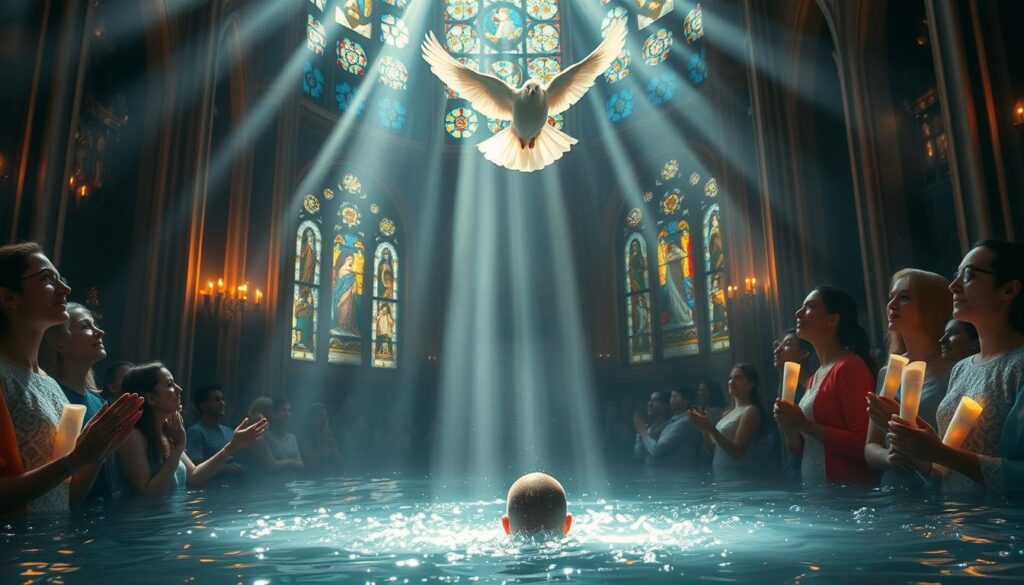
Sacraments act as spiritual doorways where believers experience divine connection. At baptism, the journey begins—water and sacred words awaken a relationship that shapes lifetimes. “Born of water and Spirit,” as Jesus taught, believers receive more than ritual—they gain an inner companion.
Role in Baptism, Confirmation, and Daily Devotion
Jesus’ own immersion in the Jordan River set the pattern. When the dove descended, it revealed a truth: sacraments make God’s power tangible. Today, baptism marks entry into the Church family. Confirmation deepens this bond, like adding fuel to a flame.
This divine presence isn’t temporary. It dwells within, guiding choices and comforting hearts. Daily prayer becomes a conversation—a chance to lean into wisdom greater than our own. Even simple acts of kindness flow from this inner wellspring.
Historical Insights and Papal Reflections
Early Christians saw baptism as rebirth. They echoed Jesus’ words: “Unless born anew, you cannot see God’s kingdom.” Over centuries, leaders emphasized nurturing this gift. Pope Benedict XVI once noted how easily we forget this divine partner in our faith journey.
His solution? Rediscover quiet moments of listening. Like Peter finding courage after Pentecost, modern believers thrive when embracing this unseen helper. Regular confession and worship keep the connection alive—transforming ordinary lives into extraordinary witnesses.
Deep Dive into catholicism holy spirit: Impact on Daily Faith and Practice
The dance of divine relationships offers a blueprint for spiritual connection. Early theologians like Saint Maximus envisioned the Trinity as an endless movement of love, where the Father and Son move in perfect sync. The third person becomes the dance floor itself—the space where their bond flourishes and invites others to join.
The Spirit as the Facilitator of the Blessed Trinity’s Relationship
This divine presence isn’t just a spectator. The Nicene Creed’s phrase “proceeds from the Father and Son” reveals its active role. Like breath shared between two people, it carries the essence of their relationship into the world. Ancient thinkers saw this as God’s way of including humanity in sacred unity.
How do we join this dance? Through simple, consistent prayer. Every whispered plea or moment of gratitude becomes a step toward harmony with divine love. Sacraments like Eucharist renew this connection, reminding us we’re part of something eternal.
The Spirit’s work isn’t abstract—it reshapes how we live. It nudges us toward patience during conflicts and sparks creativity in serving others. Recognizing this inner guide transforms routine actions into reflections of the blessed Trinity’s perfect unity.
The Holy Spirit in Scripture and Tradition
Sacred writings and Church practices weave together like threads in a tapestry, revealing patterns of divine guidance across ages. This connection shows how ancient promises still shape modern faith experiences. From creation’s first breath to fiery Pentecost tongues, the story unfolds through inspired words and lived traditions.
From Genesis 1:2 to Pentecost: A Scriptural Journey
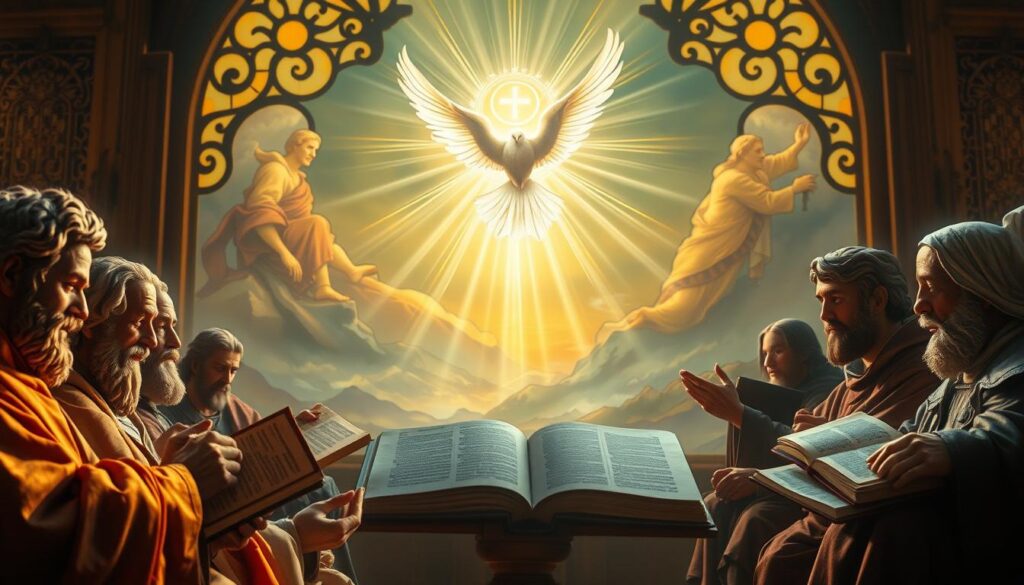
The Bible’s opening lines introduce a life-giving force hovering over chaos. This presence later empowered Joseph to save nations from famine and stirred prophets to speak truth. Joel’s vision—“I will pour out my spirit upon all flesh”—found explosive fulfillment when flames descended on Jesus’ followers. Ordinary men and women suddenly spoke with divine boldness, as Acts 5:31 vividly describes.
Pentecost wasn’t a one-time event. The Book of Acts shows this power continually transforming believers into courageous witnesses. Sons and daughters across generations now share inspired insights, proving Joel’s words remain alive today.
Ancient Traditions and Doctrinal Developments
Early Christians faced heated debates about the Spirit’s nature. Fourth-century councils settled these questions with clear declarations: “The Lord, the giver of life… who proceeds from the Father.” Giants like Athanasius and Basil defended these truths, ensuring teachings matched biblical revelations.
Their work established pneumatology—the study of spiritual realities—as central to faith. Centuries of prayer and reflection deepened understanding, showing how ancient practices and modern worship both flow from the same source. This living tradition helps believers worldwide stay anchored in timeless truth while embracing fresh expressions of hope.
Embracing the Gifts and Charismatic Elements of the Holy Spirit
Every generation discovers fresh ways to engage with sacred empowerment. The seven gifts described in Isaiah 11:2-3—like wisdom and courage—equip believers to face modern challenges. These timeless tools foster spiritual growth and service, shaping how communities live out their faith.
Spiritual Gifts, Fruits, and the Transformative Power
Paul’s letters reveal a vibrant mix of supernatural abilities for building up the Church. From healing to prophecy, these manifestations remind us divine power remains active today. The fruits listed in Galatians 5:22-23 show inner transformation—love and patience blooming in surrendered hearts.
| Type | Gifts/Fruits | Purpose |
|---|---|---|
| Traditional Gifts | Wisdom, Fortitude, Piety | Guidance for righteous living |
| Charismatic Gifts | Healing, Prophecy, Tongues | Strengthen community faith |
| Spiritual Fruits | Joy, Peace, Self-Control | Reflect divine character |
Invoking the Divine Presence in Personal and Community Prayer
Jesus promised, “Your Father will give the Spirit to those who ask” (Luke 11:13). Simple prayers like “Come, Holy Spirit” open doors to deeper connection. Group worship amplifies this experience—especially in Catholic renewal movements where hands-on prayer mirrors apostolic traditions.
Life in the Spirit Seminars teach practical ways to welcome sacred power. Through scripture study and communal support, participants learn to recognize subtle promptings. This balanced approach keeps extraordinary gifts grounded in Church teaching while igniting fresh passion for sharing faith.
Conclusion
Personal transformation stories highlight the active role of a divine guide in everyday faith. When believers open their hearts to this power, ordinary lives become extraordinary testimonies. Think of Peter—once hiding in fear, later preaching boldly to thousands. His change began when he embraced the person blessed trinity’s presence fully.
This same relationship between father son and believers continues today. Through prayer and sacraments, people discover strength beyond their own. The catholic church teaches that being filled holy spirit isn’t reserved for saints—it’s available to all who seek truth.
Daily life becomes richer when we recognize these gifts. Simple acts of kindness, moments of courage, and quiet prayers all carry divine fingerprints. Like wind shaping landscapes over time, this sacred partnership reshapes hearts and communities—one faithful step at a time.
FAQ
How does the Bible describe the Holy Spirit’s role in creation?
In Genesis 1:2, the divine presence is depicted as moving over the waters, symbolizing His active role in shaping the world. This foundational text highlights His ongoing work in sustaining life and guiding creation.
What is the connection between the Holy Spirit and sacraments like Baptism?
During Baptism and Confirmation, believers receive grace through the third person of the Trinity. These sacraments mark a spiritual rebirth, empowering individuals to live out their faith with courage and wisdom.
Why is Pentecost significant in understanding the Holy Spirit?
Pentecost, described in Acts 2, marks the moment when early followers were filled with divine power. This event enabled them to spread teachings boldly, fulfilling prophecies like Joel 2:28 about sons and daughters prophesying.
How do the “gifts” mentioned in Isaiah 11:2 apply to daily life?
The seven gifts—wisdom, understanding, counsel, fortitude, knowledge, piety, and fear of the Lord—help believers navigate challenges. They foster virtues like patience and kindness, shaping actions rooted in love and truth.
Can someone experience the Holy Spirit outside formal prayer?
Absolutely! The Catechism teaches that the divine presence works through ordinary moments, relationships, and acts of service. Many feel inspired during quiet reflection, community gatherings, or even acts of compassion.
How does the Holy Spirit relate to the Trinity?
As the third person of the Trinity, He proceeds from the Father and Son, uniting them in love. This bond reflects how God’s grace flows into the world, inviting people into deeper communion with the divine.