At the heart of Christian worship lies a sacred practice that unites believers across generations. Considered the “source and summit” of spiritual life, this sacrament offers a profound connection to faith traditions and divine grace. Through it, followers experience a living bond with the foundational events of their beliefs.
Central to this practice is the belief in transubstantiation—the transformation of bread and wine into the essence of Christ during worship services. This concept isn’t merely symbolic but represents a tangible expression of divine presence. It serves as both nourishment for daily spiritual journeys and the ultimate expression of communal devotion.
Many find in this ritual a renewal of purpose and a reminder of shared values. It bridges individual reflection with collective celebration, anchoring worship in timeless truths while inviting personal growth. Understanding its role helps deepen appreciation for its enduring relevance in modern faith communities.
Key Takeaways
- Regarded as the spiritual foundation and highest expression of faith
- Involves a sacred transformation during worship services
- Creates direct ties to foundational religious events
- Balances personal spirituality with community connection
- Maintains vital importance in contemporary practice
The Historical Roots of the Catholic Eucharist
Centuries of faith traditions trace their origins to a simple meal shared in an upper room. This moment marked the beginning of a practice that would shape spiritual life through time. Let’s explore how this sacred meal became Christianity’s cornerstone ritual.
Biblical Foundations and Early Traditions
The story begins with Jesus Christ’s final meal with his disciples. During this gathering, he took bread wine, blessed them, and declared: “This is my body… do this in remembrance of me” (Luke 22:19-20). These words became the blueprint for holy communion.
Early followers took this instruction seriously. The Acts of Apostles shows believers breaking bread daily. These meals weren’t casual snacks—they served as spiritual nourishment and community bonding moments.
Development in the Early Church
By the second century, written accounts like the Didache reveal structured prayers during bread wine rituals. Leaders emphasized maintaining Jesus Christ’s original words while adapting to local cultures.
| Aspect | Early Church Practices | Later Developments |
|---|---|---|
| Elements Used | Bread and wine | Refined liturgical elements |
| Frequency | Daily gatherings | Weekly celebration |
| Ritual Focus | Communal meals | Structured liturgy |
Through time, these holy communion gatherings became more formal. Yet they kept their core purpose—connecting believers to that transformative night in Jerusalem.
Understanding the Catholic Eucharist
What’s in a name? For this sacred practice, everything. The term holy eucharist springs from the Greek word eucharistia, meaning “thanksgiving.” This linguistic root reveals its core purpose—a ritual of gratitude connecting participants to a 2,000-year-old spiritual legacy.
More than symbolic, it’s considered both sacrament and sacrifice. As a sacrament, it offers divine grace through tangible elements. As a sacrifice, it re-presents Christ’s offering at Calvary. This dual nature makes it unique among religious rites, blending remembrance with active participation.
Central to the practice are bread wine, elements transformed during worship. Followers believe these simple items become vessels of sacred presence while keeping their physical traits. This paradox—visible simplicity hiding profound mystery—fuels deep reverence during gatherings.
Every celebration ties modern worshippers to that ancient upper room. Through shared bread wine and prayers of thanksgiving, communities bridge time and space. As one early text states: “We give you thanks for this spiritual drink and heavenly bread.”
This ritual remains Christianity’s heartbeat—a living link to foundational events. Its enduring power lies in balancing theological depth with accessible practice, inviting all to taste unity beyond words.
The Real Presence: Body, Blood, and Divinity
A foundational teaching distinguishes this sacred practice from other rituals. At its core lies the belief that divine essence permeates ordinary elements through divine action. This understanding shapes worship patterns and personal devotion across generations.
Scriptural Evidence and Biblical Insights
Jesus’ words in John’s Gospel leave little room for symbolic interpretation: “Whoever eats my flesh and drinks my blood remains in me, and I in them” (John 6:56). Early followers took these statements literally, as shown in ancient texts describing meal rituals as “medicine of immortality”.

Challenging Common Misconceptions
Some assume the ritual involves mere memorial symbols. However, the real presence teaching affirms that Christ’s body blood becomes truly present through consecration. This explains why believers kneel before reserved elements and handle them with special care.
| Common Misconception | Actual Teaching |
|---|---|
| Symbolic representation | Substantial transformation |
| Spiritual metaphor | Physical and spiritual reality |
| Memorial meal | Living encounter |
As one medieval theologian noted: “What you see is the appearance of bread, but what it contains is divine reality.” This perspective maintains both mystery and tangible connection to sacred events.
The Mystery of Transubstantiation
Behind every profound spiritual practice lies a concept that challenges and inspires. Transubstantiation describes how ordinary elements carry extraordinary meaning during worship. This teaching shows how physical objects become vessels of sacred connection through divine action.
Substance Versus Accidents
Imagine holding a piece of bread that becomes body blood in essence while keeping its familiar traits. That’s transubstantiation—where the substance (core reality) changes completely, while accidents (physical qualities) stay the same. The substance of bread wine transforms into Christ’s presence through consecration prayers.
Here’s why this matters: even though the elements look unchanged, believers affirm they’ve received spiritual nourishment. As Thomas Aquinas wrote: “What appears to the senses endures, while what faith perceives transcends.”
| Aspect | Substance | Accidents |
|---|---|---|
| Definition | Core identity | Physical traits |
| Bread Example | Christ’s body | Texture, taste |
| Wine Example | Christ’s blood | Color, aroma |
This process differs from ordinary changes like baking or fermenting. When wine become body, it’s not chemical alteration but divine intervention. The elements retain their familiar forms to make sacred truths accessible.
Why maintain physical appearances? It allows people to encounter mystery without confusion. The substance bread wine transformation invites trust beyond human senses—a cornerstone of faith communities for centuries.
Exploring the Sacramental Nature of the Eucharist
What transforms ordinary bread into a bridge between heaven and earth? This sacrament operates on two powerful levels—as a gift of life and a living memorial. Through it, participants encounter divine love in its most tangible form while strengthening bonds with fellow believers.
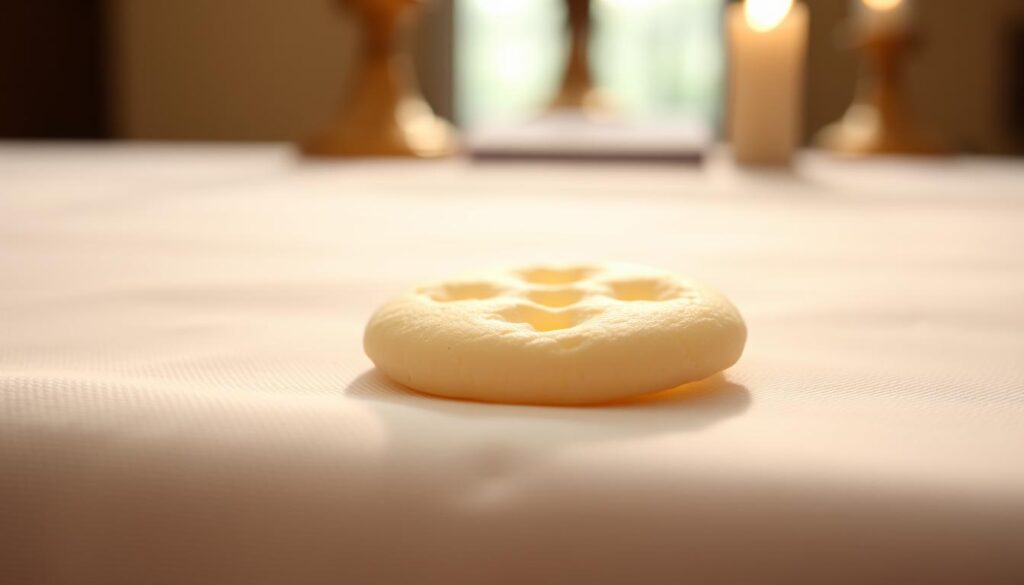
Sacrificial Elements and Thanksgiving
At every gathering, the sacrifice of Calvary becomes present anew. As one early Christian text notes: “We proclaim your death until you come again.” This isn’t about repeating history but reconnecting with its life-changing power. The body blood offered once now nourishes souls across generations.
True to its name—meaning “thanksgiving”—this ritual overflows with gratitude. Worshipers don’t just remember Christ’s love; they taste it. Communion becomes a shared “thank you” whispered through broken bread and shared cups.
Communal and Spiritual Nourishment
This sacrament feeds both individuals and communities. Receiving the body blood works like spiritual glue—binding hearts to Christ and to each other. As one modern believer shared: “It’s not just my meal—it’s ours.”
The table becomes a place of mutual strengthening. Through this life-giving practice, personal faith grows while community ties deepen. What begins as personal nourishment blossoms into collective vitality—the true mark of living communion.
The Role of the Priest and Liturgical Vestments
When the community gathers for worship, one figure stands at the intersection of heaven and earth. The priest serves as both guide and conduit during holy communion, wearing garments that tell a story older than words. These visual elements work together to reveal deeper truths about sacred roles.
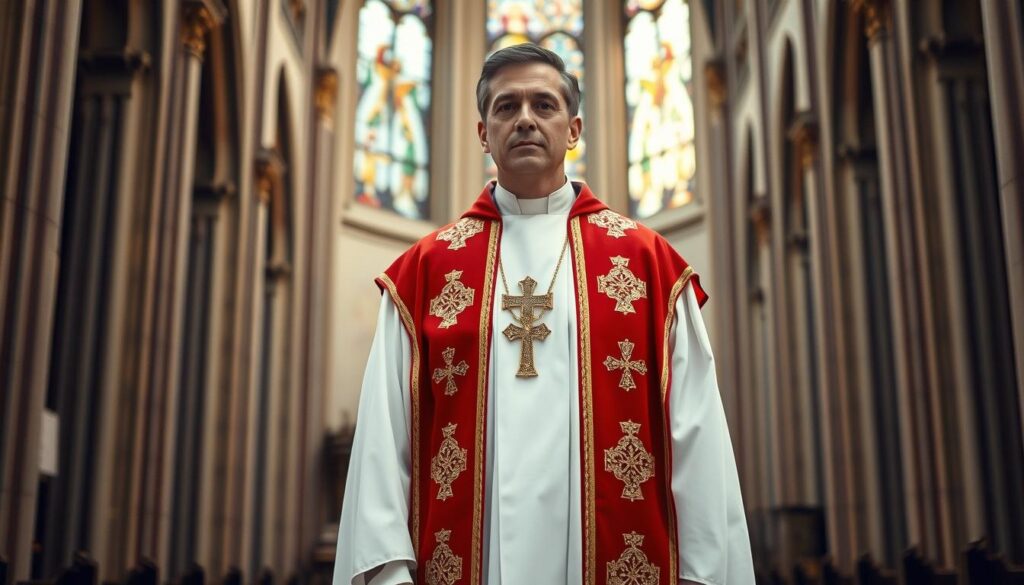
Acting in Persona Christi
During consecration prayers, the priest becomes more than himself. As the Catechism states: “He acts in the person of Christ… making present the sacrifice of the cross.” This sacred responsibility explains why only ordained ministers can perform this act—they continue a chain of authority stretching back to the original apostles.
Symbolism in Clerical Attire
Every vestment carries meaning. The alb represents purity, while the chasuble symbolizes charity. Through these garments, the priest visually steps into his role as an icon of Christ’s service.
| Vestment | Symbolic Meaning |
|---|---|
| Stole | Authority to administer sacraments |
| Cincture | Commitment to chastity |
| Chasuble | Yoke of Christ’s love |
As one theologian observed: “The vestments remind us that Christ gives Himself through human hands.” This blend of earthly materials and divine purpose makes every Mass both humble and cosmic—a moment where body blood Christ becomes present through visible signs.
Celebrating Holy Mass: The Sacred Sacrifice
Every ritual in the Mass weaves together ancient traditions and living faith. At its core lies a sacred exchange—ordinary gifts transformed into divine nourishment through precise words and actions. This celebration follows patterns established over centuries, connecting modern worshippers to biblical roots.
Rituals and Liturgical Practices
The bread wine used must meet strict standards: unleavened wheat bread and pure grape wine mixed with water. These rules honor Christ’s Last Supper while ensuring continuity across generations. As Canon Law states, the elements remain simple—“recently made” and free from spoilage.
Key moments shape the sacrifice. During consecration, the priest speaks Jesus’ own words: “This is my body… my blood.” The congregation responds with ancient acclamations, joining their voices to heaven’s chorus. Elevated hosts and chalices become visual anchors for awe.
Mixing water with wine carries deep meaning—symbolizing humanity’s union with the divine. This small gesture reminds believers they’re part of something greater. Through holy communion, shared participation turns individual hearts into a unified body.
From gift preparation to final blessing, every action feeds both soul and community. The celebration isn’t just observed—it’s lived, tasted, and carried into the world.
FAQ
Why is the Eucharist considered the source of Christian life?
It’s viewed as the spiritual “summit” because believers encounter Christ’s real presence. Through bread and wine, the faithful receive grace, unity with God, and strength to live their faith daily.
How does the Blessed Sacrament connect to ancient traditions?
Early Christians gathered for communal meals, echoing Jesus’ Last Supper. Writings from figures like St. Justin Martyr show how rituals evolved, emphasizing thanksgiving and Christ’s sacrifice on the cross.
What’s the difference between substance and accidents in transubstantiation?
The physical properties of bread and wine (accidents) remain, but their essence (substance) transforms into Christ’s body and blood. This change reflects divine action, not scientific alteration.
Is Holy Communion just a symbolic act?
No—it’s more than symbolism. The Real Presence means Christ is truly there, offering spiritual nourishment. This belief stems from Scripture, like John 6:53, where Jesus emphasizes eating His flesh for eternal life.
Why do priests wear special vestments during Mass?
Liturgical garments symbolize their role as acting “in persona Christi” (in the person of Christ). Each piece, like the chasuble or stole, represents humility, service, and connection to sacred traditions.
How does the Mass reflect sacrifice?
The liturgy re-presents Christ’s sacrifice on Calvary in an unbloodied way. Offerings of bread and wine become His body and blood, uniting the congregation with His redeeming act.
Can non-Catholics receive the Blessed Sacrament?
Typically, it’s reserved for those in full communion with the Church. This practice honors the sacrament’s sacredness and ensures unity in belief about its significance.
What role does the Holy Spirit play in the liturgy?
The Spirit transforms the gifts on the altar and unites the community. This “epiclesis” prayer invites divine power to make the bread and wine Christ’s body and blood.