Welcome to your guide to understanding one of the most recognizable religious symbols globally. This sacred banner carries centuries of spiritual heritage, serving as a bridge between ancient traditions and modern faith practices. Its design tells a story of unity, authority, and devotion that resonates with millions.
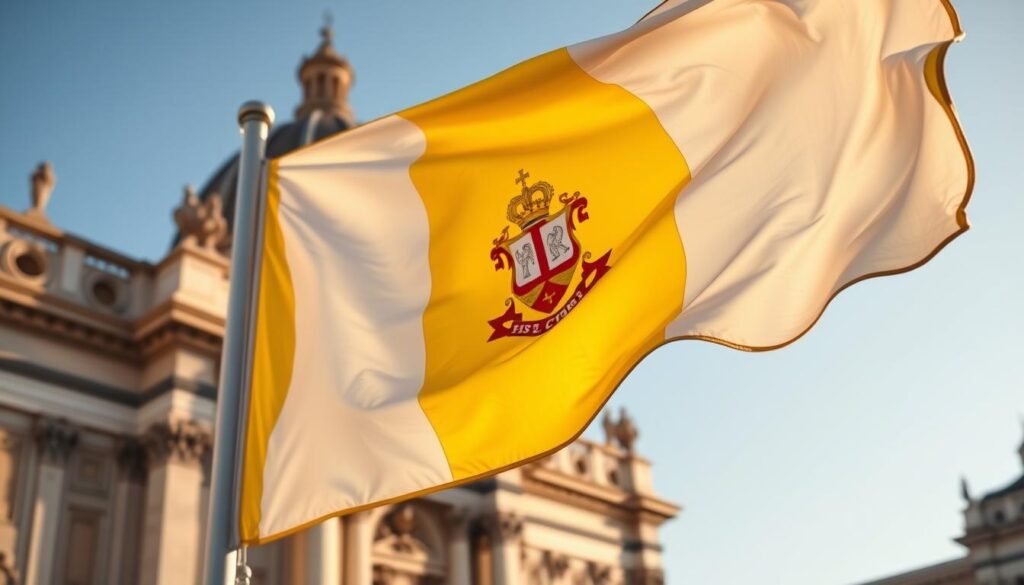
Dive deeper into the visual language of this emblem. You’ll find two vertical bands of gold and white, colors chosen for their spiritual significance. The crossed keys of Saint Peter and papal tiara at its center symbolize connections to divine authority and ecclesiastical governance.
Beyond its visual elements, this symbol holds practical importance for believers. Its square shape distinguishes it from national banners, reflecting its unique role in representing spiritual leadership rather than territorial claims. Many display it during religious ceremonies or as personal expressions of faith.
This exploration will help you appreciate how tradition meets modern symbolism. We’ll examine its ties to Vatican City governance and why authentic reproductions matter to collectors and worshippers alike. Whether you’re curious about history or considering acquiring one, you’ll gain valuable insights here.
Key Takeaways
- Represents papal authority through distinctive symbols like crossed keys
- Features unique color combinations with deep spiritual meanings
- Square format distinguishes it from standard national banners
- Direct connection to Vatican City’s governance structure
- Quality materials ensure accurate representation for display
Introduction to the Catholicism Flag
Discover the emblem that bridges ancient tradition with modern faith practices. Often referred to as the Papal Flag or Holy See banner, this symbol carries weight far beyond its visual design. Its square format and sacred imagery make it instantly recognizable to millions worldwide.
Your Guide to Sacred Symbolism
This resource offers essential information for collectors, worshippers, and history lovers alike. Whether you’re seeking to display it respectfully or understand its spiritual roots, you’ll find practical insights here. The banner’s role extends beyond decoration—it’s a tangible connection to centuries of religious heritage.
Standout Features Explained
What sets this emblem apart? Three key traits define it:
- Unique proportions: One of only two square national banners globally
- Sacred geometry: The vertical gold-white division reflects spiritual balance
- Dual representation: Symbolizes both Vatican City’s governance and the Holy See‘s global influence
Unlike rectangular national flags, this square design emphasizes its non-territorial purpose. The crossed keys motif directly ties to Saint Peter’s biblical legacy, reinforcing the Catholic Church‘s foundational stories. When displayed, it serves as more than decor—it’s a statement of shared identity for 1.3 billion adherents worldwide.
Catholicism Flag: History and Symbolism
A pivotal moment in religious history unfolded on June 7, 1929. That’s when Pope Pius XI signed the Lateran Treaty, establishing Vatican City as the world’s smallest sovereign state. This agreement ended 59 years of tension between the Holy See and Italy.
Historical Origins and the Papal Legacy
The banner’s design honors its roots in the Papal States, which ruled central Italy for over 1,100 years. From 756 to 1870, these territories showcased the Catholic Church‘s dual role as spiritual guide and political power. The keys of Saint Peter first appeared on banners during this era.
Influence of the Lateran Treaty and Papal States
Three key impacts shaped modern symbolism:
- The Lateran Treaty restored territorial sovereignty lost in 1870
- Design elements directly reference the Papal States‘ heraldry
- Gold and white colors maintain continuity across centuries
Before 1929, popes lived as “prisoners” within Vatican walls. The Holy See regained independence through diplomatic mastery, creating a visible symbol of faith’s enduring influence. Today, the banner bridges ancient traditions with modern governance.
Design Elements and Symbolic Details
Every element of this sacred banner tells a story through shape, shade, and sacred geometry. Let’s decode its visual language piece by piece.
Significance of the Gold and White Colors
The vertical bands aren’t just pretty stripes. On the left side, gold shines as the color of spiritual authority. The white side carries silver’s earthly meaning in heraldic tradition. Together, they mirror the dual roles of the holy see – guiding souls and engaging with worldly matters.
The Crossed Keys, Papal Tiara, and Red Cord
At the heart of the coat arms, two keys cross like ancient gatekeepers. The golden key points upward for divine power, while the silver key tilts downward for temporal rule. This arrangement follows centuries-old holy see heraldry rules.
Three striking features complete the design:
- The papal tiara crowns the composition, symbolizing leadership continuity
- A red cord binds the keys, representing unity between heaven and earth
- Matthew 16:19’s promise to saint peter comes alive in the crossed keys
Did you know? The silver key always sits on the right side when facing the coat arms. This placement follows strict heraldic protocols established when many European nations adopted similar symbolic systems.
Modern reproductions maintain these details with precision. From the color shades to the keys‘ angles, each choice preserves eight centuries of holy see tradition. As one Vatican historian noted: “These symbols don’t just represent power – they visually connect believers to Saint Peter’s legacy.”
Materials, Construction, and Quality
Durability meets sacred symbolism in the creation of these banners. Crafters combine modern engineering with respect for tradition to produce emblems that withstand both time and elements.

200-Denier Nylon and Weather Resistance
Premium banners use 200-denier nylon – a fabric chosen for its strength. This material resists sun damage better than polyester or cotton. Colors stay vibrant through seasons of outdoor display.
SolarMax™ technology takes protection further. It blocks harmful UV rays while letting gold and white hues shine. Your emblem won’t fade quickly like cheaper alternatives.
Canvas Heading and Reinforced Details
The canvas heading along the hoist side adds crucial support. This thick strip handles stress from wind gusts. Four rows of stitching lock edges in place securely.
Brass grommets anchor the banner without rusting. These corrosion-resistant rings work in coastal areas and rainy climates. They fit standard poles while maintaining a clean look.
| Feature | Benefit | Comparison |
|---|---|---|
| 200D Nylon | 5+ year color retention | Lasts 3x longer than polyester |
| Canvas Heading | Prevents tearing | 50% stronger than hemmed edges |
| Brass Grommets | Zero rust | Outlasts aluminum by 8 years |
| Quad Stitching | Wind resistance | Withstands 55mph gusts |
Manufacturers in the United States follow strict quality guidelines. Their expertise ensures proper proportions and symbol placement. When you choose domestic production, you support skilled craftsmanship tied to the holy see‘s values.
These construction choices matter beyond practicality. They honor the sacred purpose of the emblem while meeting real-world needs. As one artisan noted: “We build durability into every stitch because these aren’t just flags – they’re declarations of faith.”
Cultural and Religious Significance
More than fabric and colors, this emblem weaves together earthly governance and heavenly purpose. Its presence in ceremonies and diplomatic settings reveals layers of meaning that transcend borders.
Connection to Vatican City and the Holy See
The Holy See operates as both spiritual guide and sovereign state. While Vatican City covers just 110 acres, its banner represents authority recognized by 180 nations. This unique arrangement lets the Roman Catholic Church engage globally while maintaining independence.
Three key facts define this relationship:
- The popes serve dual roles as religious leaders and Vatican City‘s heads of state
- Diplomatic agreements flow through the Holy See, not the physical territory
- Arms holy see symbols appear on official documents worldwide
Spiritual Meaning Behind Symbolic Elements
Every detail carries divine weight. The crossed keys mirror Jesus’ promise to Saint Peter in Matthew 16:19 – heavenly power binding earthly matters. Gold threads in the tiara symbolize the Roman Catholic commitment to spiritual wealth over material gain.
When displayed, the emblem does more than identify. It silently proclaims unity across 1.3 billion believers. For many Catholic Church members, seeing its white-and-gold pattern sparks reminders of shared heritage and hope.
FAQ
What do the colors on the Vatican City flag represent?
The gold and white stripes symbolize spiritual and earthly power. Gold reflects divine light, while white represents purity and peace. These colors have been linked to the Papacy since the early 19th century.
How did the Lateran Treaty influence the flag’s design?
Signed in 1929, the Lateran Treaty established Vatican City as a sovereign state. This agreement solidified the flag’s status as an official national emblem, blending historical Papal States imagery with modern statehood.
Why are crossed keys and a papal tiara featured on the coat of arms?
The keys, one gold and one silver, symbolize Saint Peter’s authority to bind and loose in heaven and earth. The tiara represents the Pope’s spiritual leadership. A red cord unites them, signifying the Church’s global mission.
Is the flag suitable for outdoor use?
Yes! Made from 200-denier nylon, it resists fading and tearing. Reinforced stitching, brass grommets, and a canvas heading ensure durability in wind, rain, or sun, making it ideal for long-term display.
What’s the difference between the Holy See and Vatican City?
Vatican City is the sovereign state, while the Holy See is the spiritual and governing entity of the Roman Catholic Church. The flag represents both, highlighting their intertwined roles in global religious and diplomatic affairs.
Can I purchase an official version of this flag?
Authentic flags are sold through authorized religious goods retailers or specialty vendors. Look for precise design details, like the correct shade of gold and accurate key placement, to ensure authenticity.