The United Methodist Church Discipline is a foundational document that outlines the principles, practices, and policies of the church.
It serves as a guide for church governance, clergy accountability, and dispute resolution, shaping the identity and practices of the United Methodist Church.
Understanding the key insights of this document is essential for church members, clergy, and leaders to navigate the complexities of church operations.
Key Takeaways
- The Discipline is a crucial document for church governance.
- It outlines principles and practices for clergy accountability.
- The document provides guidance on dispute resolution.
- Understanding the Discipline is vital for church members and leaders.
- It shapes the identity and practices of the United Methodist Church.
Understanding the United Methodist Church Discipline
The Discipline of the United Methodist Church is more than just a set of rules; it’s a reflection of the church’s theology and practice. It serves as a guide for church governance, outlining the principles and practices that shape the church’s decision-making processes.
Definition and Purpose
The Discipline is defined as “the church’s effort to reflect upon God’s gracious action in our lives” (¶105). Its primary purpose is to provide a framework for the church’s organization and operations, ensuring that it remains faithful to its theological heritage.
The Discipline outlines the church’s polity, or governance structure, which is connectional in nature. This means that the church is organized into a network of conferences and jurisdictions that work together to achieve common goals.
Historical Context
The United Methodist Church Discipline has evolved over time, influenced by the church’s history, theology, and cultural context. Understanding its historical context is crucial for grasping the document’s significance and relevance.
| Year | Significant Event | Impact on the Discipline |
|---|---|---|
| 1784 | Formation of the Methodist Episcopal Church | Established the foundation for the Discipline |
| 1939 | Uniting of Methodist Episcopal Church and Methodist Episcopal Church, South | Led to the creation of a unified Discipline |
| 1968 | Merger with the Evangelical United Brethren | Resulted in the current United Methodist Church Discipline |
Importance for Church Governance
The Discipline plays a vital role in umc polity, guiding the church’s decision-making processes and ensuring that it remains accountable to its members and the broader community.
By understanding the Discipline, church leaders can better navigate the complexities of church governance, making informed decisions that align with the church’s theological heritage and values.
The Structure of the United Methodist Church Discipline
Understanding the structure of the United Methodist Church Discipline is crucial for grasping how the church operates. The Discipline outlines the governance system, which is vital for the church’s accountability processes and adherence to its theological heritage.
Conference Levels and Their Roles
The United Methodist Church is organized into multiple conference levels, each with distinct roles and responsibilities. These include the General Conference, jurisdictional conferences, and annual conferences.
The General Conference is the highest level of authority in the UMC, meeting every four years to make decisions on church law and policies. Jurisdictional conferences are regional gatherings that oversee the election of bishops and the establishment of church policies within their jurisdictions. Annual conferences are the basic units of church organization, responsible for the ordination of clergy and the management of local church affairs.
| Conference Level | Primary Roles |
|---|---|
| General Conference | Legislative authority, policy-making |
| Jurisdictional Conferences | Bishop elections, regional policy |
| Annual Conferences | Clergy ordination, local church management |
Local Church Governance
Local church governance is another critical aspect of the UMC’s structure. Each local church has its own governing body, which is responsible for making decisions on church operations and implementing policies set by the higher conference levels.
“The local church is the basic unit of the United Methodist Church, where members gather for worship, fellowship, and service.”
Connectional System Explained
The connectional system is a hallmark of the United Methodist Church, linking local churches with the broader denomination. This system facilitates cooperation and coordination among churches, ensuring a unified approach to ministry and mission.
The connectional system enables the sharing of resources, expertise, and best practices across the denomination, enhancing the overall effectiveness of the church’s mission.
Key Topics in Church Discipline
The Church Discipline covers a range of vital subjects that are critical for maintaining order and harmony within the United Methodist Church. These topics are fundamental to understanding the church’s governance structure and operational guidelines.
Membership and Commitments
Membership in the United Methodist Church involves certain commitments and responsibilities. The United Methodist Book of Discipline outlines these expectations, including participation in worship, financial support, and engagement in community service. Members are also expected to adhere to the church’s doctrines and practices.
The process of becoming a member involves a period of discernment and preparation, culminating in a public profession of faith. This process is designed to ensure that new members understand the church’s teachings and are committed to its community.
Clergy Accountability
Clergy accountability is a critical aspect of Church Discipline, ensuring that clergy members uphold the highest standards of conduct and integrity. The UMC Judicial Council plays a significant role in this process, providing guidance and oversight in matters of clergy conduct and church law.
The accountability process involves regular evaluations and assessments, as well as procedures for addressing misconduct or unethical behavior. This framework helps maintain trust and integrity within the clergy and the broader church community.
Dispute Resolution Procedures
Effective dispute resolution is essential for maintaining harmony within the church. The Church Discipline outlines procedures for resolving conflicts and disputes, emphasizing the importance of grace, forgiveness, and reconciliation.
These procedures involve mediation, negotiation, and, when necessary, formal disciplinary actions. The goal is to resolve disputes in a manner that is fair, respectful, and consistent with the church’s teachings.
In summary, the key topics in Church Discipline are designed to promote a cohesive and functioning church community. By understanding and adhering to these guidelines, members and clergy can work together to achieve the church’s mission and objectives.
The Role of the Book of Discipline
The Book of Discipline serves as the backbone of the United Methodist Church’s organizational structure and theological stance. It is a comprehensive document that outlines the principles, practices, and policies of the church, providing a framework for governance and decision-making.
Understanding the Book of Discipline is crucial for church members, clergy, and leaders as it shapes the identity and practices of the United Methodist Church. The document covers various aspects, including membership, clergy accountability, and dispute resolution procedures, which are integral to the umc complaint process.
Overview of the Book
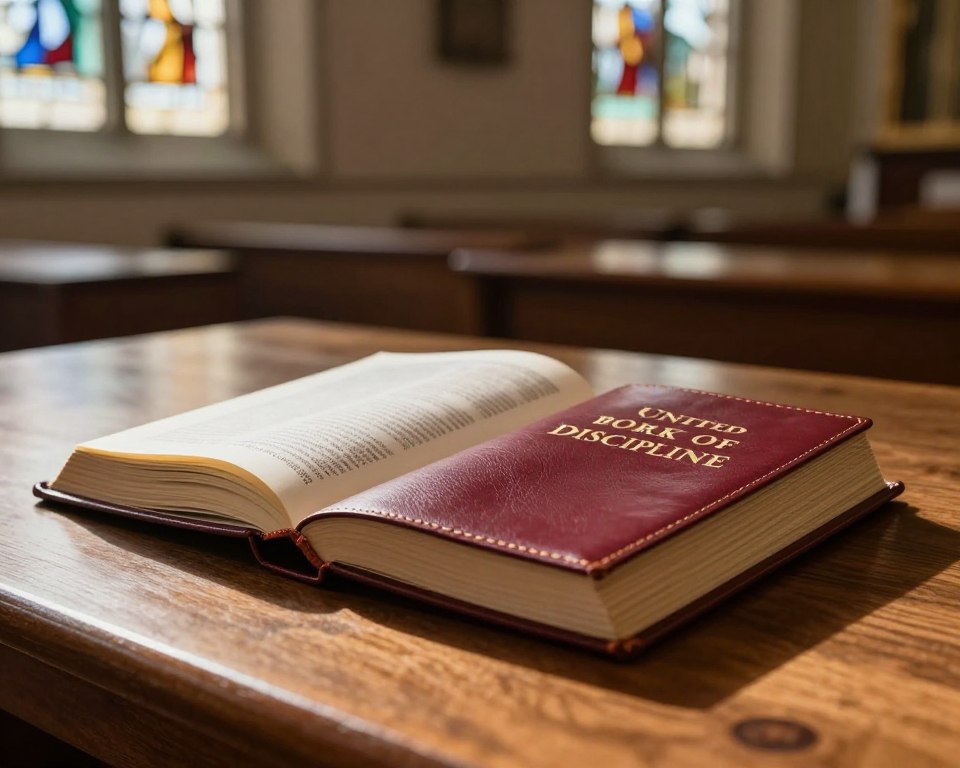
The Book of Discipline is a detailed guide that encompasses the church’s doctrinal standards, liturgical practices, and organizational structure. It includes the United Methodist Doctrinal Standards, which form the theological foundation of the church. The book is designed to be a resource for churches to operate in harmony with the denomination’s beliefs and practices.
Recent Revisions and Updates
The Book of Discipline is regularly updated to reflect changes in the church’s theology, governance, and cultural context. These revisions ensure that the church remains relevant and responsive to the needs of its members and the wider community. Recent updates have addressed various issues, including inclusivity and social justice initiatives, demonstrating the church’s commitment to adapting to contemporary challenges.
How to Access the Book
The Book of Discipline is available through various channels, making it accessible to church members and leaders. It can be obtained in print or digital formats from the official United Methodist Church website or through denominational resources. Ensuring access to the most current version is essential for those involved in church governance and decision-making processes.
By understanding and utilizing the Book of Discipline, the United Methodist Church can maintain its integrity and continue to guide its members according to its doctrinal standards and practices.
Church Modalities and Their Impact
Understanding the different church modalities is crucial for grasping the nuances of the United Methodist Church Discipline. The UMC has evolved to encompass a variety of church settings, each with its unique characteristics and challenges.
The diversity in church modalities within the UMC includes traditional, emerging, and multi-site churches. Each modality has its own set of expectations and challenges, as outlined in the UMC Discipline.
Traditional vs. Emerging Churches
Traditional churches often follow established practices and structures, while emerging churches are more adaptable and innovative in their approaches. The UMC Discipline acknowledges the importance of both modalities in achieving the church’s mission.
Emerging churches, in particular, are encouraged to be contextually relevant, engaging with their communities in meaningful ways. This approach is reflected in the UMC’s emphasis on adaptability and mission.
Multi-Site Settings
Multi-site settings represent another significant modality within the UMC, where a single church operates across multiple locations. This setup presents both opportunities and challenges for governance and community engagement.
The UMC Discipline provides guidelines for multi-site churches, addressing issues such as clergy accountability, resource allocation, and maintaining a cohesive church identity across different locations.
Impact on Church Discipline
The various church modalities have a direct impact on the application of UMC Discipline. Understanding these modalities is essential for effective governance, dispute resolution, and clergy accountability.
By acknowledging and supporting diverse church modalities, the UMC demonstrates its commitment to being a dynamic and inclusive denomination, capable of adapting to changing contexts while remaining true to its core principles.
Conflict and Disciplinary Actions
The United Methodist Church’s approach to conflict and disciplinary actions is rooted in its commitment to fostering a community based on mutual respect and understanding. The United Methodist Church Discipline outlines the types of disciplinary actions that may be taken, including procedures for handling disagreements and restoring individuals and communities.
Types of Disciplinary Actions
Disciplinary actions within the United Methodist Church are designed to address various infractions and misconduct. These actions are guided by the principles of fairness, justice, and compassion.
- Verbal warnings and counseling
- Formal charges and trials
- Temporary or permanent removal from office or membership
Each type of disciplinary action is tailored to the specific circumstances, ensuring that the response is proportionate to the offense.
Handling Disagreements with Grace
Handling disagreements with grace is a critical aspect of maintaining harmony within the church. The United Methodist Church encourages its members to approach conflicts with empathy and understanding.
The process involves:
- Active listening to understand the perspectives of all parties involved
- Mediation by church leaders or designated mediators
- Prayer and reflection to seek guidance and resolution
Restoration Processes
Restoration processes are essential for healing and reconciliation after a conflict or disciplinary action. The church emphasizes the importance of restoring individuals and communities.
| Restoration Steps | Description |
|---|---|
| 1. Acknowledgment | Acknowledging the hurt or wrongdoing and taking responsibility |
| 2. Reconciliation | Efforts towards healing and rebuilding relationships |
| 3. Reintegration | Welcoming individuals back into the community with support and understanding |
By following these steps, the United Methodist Church aims to create an environment where conflicts are resolved constructively, and members can grow spiritually.
Inclusivity in the United Methodist Church
The United Methodist Church has been at the forefront of promoting inclusivity within its community. This commitment is evident in various aspects of its Book of Discipline, which outlines the church’s stance on several key issues.
LGBTQ+ Inclusion in Church Discipline
The United Methodist Church’s Book of Discipline addresses issues related to LGBTQ+ inclusion, reflecting the church’s efforts to be welcoming and affirming. The UMC Judicial Council plays a crucial role in interpreting these policies and ensuring their application.
Recent debates and discussions within the church have centered around LGBTQ+ rights, highlighting the complexities of balancing traditional practices with the need for inclusivity.
Efforts Toward Diversity
The United Methodist Church is committed to diversity, recognizing the value of different backgrounds and perspectives within its community. Efforts to promote diversity include initiatives aimed at increasing representation and participation from underrepresented groups.
Outcomes of Social Justice Initiatives
The church’s social justice initiatives have led to significant outcomes, including advocacy for marginalized communities and the implementation of programs aimed at promoting equality. These efforts are guided by the principles outlined in the United Methodist Book of Discipline.
By focusing on inclusivity, diversity, and social justice, the United Methodist Church continues to evolve and adapt to the needs of its members and the broader community.
The Future of Church Discipline
The future of church discipline in the United Methodist Church is poised to be shaped by a complex interplay of policy revisions, technological advancements, and adaptive trends. As the church navigates the challenges of a rapidly changing world, its discipline will likely undergo significant transformations.
Predictions for Policy Changes
The United Methodist Church’s discipline is not static; it evolves in response to changing cultural, social, and theological contexts. Recent debates surrounding united methodist doctrinal standards have highlighted the need for potential policy changes. Some predicted changes include:
- Revisions to the UMC complaint process to make it more efficient and accessible.
- Updates to policies regarding LGBTQ+ inclusion to reflect the evolving understanding of social justice.
- Reforms aimed at increasing transparency and accountability within the church hierarchy.
These changes are expected to be shaped by ongoing discussions within the church and the broader societal context.
Role of Technology in Governance
Technology is increasingly playing a crucial role in the governance of the United Methodist Church. The use of digital platforms for communication, decision-making, and record-keeping is becoming more prevalent. Some key areas where technology is making an impact include:
- Online platforms for reporting complaints and grievances, streamlining the UMC complaint process.
- Virtual meetings and conferences, enabling greater participation and inclusivity.
- Digital documentation and archiving, improving access to historical records and church policies.
By embracing technology, the church can enhance its governance, making it more efficient, transparent, and adaptable to the needs of its members.
Trends Toward Adaptability
The United Methodist Church is trending toward greater adaptability in its discipline and governance. This involves being responsive to the needs of a diverse membership and the changing societal landscape. Key trends include:
- A greater emphasis on inclusivity and diversity, reflecting the church’s commitment to social justice.
- The development of more flexible governance structures that can respond quickly to emerging issues.
- Increased engagement with technology to facilitate communication, education, and community building.
By embracing these trends, the church can ensure that its discipline remains relevant and effective in guiding its members.
Frequently Asked Questions
As a foundational document of the United Methodist Church, the Discipline is often subject to inquiries regarding its interpretation and implementation. The complexity of the Discipline can lead to various questions and concerns among church members, clergy, and leaders.
Common Concerns and Clarifications
Many individuals seek clarification on aspects of the United Methodist Church Discipline, particularly regarding membership, clergy accountability, and dispute resolution. Understanding these elements is crucial for effective church governance and community harmony.
Some common questions revolve around the process of becoming a member, the roles and responsibilities of church leaders, and how disputes are handled within the church. Clarifying these aspects can help in fostering a more inclusive and respectful community.
Resources for Further Information
For those seeking more detailed information on the United Methodist Church Discipline, several resources are available. The official United Methodist Church website provides access to the full text of the Discipline, as well as guides and explanations to help navigate its contents.
Additionally, local church offices and regional conferences often offer workshops, training sessions, and one-on-one consultations to provide further insight into the Discipline and its application.
How to Engage with Church Discipline
Engaging with the UMC polity involves understanding its principles and actively participating in church governance. Members can engage by attending church conferences, joining committees related to church governance, and staying informed through church publications and online resources.
By engaging with the Discipline, members not only gain a deeper understanding of the church’s operational framework but also contribute to its evolution and adaptation to the needs of the community.
How to Get Involved
Getting involved in the United Methodist Church is a meaningful way to contribute to its mission and governance. The United Methodist Church Discipline encourages active participation from its members to foster a culture of inclusivity, respect, and accountability.
Local Governance Participation
Church members can participate in local governance by attending church conferences and joining committees that align with their interests and skills. Understanding the United Methodist Book of Discipline is essential for effective participation in these roles.
Volunteering for Committee Roles
Volunteering for committee roles is another way to get involved. The church has various committees, such as those focused on social justice, education, and outreach. Members can contribute their time and talents to these committees, helping to shape the church’s initiatives and programs.
Fostering Open Dialogue
Encouraging open dialogue within the church is vital for its growth and harmony. Members can promote this by engaging in respectful conversations, listening to different perspectives, and participating in church forums and discussions.
By getting involved in these ways, church members can help shape the future of the United Methodist Church, ensuring it remains a vibrant and inclusive community.
FAQ
What is the United Methodist Church Discipline?
The United Methodist Church Discipline is a foundational document that outlines the principles, practices, and governance structure of the United Methodist Church, shaping its identity and decision-making processes.
What is the purpose of the United Methodist Church Discipline?
The purpose of the Discipline is to provide a guide for church governance, outlining the theological heritage and practices that shape the church’s decision-making processes and accountability.
How is the United Methodist Church governed?
The United Methodist Church is governed through a connectional system, with multiple layers of governance, including conference levels, local church governance, and various committees and boards.
What is the role of the Book of Discipline in the United Methodist Church?
The Book of Discipline is the official document that outlines the church’s laws, policies, and procedures, providing a framework for church governance and decision-making.
How often is the Book of Discipline revised?
The Book of Discipline is revised periodically, typically every four years, to reflect changes in church polity, theology, and practices.
What are the different types of disciplinary actions in the United Methodist Church?
The United Methodist Church has various types of disciplinary actions, including complaints, charges, and trials, which are used to address clergy and church member misconduct.
How does the United Methodist Church promote inclusivity and diversity?
The United Methodist Church promotes inclusivity and diversity through various initiatives, including LGBTQ+ inclusion, diversity training, and social justice initiatives, to create a welcoming environment for all individuals.
What is the role of technology in United Methodist Church governance?
Technology plays an increasingly important role in United Methodist Church governance, facilitating communication, decision-making, and accountability through digital platforms and tools.
How can I get involved in local church governance?
You can get involved in local church governance by attending church meetings, joining committees, and participating in decision-making processes, allowing you to contribute to the life and direction of the church.
What resources are available for understanding the United Methodist Church Discipline?
Resources for understanding the United Methodist Church Discipline include the Book of Discipline, church websites, and training programs, which provide guidance and support for church members and leaders.
How can I file a complaint or charge against a clergy member?
To file a complaint or charge against a clergy member, you should follow the procedures outlined in the Book of Discipline, which involves submitting a written complaint to the appropriate authorities.
What is the Judicial Council’s role in the United Methodist Church?
The Judicial Council is the highest court in the United Methodist Church, responsible for interpreting the church’s laws and resolving disputes, providing guidance on church polity and procedure.