Everyone deserves access to nutritious meals, and community support makes this possible. Across neighborhoods, faith-based organizations step up to help families stretch their budgets while maintaining dignity. One standout option combines practical assistance with compassionate service.
These neighborhood hubs provide groceries you can prepare at home, from fresh vegetables to shelf-stable staples. Many operate with flexible schedules – some weekly, others monthly – to fit different needs. Volunteers often greet visitors with smiles rather than paperwork, though a few locations might ask for basic registration.
What makes these programs unique is their emphasis on mutual respect. Whether you need short-term help or ongoing support, the focus stays on meeting needs without judgment. Some centers even connect people with other local resources like job training or childcare services.
Key Takeaways
- Neighborhood assistance programs offer free groceries with minimal requirements
- Fresh produce and cooking essentials available weekly or monthly
- Flexible schedules accommodate working families and seniors
- Volunteers prioritize kindness and confidentiality
- Additional community resources often available onsite
lutheran food pantry: How It Works
Neighbors helping neighbors forms the backbone of these assistance programs. Volunteers transform donated items into ready-to-go packages, creating a streamlined system that respects everyone’s time and needs.
Grocery Bag Assembly Process
Teams start early, often at 9 AM, to sort through fresh produce and shelf-stable goods. At Basement Fellowship Hall, coordinators like Frankie – a decade-long leader – guide helpers through systematic packing. Tables become temporary staging areas where canned vegetables, pasta, and apples get arranged for easy access.
An assembly line method ensures fairness. Each reusable tote receives identical items, from whole-grain cereal to seasonal fruits. This approach lets groups prepare 150+ bundles monthly while maintaining quality control. Youth volunteers often handle lighter items, creating intergenerational connections during the process.
No-Appointments and Walk-In Access
Many centers keep requirements simple: just show up during distribution windows. The first Saturday monthly sees lines forming by 10:30 AM, with everyone served equally until supplies last. This model accommodates shift workers and those without reliable transportation.
“We meet people where they are,” explains a longtime coordinator. Flexible hours reflect the belief that nourishment shouldn’t wait on bureaucracy. Some locations even adjust schedules quarterly to align with community needs and volunteer availability.
Locations and Schedules for Food Assistance
Finding reliable support starts with knowing where and when help is available. Three neighborhood centers provide structured meal assistance with varied schedules to match different needs. Let’s explore their offerings.
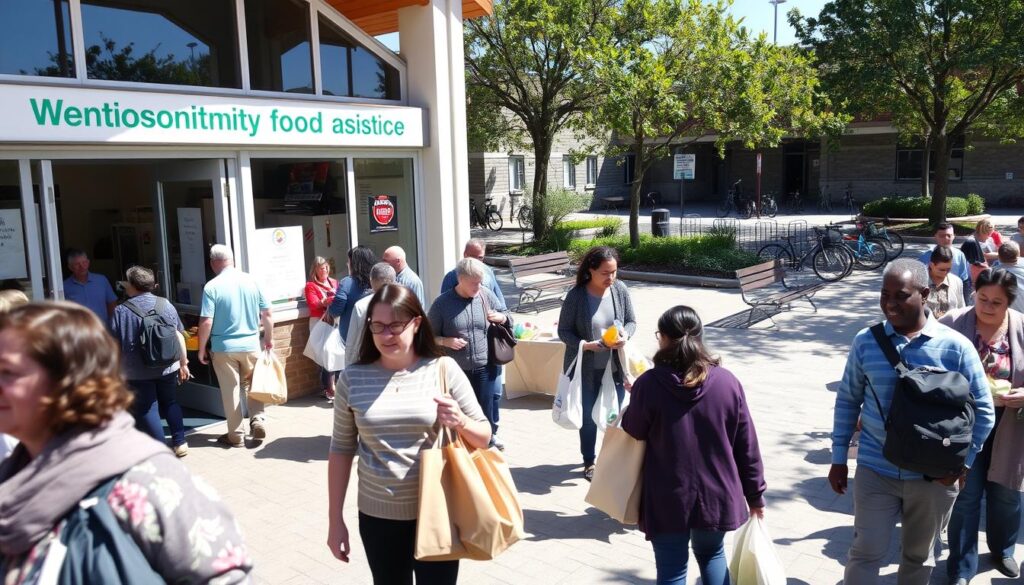
Basement Fellowship Hall – First Saturday Distribution
Mark your calendar for the first Saturday each month. Volunteers begin packing at 9 AM, with distribution running 10:30–11:30 AM. This weekend slot helps those who work weekdays. Fresh produce fills half the reusable bags, while shelf-stable items complete each bundle.
Trinity Evangelical Lutheran Church – Requirements and Offerings
At 716 Route 25A, this center serves groceries every Tuesday (10 AM–12 PM) and hot meals Thursdays (4–5 PM). “We want to ensure everyone gets fair access,” explains a coordinator. First-time visitors need to show ID and proof of local residence during initial registration.
LSS/All Saints Lutheran Church – Monthly Service Details
Second Wednesdays bring stress-free support to 164-02 Goethals Ave. From noon to 2 PM, anyone can collect pre-packed boxes without paperwork. This location prioritizes quick access, often distributing seasonal vegetables within 90 minutes.
| Location | Days/Hours | Requirements |
|---|---|---|
| Basement Fellowship Hall | 1st Saturday (10:30–11:30 AM) | None |
| Trinity Evangelical | Tue (10 AM–12 PM) Thu (4–5 PM) |
ID + Proof of Address |
| LSS/All Saints | 2nd Wed (12–2 PM) | None |
Review details online or call ahead to confirm holiday schedule changes. Multiple options ensure everyone finds convenient help.
Community Impact and Volunteer Opportunities
Morning light reveals more than sunrise – it shows neighbors preparing hope in reusable bags. Across generations and backgrounds, people unite to strengthen their communities through practical action. These efforts create lasting bonds while addressing urgent needs.
Volunteer Roles and Arrival Times
Teams gather at 9 AM sharp, transforming empty tables into assembly lines of care. Youth sort apples while adults pack rice – everyone contributes based on their abilities. Saturday mornings buzz with energy as bilingual volunteers label items and check expiration dates.
| Role | Time Commitment | Key Responsibilities |
|---|---|---|
| Grocery Packer | 9–11 AM | Assemble balanced meal kits |
| Greeter | 10 AM–12 PM | Welcome guests and manage flow |
| Donation Organizer | Flexible hours | Sort incoming produce and dry goods |
Sharing Abundance Through Service
“We’re not just moving boxes – we’re building bridges,” shares Frankie, a coordinator. Many who receive groceries return later to volunteer, blurring lines between helpers and those helped. This cycle reinforces that everyone has something valuable to give.
Weekend efforts often yield 200+ meal kits containing fresh vegetables and cooking essentials. Volunteers frequently take home extras themselves, proving that needing assistance doesn’t define someone’s worth. These spaces become classrooms where children learn compassion alongside math skills while counting cans.
Conclusion
Access to nutritious groceries shouldn’t be a maze of complicated processes. Neighborhood assistance programs simplify this through flexible schedules and multiple entry points. Some locations operate walk-in hours while others set specific days – all designed to match different routines.
What makes these services stand out? You’ll find no judgment, just practical support. Whether it’s your first visit or fifth, volunteers focus on providing fresh produce and essentials with dignity. Many centers update their offerings weekly, ensuring variety in every bag.
Need help today? Several locations welcome visitors without appointments. Others rotate availability throughout the month to serve more households. This mix of options means you can choose what works best for your situation.
These community-driven efforts prove that asking for assistance strengthens neighborhoods. Volunteers and recipients often become partners in building food security. Together, they create spaces where everyone contributes something valuable.
Next time you need support, remember: quality groceries and friendly faces await. Check local schedules online or call to confirm hours. Help exists – and it’s designed to work with your life, not against it.
FAQ
What types of groceries are typically available?
Most locations provide pre-packed bags with staples like canned goods, grains, and fresh produce. Some may also offer hygiene items or baby supplies based on donations.
Do I need to schedule an appointment?
Many pantries operate on a walk-in basis, especially during weekend distributions. Check specific locations like Basement Fellowship Hall or Trinity Evangelical Lutheran Church for their policies.
Are there income requirements to receive assistance?
Requirements vary by location. For example, Trinity Evangelical Lutheran Church may ask for basic documentation, while others serve anyone in need without questions.
How often can I visit a pantry?
Most spots allow visits once per month, but schedules differ. LSS/All Saints Lutheran Church hosts monthly distributions, while some pantries offer weekly options.
Can I volunteer if I’m not part of the church?
Absolutely! Volunteer roles like sorting donations or packing bags are open to all. Arrive early at distribution events to help set up—no prior experience needed.
What if I have dietary restrictions?
Let volunteers know when you arrive. Many pantries try to accommodate preferences by offering alternative items when available.
Do locations provide perishable items?
Yes! Fresh produce, bread, and dairy products are often included when donations allow. Selection depends on the day and partnerships with local suppliers.
How do I find updated schedules or closures?
Check the pantry’s website or call ahead. Hours for spots like Basement Fellowship Hall are usually posted online, along with holiday adjustments.