Welcome to a vibrant faith community where heartfelt worship meets purposeful action. For decades, this congregation has stood as a beacon of hope, uniting individuals through shared values and a commitment to uplifting others. Every gathering here centers on deepening connections—with truth, neighbors, and the divine calling to make a difference.
Rooted in timeless principles, the teachings here emphasize the transformative power of scripture. Dynamic messages blend wisdom with practical guidance, equipping believers to navigate life’s challenges while fostering spiritual growth. Families and individuals alike find belonging in small groups designed to nurture relationships and accountability.
What sets this fellowship apart is its seamless blend of heritage and innovation. Traditional hymns resonate alongside contemporary expressions of faith, creating worship experiences that honor the past while engaging modern hearts. Outreach initiatives—from local food drives to global missions—reflect a dedication to serving with compassion.
As you explore this article, you’ll discover how lives are shaped through meaningful discipleship, joyful service, and unwavering devotion to grace. Let’s dive into the stories and practices that define this thriving spiritual home.
Key Takeaways
- Discover a welcoming community focused on spiritual growth and practical service
- Experience worship that honors tradition while embracing modern expressions of faith
- Learn how scripture-based teaching guides personal and collective transformation
- Explore outreach programs addressing both local needs and global challenges
- Understand the balance between individual spiritual development and community impact
History of First Baptist Church Orlando and Its Spiritual Journey
Nestled in the heart of Central Florida, this congregation’s story began with a small group of believers passionate about living out their convictions. Much like early Baptist pioneers John Smyth and Thomas Helwys—who championed religious freedom in 17th-century England—the founders sought to create a space where faith and service walked hand in hand.
Inspired by Puritan ideals of personal devotion and communal responsibility, the fellowship grew steadily. By blending historic principles with fresh approaches, it became a bridge between past and present. Leaders emphasized scripture as the foundation for every decision, mirroring the commitment of early Baptist churches to let truth guide their mission.
Over decades, the community expanded its reach through food pantries, youth programs, and partnerships with global missions. This mirrored the spirit of 19th-century Baptist missionaries who saw “every person as worthy of grace”. Today, members still gather not just to learn, but to act—transforming neighborhoods while honoring their roots.
What remains unchanged? A dedication to teaching that sparks both personal growth and collective impact. From its humble start to its vibrant present, this journey reflects how timeless values can shape a thriving, compassionate future.
Exploring the baptist church bible: Core Beliefs and Practices
At the heart of this tradition lies a commitment to personal conviction and collective action. Followers prioritize direct engagement with sacred texts, trusting scripture as their ultimate guide for life’s journey. This approach shapes both individual choices and community priorities.
Central to their practice is believer’s baptism, a voluntary act symbolizing spiritual rebirth. Unlike infant ceremonies, this ritual follows a person’s conscious decision to follow their faith. Many communities use full immersion, reflecting ancient symbolism of renewal found in New Testament accounts.
| Belief/Practice | Biblical Basis | Modern Application |
|---|---|---|
| Sola Scriptura | 2 Timothy 3:16-17 | Bible study groups & personal devotionals |
| Congregational Governance | Acts 15:22 | Members vote on leadership & ministries |
| Service as Worship | James 2:17 | Food banks, disaster relief, mentorship |
Weekly gatherings blend heartfelt singing with practical teaching. Many incorporate responsive readings or spontaneous prayer, creating space for both structure and spontaneity. These moments reinforce shared values while honoring individual spiritual journeys.
Historical debates about religious freedom still shape how communities operate today. Local autonomy allows each group to address unique needs while maintaining core principles. This balance between unity and flexibility keeps ancient truths relevant in changing times.
Through these practices, members cultivate lives marked by compassion and purpose. Daily prayer routines and scripture meditation fuel acts of kindness, turning belief into tangible impact. It’s a living tradition where ancient wisdom meets modern needs.
Understanding Believer’s Baptism and Immersion Practices
At the core of many faith traditions lies a practice that bridges personal commitment with communal celebration. For those exploring this spiritual milestone, baptism represents more than ritual—it’s a declaration of renewed purpose and connection to timeless truth.
Scriptural Foundations for Voluntary Commitment
New Testament accounts highlight baptism as a conscious choice for believers. Jesus’ own example in the Jordan River (Matthew 3:16) and Paul’s teaching about “buried with Christ in baptism” (Romans 6:4) shaped this view. Early Christians like the Ethiopian official in Acts 8:36-38 requested baptism after embracing faith personally.
This approach contrasts with infant ceremonies, emphasizing individual understanding. Immersion became the preferred method, mirroring biblical descriptions and symbolizing spiritual rebirth. As one 17th-century leader noted, “Water cannot make the heart clean, but a clean heart seeks the water.”
How History Shaped Modern Traditions
John Smyth’s 1609 Amsterdam congregation ignited a movement by rejecting inherited rituals. His group practiced believer’s baptism through full immersion, reviving what they saw as New Testament patterns. This sparked debates across Europe about faith’s voluntary nature.
Immersion’s physicality—being lowered into water and raised anew—visually echoes Christ’s resurrection. Early advocates argued this method best expressed dying to old ways and embracing new life. Today, this practice continues uniting members through shared symbols while honoring personal spiritual journeys.
By grounding their actions in scripture and history, communities preserve a doctrine that celebrates both individual freedom and collective identity. It’s a living tradition where ancient patterns meet modern hearts.
The Role of Worship in Strengthening Community Faith
In moments of collective song and silence, hearts align, weaving a tapestry of trust and togetherness. Weekly gatherings become more than rituals—they’re lifelines connecting individuals through shared purpose. Blending timeless traditions with fresh expressions, these experiences remind everyone they’re part of something greater than themselves.

Harmony in Diversity
Music bridges generational gaps as gospel choirs sway alongside acoustic bands. A grandmother’s favorite hymn might follow a teen’s worship ballad, each voice valued equally. Prayer circles become safe spaces where struggles are shared and burdens lifted collectively.
Last summer’s outdoor service under oak trees saw 500+ people from different backgrounds holding hands during scripture readings. One attendee remarked, “Hearing five languages recite the Lord’s Prayer together? That’s heaven touching earth.”
Ancient Roots, Modern Fruit
Contemporary services maintain core elements that have united believers for centuries:
- Call-and-response readings from sacred texts
- Candlelight vigils blending ancient liturgy with current social concerns
- Interactive prayer stations using art and technology
These practices create belonging while nurturing personal growth. A young father recently shared how monthly communion services helped him rebuild trust after loss. “The bread tasted like hope,” he confessed.
Through intentional design, worship becomes both anchor and compass—grounding communities in truth while inspiring compassionate action. It’s where individual journeys merge into a shared adventure of faith.
The Impact of Biblical Teaching on Personal Faith Development
Deep within the pages of scripture lies a roadmap for personal transformation. Engaging regularly with these teachings helps individuals navigate life’s complexities with clarity and purpose. One member shared, “Studying Proverbs changed how I approach decisions—it’s like having wisdom on speed dial.”
Weekly sermons and small group studies create spaces where ancient truths meet modern struggles. A young professional described how understanding grace through Ephesians reshaped her relationships: “I stopped keeping score and started showing compassion.” These moments of insight often spark chain reactions—stronger marriages, ethical workplaces, and kinder neighborhoods.
Daily prayer and reflection turn theoretical knowledge into lived experience. Parents report using parables to teach children about fairness, while retirees find renewed purpose through mentoring programs. Theology isn’t confined to Sunday mornings here—it’s a toolkit for everyday challenges.
Continuous learning opportunities, like doctrine workshops and scripture journals, keep faith vibrant across generations. As one volunteer noted, “Serving at the food pantry feels different when you connect it to Jesus feeding the 5,000.” This fusion of belief and action builds resilient communities where personal growth fuels collective good.
Mission and Service: Extending Community Outreach
True compassion doesn’t stop at the sanctuary doors—it spills into streets and crosses oceans. This community’s outreach blends practical help with spiritual hope, addressing hunger, education gaps, and disaster recovery. Every initiative springs from a simple belief: love must move beyond words.
Neighbors Helping Neighbors
Local programs tackle pressing needs through creative partnerships. Weekly food pantries stock shelves with dignity—shoppers choose items like fresh produce instead of receiving pre-packed boxes. After-school tutoring centers pair retired teachers with students struggling in math and reading. One volunteer shared, “Seeing kids light up when they finally ‘get it’? That’s theology in motion.”
Summer brings backpack drives filled with school supplies, while winter coats collected in November warm hundreds of families. These efforts mirror ancient teachings about caring for “the least of these,” proving timeless truths still guide modern service.
Bridging Continents Through Compassion
Global partnerships focus on sustainable change rather than short-term fixes. Medical teams train local healthcare workers in underserved regions, creating lasting impact. Clean water projects in Central America combine well drilling with hygiene education—a strategy that reduces disease rates by 60% in partner villages.
Youth groups fundraise for solar lamps used in refugee camps, while mission trips help build schools and plant crops. As one member noted, “Serving abroad reshaped how I see my role back home—we’re all part of the same story.” From disaster relief to literacy programs, every action reinforces the conviction that faith thrives when shared generously.
The Influence of the Protestant Reformation on Baptist Practices
The 16th-century religious upheaval reshaped spiritual landscapes across Europe, planting seeds for movements that still thrive today. Reformers like Martin Luther and John Calvin challenged centralized religious authority, paving the way for groups valuing personal engagement with sacred texts. Their cry of “sola scriptura” (scripture alone) became a cornerstone for communities prioritizing individual conviction over institutional mandates.
Three key Reformation principles directly shaped early Baptist thought:
| Reformation Principle | Historical Impact | Modern Practice |
|---|---|---|
| Priesthood of All Believers | Empowered lay leadership | Members lead ministries and outreach |
| Local Church Autonomy | Rejected hierarchical control | Congregations self-govern through voting |
| Voluntary Faith | Opposed forced conversions | Believer’s baptism as adult choice |
Radical reformers like Balthasar Hubmaier argued that “truth is unkillable”, inspiring early Baptist leaders to champion religious freedom. Their 1609 Amsterdam congregation became a laboratory for ideas merging Reformation theology with New Testament patterns. This blend birthed distinctive practices—voluntary membership, baptism by immersion, and scripture-centered preaching.
Today’s communities still reflect these roots. Weekly Bible studies echo Luther’s emphasis on personal interpretation, while mission trips embody Calvin’s vision of societal transformation. As one historian notes, “The Reformation didn’t end in 1648—it’s alive in every believer who reads scripture with fresh eyes.”
Diversity within Baptist Traditions and Denominations
Across faith communities, vibrant traditions often grow from shared convictions expressed in unique ways. This diversity becomes evident when exploring historical branches like the General and Particular Baptists—groups united by core principles yet distinct in theological perspectives.
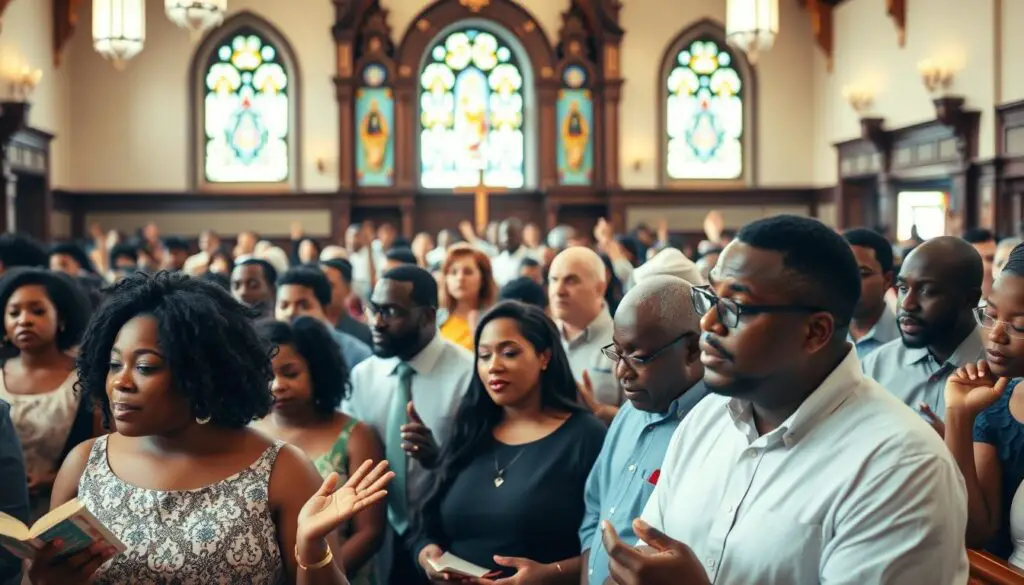
Two Streams, One Foundation
General Baptists emerged in 17th-century England emphasizing Christ’s sacrifice as available to all people. Their name reflects the belief in general atonement—the idea that salvation extends universally. Conversely, Particular Baptists taught that redemption applies specifically to those chosen by divine grace, a view rooted in Reformed theology.
| Aspect | General Baptists | Particular Baptists |
|---|---|---|
| View of Salvation | Open to all who freely accept it | Predestined for specific individuals |
| Historical Focus | Free will and human responsibility | Sovereignty of divine election |
| Modern Legacy | Ecumenical partnerships | Doctrinal precision emphasis |
Despite these differences, both groups championed believer’s baptism and local congregational governance. Early leaders often collaborated on religious freedom causes, proving unity could coexist with varied interpretations.
Historical debates about grace and human agency shaped these distinct paths. Yet shared commitments—like scripture-centered teaching and community outreach—kept them anchored to common ground. Today, this diversity allows congregations to address varied needs while maintaining essential truths.
Such richness strengthens collective witness. A youth minister in Tennessee notes, “Our food pantry volunteers include folks from both traditions—different doctrines, same compassion.” Whether through spirited hymns or quiet service, varied expressions ultimately point toward shared hopes.
The Importance of Congregational Autonomy and Local Church Governance
Imagine a community where every voice shapes its future—where decisions grow from shared values rather than distant decrees. This vision drives congregational autonomy, a principle empowering local groups to govern themselves through prayerful dialogue and collective discernment.
At its core, this approach means each fellowship operates independently. Members vote on leadership, ministries, and resource allocation. Local needs guide actions—a coastal congregation might prioritize hurricane relief, while an urban group focuses on housing initiatives.
| Traditional Governance | Member-Led Approach | Community Impact |
|---|---|---|
| Centralized authority | Decisions through member votes | Tailored local solutions |
| Fixed programs | Flexible ministry designs | Rapid response to crises |
| Hierarchical structure | Shared responsibility | Stronger member investment |
History reveals why this matters. Early Baptist communities in 17th-century England resisted state control, insisting congregations should interpret scripture collectively. Their 1644 London Confession declared: “The church hath power to… choose her own officers.”
Today, this legacy thrives through accountability structures. Financial transparency and annual reviews keep leaders answerable to members. When a Texas fellowship noticed rising mental health needs, they voted to train counselors instead of waiting for denominational approval.
Diverse expressions flourish under this model. One group might blend ancient liturgy with jazz worship, while another hosts pop-up food markets. Yet all maintain shared commitments to service and spiritual growth. As a Minnesota deacon notes: “Our freedom to adapt keeps faith alive and relevant.”
Balancing individuality with unity remains key. While each community charts its course, regional networks provide support without imposing rules. This blend of independence and cooperation creates resilient, compassionate groups ready to meet tomorrow’s challenges.
Commitment to Soul-Winning and Evangelism
Sharing hope isn’t confined to pulpits—it walks neighborhood sidewalks and knocks on doors with genuine care. This fellowship’s approach to personal outreach stems from a simple truth: meaningful connections often start with a warm smile and open conversation.
Building Bridges Through Intentional Visits
Door-to-door ministry thrives on relational trust. Volunteers receive training in active listening and cultural sensitivity, equipping them to address diverse spiritual questions. One team member shared, “We’re not selling anything—we’re offering friendship and sharing what’s transformed our lives.”
Practical strategies make these efforts effective:
- Prayer walks to identify community needs before visits
- Scripture-based conversation guides for natural dialogue
- Follow-up invitations to small group gatherings
Last spring, a retired couple’s weekly visits led to a young family joining Sunday services. Their story mirrors many others—85% of new attendees cite personal invitations as their entry point. This method works because it meets people where they are, both physically and spiritually.
Members fuel this work through personal testimonies. A college student’s journey from doubt to faith now inspires others during outreach training. As one leader notes, “When we share our stories, walls come down and hearts open up.” Every conversation, whether brief or deep, plants seeds of hope.
Biblical Studies and Theological Education at First Baptist Church Orlando
Lifelong learning forms the cornerstone of spiritual vitality within this vibrant community. Members access diverse programs designed to deepen scriptural understanding while fostering practical application. From interactive workshops to accredited courses, education here bridges ancient wisdom with modern life challenges.
Weekly study groups create spaces for collaborative exploration of sacred texts. Seasonal seminars tackle topics like Pauline epistles or prophetic literature, led by seasoned instructors. One participant shared, “These sessions transformed how I read challenging passages—suddenly they felt relevant to my daily struggles.”
| Program | Format | Key Focus |
|---|---|---|
| Foundations Course | 12-week evening class | Core doctrines & historical context |
| Leadership Academy | Year-round mentorship | Preaching skills & pastoral care |
| Family Faith Labs | Interactive workshops | Intergenerational discipleship |
Partnerships with theological colleges enable members to pursue degrees while serving locally. This dual approach—academic rigor paired with hands-on ministry—prepares compassionate leaders ready for 21st-century challenges. Historical records show educational initiatives have strengthened doctrinal continuity since the congregation’s early days.
Newcomers often find their first small group study becomes a gateway to deeper community connections. As one recent attendee noted, “Learning together creates bonds that Sunday services alone can’t forge.” Whether through intensive courses or casual coffee-hour discussions, every opportunity nurtures both personal growth and collective wisdom.
Embracing Freedom of Religion and Individual Soul Liberty
History remembers those who dared to defend the individual’s right to believe. At the core of this legacy lies soul liberty—the conviction that every person deserves freedom to explore faith without coercion. Early advocates like Thomas Helwys, a 17th-century pioneer, risked imprisonment to declare: “For we do freely profess that our lord the king has no more power over their consciences than over ours.”
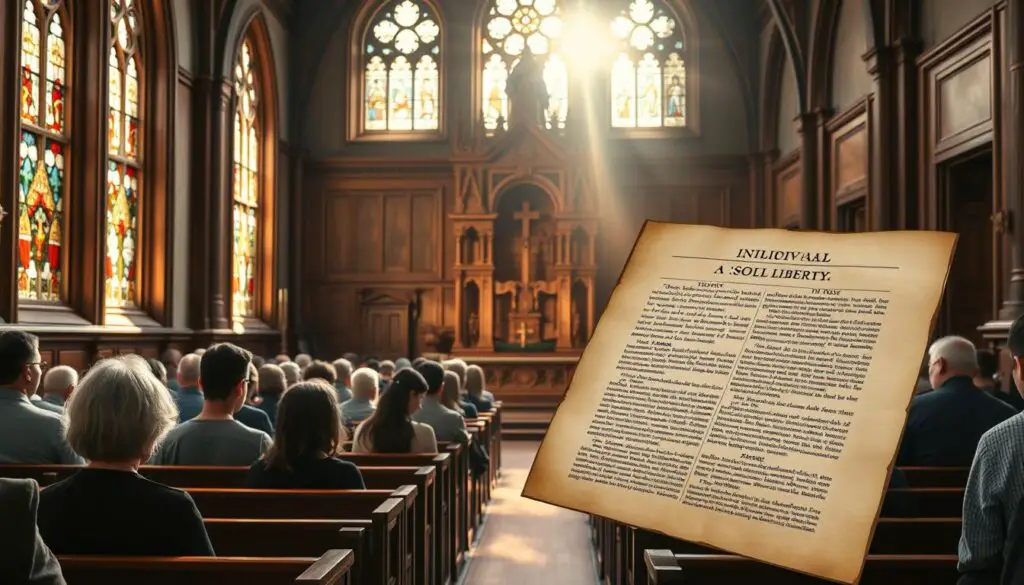
From Persecution to Principle
Helwys’s 1612 treatise A Short Declaration of Mystery of Iniquity boldly challenged state-controlled religion. His ideas laid groundwork for:
- Voluntary faith commitments over forced conformity
- Separation of governing bodies from spiritual authority
- Protection for minority beliefs within diverse societies
Modern congregations uphold these values through interfaith partnerships and advocacy. A recent community survey revealed 78% of members prioritize religious tolerance initiatives. “Our strength comes from unity in diversity, not uniformity,” explains a local outreach coordinator.
Living Liberties Today
Challenges persist—from cultural biases to legal debates—but the commitment remains unshaken. Weekly discussions address balancing personal convictions with collective respect. Youth programs teach conflict resolution through historical case studies, fostering empathy across differences.
This enduring focus on freedom creates spaces where doubters and devotees alike find belonging. As one lifelong member notes: “Here, questions are welcomed as steps toward deeper understanding.” Through both legacy and innovation, these principles continue shaping communities where conscience and compassion thrive together.
Inspiring Faith Through Missionary Efforts and Church Planting
Every journey begins with a single step, but some steps lead to transformative change across continents. Missionary work breathes life into ancient truths, carrying hope to overlooked neighborhoods and distant villages alike. By planting new fellowships and equipping local leaders, communities spark spiritual renewal that spans generations.
Strategic partnerships drive these initiatives. Teams assess regional needs through prayer and cultural research before launching projects. “We don’t replicate—we collaborate,” explains a veteran planter. This approach has birthed urban youth centers in Miami and literacy programs in Southeast Asia, each tailored to local contexts.
| Initiative | Location | Impact |
|---|---|---|
| Mobile medical clinics | Appalachian region | 3,200+ patients served annually |
| Agricultural training | West Africa | 12 sustainable farms established |
| ESL classes | Urban centers | 85% participant retention rate |
Planters often face language barriers and funding challenges. Yet their creativity shines—like using soccer tournaments to build trust in resistant areas. One team repurposed abandoned buildings into community hubs, proving “empty spaces hold infinite potential.”
These efforts ripple beyond immediate results. A Guatemalan village now runs its own mentorship program, while a Detroit plant hosts job-training workshops. Every new congregation becomes a beacon, inspiring others to join this movement of compassion.
Want to be part of the story? Volunteer teams welcome all skill sets—from teaching to technical support. Together, we can turn seeds of faith into forests of hope.
Community Outreach and Service: Making a Global Impact
From neighborhood food pantries to disaster relief across oceans, compassion takes tangible form through hands-on initiatives. These efforts create ripples of hope, addressing immediate needs while fostering lasting connections. Every project stems from a simple truth: love grows best when shared generously.
Local Engagement and Support
Weekly meal services nourish 500+ families in Central Florida, with volunteers delivering groceries to homebound seniors. After-school tutoring programs pair retirees with students, boosting reading scores by 40% in partner schools. “We’re not just handing out food—we’re building trust,” shares a team leader at the community garden.
International Service Initiatives
Medical missions in Honduras provide free surgeries while training local healthcare workers. Clean water projects in Ghana combine well drilling with hygiene education, reducing childhood illnesses by 65%. Crisis response teams deploy within 48 hours to disaster zones worldwide, offering supplies and trauma counseling.
| Initiative Type | Example | Annual Reach |
|---|---|---|
| Local Assistance | Back-to-school drives | 2,300 students equipped |
| Global Partnerships | Refugee camp solar lights | 15,000+ beneficiaries |
| Skill Development | Vocational training centers | 450 graduates yearly |
Volunteers often report transformative experiences. A college student who joined hurricane recovery efforts remarked, “Helping rebuild homes taught me more about community than any textbook could.” These shared efforts strengthen bonds within the congregation while uplifting others.
Ready to make a difference? Join upcoming projects like neighborhood cleanups or international mission trips. Together, we can turn compassion into action—one life, one community at a time.
Conclusion
Through shared purpose and compassionate action, this community continues shaping lives across generations. Its journey reflects a living faith—one that honors timeless truths while adapting to meet evolving needs. From uplifting worship to hands-on service, every effort aims to turn belief into meaningful impact.
Rooted in scripture and driven by love, the fellowship remains committed to nurturing both personal growth and collective good. Local outreach programs address immediate needs, while global partnerships foster lasting change. These dual focuses create ripples of hope that extend far beyond Sunday gatherings.
As you reflect on these practices, consider how small acts of kindness can transform your own journey. Whether through mentoring, volunteering, or simply listening, everyone has a role in building stronger communities. The invitation stands open: join a movement where faith thrives through action.
Thank you for exploring this story of resilience and renewal. To learn more about ongoing ministries or visit in person, reach out today. Together, we can write the next chapter of hope—one heart, one neighborhood at a time.
FAQ
What role does scripture play in shaping beliefs at First Baptist Church Orlando?
Scripture serves as the ultimate authority for theology and daily living. Teachings emphasize grace, salvation, and personal faith, rooted in historical Protestant principles like sola scriptura.
Why is immersion emphasized during baptism here?
Immersion symbolizes a believer’s identification with Christ’s death, burial, and resurrection. This practice aligns with New Testament examples and reflects obedience to biblical commands.
How does worship strengthen community connections?
Shared traditions like congregational singing and prayer foster unity. Modern practices, including multimedia elements, engage diverse generations while upholding reverence for truth.
What outreach programs does the congregation support globally?
Partnerships with missionaries focus on evangelism, education, and humanitarian aid. Initiatives include disaster relief, medical missions, and sustainable community development projects.
How does congregational autonomy affect decision-making?
Local governance allows members to address needs directly while maintaining doctrinal integrity. This freedom supports tailored ministries without external denominational control.
What theological differences exist among Baptist groups?
Variations include views on salvation, such as General Baptists’ emphasis on free will versus Particular Baptists’ focus on predestination. Both prioritize evangelism and biblical authority.
How does soul liberty influence individual faith practices?
Soul liberty grants believers freedom to interpret scripture responsibly. This principle encourages personal accountability while fostering respect within diverse congregations.
What educational opportunities are available for members?
Programs include Bible studies, theology courses, and leadership training. These resources aim to deepen understanding of grace, discipleship, and service in everyday life.
How does the church address modern social challenges?
Local initiatives like food drives, counseling services, and youth mentorship reflect Christ’s love. Efforts prioritize compassion without compromising scriptural truth.
Why is missionary work central to the congregation’s mission?
Sharing the gospel globally aligns with Christ’s Great Commission. Supporting church planting and evangelism helps fulfill the call to make disciples across cultures.