At the heart of many Christian traditions lies a unique blend of theological conviction and personal choice. Among these, the Free Will Baptist movement stands out for its emphasis on individual freedom and divine grace. Rooted in 17th-century England, this denomination emerged from General Baptist teachings, later shaped by leaders like Benjamin Randall in colonial America. Their focus? A faith built on the idea that every person can freely accept or reject salvation through Christ.
Central to their identity is the belief in free salvation—a gift available to all, not just a predestined few. This contrasts with stricter Calvinist doctrines, highlighting a balanced theology that values both God’s sovereignty and human responsibility. Worship practices, such as believer’s baptism by immersion, reflect their commitment to scriptural authority.
Beyond doctrine, Free Will Baptists are known for their tight-knit communities. Often described as conservative and blue-collar, they prioritize practical faith lived out in everyday life. Whether through local church initiatives or shared values of service, their focus remains on fostering spiritual growth without compromising personal accountability.
Key Takeaways
- Centers on the freedom to choose salvation through Jesus Christ.
- Traces origins to 17th-century General Baptists and American revivalist Benjamin Randall.
- Rejects predestination, emphasizing grace available to everyone.
- Practices believer’s baptism and values scriptural authority.
- Known for community-driven worship and conservative, practical theology.
Overview of Free Will Baptist Beliefs
Central to their identity is a trio of principles shaping both doctrine and daily life. These ideas—free will, free grace, and free salvation—form a theological framework distinct from many Protestant traditions. Rooted in early General Baptist teachings, the denomination evolved through centuries, refining its emphasis on personal accountability.
Defining the Core Doctrines
Every person, according to Free Will Baptists, possesses the ability to choose faith. Unlike predestinarian views, their doctrine teaches that God’s grace extends to all. Salvation becomes a genuine offer, not a preordained script. This mirrors the historic “freewillers” of 17th-century England, who rejected rigid Calvinism.
Free grace and salvation are inseparable here. There’s no earning favor through works—redemption flows from Christ’s sacrifice alone. As theologian Kevin Riggs notes, this creates a faith grounded in accessibility, not exclusivity.
The Role of Free Grace and Free Salvation
Imagine grace as an open door. For this denomination, it’s unlocked for everyone. The catch? Individuals must walk through it. This balance—divine initiative meeting human response—defines their practical conservatism.
How does this shape daily life? Churches prioritize humility and service, reflecting grace in action. While sharing similarities with other Baptist groups, their focus on conditional security sets them apart. Followers believe faith can be abandoned, making spiritual growth a lifelong journey.
What is free will baptist beliefs? Key Concepts Unpacked
Navigating theological debates about choice and destiny, this tradition offers a middle path. At its foundation lies the conviction that individuals hold genuine agency in spiritual matters. Unlike rigid predestination views, adherents affirm that every person can respond to divine invitation.
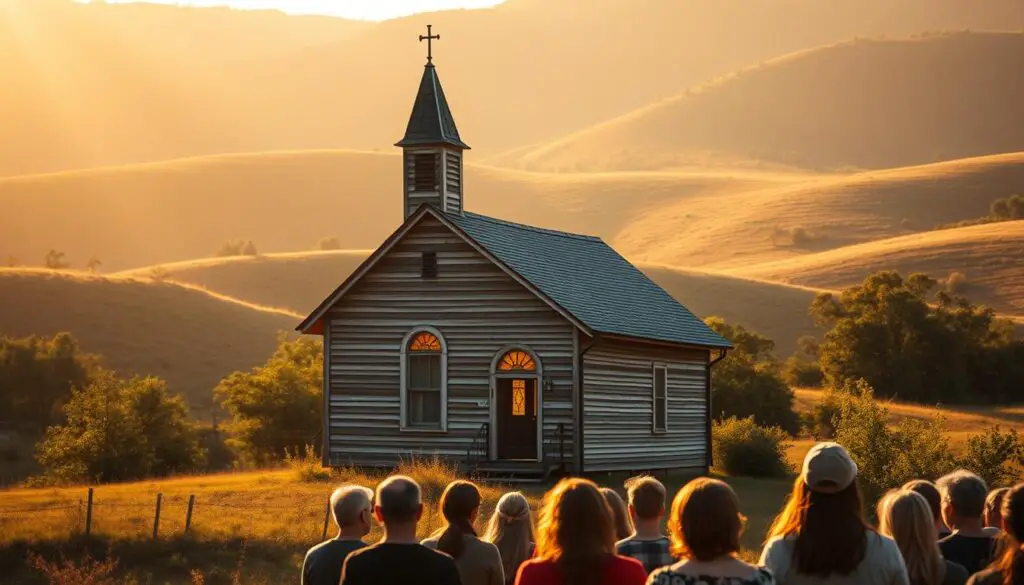
Human Responsibility and Divine Offer
The term “free will” here means more than casual choice—it’s about moral accountability. Benjamin Randall, an 18th-century leader, often stressed that Christ’s sacrifice becomes effective only when embraced willingly. This mirrors Jesus’ words in Revelation 3:20: “I stand at the door and knock.”
Grace Without Strings Attached
Free grace means salvation isn’t earned. It’s gifted through Jesus’ sacrifice, available to anyone. Scholar Kevin Riggs compares it to sunlight—“you can’t buy it, but you must step into it.” This idea fueled early growth among working-class communities seeking accessible faith.
Conditional security adds another layer. Followers believe salvation remains secure only through ongoing faith. Like tending a garden, spiritual growth requires consistent care. This contrasts with “once saved, always saved” doctrines common in other denominations.
Randall’s writings reveal careful balance. He taught that God’s sovereignty works with human freedom, not against it. Modern churches echo this through ministries focused on practical discipleship and community support.
Historical Evolution of the Free Will Baptist Movement
Tracing its roots to 17th-century England, the movement began among General Baptists who emphasized personal choice in faith. Early members migrated to America, carrying their rejection of predestination across the Atlantic. Critics mockingly called them “freewillers”—a label they proudly adopted as a badge of conviction.
Two Paths, One Faith
By the late 1700s, two distinct branches emerged. The Palmer-line flourished in southern colonies, blending revivalism with agrarian values. Meanwhile, Benjamin Randall ignited a northern revival from New Hampshire, stressing practical discipleship. His fiery sermons drew farmers, craftsmen, and sailors, forming tight-knit congregations.
Mergers That Shaped a Denomination
Randall’s followers organized associations, codifying doctrines like conditional security and free salvation. Decades later, the 1911 and 1935 mergers united regional groups, creating a cohesive national identity. These steps transformed scattered revival meetings into structured churches with shared practices.
| Year | Event | Impact |
|---|---|---|
| 1700s | Palmer & Randall movements | Regional growth |
| 1911 | Northern merger | Standardized doctrines |
| 1935 | National unification | Strengthened outreach |
Today, this heritage lives in churches valuing both individual freedom and communal accountability. From camp meetings to modern ministries, their story reflects resilience—a faith shaped by ordinary people embracing extraordinary grace.
Distinctives and Conservative Values
Rooted in simplicity and shared purpose, Free Will Baptists have cultivated a reputation for steadfast integrity. Their identity blends unpretentious living with theological balance, creating communities where faith feels both familiar and transformative.
Blue-Collar Heritage and Community Spirit
Early congregations often met in barns or homes, reflecting their working-class roots. Even today, many churches avoid ornate structures, preferring functional spaces where neighbors gather as family. Kevin Riggs once joked that their “Free Wheel College” training emphasized “plowing fields and preaching sermons with equal grit.”
This practical mindset extends to daily life. Members prioritize modesty, hard work, and mutual aid—values forged during eras of economic hardship. One 1930s congregation in Tennessee pooled resources to build homes for widows, embodying their motto: “Faith without works is empty.”
Balanced Theology and Practical Conservatism
Free Will Baptists avoid extremes, favoring a middle path between rigid dogma and cultural compromise. They uphold biblical inerrancy while emphasizing grace-driven living. For example, salvation is seen as a gift to steward, not a license for complacency.
- Traditional worship: Hymns and Scripture readings anchor services.
- Community focus: Food pantries and mentorship programs bridge faith and action.
- Accountability: Small groups encourage spiritual growth through transparency.
This blend of conviction and compassion keeps congregations grounded. As one pastor noted, “We’re not here to impress the world—just to reflect Christ in our corner of it.”
Worship Practices and Ordinances in Free Will Baptist Churches
Three sacred acts shape spiritual life among Free Will Baptists, blending ancient traditions with modern humility. These practices—baptism, communion, and foot washing—anchor worship while embodying core teachings about grace and choice.
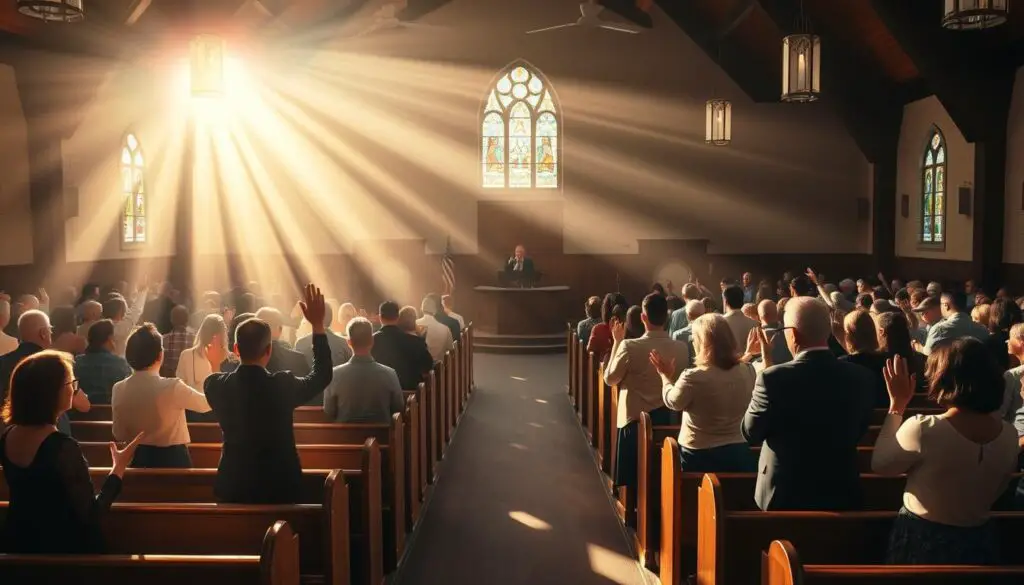
Symbols of Renewal and Remembrance
Baptism by immersion marks a believer’s public commitment. As E.L. St. Claire preached, “Going under the water isn’t magic—it’s saying ‘Yes’ to dying with Christ and rising anew.” This ritual requires prior repentance, emphasizing personal experience over ritual obligation.
The Lord’s Supper follows Jesus’ command to “do this in remembrance of me.” Congregants share bread and juice monthly, reflecting on Christ’s sacrifice. Kevin Riggs notes it’s “a family meal where grace becomes visible.”
Lessons in Servant Leadership
Foot washing, though rare elsewhere, remains vital here. Modeled after John 13, members wash each other’s feet during special services. One deacon explained, “Kneeling with a basin reminds us no task is beneath Christ’s followers.”
| Ordinance | Biblical Basis | Community Impact |
|---|---|---|
| Baptism | Matthew 28:19 | Public faith declaration |
| Lord’s Supper | 1 Corinthians 11:24-25 | Shared remembrance |
| Foot Washing | John 13:14-15 | Humble service |
These acts reinforce doctrines through action. Baptism mirrors free choice, communion celebrates grace, and foot washing nurtures unity. Together, they create churches where faith feels lived, not just believed.
Community, Associations, and National Influence
From small-town congregations to nationwide initiatives, Free Will Baptists weave individual conviction into collective action. Their structure balances grassroots autonomy with collaborative purpose—a harmony rooted in early revival meetings. This framework supports both local traditions and global outreach, reflecting their commitment to unity without uniformity.
Local Church Governance and National Associations
Each congregation operates independently, led by pastors elected through member consensus. Leaders guide spiritual matters, while major decisions—like property purchases or doctrinal updates—require congregational votes. This model mirrors Benjamin Randall’s 18th-century emphasis on shared responsibility.
Regional associations link churches for training and resource sharing. The National Association, formed in 1935, coordinates missions across 40 states. Their annual convention unites thousands, funding colleges, disaster relief, and global evangelism.
| Group Type | Governance | Focus Area | Contribution |
|---|---|---|---|
| Local Churches | Pastor + Congregation | Community Outreach | Food banks, youth programs |
| Regional Associations | Elected Committees | Leadership Training | Seminary partnerships |
| National Association | Delegate Assembly | Global Missions | Funds 200+ missionaries |
The Role of Unaffiliated Groups and Broader Mission
Nearly 15% of churches remain independent, preserving unique practices like quarterly foot-washing services. These groups often pioneer niche ministries—one Appalachian association runs addiction recovery homes, while African-American congregations host urban mentorship programs.
United by core doctrines yet diverse in methods, the denomination thrives through this flexibility. As one missionary noted, “Our structure lets rural chapels and city megachurches advance the same mission—just with different tools.”
Conclusion
Throughout three centuries of spiritual journey, Free Will Baptists have woven together conviction and compassion. Their core doctrines—free will, grace accessible to all, and salvation through Christ—anchor a faith where choice meets divine invitation. From English General Baptists to Benjamin Randall’s revivalist spark, history reveals a movement shaped by ordinary people embracing extraordinary purpose.
Distinctive practices like baptism by immersion and foot washing embody humility, mirroring Christ’s call to servant leadership. Conservative values and blue-collar roots foster tight-knit communities where faith translates into action—food pantries, mentorship programs, and disaster relief missions.
Structured yet adaptable associations empower local churches while advancing national outreach. This balance preserves authenticity while fueling growth across 40 states and beyond. The denomination thrives not through grand gestures, but through steadfast commitment to scripture and neighbor.
Interested in exploring deeper? Consider visiting a congregation or studying Randall’s writings. Whether drawn to theological depth or practical service, there’s space here to grow—and to join a mission bridging centuries of faith with modern relevance.
FAQ
How do Free Will Baptists view salvation and human choice?
They emphasize free grace and teach that salvation is available to all through Jesus Christ. Individuals can accept or reject this gift, highlighting the role of personal choice in faith. This contrasts with predestination-focused doctrines.
What role did Benjamin Randall play in the denomination’s history?
Benjamin Randall, an 18th-century preacher, founded the movement in New England. His teachings on conditional security and congregational independence shaped its early identity, blending evangelism with a focus on local church autonomy.
How do worship practices differ from other Baptist groups?
Churches observe believer’s baptism by immersion, the Lord’s Supper, and sometimes foot washing. These acts symbolize commitment to Christ, repentance, and humility, reflecting their practical approach to spiritual growth.
What defines their community values?
Rooted in blue-collar heritage, many congregations prioritize close-knit fellowship and service. Their theology balances conservative principles with adaptability, fostering unity while respecting individual church governance.
Are Free Will Baptists part of larger associations?
While some affiliate with groups like the National Association, others remain independent. This mix allows collaboration on missions and education while preserving each congregation’s self-governance.
How does their stance on eternal security compare to Calvinism?
They reject the idea of “once saved, always saved,” teaching instead that believers can walk away from faith. This conditional security underscores accountability and ongoing spiritual commitment.
What historical ties do they have to earlier Baptist movements?
Emerging from English General Baptists, the denomination blended Arminian theology with American revivalism. Early leaders like Randall formalized doctrines that distinguished them from stricter Calvinist traditions.