Ever wondered why some church moments feel straight out of a sitcom? Let’s explore the charmingly quirky side of faith communities that’s taken social media by storm. From coffee-hour chaos to hymn-singing debates, these gatherings have inspired endless memes and inside jokes.
Many congregations blend centuries-old traditions with modern-day surprises. Picture potluck dinners where gelatin salads battle casseroles for dominance or youth groups mastering TikTok dances between Bible studies. These lighthearted quirks create a distinctive identity that unites members while puzzling newcomers.
What makes these customs so memorable? They’re rooted in shared experiences that transform routine gatherings into something extraordinary. Whether it’s the annual bake-off rivalry or that one hymn everyone sings off-key, these traditions strengthen community bonds through laughter and camaraderie.
Key Takeaways
- Social media trends highlight relatable church culture moments
- Unique worship styles create memorable community experiences
- Traditions often blend historical roots with modern adaptations
- Humor strengthens connections within faith groups
- Distinct practices reflect regional and denominational diversity
The Relevance of “protestant churches be like” in Modern Faith
Memes aren’t just for cats and politics—they’re reshaping how we talk about spirituality. Viral trends about Sunday service mishaps or hymnbook confusion get millions of laughs, proving humor builds bridges in today’s faith communities.
With 1.2 billion adherents worldwide, Protestantism forms a cultural force that’s both massive and diverse. This table shows its 2025 demographic spread:
| Group | Members | Global Share |
|---|---|---|
| Traditional | 628 million | 52% |
| Independent | 409 million | 34% |
| Unaffiliated | 151 million | 14% |
These lighthearted online jokes do more than entertain. They help people navigate modern faith by celebrating shared quirks—like that one deacon who always forgets microphone settings. Social media turns these moments into universal inside jokes that connect teens and grandparents alike.
What makes the trend stick? It reveals how churches balance tradition with real life. From livestreamed baptisms to emoji-filled prayer requests, humor becomes a tool for keeping faith relevant without losing its heart. The laughter invites outsiders to see religious life as approachable rather than intimidating.
Historical Roots and Reformation Humor
Long before viral memes, religious reformers were serving up comedy gold through accidental antics. Centuries-old debates about communion bread or proper hymn tempos might sound dry today—until you imagine medieval believers arguing over these details while hiding from authorities.

Proto-Protestant Movements and Early Dissent
Groups like the Hussites and Waldensians pioneered faith-based improv comedy without meaning to. Picture 14th-century believers passing secret messages in cheese wheels or hastily rewriting liturgy behind barn doors. Their survival tactics created unintentional humor that still resonates in modern church culture.
These early rebels faced a tricky balance: creating meaningful traditions while avoiding execution. The result? Quirky practices like outdoor sermons interrupted by sheep or makeshift communion cups carved from turnips. Their creative problem-solving laid groundwork for today’s lighthearted worship styles.
Bohemian Reformation and Cultural Shifts
The 15th-century Bohemian Reformation turned religious innovation into an art form. Communities began singing folk hymns in taverns and debating theology over ale—a medieval version of coffee hour chaos. This era normalized the idea that faith gatherings could be both sacred and slightly messy.
Historical records show preachers using puppet shows to explain complex doctrines. These playful approaches created a tradition of accessibility that modern groups echo through TikTok Bible skits or meme-filled youth retreats. What began as survival strategies became enduring markers of identity.
The Bold Impact of Martin Luther’s Ninety-Five Theses
When a monk’s hammer struck a church door in 1517, it sparked a revolution that reshaped spiritual life. Martin Luther’s Ninety-Five Theses challenged centuries of religious norms, mixing bold theology with accidental showmanship. His critique of indulgences – payments to reduce punishment for sins – questioned the Catholic Church’s authority in matters of salvation.
Luther’s Iconic Challenge to the Catholic Church
The Wittenberg professor didn’t aim to start a movement. He simply wanted academic debate about corrupt practices. Luther argued salvation came through faith alone, not financial transactions. “When coins clink in the money chest,” he wrote, “greed and avarice increase.” This direct language made complex doctrine relatable to ordinary people.
His ideas spread like wildfire thanks to new printing technology. Within months, pamphlets circulated across Europe carrying these radical thoughts:
- Religious leaders couldn’t sell divine forgiveness
- Scripture interpretation belonged to all believers
- Faith mattered more than ritual perfection
Reactions, Reforms, and Lasting Influence
The Catholic Church initially dismissed Luther as a rebellious monk. But his ideas gained traction, creating permanent fractures in Western Christianity. This table shows how his reforms took root:
| Region | Adoption Year | Key Change |
|---|---|---|
| Germany | 1525 | First Lutheran services |
| Sweden | 1527 | State church established |
| England | 1534 | Break from Rome |
Luther’s emphasis on personal faith created space for informal worship styles. Modern gatherings featuring rock bands or coffee-shop sermons owe much to his push for accessible spirituality. While he never intended humor, Luther’s dramatic protest set a precedent for faith communities to embrace authenticity – even when it looks unconventional.
Cultural Quirks in Protestant Church Traditions
What do casserole competitions and hymn speed debates have in common? They’re part of a rich tapestry of worship culture that blends solemnity with everyday humor. These distinctive practices form an unspoken language understood by regular attendees but often leave first-time visitors delightfully confused.
Unexpected Rituals and Church Behaviors
Every congregation develops its own secret code of conduct. Some groups have strict rules about who brings deviled eggs to potlucks, while others debate whether clapping after baptisms counts as proper liturgical etiquette. The parking lot becomes a strategic battlefield on Sundays, with veteran members claiming prime spots through years of unspoken agreements.
Children’s programs often showcase the most creative adaptations. One Midwest church stages an annual Christmas play where shepherds wear bathrobes and angels sport tinsel halos. These productions maintain spiritual meaning while embracing budget-friendly practicality.
Modern Adaptations of Age-Old Customs
Technology now spices up time-honored traditions. Livestreamed prayer circles might feature emoji reactions, while youth groups remix centuries-old hymns with beatbox rhythms. Dress codes walk a tightrope between “come as you are” and “maybe leave the pajama pants at home.”
Shared meals remain central to community building, though the rules evolve. A Southern congregation’s practice of blessing every dish—including questionable Jell-O molds—shows how food becomes sacred ground. Meanwhile, coffee hour transforms into a networking event where theology mixes with gossip about the choir director’s new haircut.
These customs create a unique rhythm that honors the past while dancing with the present. Whether through smartphone-powered scripture readings or interpretive dance renditions of Psalms, traditions stay alive through playful reinvention.
Funny Insights into Protestant Denominational Diversity
Did you know Methodists and Baptists once argued about whether coffee counts as communion wine? This joke captures the playful spirit among different faith groups. With over 30,000 distinct branches worldwide, denominational diversity creates endless comedic gold.
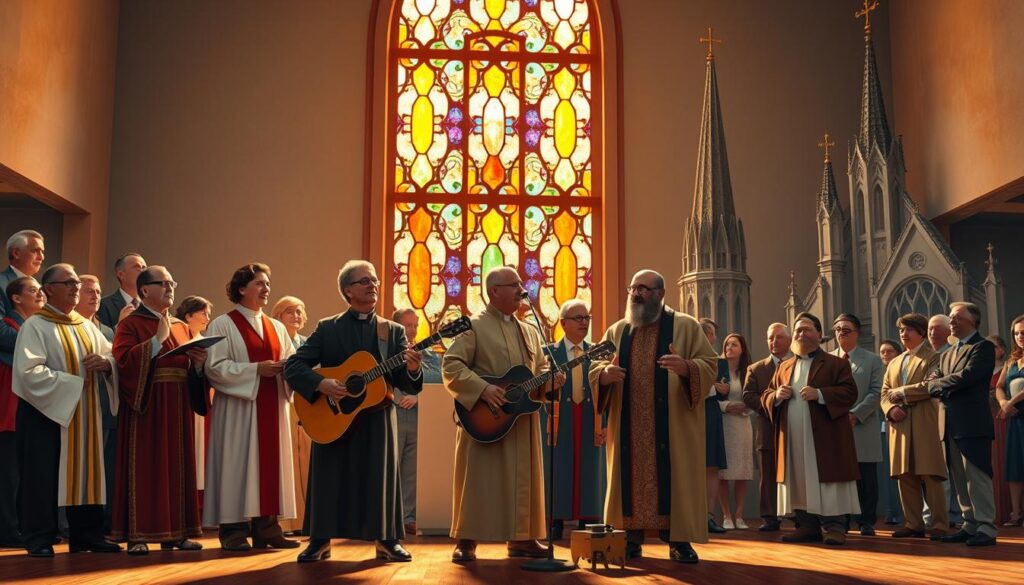
From silent Quaker meetings to Pentecostal dance breaks, each group crafts unique traditions. A Lutheran might chuckle at Presbyterian debates about proper hymn tempo, while Episcopalians swap stories about “that one time the altar candles set off the smoke detectors.”
“I visited a Pentecostal service after years in a Methodist church – I thought we’d joined a conga line by accident!”
This table shows how major denominational families approach worship differently:
| Group | Members (US) | Signature Quirk |
|---|---|---|
| Baptists | 14.5 million | Debate dunking vs. sprinkling |
| Methodists | 6.5 million | Potluck diplomacy experts |
| Pentecostals | 4 million | Spontaneous hymn remixes |
Friendly rivalries often surface in unexpected ways. Anabaptists might tease Lutherans about their love for liturgical calendars, while Presbyterians joke about who has the best post-sermon snack spread. These interactions highlight how shared faith thrives through good-natured humor.
Insider references become badges of belonging. When someone mentions “the Great Casserole Controversy of ’09,” entire congregations nod knowingly. Such moments transform theological diversity into communal glue – one laugh at a time.
Examining Protestant Church Architecture: Beauty vs. Simplicity
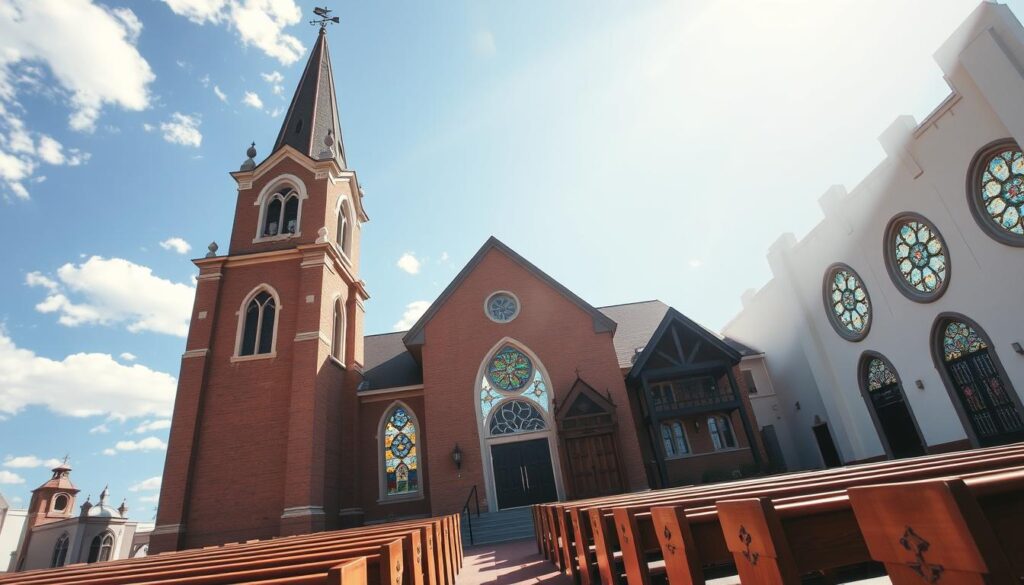
Stepping into a worship space immediately tells you about its priorities – vaulted ceilings or folding chairs? Architectural choices in faith communities spark both awe and chuckles. While some structures resemble medieval castles, others repurpose former supermarkets with creative flair.
Comparing Ornate Versus Minimalist Designs
Grand cathedrals like New York’s Episcopal Cathedral of St. John the Divine showcase intricate stonework rivaling European landmarks. Iceland’s Hallgrímskirkja Lutheran church blends modern minimalism with volcanic inspiration. Yet many groups prefer functional spaces – think multipurpose rooms doubling as Sunday schools.
| Church | Location | Style | Key Features |
|---|---|---|---|
| Episcopal Cathedral | New York | Gothic Revival | 43,000 sq ft nave |
| Hallgrímskirkja | Reykjavik | Expressionist | 240-foot tower |
| St. Matthew’s | Charleston | Colonial | Hand-carved pews |
| Community Church | Austin | Adaptive Reuse | Former music venue |
The Role of Architecture in Faith and Humor
Buildings often become characters in congregational lore. Members joke about basketball hoops hovering above altars or sound systems that crackle during silent prayers. One pastor quipped, “Our gymnasium-turned-sanctuary proves God loves rebounds – spiritual and literal.”
These spaces reflect practical theology. A Midwest group meets in a converted car dealership, their neon sign reading “Open for Worship.” While Catholic counterparts often feature ornate decor, many faith communities prioritize accessibility over aesthetics – creating unexpected beauty in everyday settings.
Understanding the Spectrum of Protestant Denominations
Navigating the world of faith groups feels like attending a global potluck – everyone brings distinct flavors to the table. Three major groups showcase this diversity: Lutherans steeped in sacramental traditions, Baptists championing local autonomy, and Methodists blending piety with social justice.
From Lutherans to Baptists: A Quick Overview
Lutheran communities follow Martin Luther’s teachings, prioritizing rituals like infant baptism. Their services often feature liturgical precision – think robed choirs and recited creeds. One member joked, “Our bulletin has more instructions than IKEA furniture!”
Baptist groups take a different route. They emphasize adult baptisms by full immersion and let each congregation set its own rules. This leads to quirky variations – one might ban drums while another hires a full rock band.
How Denominational Structures Influence Worship
Organizational models shape experiences:
- Lutherans: Follow annual liturgical calendars with set readings
- Baptists: Allow spontaneous sermon topics and hymn choices
- Methodists: Balance structured services with community outreach projects
These frameworks create amusing culture shocks. A Methodist might stumble through a Lutheran’s responsive readings, while a Baptist visitor could panic when asked to dance during worship. Yet all share core beliefs about grace and scripture – even if their potluck casseroles taste wildly different.
Listicle of Hilarious Church Moments and Traditions
Sacred spaces sometimes double as stages for unexpected comedy. These laugh-out-loud instances reveal how spiritual gatherings balance reverence with real life. Let’s explore three categories where holy intentions meet human hilarity.
The Coffee Hour Olympics
Navigating post-service mingling requires ninja-level social skills. Regulars know to avoid Mrs. Johnson before her second cup, while newcomers learn the hard way about the unwritten casserole critique rules. The buffet table becomes a diplomatic minefield when someone brings store-bought cookies.
Tech Fails & Tongue Twisters
Even seasoned pastors face microphone mishaps. One minister accidentally projected a cat video during communion. Others wrestle with biblical names like “Maher-shalal-hash-baz,” turning sermons into improv comedy nights.
Kids Say the Holiest Things
Children’s unfiltered honesty keeps services lively. A toddler once shouted “Amen, let’s eat!” during silent prayer. Youth pageants feature shepherds tripping over bathrobes and angels forgetting lines – creating heartwarming chaos that everyone secretly loves.
These moments remind us that spiritual growth often comes with giggles. Whether it’s a sound system blasting polka music or a potluck tuna surprise, humor weaves communities tighter through shared joy.
FAQ
Why do people joke about "protestant churches be like" trends?
Humor often highlights relatable quirks, like denominational differences or minimalist designs. These memes poke fun at traditions while celebrating the diversity of Christian communities.
How did Martin Luther’s actions shape modern church humor?
Luther’s bold critiques of Catholic practices inspired satire about rigid traditions. His legacy fuels jokes about debates over rituals, like communion or hymn styles, still seen today.
What’s the funniest architectural difference in Protestant spaces?
Stark white walls vs. stained-glass debates! Some congregations embrace simplicity, while others accidentally create echo chambers perfect for awkwardly amplified sneezes mid-prayer.
Do denominations like Baptists and Lutherans really disagree that much?
Think “friendly rivalry.” Baptists might side-eye liturgical robes, while Lutherans joke about potluck supremacy. Yet both agree on core beliefs—and the importance of coffee hour.
Are unexpected church moments, like sermon blunders, common?
Absolutely. From mic feedback during silent prayers to toddlers hijacking pulpits, these unscripted laughs remind congregations that grace—and humor—are always part of worship.
Why do some churches have quirky rituals like pancake suppers?
Blame tradition meets creativity! Shrove Tuesday pancakes or “blessing of the animals” services blend ancient customs with modern charm, keeping faith lively and relatable.
How do Protestant groups adapt old customs for today’s culture?
By mixing ancient hymns with rock bands, or replacing fire-and-brimstone sermons with TED Talk-style messages. It’s all about connecting without losing core identity.
What’s the deal with the Bohemian Reformation’s cultural impact?
Early reformers like Jan Hus challenged authority with wit, inspiring later satire. Their defiance against corruption became a template for questioning norms—with a smile.