Exploring the Rich History and Core Beliefs of one of the world’s oldest religions.
Hinduism, with a history spanning over 4,000 years, is a diverse and complex faith that has evolved significantly over time. At its core, it encompasses a broad range of philosophies and practices.
The ancient faith is characterized by its tolerance for diverse beliefs and practices, making it a unique and fascinating subject of study.
Key Takeaways
- Understanding the basic definition of Hinduism
- Exploring the core beliefs and philosophies
- Discovering the significance of Hinduism in the modern world
- Learning about the history and evolution of the faith
- Appreciating the diversity and complexity of Hinduism
The Origins and Historical Development of Hinduism
With roots tracing back to ancient civilizations, Hinduism’s history is as diverse as it is profound. The development of Hinduism is a complex process that has been influenced by various cultural, social, and religious factors over thousands of years.
The Indus Valley Civilization
The earliest known roots of Hinduism date back to the Indus Valley Civilization, around 3300 BCE. This civilization is known for its sophisticated urban planning, architecture, and water management systems. The presence of ritualistic practices and symbolic artifacts suggests a complex spiritual life.
- Evidence of ritual bathing and sacred symbols
- Advanced urban planning and architecture
- Early forms of spiritual practices
Vedic Period and Early Foundations
The Vedic Period (1500 BCE – 500 BCE) is crucial in understanding the early foundations of Hinduism. During this era, the Vedas were composed, which are the oldest and most sacred texts of Hinduism. These texts contain hymns, prayers, and philosophical discussions that laid the groundwork for Hindu philosophy and rituals.
- The composition of the Vedas
- Development of early Hindu rituals and practices
- Philosophical discussions on the nature of reality
Evolution Through the Ages
Hinduism continued to evolve through various ages, influenced by different philosophical schools, regional traditions, and cultural practices. The Upanishads and the Bhagavad Gita played significant roles in shaping Hindu thought and practice. This evolution has resulted in the diverse and rich religious landscape seen in Hinduism today.
The ability of Hinduism to adapt and incorporate various traditions has been a key factor in its enduring presence.
Understanding Hinduism: Core Beliefs and Concepts
At the heart of Hinduism lies a rich tapestry of core beliefs and concepts that have evolved over millennia. These foundational principles not only shape the spiritual practices of Hindus but also influence their daily lives and worldview.
Brahman: The Ultimate Reality
Brahman is considered the ultimate, unchanging reality in Hinduism. It is often described as the supreme cosmic power that pervades everything in the universe. Brahman is beyond human comprehension, yet it is the essence of all existence.
Atman: The Individual Soul
The concept of Atman refers to the individual soul or self. According to Hindu beliefs, every living being has an Atman, which is a spark of the divine Brahman. Understanding the relationship between Atman and Brahman is crucial for spiritual growth.
Karma and Dharma
Karma refers to the actions and deeds of an individual, which have consequences in this life and the next. Dharma, on the other hand, is about living a righteous life, fulfilling one’s duties, and adhering to moral order. Together, Karma and Dharma guide Hindus on their path to spiritual liberation.
- Karma influences an individual’s future experiences.
- Dharma provides a moral framework for living.
- Balancing Karma and Dharma is key to spiritual progress.
Moksha: Liberation from the Cycle of Rebirth
Moksha is the ultimate goal of Hinduism, representing liberation from the cycle of birth, death, and rebirth (samsara). Achieving Moksha means realizing one’s true nature as Brahman and attaining eternal peace and freedom.
In summary, the core beliefs of Hinduism, including Brahman, Atman, Karma, Dharma, and Moksha, form a complex and interconnected web of spiritual concepts. Understanding these principles is essential for grasping the essence of Hinduism and its significance in the lives of its followers.
The Sacred Texts of Hinduism
The ancient scriptures of Hinduism offer insights into the nature of reality and the self. These texts have been revered for centuries, providing a foundation for the beliefs, practices, and spiritual growth of millions of adherents.
The Vedas: Ancient Wisdom
The Vedas are among the most sacred texts in Hinduism, comprising a vast collection of hymns, prayers, and philosophical discussions. They are divided into four main sections: Rigveda, Samaveda, Yajurveda, and Atharvaveda.
Rigveda, Samaveda, Yajurveda, and Atharvaveda
Each Veda has its unique characteristics and content. For instance, the Rigveda contains hymns and prayers to various deities, while the Yajurveda focuses on rituals and sacrificial practices.
Importance in Daily Practice
The Vedas continue to influence daily life and rituals in Hinduism. Many Hindus recite Vedic hymns during worship and ceremonies, believing that these ancient texts hold the power to bring spiritual growth and harmony.

Upanishads and Philosophical Teachings
The Upanishads represent a significant shift in Hindu thought, focusing on the philosophical and mystical aspects of the Vedas. They explore the nature of the ultimate reality, known as Brahman, and the individual soul, or Atman.
Bhagavad Gita and Epic Literature
The Bhagavad Gita is a pivotal text within Hindu scripture, forming part of the larger epic, the Mahabharata. It presents a dialogue between Prince Arjuna and Lord Krishna, addressing the complexities of duty, morality, and spiritual liberation.
Mahabharata and Ramayana
The Mahabharata and Ramayana are two of Hinduism’s most revered epics, containing stories of heroes, gods, and the struggle between good and evil. These texts have profoundly influenced Hindu culture and continue to be retold in various forms of art and literature.
Puranas and Other Texts
The Puranas are a collection of stories, legends, and historical accounts that further enrich Hindu mythology and cosmology. Alongside other texts like the Tantras and Agamas, they contribute to the diverse tapestry of Hindu scriptures.
Major Deities in the Hindu Pantheon
At the heart of Hinduism lies a vast pantheon of deities, including gods and goddesses who embody various aspects of the divine. This diverse array of deities is worshipped across different regions and communities, reflecting the rich tapestry of Hinduism.
The Trimurti: Brahma, Vishnu, and Shiva
The Trimurti, or the three-form, is a concept that encompasses the three primary aspects of the Supreme Being in Hinduism: Brahma, the creator; Vishnu, the preserver; and Shiva, the destroyer. Each deity has distinct roles and is revered for their unique attributes.
- Brahma: Often depicted with four heads, Brahma is credited with creating the universe and all living beings.
- Vishnu: Known for his role in preserving the universe, Vishnu is often worshipped in his various avatars or incarnations.
- Shiva: The destroyer, Shiva is associated with the cycle of destruction and rebirth, embodying the transformative power of the divine.
Goddesses: Shakti, Lakshmi, Saraswati, and Durga
Hinduism also reveres a multitude of goddesses who embody feminine power and grace. Key goddesses include:
- Shakti: Representing the divine feminine energy, Shakti is often associated with power and strength.
- Lakshmi: The goddess of prosperity and good fortune, Lakshmi is worshipped for her blessings.
- Saraswati: As the goddess of knowledge and arts, Saraswati is revered by students and artists alike.
- Durga: Known for her bravery and protective powers, Durga is celebrated during the festival of Navratri.
Other Important Deities and Divine Beings
Beyond the Trimurti and the prominent goddesses, Hinduism recognizes numerous other deities and divine beings.
Ganesh and Hanuman
Ganesh, the remover of obstacles, is widely worshipped before any significant undertaking. Hanuman, the monkey god and devotee of Rama, is celebrated for his loyalty and strength.
Regional and Family Deities
Hindu families and communities often worship kuladevatā or family deities, as well as regional deities specific to their geographical location. These deities play a significant role in daily life and rituals.
Hindu Worship Practices and Rituals
Hindu worship is a vibrant and integral part of the religion, incorporating various elements like puja, temples, and sacred symbols. It is a means of connecting with the divine and seeking spiritual growth.
Puja: Daily Devotional Worship
Puja is a fundamental aspect of Hindu worship, involving the offering of prayers, flowers, and other items to deities. It is a daily devotional practice that fosters a personal connection with the divine. As noted by a prominent Hindu scholar, “Puja is not just a ritual; it’s a way of life, a means of expressing devotion and gratitude.”
Temples and Sacred Spaces
Hindu temples serve as sacred spaces for worship, community gatherings, and spiritual growth. These temples often house deities and sacred symbols, providing a focal point for hindu worship. The architecture and design of temples are steeped in symbolism, reflecting the religion’s rich cultural heritage.
Mantras, Yantras, and Sacred Symbols
Mantras and yantras are integral to Hindu worship, used in meditation and rituals to invoke spiritual energies. The Om mantra is particularly significant, symbolizing the universe and the ultimate reality.
Om and Its Significance
The Om mantra is considered sacred in Hinduism, representing the cosmic vibration and the essence of the universe. Chanting Om is believed to bring spiritual benefits and inner peace.
Other Important Symbols
Besides Om, other symbols like the Swastika and Lotus are revered in Hinduism. These symbols carry deep meanings, representing concepts such as prosperity, spiritual growth, and enlightenment.
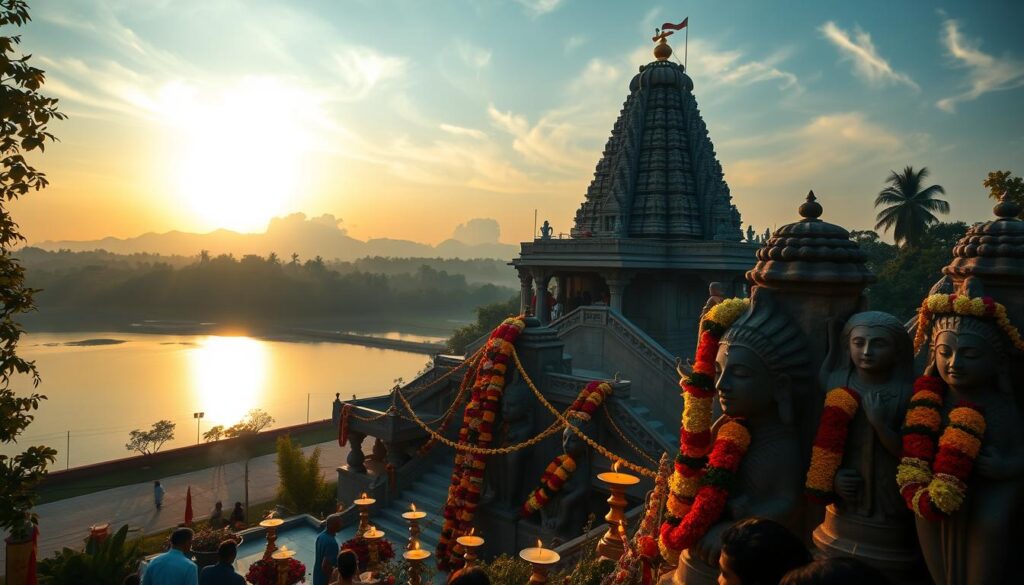
Major Traditions and Denominations Within Hinduism
The Hindu faith is marked by a multitude of traditions and denominations, each with its unique practices and philosophical underpinnings. These diverse traditions have coexisted and evolved over centuries, contributing to the rich tapestry of Hinduism.
Vaishnavism: Devotion to Vishnu
Vaishnavism is a significant tradition within Hinduism that focuses on the worship of Vishnu and his avatars, such as Rama and Krishna. Vaishnavites believe in the preservation and protection of the universe by Vishnu. This tradition emphasizes devotion, love, and service to God.
Shaivism: Followers of Shiva
Shaivism revolves around the worship of Shiva, the destroyer of the universe. Shaivites often practice intense personal devotion and asceticism, believing in the power of Shiva to liberate the soul. Shaivism encompasses various sub-traditions, including Kashmir Shaivism.
Shaktism: Worship of the Divine Mother
Shaktism is centered on the worship of Shakti, the divine feminine energy. This tradition recognizes the feminine principle as the ultimate reality and source of power. Shaktas often worship goddesses like Durga and Kali, embodying the dynamic and nurturing aspects of the divine.
Smartism and Other Traditions
Smartism is a tradition that venerates the five primary forms of God: Shiva, Vishnu, Shakti, Ganesha, and Surya. It promotes a non-sectarian approach, advocating for the unity of all existence. Other traditions within Hinduism include Ganapatya and Saura, focusing on Ganesha and Surya, respectively.
| Tradition | Primary Deity | Key Practices |
|---|---|---|
| Vaishnavism | Vishnu | Devotion, service, worship of avatars |
| Shaivism | Shiva | Asceticism, personal devotion, yoga |
| Shaktism | Shakti | Worship of goddesses, recognition of feminine energy |
| Smartism | Pancha-devata (five forms) | Non-sectarian worship, unity of existence |
Hindu Festivals and Celebrations
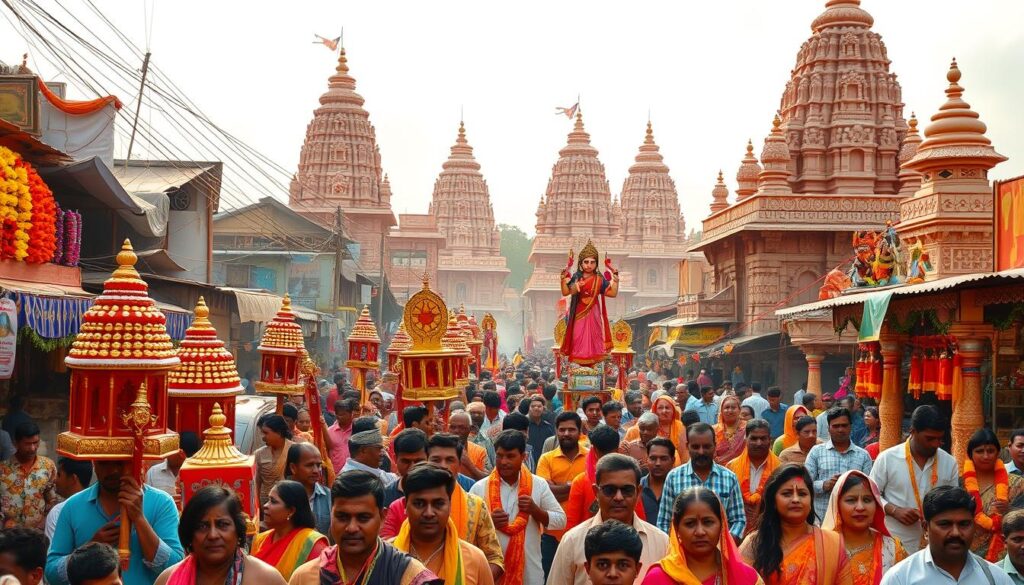
From Diwali to Holi, Hindu festivals are an integral part of the religion’s heritage, fostering a sense of community and spiritual growth. These celebrations are deeply rooted in Hindu mythology and are observed with great fervor across the globe.
Diwali: The Festival of Lights
Diwali, or Deepavali, is a five-day festival that symbolizes the victory of light over darkness and good over evil. It is celebrated by lighting diyas (earthen lamps), decorating homes, and exchanging gifts. “The lighting of lamps is a symbol of the inner light that protects us from the darkness of ignorance,” as per Hindu philosophy.
Holi: The Festival of Colors
Holi is a vibrant festival celebrated over two days, marking the arrival of spring and the triumph of good over evil. Participants throw colored powders and waters at each other, signifying the joy and colors of life. “Holi is a celebration of love, laughter, and the colors of life.”
Navratri and Durga Puja
Navratri is a nine-day festival dedicated to the worship of Goddess Durga in her various forms. It is celebrated with traditional dances like Garba and Dandiya Raas. Durga Puja, particularly in Eastern India, is a grand celebration honoring the goddess’s victory over the buffalo-demon Mahishasura.
Other Significant Festivals
Other notable festivals include Janmashtami (celebrating Krishna’s birth), Ganesh Chaturthi (honoring Ganesha), and Makar Sankranti (marking the sun’s journey into the northern hemisphere). These festivals have regional variations and are celebrated with unique traditions.
Regional Celebrations
Regional festivals like Pongal in South India and Bihu in Northeast India showcase the diversity of Hindu celebrations, often tied to agricultural cycles and local deities.
Seasonal Observances
Many Hindu festivals are tied to the lunar calendar and seasonal changes, reflecting the religion’s deep connection with nature and the cosmos.
The Concept of Time and Cosmology in Hinduism
In Hinduism, the understanding of time and the cosmos is deeply intertwined with its philosophical and religious beliefs. Hindu cosmology offers a rich and complex framework for understanding the universe and its cycles.
Yugas: The Four Ages of the World
Hindu scriptures describe time as being cyclical, divided into four ages or yugas: Satya Yuga, Treta Yuga, Dvapara Yuga, and Kali Yuga. Each yuga represents a decline in moral and social order, with the Kali Yuga being the current age, characterized by strife and disorder. This cyclical view of time emphasizes the impermanence of the world and the need for spiritual growth.
Creation, Preservation, and Dissolution Cycles
The cosmos itself is understood to undergo cycles of creation, preservation, and dissolution. The Trimurti – Brahma, Vishnu, and Shiva – are the primary deities associated with these cycles. Brahma is the creator, Vishnu the preserver, and Shiva the destroyer. This triad underscores the dynamic nature of the universe, where creation is followed by preservation and ultimately dissolution, only to begin anew. As the Bhagavata Purana states, “The universe is created, maintained, and destroyed in cyclical order, reflecting the eternal nature of the ultimate reality.”
Hindu Philosophy and Schools of Thought
Hindu philosophy encompasses a diverse range of schools of thought, each offering unique perspectives on the nature of reality and the path to liberation. This diversity is a hallmark of Hinduism, reflecting its rich intellectual and spiritual heritage.
Advaita Vedanta: Non-Dualism
Advaita Vedanta, one of the most influential schools of Hindu philosophy, advocates for non-dualism. It posits that the ultimate reality, Brahman, is the only truth, and the individual self, Atman, is not different from Brahman. As Adi Shankaracharya, a key proponent of Advaita Vedanta, succinctly puts it, “The ultimate reality is the only truth; the world is an illusion.” This school of thought emphasizes the attainment of Self-realization through the understanding of the true nature of the self and reality.
Dvaita: Dualism
In contrast, Dvaita Vedanta, founded by Madhvacharya, advocates for dualism. It asserts that Brahman (God) and the individual souls (jiva) are distinct and separate entities. According to Dvaita, the ultimate goal is to attain devotion to God, recognizing the eternal distinction between God and the soul. This philosophy emphasizes the importance of devotion and the personal relationship between the devotee and God.
Other Philosophical Systems
Beyond Advaita Vedanta and Dvaita, Hinduism encompasses several other significant philosophical systems.
Samkhya and Yoga
Samkhya philosophy provides a dualistic framework, categorizing reality into Purusha (consciousness) and Prakriti (matter). It offers a detailed analysis of the constituents of the universe and the process of creation. Yoga, closely related to Samkhya, is a practical discipline aimed at achieving spiritual growth and self-realization through various techniques, including physical postures, breath control, and meditation. As
“The Yoga Sutras of Patanjali”
outline, Yoga is about uniting the individual self with the universal consciousness.
Nyaya and Vaisheshika
Nyaya is a school of logic and epistemology that focuses on the means of knowledge and the methods of reasoning. It provides a systematic approach to understanding the world through the lens of logic and debate. Vaisheshika, on the other hand, is a metaphysical system that categorizes the universe into various fundamental substances and attributes. Together, Nyaya and Vaisheshika offer a comprehensive framework for understanding the nature of reality and knowledge.
The diversity of Hindu philosophical schools reflects the complexity and richness of Hindu thought. Each school contributes to a deeper understanding of the ultimate reality, the nature of the self, and the path to liberation, offering a multifaceted approach to spirituality and intellectual inquiry.
Yoga and Meditation in Hindu Practice
The practice of yoga and meditation in Hinduism is a journey towards understanding the true nature of the self and the universe. These spiritual disciplines are designed to help practitioners achieve a state of inner peace, unity, and liberation.
The Eight Limbs of Yoga
The Eight Limbs of Yoga, as outlined by Patanjali in the Yoga Sutras, provide a comprehensive framework for spiritual growth and self-realization. These limbs include yamas (ethical standards), niyamas (self-discipline), asanas (postures), pranayama (breath control), pratyahara (sense withdrawal), dharana (concentration), dhyana (meditation), and samadhi (absorption in the divine).
Different Forms of Yoga
Hindu tradition encompasses various forms of yoga, each with its unique focus and practices. Hatha Yoga emphasizes physical postures and breath control, preparing the body for meditation. Raja Yoga, also known as the “Royal Path,” focuses on the eight limbs of yoga, aiming for mental and spiritual discipline.
Hatha, Raja, Bhakti, and Karma Yoga
Bhakti Yoga is the path of devotion, cultivating love and devotion towards a personal deity or the ultimate reality. Karma Yoga involves selfless service, performing actions without attachment to their outcomes, fostering a sense of detachment and inner purity.
Modern Adaptations
In contemporary times, yoga has evolved, incorporating various styles and approaches. Modern adaptations often blend traditional practices with new techniques, catering to diverse needs and preferences.
Meditation Techniques and Spiritual Development
Meditation is a powerful tool in Hindu spiritual practice, enabling practitioners to quiet the mind, focus their attention, and attain higher states of consciousness. Techniques include focusing on the breath, visualization, and the use of mantras.
Hinduism’s Influence on Art, Music, and Culture
Hinduism has significantly shaped the artistic, musical, and cultural landscape of numerous societies. Its influence can be seen in various forms of art, from temple architecture to classical dance and music, and literature.
Temple Architecture and Sculpture
Hindu temple architecture is renowned for its intricate designs and sculptures that depict various deities and mythological scenes. The temples of Khajuraho and Konark are exemplary models of Hindu temple architecture, showcasing the artistic prowess of ancient Indian craftsmen. These structures not only serve as places of worship but also as repositories of Hindu mythology and culture.
Classical Dance and Music
Hinduism has also had a profound impact on classical dance and music. Forms like Bharatanatyam and Odissi are deeply rooted in Hindu mythology and are often performed during religious festivals. Similarly, Hindu music, with its complex ragas and talas, is an integral part of Hindu worship and cultural practices.
- Bharatanatyam: A classical dance form from South India
- Odissi: A classical dance form from Odisha, known for its fluid movements
Literature and Storytelling Traditions
Hindu literature is rich and diverse, encompassing texts like the Ramayana and Mahabharata. These epics have been retold and reinterpreted in various forms of literature and art across Southeast Asia and beyond. The stories of Hindu deities and heroes continue to inspire artists, writers, and performers.
“The Ramayana and Mahabharata are not just religious texts but also cultural touchstones that have shaped the identity of Hindu communities worldwide.”
In conclusion, Hinduism’s influence on art, music, and culture is multifaceted and far-reaching. From the majestic temple architectures to the expressive classical dances and the timeless epics, Hinduism continues to enrich the cultural heritage of humanity.
Common Misconceptions About Hinduism
Hinduism, one of the world’s oldest religions, is often subject to misconceptions that distort its true teachings. These misconceptions can arise from a variety of sources, including cultural misunderstandings and oversimplifications of complex philosophical concepts.
Polytheism vs. Monotheism in Hindu Context
One common misconception about Hinduism is that it is polytheistic. While it is true that Hindus worship multiple deities, this practice is often misunderstood. In reality, many Hindus believe in a single, ultimate reality (Brahman) that manifests in various forms. As the Bhagavad Gita states, “There is nothing else beside Me, My dear Arjuna. Everything is like a string of pearls suspended on Me.” This nuanced understanding blurs the lines between polytheism and monotheism, suggesting a more complex theological framework.
The Caste System: Historical Context and Modern Reality
Another significant misconception surrounds the caste system, a social hierarchy that has been associated with Hinduism. Historically, the caste system was influenced by Hindu scriptures, but it has also been shaped by social and economic factors over centuries. While the caste system has been a source of inequality and social injustice, many Hindus today reject it as contrary to the true teachings of their faith. As
“The very notion of the divine in man as the measure of his worth was hardly known in the social order of the day”
, highlighting the contrast between traditional practices and the evolving values within Hinduism.
In conclusion, understanding Hinduism requires looking beyond common misconceptions to appreciate its rich diversity and depth.
Hinduism in the Modern World
As the world becomes increasingly interconnected, Hinduism continues to evolve and adapt to modern challenges. This evolution is evident in various aspects of Hindu practice and culture.
Adaptation and Reform Movements
Hindu reform movements have emerged to address contemporary issues and reinterpret traditional practices. These movements aim to revitalize Hinduism and make it more relevant to modern society.
Challenges and Opportunities
Hinduism faces challenges such as cultural assimilation and religious extremism, but it also has opportunities for growth through global outreach and interfaith dialogue. Hindu communities are leveraging technology to preserve and promote their heritage.
Global Spread and Diaspora Communities
The Hindu diaspora has played a significant role in spreading Hinduism globally. Hindu communities in countries like the United States, Canada, and the UK are establishing temples and cultural centers.
Hinduism in America
In the United States, Hinduism has become one of the fastest-growing religions. American Hindus are actively involved in building temples, cultural events, and educational programs.
International Hindu Organizations
Organizations like the International Society for Krishna Consciousness (ISKCON) and the Hindu American Foundation are working to promote Hinduism worldwide. These organizations focus on education, advocacy, and community building.
| Organization | Focus Area | Global Presence |
|---|---|---|
| ISKCON | Krishna Consciousness | Yes |
| Hindu American Foundation | Advocacy and Education | Yes |
The global spread of Hinduism is a testament to its enduring relevance and appeal. As Hindu communities continue to adapt and grow, they are shaping the future of this ancient faith.
Hinduism’s Relationship with Other Religions
Understanding Hinduism’s relationship with other religions provides insight into its adaptability and diversity. Hinduism has coexisted with various faiths, influencing and being influenced by them throughout history.
Shared Concepts with Buddhism and Jainism
Hinduism shares many philosophical concepts with Buddhism and Jainism, such as the belief in karma and reincarnation. These shared beliefs reflect the common cultural and historical context in which these religions developed. For instance, the concept of ahimsa, or non-violence, is central to both Hinduism and Jainism.
Interactions with Abrahamic Faiths
Hinduism’s interactions with Abrahamic faiths, such as Christianity and Islam, have been shaped by historical events, including colonialism and trade. These interactions have led to the exchange of ideas and cultural practices, enriching Hinduism’s diverse traditions. For example, the Bhakti movement in Hinduism shares similarities with Sufi traditions in Islam.
Interfaith Dialogue and Harmony
In modern times, Hinduism has been actively engaged in interfaith dialogue, promoting mutual understanding and respect among different religious communities. This dialogue is crucial for fostering global peace and harmony. Hindu leaders have participated in various interfaith initiatives, emphasizing the importance of tolerance and coexistence.
By engaging in interfaith dialogue, Hinduism continues to evolve, adapting to the changing global landscape while remaining true to its core principles.
Conclusion
Hinduism is a rich and diverse faith that continues to evolve and adapt in the modern world. This comprehensive guide has explored the origins, core beliefs, practices, and cultural significance of Hinduism, providing a nuanced understanding of this complex faith.
A key aspect of Hinduism is its ability to encompass a wide range of beliefs and practices, from the philosophical to the devotional. The faith’s core concepts, such as Brahman, Atman, Karma, and Moksha, form the foundation of Hindu thought and spirituality.
In conclusion, Hinduism remains a vibrant and dynamic faith, influencing art, literature, and culture in profound ways. This hinduism summary highlights the faith’s enduring significance, demonstrating its continued relevance in today’s world, making it a valuable hinduism conclusion.
FAQ
What is Hinduism?
Hinduism is an ancient faith that originated in the Indian subcontinent, characterized by a diverse set of beliefs, practices, and philosophies.
What are the core beliefs of Hinduism?
The core beliefs of Hinduism include the concepts of Brahman, atman, karma, dharma, and moksha, which form the foundation of Hindu philosophy and practice.
What is the significance of the Vedas in Hinduism?
The Vedas are ancient scriptures that are considered sacred in Hinduism, providing wisdom, guidance, and spiritual insight.
Who are the major deities in Hinduism?
The major deities in Hinduism include the Trimurti (Brahma, Vishnu, and Shiva), goddesses like Shakti and Lakshmi, and other divine beings, each with their own significance and characteristics.
What is the role of yoga and meditation in Hindu practice?
Yoga and meditation are essential practices in Hinduism, aimed at cultivating spiritual growth, self-awareness, and physical well-being.
What are the different traditions within Hinduism?
The major traditions within Hinduism include Vaishnavism, Shaivism, Shaktism, and Smartism, each with their own distinct beliefs, practices, and philosophies.
How does Hinduism view the concept of time and cosmology?
Hinduism views time and cosmology through the lens of cycles of creation, preservation, and dissolution, with the concept of yugas (four ages of the world) being a key aspect.
What is the significance of Hindu festivals and celebrations?
Hindu festivals and celebrations, such as Diwali, Holi, and Navratri, are significant cultural events that bring communities together, promote spiritual growth, and celebrate the divine.
How has Hinduism influenced art, music, and culture?
Hinduism has had a profound influence on art, music, and culture, with temple architecture, classical dance, and literature being just a few examples of its rich cultural heritage.
What are some common misconceptions about Hinduism?
Common misconceptions about Hinduism include misunderstandings about polytheism vs. monotheism and the caste system, which are complex issues that require nuanced understanding.
How is Hinduism adapting to the modern world?
Hinduism is adapting to the modern world through reform movements, global spread, and diaspora communities, while facing challenges and opportunities in the process.
What is Hinduism’s relationship with other religions?
Hinduism has a rich history of interaction with other religions, including shared concepts with Buddhism and Jainism, and a commitment to interfaith dialogue and harmony.
What is Advaita Vedanta?
Advaita Vedanta is a philosophical school within Hinduism that emphasizes non-dualism, the idea that the ultimate reality is a unified, all-encompassing consciousness.
What is the significance of mantras and yantras in Hindu worship?
Mantras and yantras are sacred symbols and sounds used in Hindu worship to connect with the divine, cultivate spiritual growth, and promote inner peace.