Welcome to one of humanity’s oldest living traditions—a vibrant tapestry of beliefs practiced by over a billion people worldwide. Unlike many organized religions, this ancient faith has no single founder or central text. Instead, it thrives as a dynamic network of philosophies, rituals, and cultural expressions shaped over millennia.
The term now used to describe these practices originated outside the Indian subcontinent. Neighboring civilizations in Persia and ancient China first referred to people near the Indus River as “Hindu.” Today, this label represents a family of spiritual paths united by shared concepts like karma, dharma, and the pursuit of enlightenment.
What makes this tradition unique is its incredible diversity. From colorful festivals to meditative yoga practices, it embraces countless ways to connect with the divine. Some followers focus on devotional worship, while others explore profound philosophical schools. This flexibility allows it to remain deeply relevant in our modern world.
Key Takeaways
- Represents diverse traditions rather than a single organized religion
- Name originated from ancient neighbors near the Indus River
- Features flexible philosophies adapted over 4,000 years
- Emphasizes personal spiritual growth and cosmic balance
- Third-largest global belief system by followers
- Integrates ritual practices with deep philosophical inquiry
Overview of Hinduism and Its Global Significance
Across the globe, diverse communities uphold practices dating back thousands of years. With over 1.25 billion followers, this spiritual tradition ranks as the world’s third-largest belief system. Its influence stretches from the crowded streets of Mumbai to the temples of London, adapting to new cultures while preserving ancient wisdom.
India remains the faith’s heartland, where 80% of the population identifies with its teachings. Neighboring Nepal shows an even stronger connection—nearly 9 in 10 people follow these time-honored customs. But the tradition’s reach extends far beyond South Asia:
| Country | Hindu Population | % of Total |
|---|---|---|
| India | 1.1 billion | 80% |
| Nepal | 28 million | 90% |
| United Kingdom | 840,000 | 1.5% |
| United States | 3.3 million | 1% |
Many practitioners abroad carry rich migration histories. “Our festivals feel like home, even when home spans three continents,” shares a London-based community leader. Families often moved first from India to East Africa or the Caribbean before settling in Western nations, blending traditions with local influences.
This global network thrives through temples and cultural centers. From Bali’s ornate shrines to Canada’s educational institutes, these spaces help people connect with their heritage while sharing insights with broader society. The result? A living tradition that grows richer through cross-cultural exchange.
Historical Roots: From the Indus Valley to Vedic Traditions
Long before empires rose and fell, a remarkable story began along the banks of the Indus River. Two ancient forces—urban innovators and nomadic thinkers—would shape spiritual practices still alive today.
Secrets of the First City-Builders
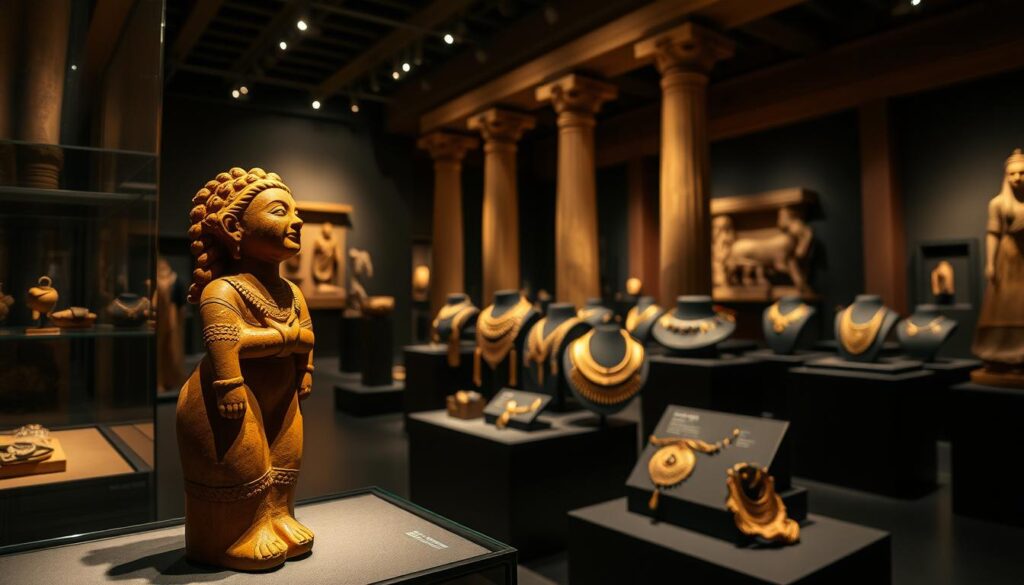
Around 2500 BCE, the Indus Valley civilization built advanced cities like Mohenjo-Daro. Their grid-like streets and drainage systems rival modern urban planning. Archaeologists found bathing pools that might have inspired later ritual cleansings.
Clay seals show figures sitting in yoga poses. One famous artifact depicts a three-faced being surrounded by animals—a possible early version of Shiva. These discoveries suggest spiritual ideas lasting thousands of years.
Newcomers With Fire and Song
Around 1500 BCE, Aryan tribes brought fresh perspectives. Their horse-drawn chariots and Sanskrit hymns mixed with local culture. Fire rituals honoring nature gods became common, blending with existing traditions.
| Aspect | Indus Valley | Aryan Influence |
|---|---|---|
| Urban Planning | Advanced cities | Mobile settlements |
| Spiritual Practices | Yoga imagery | Fire ceremonies |
| Language | Undeciphered script | Sanskrit texts |
| Artistic Legacy | Seal carvings | Oral poetry |
This fusion created something new. As one historian notes: “The meeting of river-farmers and star-readers birthed a tradition embracing both earth and cosmos.” Sanskrit became sacred, carrying wisdom through the ages.
The Composition and Significance of the Vedas
Imagine memorizing entire books without writing a single word. For over 3,000 years, priests preserved India’s sacred wisdom through precise oral transmission. These ancient texts form the bedrock of spiritual tradition, offering guidance for both grand ceremonies and daily life.
Four Pillars of Divine Wisdom
The Rig Veda shines as the oldest collection, with 1,028 hymns praising cosmic forces like Agni (fire) and Indra (storms). Think of it as humanity’s first recorded conversation with the divine. The Sama Veda turns these poems into song—early liturgical music that still inspires chanting today.
Need instructions for sacred rituals? The Yajur Veda delivers step-by-step guides for fire ceremonies. Meanwhile, the Atharva Veda keeps things practical with spells for health, love, and protection. Together, they cover everything from cosmic philosophy to fixing a toothache!
Beyond the Verses
Later works built upon this foundation. Brahmanas explain ritual details like spiritual cookbooks. Aranyakas emerged as forest-dwelling sages sought deeper meanings. Their discussions blossomed into the Upanishads—profound dialogues exploring reality’s nature.
Scholars often compare this structure to a growing tree. “The Vedas are roots,” explains Dr. Anita Sharma, “while later works branch into philosophy while staying grounded in ancient practices.” This living library continues to shape spiritual journeys across generations.
Epic Narratives: Mahabharata and Ramayana
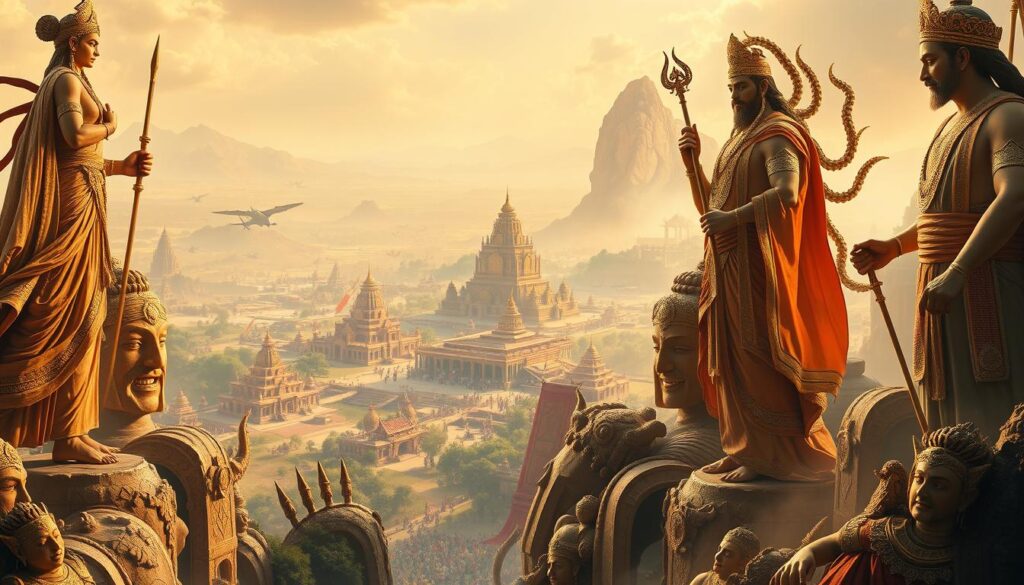
Two timeless stories shape moral foundations across generations. The Mahabharata and Ramayana aren’t just ancient texts—they’re living guides exploring dharma, duty, and human struggles. Families gather to hear these tales, finding new meaning with each retelling.
The Bhagavad Gita and Its Philosophical Impact
At the heart of the Mahabharata lies a battlefield conversation that changed spiritual tradition. When warrior Arjuna hesitates to fight his kin, Lord Krishna shares wisdom transcending time: “Set your heart on action, never on its fruits.” This moment birthed the Bhagavad Gita—a 700-verse roadmap for balanced living.
| Aspect | Mahabharata | Ramayana |
|---|---|---|
| Verses | 100,000+ | 24,000 |
| Core Conflict | Family rivalry | Rescue mission |
| Key Lesson | Ethical dilemmas | Ideal conduct |
| Iconic Figure | Krishna | Rama |
The Gita blends three paths: knowledge (jnana), devotion (bhakti), and selfless action (karma). A New York yoga teacher explains: “Krishna’s advice helps my students face modern stress—it’s about doing right without attachment.”
These epics remain cultural cornerstones. From Bollywood films to Silicon Valley leadership workshops, their lessons adapt to new contexts while preserving ancient truths about life’s complexities.
Temples and Pilgrimages: Centers of Devotion
Sacred spaces and journeys form the heartbeat of spiritual practice for millions. Hindu temples, called mandirs, pulse with daily rhythms that blend artistry with devotion. These vibrant centers host rituals connecting worshippers to the divine through sight, sound, and service.
Mandir Worship and Ritual Practices
Step into any mandir at dawn, and you’ll witness priests performing abhishekam—bathing carved deity figures (murtis) with milk and flowers. These sacred images become divine vessels through precise consecration rites. “We treat murtis like living royalty,” explains a priest from Varanasi. “They’re dressed in silk, fed ceremonial meals, and honored with incense.”
The highlight for devotees is darshan—a soulful exchange where worshippers gaze upon the deity and receive blessings. This practice creates intimate moments of connection, whether in neighborhood shrines or grand South Indian complexes adorned with thousand-pillared halls.
Pilgrimage Routes and Sacred Sites
Journeys to holy places transform faith into footsteps. Four sacred cities form the Char Dham circuit:
| Sacred Site | State | Deity |
|---|---|---|
| Badrinath | Uttarakhand | Vishnu |
| Dwarka | Gujarat | Krishna |
| Jagannath Puri | Odisha | Jagannath |
| Rameshwaram | Tamil Nadu | Shiva |
The Kumbh Mela pilgrimage redefines scale—imagine 50 million people bathing in sacred rivers during peak days. That’s like combining 62 Super Bowl crowds! These gatherings show how ancient traditions thrive in modern times, blending spirituality with jaw-dropping human connection.
The Rise of Devotional Movements and the Bhakti Tradition
Ordinary people reshaped spirituality through song between the 6th and 16th centuries. This devotion revolution declared heartfelt connection more vital than rituals—a message that still inspires millions.
Southern Fire, Northern Flame
Tamil poet-saints ignited change first. The Nayanmars wrote fiery Shiva hymns, while the Alvars composed Vishnu praises comparing divine love to monsoons. Their poetry became sacred texts, showing how verses could unite communities.
Later, North Indian voices added new sparks. Kabir mocked empty rituals with clever rhymes. Mirabai danced while singing Krishna’s praises, defying caste rules. Their songs traveled through markets and fields, making spirituality accessible to all.
This tradition proved love outshines status. As a New York musician notes: “Their words teach us that real devotion needs no permission.” From temple chants to protest songs, this legacy thrives wherever hearts seek connection.
FAQ
What are the Vedas, and why are they important?
The Vedas are ancient sacred texts that form the foundation of spiritual knowledge and rituals. They include hymns, philosophies, and guidelines for rituals, shaping concepts like dharma (duty) and karma (action). These texts remain central to teachings and practices even today.
How do temples serve as centers of devotion?
Temples, or mandirs, are spaces where individuals connect with deities through rituals like puja (worship) and offerings. They symbolize the universe’s divine order and provide a place for community gatherings, festivals, and personal reflection.
What role do the Mahabharata and Ramayana play in daily life?
These epics teach moral values through stories of heroism, duty, and righteousness. The Bhagavad Gita, part of the Mahabharata, offers guidance on balancing action, devotion, and wisdom—principles many apply to modern challenges.
Why are pilgrimages significant in this faith?
Sacred sites like Varanasi or the Ganges River are believed to hold spiritual power. Pilgrimages allow devotees to deepen their faith, seek blessings, and participate in rituals tied to purification and renewal.
How did the Bhakti movement influence traditions?
The Bhakti movement emphasized personal devotion to deities like Vishnu or Shiva, breaking away from rigid rituals. Poet-saints like Mirabai and Kabir composed heartfelt verses that made spirituality accessible to all, regardless of social status.
What connects the Indus Valley civilization to modern practices?
Archaeological finds, like ritual baths and figurines, suggest early forms of worship that evolved into today’s traditions. Concepts of sacred water and fire rituals may trace back to this ancient culture.
How do festivals reflect core beliefs?
Celebrations like Diwali (festival of lights) or Holi (festival of colors) symbolize themes such as good overcoming evil, unity, and renewal. They blend storytelling, rituals, and community bonding to honor divine stories and cycles of nature.
What is the purpose of rituals like aarti or offerings?
Rituals like waving lighted lamps (aarti) or offering flowers create a tangible connection between devotees and the divine. They express gratitude, seek blessings, and align individuals with cosmic harmony.