Recent Posts

Calvary Lutheran Church: Welcoming Community of Faith


Nestled in the heart of Concord, North Carolina, this vibrant congregation invites individuals and families to experience a nurturing environment rooted in compassion, service, and spiritual growth. At its core, the community strives to foster meaningful connections while living out its mission to grow through Christ’s teachings.

The organization’s vision—“Sharing the Light of Christ with everyone”—shapes its approach to outreach and inclusivity. Weekly gatherings include Sunday services at 8:30 AM and 11:00 AM, along with a Thursday evening worship session at 6:00 PM. Whether you’re new to the area or seeking deeper faith-based relationships, the doors are open to all.

Located at 950 Bradley Street, the space serves as a hub for fellowship and support. Office hours run Monday through Thursday (9:00 AM to 3:00 PM), making it easy to connect with staff or learn about ministries. From volunteer initiatives to youth programs, every effort reflects a commitment to generosity and unity.

Key Takeaways

  • A mission-driven focus on building compassionate relationships and spiritual growth
  • Weekly worship opportunities, including Sunday and Thursday services
  • Convenient office hours for inquiries or support (Monday-Thursday, 9 AM-3 PM)
  • Located at 950 Bradley Street in Concord, NC, with contact number 704-782-6923
  • A welcoming atmosphere for both newcomers and long-standing members

Welcome to Our Community of Faith

Our doors are open to all seeking a supportive space to explore and deepen their spiritual journey. Here, you’ll find a group dedicated to building relationships that uplift and inspire. Whether you’re curious about faith or looking to strengthen existing beliefs, this is where belonging begins.

Our Mission and Vision

At the heart of everything lies a simple yet powerful goal: “Growing in Compassionate Relationships.” This mission shapes how members interact, ensuring everyone feels valued and heard. The vision to share hope through service and worship creates a ripple effect of kindness across the area.

One member beautifully summarized the ethos: “We don’t just attend—we actively care.” This mindset fuels initiatives like neighborhood outreach and youth mentorship programs.

How to Connect and Grow Spiritually

Starting your journey here is easy. Reach out via email at officeadmin@clconcord.org for personalized guidance. Explore the online hub for recorded services or visit Pastor František’s page for daily devotionals.

Method Details Benefit
Email officeadmin@clconcord.org Quick answers to questions
YouTube Channel Weekly recorded services Worship anytime, anywhere
Pastor’s Resources Guided prayers & articles Deepen your faith daily

Prefer to send a message? The website offers a contact form for non-urgent inquiries. No matter your starting point, there’s a path here designed to help you thrive.

Worship Services and Spiritual Growth

Finding moments for spiritual connection can transform your week—here’s how we make it accessible. Through diverse worship styles and flexible scheduling, everyone can find space to nurture their faith journey.
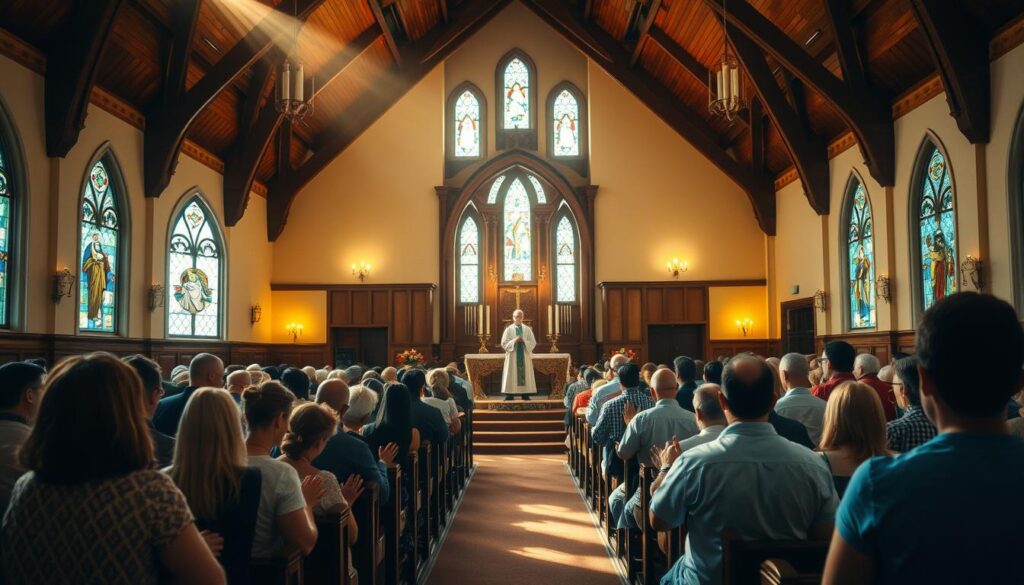
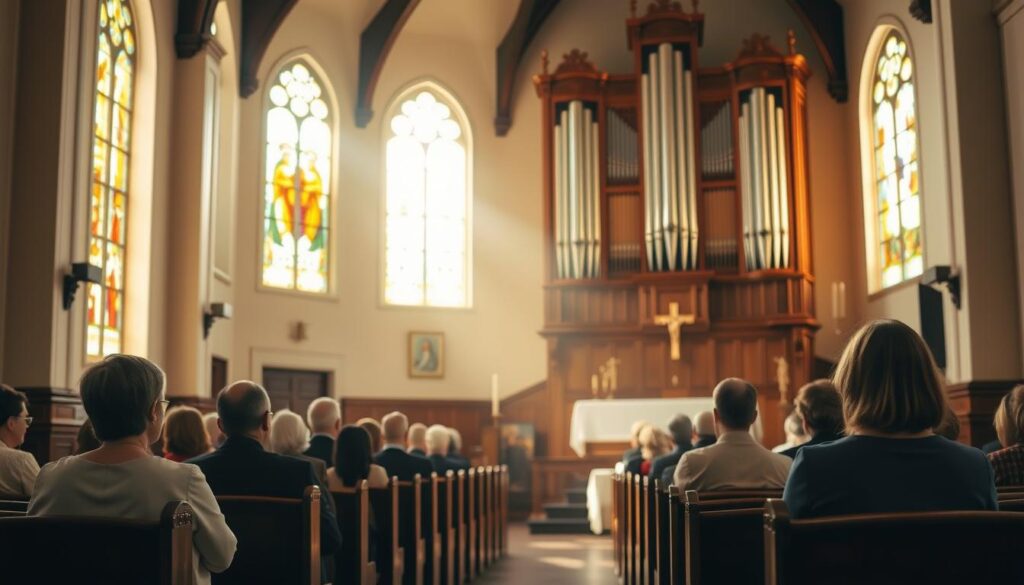
A serene sanctuary with warm, ambient lighting casting a soft glow over a congregation deeply engaged in worship. Pews filled with attentive worshippers, heads bowed in reverence, hands clasped in prayer. At the front, a majestic altar adorned with rich fabrics and elegant candles, presided over by a robed clergy leading the service. Stained glass windows filter sunlight, imbuing the space with a transcendent, ethereal atmosphere. Vaulted ceilings and wooden beams create a sense of timelessness, as the community unites in a sacred ritual of faith and spiritual growth.

Sunday and Thursday Worship Schedules

Start your week with energy at our Contemporary service (8:30 AM) featuring modern music and dynamic teachings. Prefer classic hymns? The Traditional service at 11:00 AM offers timeless liturgy. Recent messages explored the Good Samaritan parable through Deuteronomy, Psalms, and Luke.

Need midweek inspiration? Thursday’s 6:00 PM gathering provides quiet reflection. As one regular attender shared: “These services feel like a reset button for my soul.”

Recorded Services and Special Events

Can’t join in person? Our YouTube channel archives every service. View May-July recordings to catch powerful messages like Colossians 1:1-14 explorations. Newcomers appreciate the easy navigation—sorted by date for quick access.

This summer, dive deeper with the “Heartfelt Hebrews” Bible plan. Launched July 6th, this NC Synod initiative unpacks one of Scripture’s richest books. All are welcome to participate—no prior experience needed!

Discover the calvary lutheran church Experience

Finding your way to a welcoming spiritual home should be simple—here’s everything you need to know. Our team ensures smooth navigation for first-time visitors and longtime members alike.

Location, Directions, and Service Times

You’ll find us at 950 Bradley Street in Concord, NC—a red marker on our digital map pinpoints the spot. Office hours run Monday-Thursday (9 AM-3 PM), perfect for dropping by with questions. Need directions? The interactive map on our website provides turn-by-turn guidance.

As part of the Evangelical Lutheran Church in America, we connect with over 10,000 congregations nationwide. This network strengthens our local outreach while keeping traditions alive. One member recently shared: “The sense of belonging here transcends the walls—it’s a family.”

Joining Our Congregation

Becoming part of our community starts with a simple step. Call 704-782-6923 or email officeadmin@clconcord.org to chat about membership. Friendly staff will explain options like volunteer roles or study groups.

Newcomers appreciate the no-pressure approach to involvement. “They helped me find where I fit naturally,” recalls a recent attendee. Click the contact button on our website to start a conversation—we’ll handle the rest!

Engaging Ministries and Community Outreach

Building stronger communities starts with shared purpose—discover how our initiatives create lasting impact. Through hands-on programs and collaborative learning, members put their faith into action every day.
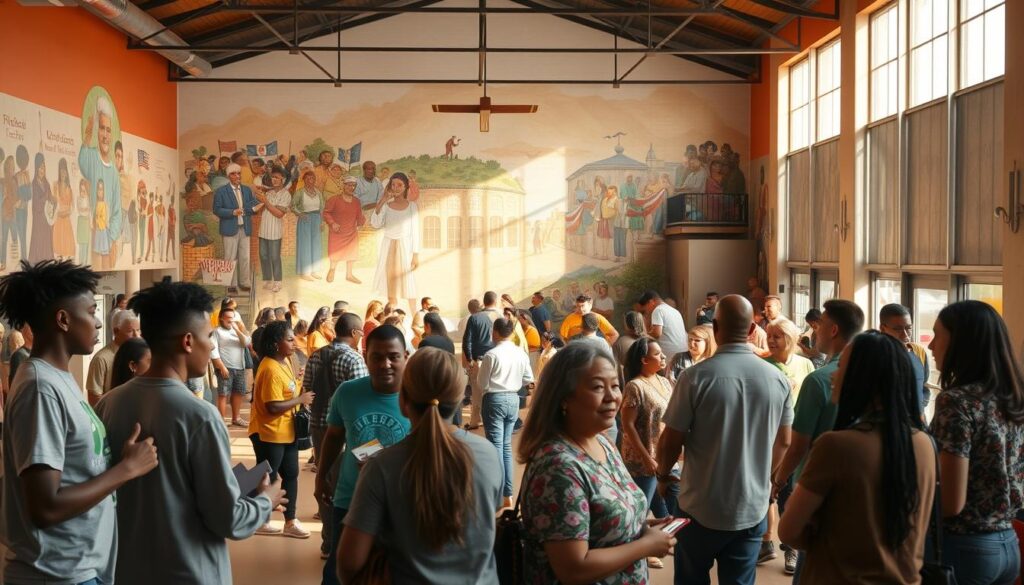
A vibrant community center bustling with activity. In the foreground, a group of volunteers enthusiastically engage with local residents, discussing resources and upcoming events. The middle ground features an open-air gathering space, with people of all ages and backgrounds mingling and collaborating. In the background, a mural depicting scenes of unity, diversity, and civic pride adorns the walls, bathed in warm, natural lighting filtering through large windows. An atmosphere of inclusivity, cooperation, and empowerment permeates the scene, showcasing the church's commitment to meaningful community outreach.

Transforming Lives Through Service

The Calvary Cares program partners with local organizations to address hunger and disaster relief. Recent efforts supported the North Carolina Synod Disaster Fund, helping families rebuild after storms. Donations to the Winecoff Blessing Box provide immediate help—“Every canned good reminds someone they’re not alone,” shares a volunteer.

Learning and Growing Together

Adults deepen their spiritual journey through Sunday morning “Growing in Faith” sessions or Wednesday Bible Study at the Concord Athletic Center. Youth Director Kasi Wilson leads dynamic gatherings, like the July 13th summer event exploring teamwork through Scripture. Small groups thrive on the principle: “Circles build bonds better than rows.”

Ways to Make a Difference

Maintain the Serenity Trail—a peaceful space opened during May’s Trailfest—or tend flowers in the Prayer Garden. Honor loved ones through altar floral arrangements via Pots of Luck Florist ($50 donation). To join efforts, click the volunteer button on our website or email officeadmin@clconcord.org.

Conclusion

At the core of every strong community lies connection—and that’s exactly what you’ll find here. Through compassionate relationships and shared spiritual growth, this Concord-based family of believers creates spaces where lives transform. Whether exploring faith for the first time or deepening your walk, there’s room for your story.

From vibrant worship services to hands-on outreach programs, every initiative reflects a simple truth: everyone matters. As one volunteer puts it, “We’re not just sharing hope—we’re living it together.” The doors stay open wide for those ready to grow, serve, and belong.

Ready to take the next step? Calvary Lutheran Church welcomes you to join a community where faith becomes action. Discover meaningful connections, nourishing teachings, and countless ways to make a difference. Your journey toward purposeful living starts here—let’s walk it together.

FAQ

What are your worship service times?

We host Sunday morning services at 8:30 AM and 11:00 AM, with a Thursday evening option at 6:30 PM. All gatherings are designed to foster spiritual growth and community connection.

How can I become a member?

Start by attending our newcomer sessions or contacting our office. We’ll guide you through the process of joining our faith family and exploring ways to grow spiritually.

Are virtual services available?

Yes! Recorded sessions are accessible on our website, and select events are livestreamed. Check our updates page for real-time links and archived messages.

How do I support outreach programs?

You can volunteer for initiatives like food drives or donate through our secure online portal. Visit the “Community Outreach” section to explore current opportunities.

Is childcare provided during services?

Absolutely. Our nursery and age-specific programs run during all worship hours, ensuring a welcoming environment for families with young children.

What adult learning options exist?

Join small groups, Bible studies, or themed workshops tailored to deepen your faith journey. Seasonal courses are announced in our newsletter and bulletin.

How do I stay updated on events?

Subscribe to our weekly email newsletter or follow social media channels. You’ll receive timely alerts about special services, volunteer needs, and fellowship activities.

Can I request prayer support?

Yes—share requests via our website form, email, or in-person. Our prayer team responds confidentially and promptly to every submission.

Where are you located?

Find directions on our “Location & Service Times” page. We’re conveniently situated near downtown, with ample parking and ADA-compliant facilities.

Do you host seasonal events?

From Advent workshops to summer VBS programs, we celebrate faith through year-round activities. Explore our calendar for family-friendly gatherings and sacred observances.

How can I connect with others midweek?

Join small groups, choir rehearsals, or volunteer teams. Details about meetings and sign-ups are available in our bulletin and online community hub.

What if I need financial assistance?

Our benevolence fund supports neighbors in crisis. Contact our office to discuss confidential aid options or partner with us to help others.

Ascension Lutheran Church: Nurturing Spiritual Growth


Finding a faith-based community that embraces everyone can transform lives. Across New York and Pennsylvania, one organization stands out for its commitment to fostering connections through compassion. With locations in Deer Park, Willow Street, and Robinson Township, this congregation opens its doors to individuals from all walks of life.

The heart of their mission lies in creating spaces where people feel truly welcomed. Rooted in timeless teachings from Scripture, such as Isaiah 41:10’s reminder to “fear not,” members find strength through shared values. Whether you’re exploring faith for the first time or deepening your journey, the emphasis on mutual support shines through every gathering.

What makes this community unique? It’s the blend of meaningful service and genuine relationships. Through outreach programs and worship experiences, participants grow together while making a difference locally and beyond. The inclusive atmosphere ensures that every voice matters—a reflection of their core belief in Christ’s boundless love.

Key Takeaways

  • Multiple locations serve New York and Pennsylvania communities
  • Open-door policy welcomes individuals from diverse backgrounds
  • Guided by biblical principles promoting peace and courage
  • Focus on collaborative service and personal faith development
  • Creates lasting connections through shared spiritual journeys

Discover Ascension Lutheran Church: A Community of Faith

For over sixty years, this congregation has built bridges between timeless teachings and modern life. Rooted in Robinson Township since 1960, it connects with the Evangelical Lutheran Church in America while nurturing local relationships. Every gathering reflects three core principles: faith in action, service to others, and radical hospitality.

Our Beliefs and Values

Central to their identity is the Trinity—Father, Son, and Holy Spirit. Scripture guides decisions, worship, and daily interactions. Members strive to live as Christ’s ambassadors, sharing love through practical acts of kindness. As one leader notes: “We grow stronger when we lift each other up.”

Embracing a Welcoming Spirit

No one walks through the doors as a stranger. The Centro Comunitario exemplifies this commitment, offering resources for diverse needs. Friendships flourish here, whether during Sunday services or volunteer projects. This warmth stems from a simple truth: everyone deserves belonging.

  • Over six decades of service in Robinson Township
  • Active membership in the Southwestern Pennsylvania Synod
  • Community center supporting local families
  • Shared meals, prayer groups, and mentorship programs

Worship and Service Opportunities

Connecting with others through shared spiritual practices strengthens both individual and community bonds. Whether you prefer traditional gatherings or digital participation, flexible options ensure everyone can engage meaningfully.

Your Spiritual Schedule, Your Way

Choose from multiple service times across locations. Willow Street hosts Saturday evening gatherings at 6:00 PM and Sunday mornings at 9:30 AM. Robinson Township welcomes visitors Sundays at 11:00 AM. Can’t attend physically? Facebook Live streams Saturday services, while YouTube archives let you revisit powerful messages anytime.

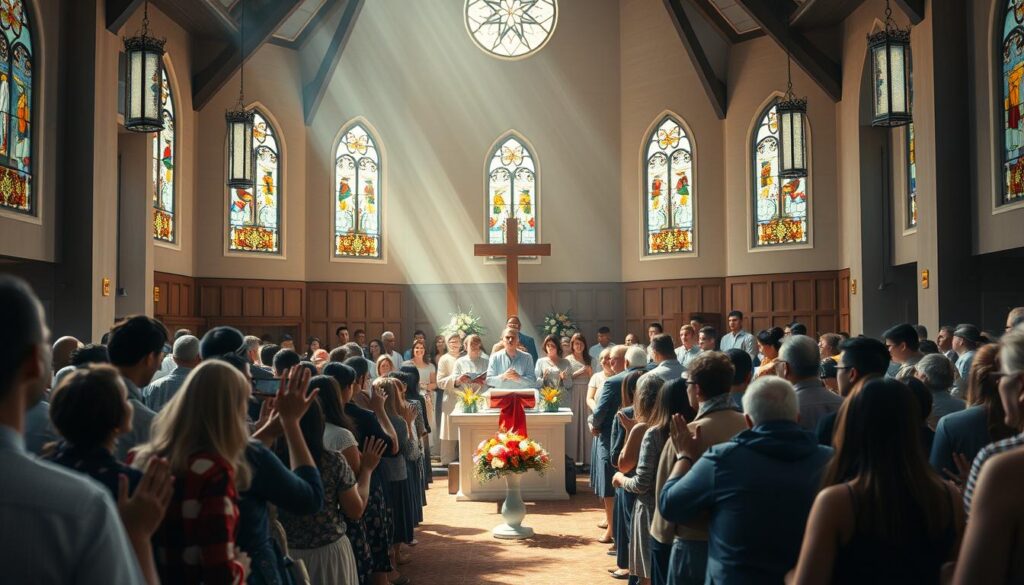
A diverse congregation gathers in a spacious, well-lit sanctuary, their faces radiant with joy and reverence. Sunlight filters through stained glass windows, casting a warm, ethereal glow. In the foreground, worshippers of all ages and backgrounds stand united, their hands raised in praise. The middle ground features a simple, yet elegant altar adorned with vibrant floral arrangements. In the background, a choir sings harmoniously, their voices blending to create a soothing, uplifting atmosphere. The overall scene conveys a sense of inclusive community, where everyone is welcomed and celebrated, united in their pursuit of spiritual growth and connection.

Unity Through Diverse Traditions

Every service blends time-honored liturgy with fresh perspectives. Hymns and modern music coexist, creating spaces where grandparents and grandchildren find common ground. “We’re not about perfect attendance,” shares a longtime member. “We’re about perfect welcome.”

Location Service Times Online Features
Willow Street Sat 6 PM
Sun 9:30 AM
Live Stream
Video Archive
Robinson Township Sun 11 AM Video Archive

For those planning to visit, the Willow Street location offers office hours Tuesday-Thursday from 9:30 AM to 1:30 PM. Reach them at (717) 464-5683 or office@ascensionws.org for personalized guidance.

Faith Growth and Community Outreach

Building a meaningful spiritual life involves both personal growth and collective action. Through intentional programs and neighborhood partnerships, this congregation creates pathways for individuals to deepen their faith while serving others.

Educational Programs and Youth Ministries

Weekly Bible studies explore Scripture through modern lenses, blending Lutheran teachings with practical life applications. Youth groups meet Fridays for activities ranging from service projects to outdoor retreats. “Our teens learn leadership by organizing food drives,” shares a volunteer coordinator. These experiences help young people build confidence alongside lasting friendships.

Community Events and Engagement

The annual Community Yard Sale draws hundreds each spring, raising funds for local shelters. Volunteers team up at the Centro Comunitario, offering bilingual resources and cultural events year-round. Weather updates align with Lampeter Strasburg School District closures, ensuring safety during winter initiatives.

Office hours run Tuesday-Thursday (9:30 AM–1:30 PM) for those seeking involvement. Call (717) 464-5683 to discuss volunteer roles or educational opportunities. Every effort reflects a simple truth: growing together makes faith stronger.

Conclusion

Your journey toward deeper faith and connection starts here. With locations in Pennsylvania and New York, this community opens its doors to all seeking meaningful relationships and spiritual growth. Visit Willow Street’s campus at 600 East Penn Grant Road, Deer Park’s welcoming space on 33 Bay Shore Road, or Robinson Township’s gathering place at 1290 Silver Lane.

Need help finding your way? GPS users can search for “Ascension Lutheran Memorial Gardens” when traveling to the Willow Street location. Detailed directions and office hours ensure stress-free planning. Reach out by phone at (717) 464-5683 or explore online resources to learn more about programs and events.

Whether you’re new to faith or deepening your walk, you’ll find support here. Share in worship that blends tradition with modern relevance, and join service projects that uplift neighbors near and far. Every smile, handshake, and conversation reflects a simple truth: you belong here.

Take the next step today. Discover how this Lutheran church family weaves faith into daily life through compassion, learning, and shared purpose. Your story matters—let’s write the next chapter together.

FAQ

What are your service times?

We host in-person gatherings every Sunday at 9:00 AM and 11:00 AM. A live stream option is also available for those unable to attend physically.

How do you approach inclusivity in worship?

Our services prioritize openness, ensuring everyone feels valued regardless of background. Music, sermons, and fellowship reflect our commitment to unity.

Are there programs for children and teens?

Yes! We offer Sunday School, youth groups, and seasonal events like Vacation Bible School to foster faith growth in younger members.

Can I volunteer for community outreach?

Absolutely. From food drives to neighborhood cleanups, we organize regular events where members can actively support local needs.

Do you host Bible study sessions?

Weekly small-group studies and discussion forums are available for adults. Topics range from scripture exploration to practical faith applications.

How can I connect with others outside Sundays?

Join our midweek fellowship groups, seasonal workshops, or social events like potlucks and game nights to build deeper relationships.

Discover St. Mark Lutheran Church


Nestled in the heart of San Francisco, a historic spiritual landmark has welcomed families for over 175 years. This vibrant congregation holds the distinction of being the oldest Lutheran community in the western United States, blending rich traditions with modern faith practices.

Designed by German-American architect Henry Geilfuss in 1894, the red brick structure stands as an architectural marvel. Its Romanesque Revival exterior contrasts beautifully with intricate Gothic Revival details inside, creating a sacred space that inspires awe. The building has weathered earthquakes and fires, symbolizing the resilience of its members.

Two distinct worship experiences cater to diverse preferences: a lively contemporary service at 8:45 AM and a traditional liturgy at 11:15 AM. Both gatherings occur in the sunlit sanctuary, where stained glass windows cast colorful patterns across wooden pews.

More than just a place of worship, this community actively fosters connections through outreach programs and fellowship events. Visitors often remark on the warm atmosphere that makes everyone feel like part of an extended family.

Key Takeaways

  • Historic spiritual hub in San Francisco serving families since 1849
  • Unique architectural blend of Romanesque and Gothic styles
  • Offers both contemporary and traditional worship services
  • Survived major earthquakes while maintaining structural integrity
  • Active community programs fostering meaningful relationships

History and Heritage of St. Mark Lutheran Church

The story begins amidst the chaos of the California Gold Rush. In 1849, German newcomers arrived in San Francisco seeking spiritual connection alongside economic opportunity. Their determination to preserve cultural traditions planted seeds for what would become a landmark of faith.

Founding Roots and Immigrant Vision

Rev. Frederick Mooshake journeyed from Germany’s Goettingen University that same year. He held services in homes and makeshift spaces, nurturing a community through shared language and customs. For 30 years, these families saved funds and rallied support to construct a permanent home for their beliefs.

Architectural Triumphs and Civic Survival

When completed in 1895, Henry Geilfuss’ red brick masterpiece blended Romanesque strength with Gothic elegance. Just 11 years later, the 1906 earthquake tested its resilience. Though nearby fires raged, the structure sheltered displaced families for weeks, its spire standing tall above the ruined city.

Year Event Impact
1849 First German settlers arrive Laid spiritual foundation
1895 Current building dedicated Architectural milestone
1906 Earthquake & fire survival Community refuge role
2006 Safety renovations completed Modernized historic spaces

Recent $11 million upgrades honor original craftsmanship while meeting seismic codes. Original stained glass and woodwork now shine beside earthquake-resistant supports – a perfect balance of past and present.

Experience st mark lutheran church Community Spirit

San Francisco’s spiritual tapestry owes much to a pioneering congregation established during the Gold Rush era. This community became a blueprint for intergenerational faith preservation, blending European traditions with Californian innovation.

Shaping Spiritual Identity

For 88 years, worship echoed in German within these walls. “Our ancestors carried their faith like precious cargo across oceans,” notes a 1940s parish record. The 1938 shift to English services mirrored the city’s evolving identity while maintaining core Lutheran practices.

A weathered, wooden box lies open, revealing a trove of antique artifacts - a leather-bound journal, a pocket watch, and a tarnished cross. Rays of warm, golden light spill in from a nearby window, casting a nostalgic glow over the historic scene. In the background, the ornate stained-glass windows and towering spire of St. Mark Lutheran Church stand as a testament to the community's enduring spirit. The discovery of this time capsule evokes a sense of wonder and connection to the past, inviting the viewer to imagine the stories and traditions it represents.

Architectural Time Travelers

Builders uncovered hidden treasures during the 2005 upgrades. A copper box buried in 1895 contained:

Item Origin Significance
German hymnal 1863 Cultural touchstone
Bilingual newspapers Gold Rush era Immigrant perspectives
Silver half-dollar SF mint Economic history link

Windows to the Past

The sanctuary’s stained glass tells dual stories. One panel shows Moses with stone tablets beside a Christian cross – visual harmony of shared roots. Modern lighting enhancements make these 19th-century artworks glow brighter than ever.

Through careful updates, the structure maintains its 1895 character while meeting 21st-century needs. Original brickwork now partners with seismic reinforcements, ensuring this landmark shelters future generations.

Worship Services and Community Programs

This vibrant community offers diverse ways to connect through meaningful worship and educational opportunities. Whether attending in person or joining online, visitors find engaging programs tailored for all ages.

On-Campus Worship and Family-Friendly Gatherings

The sunlit sanctuary welcomes families with two distinct Sunday experiences. At 8:45 AM, a contemporary service features interactive Kids’ Chat moments where children gather at the altar for age-appropriate lessons. Parents appreciate how these activities make spiritual concepts relatable for young minds.

Traditional worshippers favor the 11:15 AM liturgy featuring classic hymns accompanied by a magnificent tracker organ. Crafted by Taylor & Boody Organbuilders, this instrument fills the space with rich tones that enhance time-honored rituals. Both services offer communion twice monthly, following Lutheran traditions.

Service Highlights Best For
8:45 AM Modern music
Kids’ Chat
Casual atmosphere
Young families
First-time visitors
11:15 AM Pipe organ hymns
Formal liturgy
Historical elements
Traditionalists
Longtime members

Online Services and Sunday School Offerings

Those unable to attend physically can join live-streamed worship every Sunday morning. The broadcast captures both services in full detail, available later on YouTube for flexible viewing. Virtual participants still feel connected through shared prayers and familiar hymns.

Educational programs thrive across multiple spaces:

Age Group Location Features
Children Youth Rooms Interactive Bible stories
Teens Media Lounge Faith discussions
Adults Heritage Hall Historical theology lessons

Safety remains paramount with updated facilities and trained staff. After the early service, Heritage Hall buzzes with conversation over coffee and fresh pastries – perfect for building new friendships while kids play in supervised areas.

Conclusion

From Gold Rush-era gatherings to modern community initiatives, St. Mark Lutheran Church remains a beacon of resilience. Its story spans 175 years of nurturing faith while adapting to urban challenges. The striking red brick exterior stands as a testament to generations who rebuilt after earthquakes and fires.

Recent upgrades blend historical preservation with forward-thinking service. The 2024 groundbreaking for Ella Rohlffs Place—95 affordable senior homes—shows this heritage congregation’s commitment to civic care. Vibrant worship still echoes through renovated spaces, highlighted by anniversary organ performances.

Visitors discover more than architectural beauty here. They find a family embracing tradition and progress alike. Whether admiring century-old craftsmanship or joining outreach efforts, all contribute to an enduring legacy.

Come experience how San Francisco’s oldest Lutheran community honors its past while shaping tomorrow. Share in meaningful connections that transcend time, anchored in faith that withstands life’s tremors.

FAQ

When was the congregation established?

The faith community traces its roots to 1877, founded by German immigrants seeking to preserve their cultural and spiritual traditions in San Francisco.

How did earthquakes impact the building?

The red-brick structure survived the 1906 earthquake but required major renovations after the 1989 Loma Prieta quake to meet modern safety standards while retaining historic charm.

What community programs are available?

From weekly food pantry initiatives in Heritage Hall to seasonal family gatherings, the congregation fosters connection through outreach, worship, and intergenerational activities.

Are virtual services offered?

Yes! Alongside in-person Sunday worship, the church provides online streaming and interactive Sunday School sessions for remote participants.

Was anything found during renovations?

Workers discovered a 1954 time capsule during updates, containing artifacts that celebrate the congregation’s mid-century milestones and vision.

How does the church honor its heritage?

Original features like stained glass, Gothic arches, and the 1914 pipe organ blend with events highlighting German traditions, creating a bridge between past and present.

Is the sanctuary earthquake-safe today?

Absolutely. Post-renovation upgrades include reinforced masonry, steel supports, and seismic retrofitting to protect both visitors and historic architecture.

Can Heritage Hall be rented for events?

The space hosts community gatherings, from concerts to lectures. Contact staff for details on hosting private functions in this versatile historic venue.

Are services multilingual?

While English is now primary, occasional German-language hymns and events nod to founding traditions, welcoming diverse backgrounds.

Hopeful Lutheran Church: Faith, Fellowship, and Community


Nestled in the heart of Florence, Kentucky, a historic institution has stood as a beacon of spiritual resilience since 1806. Founded by Virginia settlers in Boone County, this congregation’s story reflects the determination of pioneers to establish lasting traditions. Their legacy lives on through a Late Gothic Revival building completed in 1917, the fourth structure to occupy this sacred ground.

The site’s cemetery offers a quiet tribute to generations of families who shaped the area’s identity. Recognized on the National Register of Historic Places in 1989, the grounds blend architectural beauty with cultural significance. Visitors today can trace local history through weathered headstones and admire craftsmanship that has weathered over a century of change.

What makes this place unique isn’t just its age, but its ability to evolve while honoring original values. From hosting community events to preserving ancestral connections, it demonstrates how institutions can adapt without losing their core purpose. The blend of past and present creates a living testament to shared faith and collective effort.

Key Takeaways

  • Founded in 1806 by Virginia settlers, making it one of Boone County’s oldest religious institutions
  • Current Late Gothic Revival building constructed in 1917 as the fourth iteration on the same site
  • Historic cemetery listed on the National Register of Historic Places in 1989
  • Showcases how communities maintain traditions while adapting to modern needs
  • Architectural details and burial grounds provide tangible links to regional heritage

Historical Journey and Community Origins

Fourteen families packed their lives into wagons in 1805, determined to plant their faith in Kentucky’s untamed soil. Their 700-mile trek from Virginia’s Hebron Lutheran community became the foundation story of Boone County’s oldest religious institution.

Founding and Early Beginnings

The Hoffman, Rouse, and Zimmermann families faced swollen rivers and mountain passes during their seven-week journey. Guided by Daniel Boone’s trail, they reached Boone County just before winter. “We carried our hymns like seeds,” one settler later recalled, describing how German-language services began in George Rouse’s cabin.

By 1807, these pioneers built a log meetinghouse on donated land. For eight years, farmer Ephraim Tanner led services until Rev. William Carpenter arrived. A Revolutionary War veteran, Carpenter brought structure from his Virginia congregation, blending frontier resilience with traditional practices.

Community Impact in Early Boone County

The settlers’ German constitution, adopted in 1806, became a social anchor. Their worship space doubled as a school and town hall, fostering unity among frontier families. Annual harvest festivals drew neighbors from miles away, weaving the congregation into the county’s cultural fabric.

Graves in the church cemetery tell silent stories of early pioneers. Their legacy shaped local education, land use, and civic traditions—proof that determined families could thrive where wilderness once ruled.

Architectural and Renovation Milestones

Rebuilding became a recurring theme for this Boone County congregation. After flames claimed three earlier buildings, the 1917 structure rose as a triumph of persistence. Its Late Gothic Revival design featured pointed arches and stone tracery, blending tradition with modern comforts like electric lighting—a rarity in rural Kentucky at the time.

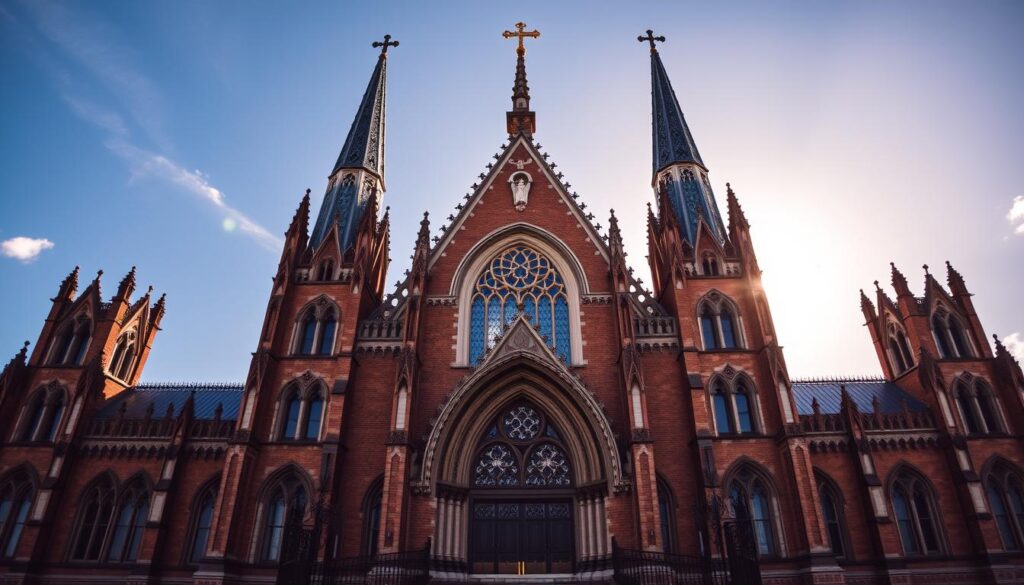
A grand, historic Lutheran church with intricate Gothic-inspired architecture stands tall against a vibrant, cloudless sky. The ornate facade features soaring spires, delicate tracery, and ornamental buttresses that cast dramatic shadows. The main entrance is framed by intricately carved arches and ornate wooden doors. Sunlight streams through the stained glass windows, casting a warm, reverent glow throughout the interior space. The church's stately presence exudes a sense of timeless faith and community, capturing the architectural and spiritual essence of this cherished landmark.

Evolution of Church Structures and Repairs

The $12,000 construction budget funded groundbreaking amenities. A spacious auditorium hosted gatherings, while the kitchen’s enameled sinks reflected contemporary standards. “We’ve built not just walls, but a legacy,” declared one member during the 1917 dedication. Over 1,000 attendees celebrated the achievement, contributing $4,000 in a single day toward remaining costs.

Historic Preservation and the National Register

Decades later, the site earned federal recognition. Added to the National Register of Historic Places in 1989, its 0.5-acre grounds now enjoy protected status. The designation preserves both the building and adjacent cemetery through the National Park Service’s information system. This ensures future generations can study the property’s architectural details and community impact.

Original blueprints show how designers balanced beauty with practicality. Sturdy brick walls replaced flammable materials from earlier structures. Today, careful restorations maintain stained glass windows while upgrading facilities for modern use—a seamless blend of past and present.

Hopeful Lutheran Church in Boone County

This Boone County institution remains a living archive of regional identity. Its impact extends beyond Sunday services, shaping education, genealogy studies, and local traditions for over 200 years.

Influence on Local Heritage and Community Life

The grounds serve as both spiritual home and historical record. With 2,209 memorials, the cemetery documents pioneer stories through weathered inscriptions. Genealogists frequently visit to trace family roots using these markers.

Identifier System Code
GIS Unique ID Boone County 88
Cemetery Index County Map 89
Feature ID US Geological Survey 2090237

Descendants of original families still lead community initiatives today. “Our ancestors taught us to build bridges, not walls,” notes a Hoffman family member active in preservation efforts.

Legacy of Pastoral Leadership

Rev. William Carpenter’s Revolutionary War-era values still guide the congregation. Later pastors expanded outreach programs, including food drives and youth mentorship. This tradition of service strengthens Boone County’s social fabric.

The National Register designation attracts architecture enthusiasts nationwide. Visitors admire Gothic Revival details while learning about Kentucky’s religious history. Through tours and events, the site keeps pioneer stories alive for new generations.

Conclusion

Over two centuries of perseverance have shaped this Boone County landmark into more than just a place of worship. From log cabin meetings to a National Register-listed site, its story showcases how communities endure through shared purpose. Three rebuilds after devastating fires prove that foundations matter more than walls.

Today, the property serves dual roles. It’s both active congregation space and open-air history book. Visitors trace family roots through weathered headstones while admiring Late Gothic Revival architecture that’s survived generations.

What began with fourteen families now impacts thousands annually. Their descendants still lead preservation efforts, ensuring pioneer values inform modern outreach programs. This living legacy reminds us that true institutions outlast buildings—they’re built through collective action and unwavering vision.

FAQ

When was the congregation established in Boone County?

The parish traces its roots to 1848, when German immigrants formed a tight-knit spiritual community. Early services were held in homes before constructing their first sanctuary.

Has the building undergone significant renovations?

Yes. The original 1850s log structure was replaced by a brick edifice in 1898. Major repairs in the 1950s and 1990s preserved its Gothic Revival features, ensuring its place on the National Register of Historic Places.

How did early members shape local heritage?

Founding families like the Muellers and Schmidts contributed to agriculture, education, and civic leadership. Their legacy is honored through preserved records and a maintained cemetery dating to the 1850s.

What role does the parish play today?

It remains a hub for worship, outreach, and cultural events. Annual gatherings like Harvest Fest connect generations while supporting food pantries and youth programs across the region.

Are historical records accessible to the public?

Yes. Archives include minutes from 19th-century meetings, baptismal registries, and photos. Researchers can request access through the Hebron Lutheran Synod’s regional office.

Who were notable leaders in its early years?

Rev. Friedrich Braun, who served from 1862–1889, expanded Sunday school programs. His sermons, written in German script, are displayed during heritage months at the Boone County History Museum.

Apostolic Lutheran Church: Connecting with the Divine


Discover a faith tradition rooted in Scandinavian heritage and heartfelt spirituality. This denomination blends time-honored Lutheran principles with the energy of a 19th-century revival movement, creating a unique space for worship and growth.

Founded by Finnish and Norwegian immigrants, this community emphasizes personal renewal and shared devotion. Through practices like communal prayer and scriptural study, members seek to deepen their relationship with the divine while honoring their ancestors’ spiritual legacy.

What makes this group stand out? Its ability to preserve traditions while adapting to contemporary American life. The focus remains on salvation through grace, forgiveness, and living by sacred teachings – values that continue to shape its identity today.

Key Takeaways

  • Rooted in 1800s Scandinavian immigrant traditions
  • Combines Lutheran theology with revivalist spirituality
  • Emphasizes personal transformation and forgiveness
  • Maintains strong ties to historical practices
  • Fosters close-knit communities across generations
  • Balances tradition with modern American life

Historical Journey and Roots

The story of this faith community begins with determined immigrants carving out spiritual spaces in a new land. Finnish and Norwegian settlers arrived in the 1800s, carrying traditions that would blossom into organized worship groups across America.

Early Beginnings in America

In December 1872, Salomon Korteniemi led excluded members to form their own group. Originally called the Salomon Korteniemi Lutheran Society, this became the first organized expression of their distinct beliefs. By 1879, they adopted the Finnish Apostolic Lutheran name – a title reflecting their evolving identity.

Calumet, Michigan made history in 1872 by hosting America’s first formal gathering. These pioneers transformed northern European customs into sustainable practices for their new home.

Influence of the Laestadian Revival and Finnish Heritage

The spiritual fire came from Swedish preacher Lars Levi Laestadius, whose revival movement spread through Scandinavia. Members brought this energy from Finland and Norway’s state churches, blending it with their cultural identity.

Early congregations in Massachusetts, Michigan, and Oregon shared identical foundations. Their structure preserved Scandinavian values while adapting to American life – a balance still visible today. Through shared rituals and ancestral ties, these communities built bridges between old-world faith and new-world possibilities.

Core Beliefs of the apostolic lutheran church

This faith community anchors its identity in a rich tapestry of spiritual renewal and historical continuity. Members blend time-tested principles with transformative practices, creating a living tradition that speaks to modern seekers.

A tranquil, sunlit sanctuary with wooden pews and stained glass windows casting a warm glow. In the foreground, an ornate altar adorned with a simple cross, symbolizing the Laestadian doctrine's emphasis on simplicity and devotion. The middle ground features worshippers in traditional attire, their expressions reflecting deep contemplation and reverence. In the background, a majestic organ stands tall, its pipes a testament to the rich musical heritage of the Apostolic Lutheran Church. The overall atmosphere conveys a sense of timeless spirituality and unwavering faith.

Doctrinal Foundations and Luther’s Teachings

At the core lies Martin Luther’s Small Catechism, the primary guide for understanding faith. This 16th-century book shapes daily practices through simple explanations of commandments, sacraments, and prayer. As one member notes: “Our teachings flow from scripture first, then Luther’s clear explanations.”

The community embraces three historic statements:

Confession Purpose Relevance
Apostles’ Creed Affirms Trinity Weekly recitation
Nicene Creed Defines Christ’s nature Ecumenical unity
Augsburg Confession Outlines Lutheran theology Doctrinal standard

The Role of Regeneration and Absolution from Sin

Spiritual rebirth forms the heart of their journey. Through the Holy Spirit’s work, believers experience profound inner change. This regeneration isn’t a one-time event but an ongoing process of growth.

Unique to their practice is audible forgiveness during gatherings. Leaders openly declare absolution, echoing Luther’s emphasis on “hearing grace spoken aloud.” This approach helps members confront sin while celebrating liberation through faith.

They maintain a delicate balance – urging separation from harmful influences while embracing mercy for imperfect people. As the Augsburg Confession states:

“Our entire salvation rests on Christ’s work, not human effort.”

Church Practices, Congregations, and Community Impact

At the heart of this spiritual community lies a dynamic approach to leadership and worship. Members blend everyday vocations with sacred callings, creating a faith experience rooted in shared responsibility. This model keeps traditions alive while addressing modern spiritual needs.

Lay Preaching, Minister Training, and Service Traditions

Most spiritual leaders here balance secular jobs with preaching duties. Lay preachers – often teachers, builders, or farmers – study scripture during evenings and weekends. Many now pursue formal education at Michigan’s Inter-Lutheran Theological Seminary, deepening their understanding of sacred texts.

Congregations thrive from Michigan’s Upper Peninsula to New Hampshire’s forests. Each group typically features multiple preachers who rotate sermons, offering fresh perspectives. Monthly communion services unite members, with the first Sunday reserved for this cherished ritual.

Publications and Liturgical Celebrations

Printed materials bind the community across states. The hymnal and altar book preserve centuries-old Scandinavian melodies and prayers. Many also read Rauhan Side (Bond of Peace), a Finnish publication reinforcing doctrinal unity.

Special events highlight cultural roots. Midsummer gatherings feature traditional hymns, while Christmas services glow with candlelit processions. As one leader shared: “Our strength comes from shared leadership and lived faith.”

Missionary efforts extend these practices nationwide. Volunteer preachers travel between states, planting new groups that honor heritage while nurturing modern believers.

Schisms, Evolution, and Comparative Movements

Faith communities often grow through both unity and division. The Laestadian movement’s story includes moments of passionate debate that reshaped its path in America. These disagreements, while challenging, helped different groups focus on what mattered most to their members.

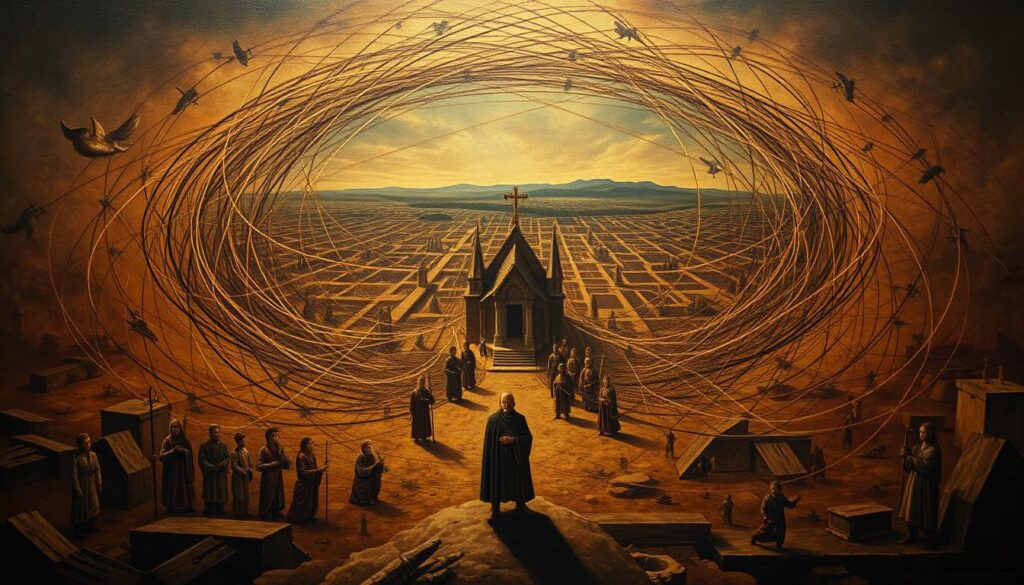
A vast and intricate tapestry of Laestadian movement's historical divisions, captured in a richly detailed oil painting. In the foreground, a central figure representing the original Laestadian church stands resolute, surrounded by a swirling vortex of schismatic movements branching off in various directions. The middle ground is a maze of intersecting lines and shapes, symbolizing the complex web of theological disputes and ideological rifts that have shaped this religious tradition over time. In the distant background, a dimly lit landscape hints at the wider socio-cultural context that has influenced the evolution of these Apostolic Lutheran communities. Warm, earthy tones and dramatic chiaroscuro lighting lend an air of solemn gravitas to the scene, inviting the viewer to ponder the significance of these historic divisions.

Historical Schisms and Doctrinal Disputes

Early splits often centered on how strictly to apply biblical rules. The 1886 Hallite separation began when some felt others neglected practical guidance for daily living. Later divisions followed similar patterns:

Year Groups Core Issue
1921 Heidemanians vs Pollarites Public vs private confession
1940 Koskela faction Role of Old Testament laws
1962 Aunesites & Reedites Leadership authority

These splits created smaller, tight-knit groups. The Old Apostolic branch became the largest by the 20th century, showing how adaptation sometimes follows separation.

Modern Interpretations and Continuing Challenges

Today’s members honor their past while facing new questions. Many know their group as “Mickelsens” – a nod to Reverend Andrew Mickelsen’s mid-1900s leadership. His work balanced tradition with modern needs, setting a pattern still followed.

Current debates often focus on technology’s role and cultural shifts. As one member shared: “We’re learning how to keep our hearts focused while our world keeps changing.” Through it all, the movement’s core goal remains – nurturing faith that transforms lives.

Conclusion

Bridging continents and centuries, this unique faith continues to flourish through family and community. Strong connections to Scandinavian countries remain vital, with spiritual guidance flowing from ancestral homelands to American congregations. The emphasis on multigenerational bonds fuels growth, as values pass naturally through close-knit family networks.

Local groups maintain remarkable independence while sharing core practices. This decentralized approach allows adaptation to regional needs without losing doctrinal unity. Members find strength in balancing historical roots with contemporary expressions of belief – a dance between tradition and relevance.

Challenges emerge in preserving identity amid rapid societal changes. Yet the movement thrives through its focus on spiritual renewal and mutual support. As one elder notes: “Our greatest witness lives in homes, not handbooks.” With no central office, leadership grows organically from local boards and lay preachers.

Looking ahead, this community navigates modernity by clinging to timeless truths. Sacred texts like Luther’s book of catechism remain touchstones, while new generations reinterpret applications. Through it all, the heartbeat persists – faith nurtured in hearts, homes, and humble gatherings.

FAQ

What historical events shaped this faith community in America?

The group traces its roots to Finnish immigrants in the 19th century. They blended Martin Luther’s teachings with the Laestadian revival’s focus on repentance and forgiveness, creating a distinct spiritual identity.

How do teachings on sin and forgiveness influence daily life?

Central to their doctrine is the belief in personal regeneration through absolution. Members emphasize confessing sins openly and seeking grace, which fosters accountability and humility within the community.

Are services led by trained clergy or lay members?

Lay preaching is common, with ministers often chosen from within congregations. Training focuses on scriptural knowledge rather than formal seminary education, reflecting their commitment to accessible spiritual leadership.

What role do publications play in preserving traditions?

Works like Voice of Zion share sermons, testimonies, and hymns. These resources strengthen unity across scattered congregations and pass down teachings to younger generations.

Have modern interpretations caused divisions?

Yes, debates over practices like communion frequency and technology use have led to splits. Some groups adapt cautiously, while others maintain stricter adherence to historic customs.

How does this community support members spiritually?

Regular gatherings, home visits, and mutual encouragement are key. The emphasis on shared repentance and forgiveness creates close bonds, often described as a “family of believers.”

Explore the Lutheran Church Missouri Synod: A Welcoming Community


For over 175 years, families across America have found a spiritual home in a faith community rooted in tradition and warmth. With 1.7 million members, this denomination stands as the second-largest of its kind in the nation, fostering connections from coast to coast. Its story began with a small group of German immigrants, growing into a network of congregations that now spans all 50 states.

What makes this community special? It’s built on timeless values that blend biblical teachings with meaningful relationships. Worship practices honor centuries-old traditions, creating a sense of continuity that resonates with modern families. Members often describe their experience as a journey where faith, service, and fellowship come together seamlessly.

Headquartered in Kirkwood, Missouri, the organization maintains a strong focus on scripture-based guidance. Leaders like President Matthew C. Harrison emphasize outreach programs that address contemporary needs while staying true to core beliefs. From local volunteer initiatives to nationwide partnerships, there’s always a way to contribute and connect.

Whether you’re seeking spiritual growth or a supportive network, this denomination offers opportunities to thrive. Its commitment to authenticity and care continues to draw people looking for a place to belong.

Key Takeaways

  • Second-largest Lutheran denomination in the U.S., with 1.7 million members as of 2022
  • Founded by German immigrants over 175 years ago, now active in all 50 states
  • Balances traditional worship practices with modern community outreach
  • Headquartered in Kirkwood, Missouri, led by President Matthew C. Harrison since 2010
  • Focuses on scripture-based teachings and family-centered fellowship

Overview of the Lutheran Church – Missouri Synod

Home to America’s largest Protestant school network, this denomination shapes futures through faith-based learning. With 1.7 million members and nearly 6,000 congregations nationwide, it creates thriving communities where families connect through shared values. Over 800 elementary schools and 100 high schools form its educational backbone, serving students while nurturing spiritual growth.

Global partnerships through the International Lutheran Council strengthen its mission. These ties allow members to collaborate with like-minded groups worldwide while maintaining doctrinal consistency. Two seminaries and seven universities further equip leaders to serve modern needs without compromising traditional teachings.

Category Primary Schools High Schools Colleges
Number of Institutions 822 99 7
Students Served Annually 85,000+ 23,000+ 15,000+

Local congregations remain central to its identity, offering worship services and volunteer opportunities tailored to community needs. From food drives to youth programs, these groups put faith into action daily. Recent surveys show 94% of participants feel more connected to their neighbors through these initiatives.

Educational excellence meets spiritual guidance in this network of caring communities. Whether through Sunday services or classroom discussions, members find meaningful ways to grow together while honoring timeless principles.

Historical Origins and Early Development

America’s heartland became a refuge for European believers seeking to protect their spiritual heritage. A wave of determined German immigrants arrived in the 1830s, carrying Bibles and dreams of religious autonomy. Their courage laid the groundwork for a faith movement that would reshape American Christianity.

Saxon Immigration and Settlement

In 1838, over 600 travelers boarded ships bound for New Orleans, fleeing government pressure to abandon traditional teachings. Led by Pastor Martin Stephan, this group settled along the Mississippi River, establishing roots in Perry County, Missouri. Rough terrain and harsh winters tested their resolve as they built log churches and schools from scratch.

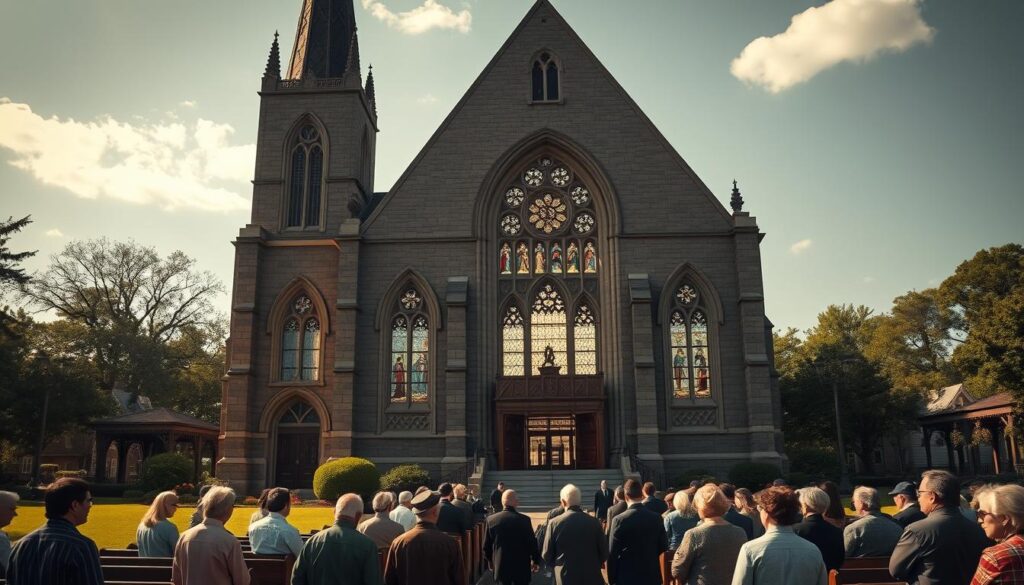
A grand Lutheran church in the Missouri Synod style, constructed in the late 19th century. The ornate spire and intricate stone facade stand tall, casting long shadows across the well-manicured lawn. Sunlight streams through stained glass windows, illuminating the ornate interior with its wooden pews and pulpit. In the foreground, a group of parishioners gathers, their expressions conveying a sense of community and devotion. The scene exudes a timeless, reverent atmosphere, capturing the historical origins and early development of this influential branch of Lutheranism.

These pioneers prioritized education, founding Concordia Seminary just four years after arrival. Their commitment to scripture-based teaching created a blueprint for future growth. By 1845, their settlements near St. Louis had become hubs for theological discussion and community support.

Löhe Missionaries and Early Work in America

Bavarian pastor Wilhelm Löhe recognized the need for trained spiritual leaders in growing immigrant communities. Starting in 1841, he dispatched over 80 ministers to serve German-speaking families across the Midwest. These missionaries traveled by horseback and wagon, establishing evangelical lutheran congregations in Ohio, Michigan, and Indiana.

The synergy between Saxon settlers and Löhe’s recruits proved transformative. Together, they developed a network of churches that blended European traditions with frontier pragmatism. This partnership ensured doctrinal consistency while adapting to America’s unique cultural landscape.

Formation and Growth of the LCMS

A group of twelve visionary leaders gathered in Chicago on April 26, 1847, sparking a movement that would reshape American religious life. Their meeting at First Saint Paul Lutheran Church united representatives from fourteen congregations across six states, laying the foundation for a new era of faith-based collaboration.

The organization began as the German Evangelical Lutheran Synod of Missouri, Ohio and Other States—a name reflecting its roots and expansive vision. Under founding president C.F.W. Walther’s leadership, the group prioritized doctrinal consistency while addressing the needs of growing immigrant communities.

Growth came swiftly. From its modest beginnings, membership surged to 687,000 by 1897, demonstrating widespread resonance with families seeking traditional worship practices. This expansion coincided with the establishment of educational institutions and outreach programs that strengthened community ties.

In 1947, a significant milestone brought simplification. The denomination adopted its current name during centennial celebrations, signaling its evolution into a fully American institution. This change mirrored broader cultural shifts while maintaining core commitments to scriptural teachings.

Three key factors fueled this remarkable journey:

  • Unwavering focus on confessional Lutheran principles
  • Strategic leadership transitions preserving theological integrity
  • Adaptive community-building approaches meeting changing needs

Today, this legacy continues through thriving congregations and educational initiatives nationwide. The original founders’ dedication to unity and tradition remains central to its identity.

Understanding the lutheran church mo synod

Guided by centuries-old confessions, this faith community anchors its practices in scriptural truth. Its approach combines historical teachings with practical faith application, creating a stable foundation for spiritual growth.

A serene Lutheran church interior, bathed in warm, natural light from large stained-glass windows. In the foreground, a simple wooden altar and pulpit, conveying the austere yet reverent nature of Confessional Lutheran worship. In the middle ground, rows of plain, sturdy pews, hinting at the emphasis on the congregational community. The background features a soaring, vaulted ceiling adorned with intricate wooden beams, evoking the rich historical traditions of the Lutheran faith. The overall mood is one of quiet contemplation and unwavering devotion, reflecting the core principles of Confessional Lutheranism.

Core Principles in Action

Every congregation operates under a shared commitment to the Book of Concord, a collection of Reformation-era documents. This ensures teachings remain consistent across 6,000+ locations. Leaders and members alike pledge to uphold these standards, maintaining unity in belief and practice.

Feature LCMS Practice Other Lutheran Bodies
Scriptural Authority Inerrancy of Bible Varied interpretations
Religious Partnerships No joint worship with differing doctrines Frequent ecumenical collaborations
Educational Materials Approved resources only Mixed secular/religious content

This structure prevents theological confusion while encouraging deep scriptural study. Families appreciate knowing their children learn from materials that align with Sunday teachings. Over 94% of surveyed participants report feeling confident in their congregation’s doctrinal clarity.

The balance between tradition and outreach creates vibrant communities. Weekly services blend ancient liturgies with modern concerns, helping members connect timeless truths to daily life. This careful stewardship of heritage continues attracting those seeking rooted yet relevant faith experiences.

Core Doctrinal Beliefs and Confessions

At the heart of this faith tradition lies a steadfast commitment to timeless spiritual truths. Rooted in ancient creeds and scriptural teachings, its framework guides both personal devotion and community practices.

The Book of Concord and Lutheran Confessions

Three historic statements—the Apostles’, Nicene, and Athanasian Creeds—form the foundation of belief. These documents unite members through shared affirmations of the Holy Trinity. The Book of Concord further clarifies teachings, ensuring consistency across generations.

Sacraments and Liturgy

Baptism and communion serve as sacred anchors in worship. Infants and adults alike receive grace through water and word in baptism. Weekly services blend structured prayers with scripture readings, creating rhythms that deepen faith connections.

Ethical stances reflect these core principles. Leaders emphasize protecting life at all stages and upholding marriage traditions. Through liturgy and action, timeless truths meet modern challenges with clarity and compassion.

FAQ

What makes the LCMS distinct from other Christian denominations?

The LCMS holds firmly to confessional Lutheran teachings, emphasizing Scripture as the sole authority. It follows the Book of Concord and practices closed communion, reserving the sacrament for those who share its doctrinal beliefs.

How does the LCMS view baptism and communion?

Baptism and the Lord’s Supper are seen as sacraments instituted by Christ. The body and blood of Jesus are believed to be truly present in communion, offering forgiveness of sins through faith.

What role does liturgy play in worship services?

Liturgy connects congregations to historic Christian traditions, blending Scripture readings, hymns, and sacraments. Many parishes follow structured services rooted in the Lutheran Confessions to nurture spiritual growth.

Are LCMS congregations involved in community outreach?

Yes! Many parishes run schools, food pantries, and global missions. Organizations like Concordia Publishing House and Lutheran World Relief reflect its commitment to serving others locally and worldwide.

How does the LCMS approach theological disagreements?

Leaders prioritize unity through Scripture and the Lutheran Confessions. While open to dialogue, the synod maintains clear doctrinal boundaries to preserve its identity and teachings.

Can non-members participate in communion?

Out of love for doctrinal clarity, communion is typically reserved for those who share the LCMS’s beliefs. Guests are encouraged to speak with the pastor before attending the Lord’s Supper.

What educational resources does the LCMS provide?

The synod supports schools, seminaries like Concordia Seminary, and publishing efforts to teach Scripture and Lutheran theology. Programs for youth and adults foster lifelong faith development.