Welcome to a welcoming, faith-centered community where spiritual growth and service go hand in hand. At its core, this congregation fosters connections through shared values and a commitment to uplifting others. No matter your background, you’ll find a place to belong here.
Join us Sundays at 9:00 AM or 10:45 AM for uplifting services designed to inspire. Come as you are—whether you’re exploring faith or deepening your journey. Our gatherings blend heartfelt worship with practical teachings that resonate daily.
Rooted in history yet forward-thinking, this church balances tradition with modern outreach. From food drives to youth mentorship, every initiative reflects a mission to serve neighbors near and far. As part of the First Baptist network, it honors a legacy of faith while embracing fresh ways to make an impact.
Key Takeaways
Services are held Sundays at 9:00 AM and 10:45 AM, welcoming all backgrounds.
Blends historical roots with modern community-focused programs.
Prioritizes spiritual growth through inclusive worship and outreach.
Part of the First Baptist network, emphasizing legacy and innovation.
Active in initiatives like food drives and mentorship to uplift the area.
Updates from umatilla baptist church
The community is buzzing with fresh initiatives and historic achievements this season. Recent announcements highlight how collective efforts continue to strengthen bonds while creating meaningful change.
Recent Announcements and Community Milestones
This fall brings exciting progress, including the celebration of 50 years of youth mentorship programs. Over 300 volunteers recently packed meals for local families, reflecting the group’s hands-on approach to service. These efforts align with their mission to blend compassion with action.
Groundbreaking Ceremony for the New Sanctuary
Mark your calendars for Sunday evening, October 16! A special ceremony begins at 5:30 p.m. on the east side of the campus (550 Hatfield Drive). This $14 million expansion will create a modern worship space while preserving the site’s historic charm.
The event includes guided tours of the future community gathering areas and light refreshments afterward. Leaders describe this project as “a bridge between our roots and tomorrow’s possibilities,” ensuring facilities meet growing needs without losing timeless values.
Explore Community Services and Upcoming Events
Gatherings here spark connections through shared purpose and celebration. Whether you’re seeking inspiration or ways to give back, opportunities abound to engage meaningfully.
Join Us This Weekend
Two Sunday gatherings let you choose what fits best: 9:00 AM for reflective worship or 10:45 AM for lively music and messages. Both services include interactive teachings rooted in timeless values. “You’re invited to experience something special with us this Sunday!”
Music That Moves Hearts
Mark September 27 on your calendar! Grammy-winning artist Steven Curtis Chapman brings his uplifting melodies to FBCU. Use code CHURCH at checkout for $10 off tickets—a gift to our local supporters.
Your Invitation to Serve
Stay updated through weekly emails and social posts highlighting volunteer roles. Current needs include:
Meal prep teams for neighborhood outreach
Mentors for after-school programs
Greeters for first-time visitors
One member recently shared: “Finding my place here transformed how I see community.” Whether through events or everyday acts of care, everyone contributes to something greater.
Latest on Church Expansion and New Projects
A new chapter begins as construction starts on a transformative project decades in the making. This initiative blends modern needs with enduring values, creating spaces where connection and growth thrive.
$14 Million Expansion and Facility Improvements
After 20 years of planning, heavy equipment will soon reshape the landscape at 550 Hatfield Drive. The centerpiece? A 45,000-square-foot sanctuary designed for 1,270 people. Crews aim to complete this $14 million effort within 12-15 months.
Feature
Details
Timeline
Main Sanctuary
45,000 sq ft
Phase 1
Seating Capacity
1,270 seats
2024 Completion
Total Investment
$14 million
Multi-year plan
Future Renovations and Additional Amenities
Once the sanctuary opens, attention shifts to the events center. Nine new classrooms will support youth programs and small group meetings. Temporary service adjustments include:
Outdoor gatherings during peak construction
Updated parking maps for weekend events
Volunteer teams assisting with relocation logistics
Leaders call this expansion a “people-driven initiative” that honors history while preparing for tomorrow. Sunday services continue uninterrupted at 9:00 AM and 10:45 AM, with updates shared through email alerts.
Conclusion
As seasons change, one truth remains clear: communities thrive when people unite around shared purpose. The initiatives highlighted here—from meal drives to youth programs—show how small acts create big impacts. Every volunteer hour and Sunday service weaves a stronger fabric of connection.
This historic location continues evolving while staying rooted in timeless values. The upcoming sanctuary expansion reflects a commitment to meeting modern needs without losing sight of what matters most. “Growth isn’t just about buildings,” as one member noted. “It’s about hearts.”
Whether you join through worship, service, or simply staying informed, your presence matters. Check the latest content online for event updates or ways to contribute. Together, we’re building a future where faith and action walk hand in hand.
Come be part of the story—your chapter starts now.
FAQ
What time are Sunday services held?
Weekly gatherings take place at 9:30 AM and 11:00 AM. Childcare and youth programs are available during both sessions.
How can I attend the Steven Curtis Chapman concert?
Tickets for the November 18 event are free but require registration through the official website. Seating is first-come, first-served.
What improvements are included in the million expansion?
The project adds a 900-seat worship space, modern classrooms, and upgraded parking. A new café and outdoor gathering areas will open in 2024.
Are volunteer opportunities available for community programs?
Yes! Teams welcome help with food drives, youth mentoring, and outreach events. Visit the Connect Desk on Sundays or email outreach@umatillabc.org.
Will the building renovations affect weekly activities?
Current services and events will continue as scheduled. Temporary signage and staff will guide attendees during construction phases.
Where is the new sanctuary located?
The expanded facility sits on the existing campus at 550 E. Collins Street. Accessible entrances and guest parking are clearly marked.
Walking into a place where you’re greeted like family can feel rare these days. At this vibrant spiritual home, every smile and handshake carries genuine warmth. The atmosphere radiates an energy that says, “Come as you are”—no pretenses, no expectations.
What makes this congregation special? It’s the intentional focus on creating connections. People from different backgrounds share stories over coffee, while kids laugh in brightly lit hallways. Whether you’re exploring faith or deepening your journey, there’s space for you here.
The church’s heartbeat is its mission to blend truth with compassion. Weekly gatherings mix timeless wisdom with practical guidance for modern life. Through volunteer initiatives and small groups, members discover meaningful ways to grow together while serving their neighborhood.
Key Takeaways
A warm, family-like environment prioritizes authentic relationships
Open to individuals at every stage of their spiritual journey
Balances traditional values with contemporary community engagement
Offers diverse programs supporting personal and collective growth
Encourages active participation through service and fellowship
Stay tuned as we explore how this community brings its values to life through worship, outreach, and shared experiences. You’ll see why so many call this place their spiritual home.
Welcome to Our Community
Finding your place in a caring community starts with feeling seen and valued. Here, relationships form through shared moments—whether it’s a conversation after service or collaborating on neighborhood projects. First-time visitors often remark how quickly they feel at home, thanks to thoughtful gestures like personalized welcome packets and friendly guides.
Embracing New Members
Newcomers receive more than just handshakes. Seasoned members actively listen to your story while helping you navigate programs that match your interests. One recent attendee shared:
“I expected to feel lost in the crowd, but they remembered my name—and my coffee order—by week two.”
Connecting Digitally with the Church Center App
Stay engaged beyond Sunday mornings using the intuitive Church Center App. Search for “Judson Baptist Church” in your app store to:
Join Life Groups exploring faith topics
Register for family-friendly events
Securely check kids into childcare
The app simplifies involvement while preserving face-to-face connections. Over 60% of members use it weekly to sign up for volunteer opportunities or share prayer requests. Whether you’re tech-savvy or prefer paper bulletins, support is always available.
Experience Judson Baptist Church Ministries
Every Sunday brings fresh opportunities to connect and deepen your beliefs. Whether you prefer quiet reflection or lively discussion, there’s a place for you here. The weekly rhythm includes small groups at 9:15 AM followed by worship at 10:30 AM, creating space for both learning and celebration.
Overview of Worship Services
Morning gatherings balance time-honored traditions with modern expressions of faith. Small groups kick things off with Bible studies tailored to different life stages—singles, parents, and seniors all find relevant topics. The main service features:
Blended music styles from hymns to contemporary worship
Practical messages applying scripture to daily challenges
Interactive prayer stations for personal reflection
Service Element
Format
Focus Area
Small Groups
Discussion-based
Community building
Traditional Worship
Organ & choir
Historical liturgy
Modern Worship
Band-led
Cultural relevance
Outreach Focus
Service projects
Practical faith
Opportunities for Spiritual Growth
Beyond Sundays, members explore faith through book clubs, mentorship programs, and service teams. One participant shared: “The marriage enrichment course helped us communicate better in just six weeks.” Seasonal workshops cover topics like financial stewardship and grief support, ensuring every life season finds guidance.
Newcomers can join introductory classes that explain core beliefs without pressure. These safe spaces encourage questions while building foundational knowledge. Through these layered approaches, individuals develop faith that works in real life—not just on Sundays.
Community Engagement and Local Outreach
True community thrives where care meets action. At 32470 Walker Road North, neighbors become partners through shared goals. This location serves as both a spiritual hub and gathering place for practical support.
Your Gateway to Connection
Weekly rhythms here blend worship with service. Small groups meet Sundays at 9:15 AM, followed by main gatherings at 10:30 AM. First-time attendees appreciate the clear signage and ample parking—no guessing games.
Activity
Day
Impact Focus
Food Pantry
Wednesdays
Hunger relief
Tutoring Program
Thursdays
Youth education
Senior Visits
Saturdays
Companionship
Building Bridges Beyond Sunday
Monthly initiatives unite locals through seasonal projects. Recent highlights include:
Back-to-school supply drives serving 300+ students
Free car care clinics for single parents
Neighborhood clean-up days with city partnerships
One volunteer shared: “Helping at the holiday meal event showed me how much we can accomplish together.” These efforts reflect the congregation’s belief that faith grows through service. Whether you’re available weekly or occasionally, there’s always room to contribute.
Conclusion
In a world where connection often feels fleeting, this faith community stands out by weaving together tradition and innovation. Its welcoming environment bridges generations and life experiences, offering something valuable whether you’ve attended services for decades or never stepped inside a sanctuary.
The Church Center App keeps involvement simple, letting newcomers join events or explore groups in three taps. What truly matters shines through—the focus on growing spiritually while lifting up neighbors.
From weekly gatherings to neighborhood partnerships, every effort reflects a core truth: faith thrives when rooted in action. Real relationships form here, built on shared purpose rather than perfect attendance.
Ready to see the transformative power of faith in action? Join the Judson Baptist Church family this Sunday or connect digitally today. Step through the doors or download the app—your journey toward meaningful connection starts here.
FAQ
How can I become part of this faith community?
Start by attending Sunday services or joining a small group. Visit our welcome desk or explore the Church Center app to learn about membership steps and upcoming events.
What digital tools help members stay connected?
The Church Center app lets you access sermons, sign up for events, and receive updates. You can also join virtual Bible studies or connect with ministry teams through the platform.
What types of worship gatherings are available?
We host traditional Sunday morning services and contemporary evening worship. Seasonal events like Easter celebrations and Christmas concerts are also open to all.
Are there programs for personal spiritual development?
Yes! Explore midweek Bible studies, youth discipleship classes, or adult mentorship opportunities. Seasonal workshops on topics like prayer and family faith are also offered.
How does the congregation support local outreach?
We partner with food banks, host free community meals, and organize charity drives. Volunteer teams also serve at schools, shelters, and neighborhood clean-up projects.
Where is the congregation located, and when are services held?
Our building is near downtown, with Sunday services at 9:00 AM and 11:00 AM. Wednesday evening programs start at 6:30 PM. Detailed directions are on our website.
What events are open to neighborhood participation?
Join our annual fall festival, summer backpack drive, or free parenting seminars. Art classes, sports leagues, and music nights are also available for all ages.
Step into a faith tradition rooted in historical resilience and modern-day compassion. For over three centuries, this denomination has championed spiritual autonomy and community uplift, blending timeless values with evolving societal needs.
Originating from early General Baptist teachings, the movement grew through collaboration with Puritan dissenters. Leaders like Benjamin Randall and Paul Palmer shaped its identity, emphasizing personal choice in salvation and scriptural authority. Their efforts laid groundwork for religious freedom across America.
Today, congregations prioritize service through food banks, youth programs, and disaster relief. This hands-on approach reflects core beliefs: every individual holds inherent worth, and collective action creates lasting change.
Key Takeaways
Founded on 18th-century principles of spiritual freedom and biblical truth
Pioneered religious liberty concepts during America’s formative years
Maintains active outreach through local congregations nationwide
Blends historical theology with contemporary community service
Recognized for structured denominational cooperation since 1935
Overview of Free Will Baptist Church History & Origins
The roots of this faith community stretch back to 17th-century England, where early dissenters championed personal spiritual choice. These reformers, later known as General Baptists, emphasized scripture over hierarchy—a radical idea that crossed oceans with colonists seeking religious freedom.
Early Beginnings and the Influence of General Baptists
By the 1700s, these ideas took firm root in colonial America. Leaders emerged who valued both individual conscience and collective worship. Their approach laid groundwork for structured religious organizations while maintaining local autonomy—a balance that still defines many congregations today.
Palmer and Randall Movements in American History
Paul Palmer planted early seeds in North Carolina between 1702 and 1727, establishing communities that prioritized accessible theology. His work created a blueprint for expansion, proving that grassroots efforts could thrive even without centralized control.
Further north, Benjamin Randall sparked a parallel movement in New England. His teachings attracted diverse followers by blending traditional beliefs with practical community support. This era saw the first formal associations, marking a shift toward organized collaboration among independent groups.
Historical challenges like debates over slavery tested these networks, revealing both strengths and fractures. Some groups merged with larger denominations, while others maintained distinct identities. These decisions shaped the faith’s trajectory, demonstrating how adaptability preserved core values through changing times.
Foundations in Theology and Beliefs
Central to this denomination’s identity are principles that shape spiritual journeys and daily practices. Its teachings balance divine grace with human responsibility, creating a framework for meaningful faith experiences.
Core Doctrines: Free Salvation, Free Will, and Conditional Security
Believers emphasize free salvation—a gift available to all through Christ. Unlike groups teaching eternal security, they hold that faith requires ongoing commitment. “Salvation isn’t a one-time event but a lifelong walk,” explains a 19th-century doctrinal statement.
This conditional security view stems from biblical interpretations of perseverance. Members believe personal choice remains vital, rejecting rigid predestination. Historical debates with Calvinist groups reinforced these ideas, particularly during the Second Great Awakening.
Observance of Ordinances and Biblical Principles
Three key practices anchor worship:
Believer’s baptism by immersion
Regular communion services
Optional foot washing ceremonies
These rituals mirror New Testament examples while allowing local adaptations. Many congregations follow monthly communion schedules, seeing it as both remembrance and spiritual renewal.
Practice
Frequency
Scriptural Basis
Baptism
Once per believer
Matthew 28:19
Lord’s Supper
Monthly
1 Corinthians 11:24-26
Foot Washing
Varies
John 13:14-15
Early leaders like Paul Palmer integrated these traditions from General Baptist roots. Their emphasis on practical faith continues influencing how communities live out beliefs today.
Community Outreach, Mission, and Ministry Impact
Transforming lives through action defines the heart of this denomination’s mission. From neighborhood tutoring programs to overseas disaster relief, congregations bridge faith and service in tangible ways. This hands-on approach reflects centuries-old values adapted for modern challenges.
Local Ministry, Education, and Social Initiatives
Neighborhoods nationwide benefit from practical support systems. Over 80% of congregations operate:
After-school literacy hubs
Emergency food pantries
Job skills workshops
In Tennessee, one group renovated abandoned buildings into affordable housing. “We don’t just preach hope—we build it,” shares a ministry leader. Partnerships with local schools provide free tutoring, while recovery programs address addiction through counseling and mentorship.
Global Mission Efforts and Evangelical Outreach
Teams work across 15 countries, focusing on sustainable solutions. Recent projects include:
Medical clinics in rural Guatemala
Clean water systems in West Africa
Disaster response training in Southeast Asia
Biennial general conferences unite members to share strategies and resources. These gatherings spark collaborations—like a 2023 initiative planting 50 new congregations in urban centers. Through these efforts, historical principles of compassion meet 21st-century innovation.
Enduring Legacy and Influence in the United States
Across rolling hills and bustling cities, a quiet revolution of faith continues shaping American spirituality. This denomination’s story isn’t just about buildings or doctrines—it’s about people choosing hope over hardship, generation after generation.
Historical Growth and Key Influential Figures
Visionaries like Benjamin Randall and David Marks turned scattered congregations into a cohesive movement. Randall’s 18th-century New England revivals emphasized practical faith—feeding the hungry while sharing scripture. Marks later bridged regional divides through his writings, proving unity could thrive without uniformity.
By 1935, separate groups merged under the National Association. This union combined resources while preserving local decision-making—a balance honoring their General Baptist roots. “Our strength lies in cooperation, not control,” declared early conference minutes.
Union, Denominational Developments, and Modern Presence
Today’s structure supports 2,000+ congregations through shared missions and training programs. Annual gatherings at the general conference spark collaborations like urban outreach hubs and disaster response networks.
Modern ministries blend tradition with innovation:
Digital prayer chains supplement in-person services
Historic meeting houses host coding classes
Youth camps teach both scripture and environmental stewardship
Through every change, the core remains: empowering individuals to serve their neighbors. From frontier log churches to city community centers, this legacy of adaptable compassion keeps writing new chapters.
Conclusion
Through centuries of change, this faith community’s three-century journey stands as a testament to spiritual perseverance. Rooted in General Baptists’ principles of personal choice and scriptural authority, its story weaves through colonial revivals, doctrinal debates, and modern service initiatives.
The tradition thrives by balancing divine grace with human responsibility. Core doctrines emphasize accessible salvation paired with active commitment—a combination fueling food banks, disaster response teams, and youth mentorship programs. Scriptural practices like believer’s baptism remain vital touchstones, connecting modern members to historical foundations.
Today’s organizational bodies preserve unity through collaborative networks while empowering local congregations. From Appalachian towns to urban centers, missions address pressing needs through medical outreach and educational partnerships. Recent efforts continue a legacy where faith meets action, proving timeless values adapt to new challenges.
Curious explorers will find living history in vibrant communities nationwide. Whether through Sunday services or volunteer opportunities, these churches extend an open invitation. Their narrative—crafted through resilience and renewal—reminds us that enduring faith grows when rooted in service and shared purpose.
FAQ
What distinguishes Free Will Baptists from other Baptist groups?
They emphasize free will in salvation, rejecting predestination. Their teachings highlight personal choice in accepting faith, conditional security of believers, and adherence to ordinances like believer’s baptism and communion.
How did the Palmer and Randall movements shape their history?
Paul Palmer’s early 18th-century evangelism in the Carolinas and Benjamin Randall’s New England revivalism laid foundations for growth. These movements blended evangelistic zeal with congregational governance, spreading their influence nationwide.
Do Free Will Baptists practice open or closed communion?
Most congregations practice open communion, inviting all baptized believers to participate. This reflects their focus on unity and shared faith, though practices may vary locally.
What role did slavery play in their denominational splits?
Opposition to slavery caused divisions in the 19th century. Northern congregations openly condemned it, while Southern groups faced internal conflicts, leading to fragmented regional associations until reunification efforts later.
How do they engage in global missions today?
Through organizations like the International Missions Board, they support evangelism, education, and humanitarian aid in over 20 countries. Partnerships with local churches drive sustainable community development.
Are Free Will Baptists part of the Southern Baptist Convention?
No, they operate independently under the National Association. While sharing some Baptist traditions, their theological distinctions and self-governance keep them separate from larger conventions.
What educational institutions are affiliated with the denomination?
Schools like Randall University in Oklahoma and Welch College in Tennessee provide faith-based education. These institutions train leaders while promoting spiritual growth and service.
How do local congregations address social issues?
Many run food pantries, addiction recovery programs, and youth mentorship initiatives. Their community-focused approach aims to meet practical needs while sharing hope through action.
At the heart of Austin’s spiritual landscape lies a congregation dedicated to fostering meaningful connections and nurturing faith. This vibrant community prioritizes uplifting worship experiences and impactful outreach programs, creating a space where individuals and families thrive together.
The mission here centers on building lasting relationships while encouraging spiritual growth. Weekly gatherings blend traditional values with modern engagement, offering dynamic sermons and interactive connect groups. These meetings are designed to support personal journeys and collective goals.
Services occur every Sunday morning, with midweek discipleship sessions available for deeper exploration. Recent updates include fresh sermon series focused on practical faith applications. Beyond Sundays, members participate in volunteer initiatives that address local needs, reflecting the group’s commitment to service.
Key Takeaways
A welcoming environment focused on spiritual and communal growth
Weekly services and small groups to strengthen personal faith
Active outreach programs supporting local communities
Sunday gatherings paired with daily discipleship opportunities
Updated sermon content addressing modern life challenges
Latest Updates from Great Hills Baptist Church
The congregation continues to enhance its outreach with timely updates. Recent adjustments to service schedules and new community programs ensure everyone stays connected.
Recent Announcements
Sunday gatherings now start at 9:00 AM and 11:00 AM to accommodate growing attendance. A fresh outreach initiative, Neighbors First, launches next month to support food-insecure families. Volunteers are needed for weekend packing events.
Midweek discipleship sessions now include childcare options. This change aims to make spiritual growth accessible for parents and caregivers.
Newsletter Highlights
Three key publications keep members informed:
Chronicle Daily: Weekly event calendars and volunteer spotlights
Breaking News: Urgent prayer requests and schedule changes
Austin Events: Partnerships with local artists and cultural programs
Resource
Frequency
Key Feature
Chronicle Daily
Weekly
Volunteer opportunities
Breaking News
As needed
Real-time updates
Austin Events
Monthly
Local collaborations
These tools help maintain strong connections between weekly services. Subscribers receive early access to event registrations and priority seating for special programs.
Inspiring Worship Services
Dynamic worship experiences merge classic hymns with modern expressions, inviting all to participate fully. Each service balances heartfelt music with intentional moments for reflection, fostering a sense of shared purpose. Attendees often describe the atmosphere as energizing yet deeply personal, where every voice contributes to the collective spirit.
Experience of Worship
Live bands blend timeless melodies with current worship songs, creating bridges between generations. Raised hands and quiet prayers coexist naturally here. Many members highlight how the environment encourages authentic expression – whether through song, prayer, or silent meditation.
Midweek video messages extend these moments beyond Sundays. These brief daily devotions align with sermon themes, helping individuals apply spiritual insights practically. As one regular attender notes, “The rhythm of weekly gatherings and daily reflections keeps faith alive through busy schedules.”
Overview of Sermon Themes
Recent teachings like the “Return of Obedience” series explore how ancient wisdom meets modern dilemmas. Messages rotate through three core focuses:
Building resilient relationships
Navigating cultural shifts with integrity
Cultivating personal spiritual practices
Service times at 9:30 AM and 11:00 AM accommodate diverse routines, while connect groups meet throughout the week. The site provides real-time updates for weather-related changes or special events, ensuring everyone stays informed. Detailed sermon recaps and discussion guides appear online each Monday, supporting continued growth between services.
Exciting Community Outreach Initiatives
Local partnerships and volunteer efforts drive meaningful change across Austin’s communities. Through creative programs and hands-on service, neighbors unite to address pressing needs while fostering lasting connections. These initiatives reflect a deep commitment to practical compassion and shared responsibility.
Community Love in Action
The Neighborhood Care Network organizes monthly food distributions, serving over 500 families since 2022. Last spring, volunteers transformed unused land into a community garden, providing fresh produce for local food banks. Partnerships with schools and businesses amplify these efforts, creating ripple effects of support.
One participant shared: “Seeing our vacant lot become a thriving green space changed how we view our shared property.” Recent news highlights include back-to-school drives supplying 1,200 backpacks and winter coat exchanges serving three zip codes.
Volunteer Opportunities
Everyone can contribute through these ongoing programs:
Tutoring sessions at youth centers (Tuesdays/Thursdays)
Senior meal delivery routes across four neighborhoods
Community garden maintenance teams
The Home Repair Brigade matches skilled volunteers with homeowners needing critical fixes. Over 75% of materials come from donated property resources or local business partnerships. Weekly news updates keep participants informed about new projects and scheduling changes.
Through these efforts, vacant land becomes gathering spaces, and shared skills transform challenges into opportunities. As one longtime volunteer notes: “Service isn’t just what we do – it’s how we grow together.”
Plan Your Visit and Sunday Programs
Newcomers find a thoughtfully designed experience from arrival to final amen. The congregation’s Sunday rhythm balances structured gatherings with organic connections, creating space for both spiritual focus and relational warmth.
Service Times and Schedule
Connect Groups kickstart Sundays at 9:30 AM, offering small-group discussions that unpack faith’s role in daily life. Worship services follow at 11:00 AM with music, teaching, and reflection. This two-part format delivers lasting value – deepening understanding while fostering community bonds.
First-time guests appreciate the clear timeline:
8:45 AM: Parking team arrives
9:15 AM: Welcome center opens
9:30 AM: Connect Groups launch
10:45 AM: Transition to worship space
Visitor Information
Detailed online resources simplify planning. The website’s visit section features:
Interactive campus map with accessible parking zones
Over 15+ years, the community has refined its welcoming process. One recent guest noted: “From the clear signage to the friendly greeters, every detail says ‘we’ve been expecting you’.”
Questions? The email response team typically replies within three hours. Share dietary needs, mobility concerns, or childcare preferences in advance for a seamless experience. This value-driven approach has made the congregation a hub for spiritual explorers across multiple family-friendly years.
Engaging Ministries and Daily Discipleship
Faith grows best in community, and this congregation offers structured pathways for spiritual development. Weekly connect groups and daily devotionals create a rhythm of learning, reflection, and connection. These programs help members apply timeless truths to modern challenges.
Connect Groups and Daily Devotions
Small meetups gather in homes and cafes across the city, fostering face-to-face connections. Over 40 groups operate weekly, organized by neighborhood or interest. Morning and evening options accommodate busy schedules, with discussion topics ranging from parenting to workplace ethics.
Daily discipleship guides arrive via email, offering 10-minute scripture reflections. One participant shares: “These bite-sized studies keep me grounded during hectic weeks.” Resources include printable prayer journals and map-linked group locations for easy navigation.
Key features of these ministries:
Groups meet in seven regions across the state
Online map updates show real-time meeting changes
Devotional themes align with Sunday messages
From college students to retirees, these programs build bridges across generations. The city-wide network ensures no one journeys alone, while state-wide virtual groups connect distant members. As one leader notes: “Our goal is faith that works Monday through Saturday.”
News and Events at Hills Baptist Church
Creativity thrives where community and culture intersect. Recent initiatives blend artistic expression with spiritual connection, offering fresh ways for people to engage. Through partnerships with local creators, the congregation amplifies Austin’s vibrant cultural scene while deepening relational bonds.
Local Arts and Culture Collaboration
Three departments – music, outreach, and events – work together to design programs that celebrate shared creativity. Last month’s mural project transformed a blank wall into a storytelling canvas, guided by neighborhood artists. Over 200 people contributed ideas during workshops, resulting in a piece reflecting Austin’s diversity.
Upcoming highlights include:
A jazz and poetry night co-hosted with local musicians
Artisan markets featuring handmade goods from refugee communities
Video testimonials from participants capture these moments. One artist shared: “Collaborating here helped me see my work as community service.” Event recaps appear online within 48 hours, allowing those who missed gatherings to stay informed.
The events team updates the website calendar daily, highlighting:
Registration deadlines for creative workshops
Volunteer needs for setup crews
Behind-the-scenes video previews of upcoming installations
These efforts demonstrate how cultural partnerships create spaces where people from all backgrounds feel valued. As one events coordinator noted: “When different departments collaborate, we build bridges no single group could construct alone.”
Behind the Scenes at great hills baptist church
Leadership teams work tirelessly to transform vision into action while stewarding physical and spiritual resources. Their daily decisions shape ministries that serve thousands while maintaining 12 acres of shared community spaces. “Every square foot matters when you’re building bridges,” notes one staff member.
Guiding Principles in Action
Transparency drives how leaders manage operations. Monthly town halls invite input on property upgrades and program expansions. This open-door philosophy traces back to the congregation’s founding passage in 1982, when early members prioritized collaborative decision-making.
Recent strategic choices reflect this legacy:
Ministry
Acres Utilized
Key Focus
Youth Development
3.5
Outdoor education spaces
Food Security
2.1
Urban farming initiatives
Community Arts
1.8
Public performance areas
Volunteers partner with staff to maximize land use. One coordinator shares: “Our acres aren’t just property – they’re platforms for connection.” This mindset fuels creative solutions like converting storage buildings into tutoring centers.
Historical records show how leadership passages evolved from solo pastoral decisions to team-based models. Today, six committees oversee different ministries, ensuring diverse perspectives guide each initiative. Regular impact reports help members track progress on shared goals.
Through careful stewardship and adaptive planning, leaders maintain spaces where faith grows roots – both literally and spiritually. Their work proves that behind every thriving ministry lies intentional collaboration.
Media Coverage and Video Messages
Digital platforms now serve as vibrant extensions of spiritual communities, connecting voices across distances. Through video sermons and online resources, meaningful connections thrive beyond physical gatherings. This approach ensures everyone stays engaged, whether attending in person or participating remotely.
Watch the Latest Sermon
Jeffrey Samplaski’s “Return of Obedience” message, broadcast June 15, 2024, explores how timeless principles apply to modern decision-making. Viewers can stream this teaching on the congregation’s dedicated media page, which archives over 200 past sessions. High-definition video and downloadable study guides make revisiting content simple.
New episodes appear every Thursday morning, with closed captioning for accessibility. The page also features discussion questions for small groups, blending digital tools with face-to-face conversations.
Digital Outreach Highlights
Beyond sermons, the community shares hope through creative online initiatives. Social media devotionals reach 15,000+ followers weekly, while podcast episodes unpack faith topics in 20-minute segments. Summer-specific content includes family activity kits and virtual vacation Bible school resources.
Key features of their digital strategy:
Real-time updates for summer event registrations
Interactive maps showing local service opportunities
Archived video series for on-demand learning
The information hub centralizes all media offerings, allowing users to filter content by topic or format. Mobile-friendly design ensures seamless access during travel or downtime. As one viewer noted: “These tools help me grow spiritually while managing a hectic summer schedule.”
Stories of Faith and Transformation
Transformative moments aren’t rare here—they’re woven into the fabric of weekly gatherings. Members across generations share how structured programs and spontaneous connections reshape their daily lives. These narratives reveal the quiet expansion of hope through practical support and spiritual guidance.
Testimonies from Members
Sarah, a retired teacher, found new purpose through tutoring programs. “In 90 days, I went from feeling obsolete to mentoring teens full-time,” she shares. Her story reflects how unused skills become community assets through intentional partnerships.
College student Marco describes his turning point: “One day changed everything. The food pantry team helped me through a crisis—now I volunteer weekly.” His experience shows how brief encounters spark lasting commitments.
Age Group
Timeframe
Impact Focus
20-35
14 days
Career guidance
36-55
30 days
Family reconciliation
55+
180 days
Community leadership
Archived videos and written accounts capture these journeys. Visitors often note how diverse voices create a mosaic of hope. Expansion manifests not in numbers alone, but in deepened relationships formed day by day.
New parents Anna and Tom credit parenting groups for their growth: “Those early days felt overwhelming. Now we lead discussions helping others navigate similar challenges.” Their transition from recipients to mentors underscores the cyclical nature of spiritual development.
Historical Reflections on Past Services
Every community’s story grows richer when honoring the footsteps that shaped its journey. For decades, worship gatherings here have balanced tradition with innovation, creating a legacy that informs current practices. Let’s explore pivotal moments that built this foundation.
Looking Back at Worship Legacy
Early services in the 1980s welcomed 50 attendees—a humble size that fostered close-knit relationships. When space became an issue in 1995, leaders converted a storage barn into a sanctuary, tripling capacity. This adaptive spirit remains central to growth strategies today.
Memorable initiatives like the 2008 “Songs of Hope” concert series drew regional attention. One member recalls: “Those nights weren’t just performances—they united people across generations.”
Notable Past Events
The 2012 flood recovery effort marked a turning point. Volunteers provided 10,000+ meals to displaced families, making community care a core part of their identity. Annual traditions like the Thanksgiving Basket Drive began during this period.
Milestones show purposeful evolution:
1999: First bilingual service launched
2004: Youth mentorship program established
2017: Solar panels installed to address energy issues
These efforts prove that remembering the past isn’t nostalgia—it’s fuel for future vision. As one leader notes: “Our history’s size doesn’t limit us; it reminds us what’s possible when we work as one part of a greater story.”
Local Partnerships and Community Impact
Building bridges beyond its walls, the congregation strengthens Austin through purposeful alliances. These collaborations amplify resources while addressing pressing needs, turning shared goals into tangible outcomes.
Collaborations with Local Organizations
Strategic partnerships with groups like the Central Texas Food Bank and Austin ISD create ripple effects across neighborhoods. Monthly meal distributions at three locations serve 800+ families, while literacy programs connect volunteers with students in 12 schools. One principal notes: “This teamwork transforms our home communities by meeting needs we can’t tackle alone.”
Current initiatives focus on sustainability and accessibility. The status of ongoing projects includes:
Partner
Focus
Location
Habitat for Humanity
Affordable housing
East Austin
Health Alliance
Mobile clinics
Citywide
Arts Council
Youth workshops
Downtown
Transparency remains key – quarterly reports detail resource allocation and project status updates. By anchoring efforts in central locations, the congregation reinforces its role as a relational home for collaborative problem-solving. As one volunteer coordinator explains: “We’re not just helping – we’re learning how to serve better together.”
Conclusion
Every step taken here echoes a commitment to spiritual growth and neighborly love. Through vibrant worship services and hands-on outreach, this community bridges faith with action. Members and visitors alike find spaces to connect, serve, and grow—whether gathered in person or engaging online.
The journey highlighted throughout this article reveals a pattern of transformation. From meal distributions to creative arts collaborations, each initiative stems from an active search for meaningful community impact. Digital tools extend these efforts, offering devotionals and event updates that keep everyone informed.
At its core, the congregation cultivates a kind environment where questions are welcomed and relationships flourish. Leaders continuously explore fresh approaches to inspire worship while addressing local needs. This balance of tradition and innovation fuels ongoing growth.
Ready to join this movement? Explore upcoming events or stream services through the website’s media hub. Together, we can build a legacy of hope that resonates for generations. Visit today to discover your kind of place in this ever-evolving search for purpose.
FAQ
How can I stay updated on upcoming events?
Check the Recent Announcements page or subscribe to the weekly newsletter for highlights. Social media platforms also share real-time updates on gatherings, volunteer needs, and special programs.
What should I expect during a worship service?
Services blend traditional hymns with contemporary music, followed by Biblically rooted sermons. Themes often focus on practical faith, community impact, and personal spiritual growth. First-time visitors receive a warm welcome!
Are there volunteer opportunities for newcomers?
Absolutely! From local outreach programs to youth mentorship, there are roles for all interests and schedules. Visit the Volunteer Opportunities page or connect with a staff member to explore options.
What ministries are available for families?
Connect Groups, youth programs, and family-focused discipleship resources are offered. Daily devotionals and seasonal events also help strengthen relationships through shared faith experiences.
Can I watch sermons online?
Yes! Full services and message highlights are available on the website and YouTube channel. Subscribe to stay updated on new content and digital outreach initiatives.
How does the church support local partnerships?
Collaborations with Austin-area nonprofits, schools, and arts groups drive initiatives like food drives, mentorship programs, and cultural events. These efforts reflect the commitment to community love in action.
Is childcare provided during services?
Secure, age-specific childcare is available for infants through elementary age. Check the Visitor Information section for details on check-in procedures and safety protocols.
How can I share my faith journey with others?
Members are encouraged to participate in testimony events or small groups. The Stories of Faith page also highlights transformative experiences to inspire others.
Welcome to a faith community where compassion meets purpose. At this Dallas-based church, people from all walks of life gather to grow spiritually while making a meaningful difference. The congregation’s mission centers on three core principles: loving their city, embracing freedom in Christ, and guiding others toward a life-changing relationship with Jesus.
Whether you’re exploring faith for the first time or seeking deeper connections, you’ll find a warm environment here. First-time guests are encouraged to visit the “New Here” kiosk on Sundays – complete a Connect Card, and the team will happily provide a small gift to welcome you. This gesture reflects their belief that every individual matters.
The church operates without rigid denominational labels, focusing instead on practical teachings rooted in biblical truth. Through dynamic worship services and outreach initiatives, members actively support local families, youth programs, and neighborhood projects. Their approach combines spiritual growth with real-world action.
Key Takeaways
Open to everyone regardless of background or beliefs
Non-denominational structure with emphasis on Jesus-centered living
Free welcome gift for first-time visitors
Active involvement in Dallas community support
Sunday services designed for spiritual growth and connection
Welcome to the Valley View Community
Step into a space where kindness fuels connection. Our doors stay open to anyone seeking meaningful relationships and spiritual growth. From the moment you arrive, expect smiles, friendly conversations, and a genuine interest in your journey.
Our Welcoming Atmosphere and Mission
We prioritize making every person feel valued. The mission here revolves around building bridges – between faith and daily life, neighbors and newcomers. Weekly gatherings blend uplifting worship with practical teachings that inspire action.
Three ways to engage immediately:
Share your story via the Connect Card
Join live-streamed services from home
RSVP for upcoming events through our app
Connecting with Our Staff and New Visitors
Team members wear blue lanyards for easy identification. They’re ready to answer questions, introduce you to small groups, or help find age-specific programs. First-time guests receive a welcome packet with fresh coffee and local business discounts.
Stay updated through our YouTube channel and Facebook page. These platforms showcase recent sermons, volunteer opportunities, and family-friendly activities. Whether online or in person, you’ll always know what’s happening next.
Exploring Worship Services and Bible Studies
Discover vibrant gatherings where faith comes alive through shared experiences. Our community offers multiple ways to connect, whether you prefer in-person worship or digital participation.
Sunday Worship and In-Person Service Experiences
Sunday mornings buzz with energy as people gather at 9:00 AM and 11:00 AM. Choose between two identical services held in different buildings, each featuring live music and practical teachings. First-time parents appreciate the secure check-in system for kids aged 6 months to 5th grade.
Can’t attend physically? Services stream live on our website. Summer schedules (May 25-July 27) add afternoon fellowship opportunities.
Engaging Bible Study Sessions for All Ages
Deepen your understanding through these interactive formats:
Adult groups meet Sundays at 4:00 PM
Teen discussions: Wednesdays 6:30 PM
Elementary-age activities: Mondays & Thursdays
Each session combines scripture exploration with real-life applications. The summer curriculum focuses on building resilient faith through challenging times.
Children’s and Student Programs Overview
Young learners thrive in age-specific environments. Nursery care runs during all services, while grade-schoolers enjoy activity-based lessons. Middle and high school students gather Sundays for mentorship and Wednesdays for community projects.
All programs use discussion-based learning to help youth connect biblical principles to modern life. Safety-trained staff ensure every child feels supported while parents participate in adult sessions.
Our Services at valley view baptist church
Experience spiritual growth through flexible formats designed for modern lives. Whether you’re across town or across the country, our community ensures nobody misses meaningful moments. Real-time engagement meets heartfelt connection here.
Live Streaming and Online Service Options
Join Sunday gatherings from any device through YouTube or Facebook. The 9:00 AM and 11:00 AM streams include full worship music, sermons, and virtual prayer requests. “Faith shouldn’t have distance limits,” says one member. “These streams let me stay rooted during travel.”
Can’t watch live? Archived services and downloadable study guides remain available all week. Small groups also meet via Zoom for deeper discussions – perfect for night-shift workers or caregivers.
Upcoming Events and Community Outreach
Mark your calendars for these opportunities to make an impact:
July 15: Backpack giveaway for 500 local students
August 3: Neighborhood clean-up day with free lunch
Ongoing: Monthly food pantry partnerships
Updates appear first on social media, along with volunteer sign-ups. Recent initiatives provided school supplies to 300 families and meals to hospice caregivers. Every event strengthens bonds while serving practical needs.
Conclusion
At the heart of our mission lies a simple truth: everyone deserves a place to grow and belong. As Pastor Michael often shares, “We’re not just building a community—we’re nurturing family.” This spirit shines through weekly worship gatherings and hands-on neighborhood projects that turn faith into action.
Whether you connect online or in person, opportunities abound. Join live-streamed services, explore Bible studies, or volunteer at next month’s backpack drive. First-time visitors receive a warm welcome, complete with local perks and friendly guidance.
Our doors stay open wide—no prerequisites required. Stay updated through social media for new events like summer youth camps or evening prayer circles. Every initiative aims to strengthen bonds while serving practical needs.
Come experience what makes this valley view community unique. Here, faith grows through shared moments—laughter over coffee, prayers lifted together, and small acts of love that ripple outward. Your journey starts whenever you’re ready.
FAQ
What types of worship services are offered?
We host uplifting Sunday gatherings with traditional hymns, contemporary music, and inspiring sermons. In-person and livestream options ensure everyone can participate.
How can I join Bible study sessions?
Our intergenerational groups meet weekly—both on-site and virtually. Topics range from foundational teachings to deep dives into Scripture. No prior experience is needed!
Are there programs for children and students?
Absolutely! Age-specific activities blend faith-building lessons with fun. Safety-trained volunteers lead nursery care, youth groups, and teen discipleship classes.
What community outreach events occur regularly?
From food drives to neighborhood cleanups, we organize monthly service projects. Seasonal celebrations like Easter egg hunts and Christmas concerts also welcome all.
Can I watch services online?
Yes! Live streams are available Sundays on our website and Facebook. Archived messages let you catch up anytime.
How do I connect with staff or plan a visit?
Reach out via our contact form or call during office hours. Guest parking and greeters await first-time attendees every Sunday morning.
When exploring Christian traditions, two groups often spark curiosity: Presbyterian and Baptist congregations. Though they share foundational beliefs—like the authority of Scripture and salvation through grace—their practices and teachings reveal distinct paths shaped by centuries of history.
Both value vibrant worship and community, but their approaches to sacraments and leadership diverge. For example, one tradition baptizes infants as a sign of covenant inclusion, while the other reserves baptism for professing believers. These differences reflect deeper theological frameworks that guide how each group interprets faith.
This article examines these contrasts without bias, focusing on how historical roots and doctrinal priorities shaped each tradition. We’ll explore topics like baptism methods, decision-making structures, and interpretations of grace. Whether you’re new to faith or deepening your understanding, this guide offers clarity on what makes these communities unique.
Key Takeaways
Both traditions prioritize biblical authority but interpret practices like baptism differently.
Leadership models vary, with one favoring elected councils and the other emphasizing local autonomy.
Covenant theology plays a central role in shaping sacramental views.
Historical contexts influenced each group’s approach to worship and community.
Understanding these differences fosters respect for diverse Christian expressions.
Historical Origins and Denominational Traditions
The stories behind religious traditions often reveal how their identities took shape. For Presbyterians, this journey begins with John Knox, a fiery reformer who brought Calvinist ideas to Scotland during the 16th-century Reformation. His vision emphasized structured worship and covenant theology, drawing parallels between Old Testament promises and New Testament communities.
The Roots of Presbyterian Worship
Knox’s work led to a system where elected elders guided congregations, blending biblical authority with collective decision-making. Early practices reflected Old Testament patterns, like infant baptism symbolizing family inclusion in God’s covenant. This approach contrasted sharply with groups that prioritized individual choice.
The Evolution of Baptist Practices
Baptist traditions emerged later, shaped by English Separatists who valued personal faith declarations. They found inspiration in Acts’ accounts of believer’s baptism, rejecting infant rites. Over time, this focus on voluntary membership and local autonomy became central. As one early leader noted,
“Faith without confession is like a seed without soil.”
Both groups reshaped worship through preaching. Presbyterians used sermons to teach covenant relationships, while Baptists highlighted personal conversion stories. These historical choices still influence how each tradition gathers, prays, and serves today.
Foundational Beliefs and Core Doctrines
At the heart of Christian practice lies a shared reverence for sacred texts. Both traditions view the Bible as God’s inspired Word, shaping their doctrines and worship patterns. Yet their approaches to applying Scripture reveal fascinating contrasts, particularly in sacramental practices.
Scriptural Authority and the Role of Sola Scriptura
The principle of Sola Scriptura—Scripture alone—anchors both groups’ teachings. Early reformers championed this idea to counter human traditions overshadowing biblical truth. Today, it means every doctrine undergoes rigorous text-based scrutiny.
Historical debates highlight these differences. One tradition sees infant baptism as fulfilling Old Testament covenant patterns, while another reserves the practice for professing believers. As a 17th-century theologian argued,
“The waters of baptism flow from Scripture’s command, not human invention.”
Consider how each applies biblical instructions:
Aspect
Tradition A
Tradition B
Baptism Mode
Sprinkling (household covenants)
Immersion (personal faith)
Scriptural Basis
Acts 16:31-34
Romans 6:3-4
Faith Emphasis
Covenantal inclusion
Individual confession
These distinctions don’t negate shared goals. Both strive to honor faith in Jesus Christ through Scripture-guided communities. Whether through covenantal promises or personal declarations, the Bible remains their compass.
Understanding Salvation, Grace, and Free Will
How do different Christian groups understand God’s role in salvation? This question reveals fascinating contrasts. One tradition emphasizes God’s sovereignty as the driving force, while another highlights human response through free will.
Many congregations influenced by reformed theology teach that grace alone initiates salvation. They point to verses like Ephesians 2:8, stressing that faith itself is God’s gift. This view sees human nature as unable to choose goodness without divine intervention.
Other groups balance divine action with personal choice. A pastor once explained:
“God draws people, but they must open the door.”
This perspective often appears in outreachministries, where invitations to accept faith play a central role.
Consider how these views shape practices:
Aspect
View A
View B
Salvation Focus
Divine election
Human response
Human Role
Receives grace
Cooperates with grace
Key Bible Verses
John 6:44
Revelation 3:20
Both traditions cherish grace but apply it differently. One sees it as an unstoppable force renewing hearts. The other views it as a gift that people can accept or decline. These differences influence how communities interpret sin and teach about spiritual growth.
Ultimately, both aim to honor Jesus’ work through their distinct lenses. Whether emphasizing God’s initiative or human responsibility, the goal remains helping others experience transformative faith.
Diving into presbyterian church vs baptist church: Differences in Baptism
One of the most visible contrasts between these Christian traditions lies in their approach to sacred rituals. While both affirm baptism as a vital practice, their interpretations of its purpose and methods reveal distinct theological priorities.
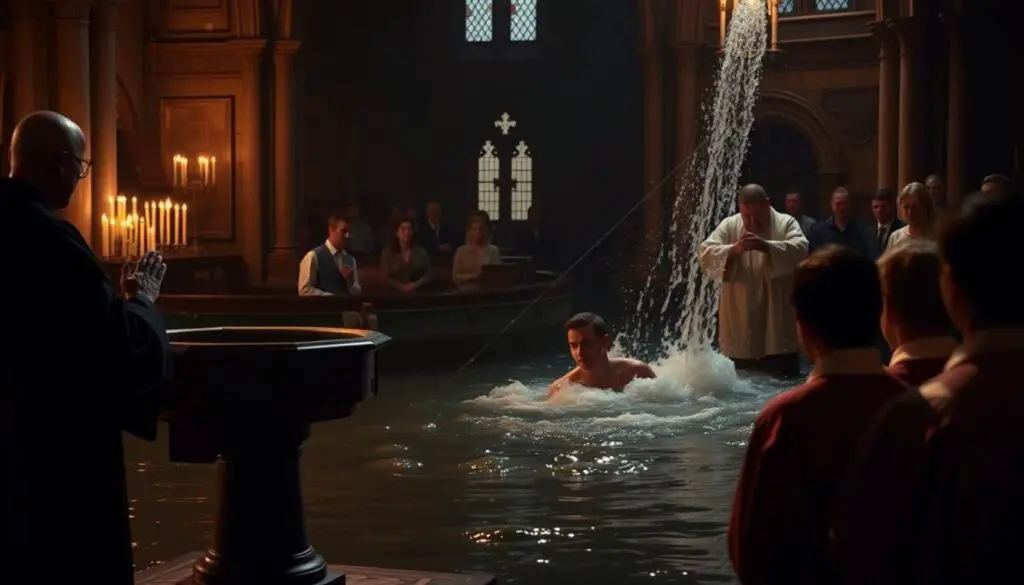
Infant Baptism vs. Believer’s Baptism
One group views infant baptism as a sign of God’s covenant with families, similar to Old Testament circumcision. They often cite Acts 16:31-34, where entire households received the sacrament. As one theologian notes:
“Grace precedes understanding—it’s God’s promise, not human merit.”
The other reserves the ritual for professing believers, emphasizing personal faith declarations. Romans 6:3-4 guides this practice, linking immersion to spiritual rebirth.
Modes of Baptism: Immersion and Sprinkling
Water usage also differs. Immersion, common in one tradition, symbolizes burial and resurrection. Sprinkling—favored by others—reflects purification themes from Ezekiel 36:25. These methods aren’t mere preferences but expressions of deeper beliefs about grace and community.
Aspect
Tradition A
Tradition B
Primary Mode
Sprinkling/Pouring
Full Immersion
Key Symbolism
Covenant inclusion
Personal commitment
Typical Age
Infancy
Adulthood
These distinctions shape how each group celebrates the baptism lord supper and nurtures faith. Whether through covenantal promises or individual confessions, both aim to honor Scripture while nurturing spiritual growth.
Covenant Theology and Old Testament Influences
Understanding ancient symbols helps decode modern faith practices. Covenant theology bridges biblical eras, showing how sacred rituals evolve while maintaining core spiritual truths. This framework reveals why some groups view baptism as more than a personal declaration—it’s a divine promise.
The Significance of the Covenant and Circumcision Parallel
In the Old Testament, circumcision served as a physical sign seal covenant between God and Abraham’s descendants. This act marked belonging to God’s people long before personal faith could be expressed. As one scholar notes:
“Circumcision wasn’t about human merit but God’s enduring pledge.”
Many communities today see baptism fulfilling this role. They argue that just as infants received the seal covenant grace through circumcision, baptism welcomes children into the faith family. Acts 2:38-39 reinforces this continuity, promising God’s gift “to you and your children.”
Old Testament Sign
New Testament Practice
Circumcision
Baptism
Physical mark
Spiritual symbol
Household inclusion
Community belonging
This approach emphasizes grace over human effort. The seal covenant isn’t magic—it’s a visible reminder of God’s faithfulness. Parents in these traditions see baptism as initiating children into a lifelong journey of discovering that grace.
Scripture supports this covenantal thread. From Abraham to Peter’s Pentecost sermon, God’s promises span generations. Baptism becomes a sign seal covenant that points to divine initiative, not just individual choice.
Church Governance and Organizational Structure
How religious communities organize themselves often reflects their deepest values. Two distinct models emerge when comparing these traditions—one built on layered collaboration, the other on grassroots independence. These systems shape everything from leadership selection to conflict resolution.
Presbyterian Hierarchical Order
Imagine a network of interconnected councils guiding congregations. This structure includes local presbyteries (regional elder groups) and a national General Assembly. Major decisions—like ordaining ministers or revising doctrinal standards—require approval at multiple levels. For example, a pastor facing discipline might appeal rulings through presbytery reviews before reaching the Assembly.
Baptist Congregational Autonomy
In contrast, each local church operates independently. Members vote directly on budgets, pastoral hires, and doctrinal stances. As one leader quipped:
“Our authority flows from the pews, not a headquarters.”
While Baptist associations exist for fellowship, they can’t override a congregation’s choices.
Key differences emerge in leadership roles:
Aspect
Collaborative Model
Independent Model
Decision-Making
Multi-level councils
Local votes
Leadership Selection
Elders approved regionally
Pastors hired locally
Appeals Process
Presbytery → Assembly
Internal congregational review
These approaches impact community life. Hierarchical systems ensure consistency but may slow changes. Autonomous ones empower quick action but risk fragmentation. Both aim to honor spiritual priorities through their unique government frameworks.
Rituals and Worship: Baptism and the Lord’s Supper
Two sacred practices unite these faith communities while highlighting their unique perspectives. Both observe baptism and the lord supper, though they describe them differently. One tradition calls them sacraments—visible signs of God’s grace. The other prefers “ordinances,” emphasizing obedience to Jesus’ commands.
Ordinances Versus Sacraments
For one group, rituals like communion are means grace—channels through which the holy spirit strengthens faith. They often reference 1 Corinthians 10:16, seeing the bread and cup as communion with Christ’s body. As a 19th-century pastor wrote:
“The table isn’t mere memory; it’s where heaven meets earth.”
The other tradition views these acts as symbolic reminders. The lord supper commemorates Christ’s sacrifice, while baptism publicly declares personal faith. Both agree these practices anchor worship in the gospel story.
Practice
View A
View B
Baptism
Sign seal of covenant
Believer’s testimony
Communion
Spiritual nourishment
Memorial observance
Water Use
Infant sprinkling
Adult immersion
Though methods vary, both traditions cherish these rituals. Whether through infant baptism or believer’s immersion, water symbolizes cleansing and new life. Similarly, shared bread and cup point to unity in Christ’s redeeming work.
Influential Theological Leaders and Pastoral Legacies
Great minds shape how communities understand divine truths. From fiery reformers to modern thinkers, spiritual leaders have left fingerprints on worship practices and doctrinal priorities. Their teachings still echo in sanctuaries and small groups today.
Historic Figures in Presbyterianism
John Knox ignited Scotland’s Reformation with his passion for reformed theology, blending biblical authority with democratic church governance. Centuries later, Peter Marshall captivated American audiences with sermons that wove Scripture into everyday life. His famous prayer,
“Give us clear vision that we may know where to stand,”
still inspires many. Modern voices like R.C. Sproul deepened discussions on God’s sovereignty, while Tim Keller connected ancient doctrines to urban ministry.
Renowned Baptist Preachers
Charles Spurgeon, the “Prince of Preachers,” filled London halls with messages about Jesus Christ’s redeeming love. His emphasis on personal faith shaped Baptist churches worldwide. Billy Graham later brought this tradition to stadiums, simplifying complex theology for millions. Today, John Piper champions reformed Baptist ideas, urging believers to find joy in God’s purposes.
These leaders didn’t just teach—they modeled how to live out convictions. Whether through Knox’s bold reforms or Graham’s mass evangelism, their legacies remind us that preaching shapes both hearts and history.
Differences in Ministry Practices and Biblical Interpretation
Daily faith practices often reveal deeper truths about how communities live out their beliefs. While both traditions cherish the word of God, their ministries reflect distinct approaches to applying biblical doctrines. One emphasizes structured programs under elder guidance, while the other prioritizes grassroots initiatives led by local members.
Scriptural interpretation shapes key rituals like believer baptism. One group sees it as a sign seal of personal commitment, requiring conscious faith in Jesus Christ. Another views it as part of a broader covenant framework, linking individual acts to communal promises. These differences extend to how sacraments are taught and practiced weekly.
Church government models also impact ministry methods. Collaborative leadership often results in standardized curricula and regional outreach partnerships. Autonomous congregations might focus on spontaneous evangelism or member-led Bible studies. As one pastor noted:
“Our structure isn’t just practical—it’s theological.”
Ministry Focus
Tradition A
Tradition B
Leadership Structure
Elder councils
Local committees
Scriptural Approach
Covenant continuity
Personal application
Key Emphasis
Community discipleship
Individual testimony
These variations matter because they shape how people experience faith Jesus in daily life. Whether through top-down programs or organic growth, both aim to honor Scripture while nurturing spiritual journeys. Recognizing these differences fosters respect for diverse ways of living out shared convictions.
Community, Membership, and Local Church Dynamics
The heartbeat of any faith community pulses through its members’ shared lives and commitments. How people join, serve, and grow together reflects their deepest values about belonging and spiritual nurture.
Roles Within the Local Church
In one tradition, infants welcomed through baptism become part of the congregation’s covenant family. They participate in age-appropriate activities, learning faith through community rituals. Parents and elders guide them until they confirm personal belief as teens.
Another group reserves formal membership for believers who publicly profess faith. Children attend services but aren’t considered full participants until making adult commitments. As one leader explains:
“We don’t assume faith—we celebrate it when someone chooses Christ.”
Both approaches value active involvement. Members might lead prayer groups, organize outreach, or mentor others. The table below highlights key differences:
Aspect
Tradition A
Tradition B
Membership Criteria
Birth into covenant family
Personal confession
Baptism Age
Infancy
Adulthood
Children’s Role
Active learners
Observers until decision
Decision-Making
Family-oriented
Individual-focused
Being part of a local church fosters accountability. Regular gatherings encourage mutual support—whether through shared meals or prayer chains. Spiritual growth happens when believers practice faith alongside others, blending ancient traditions with modern relationships.
Reformed Theology and Its Broader Implications
Exploring theological frameworks reveals how core beliefs ripple through every aspect of community life. While Reformed theology unites certain Christian groups, its application sparks lively debates about covenant continuity and spiritual identity.
Reformed Baptists in the Context of Covenant Theology
Some communities blend Reformed principles with believer-focused practices. For instance, while affirming God’s sovereignty, they argue baptism should follow personal faith declarations rather than infant rites. As theologian Samuel Renihan observes:
“The New Testament reshapes covenants—grace remains central, but the signs shift.”
Key distinctions emerge in how groups interpret biblical continuity:
Aspect
View A
View B
Covenant Signs
Baptism replaces circumcision
Faith precedes sacraments
Election Focus
Corporate covenant
Individual calling
Key Text
Genesis 17:7
Acts 2:38-39
These differences influence leadership models. One tradition might prioritize elder-led discipleship programs, while another empowers members to launch neighborhood Bible studies. Historical examples show this tension—18th-century preacher Andrew Fuller championed Reformed ideas while advocating for missionary efforts requiring personal commitment.
Adopting a Reformed stance impacts worship rhythms too. Some communities emphasize structured liturgy reflecting God’s orderly grace. Others blend doctrinal depth with spontaneous prayer meetings. Both aim to honor Scripture while nurturing authentic faith journeys.
Conclusion
Exploring faith traditions reveals both diversity and unity in Christian practice. While baptism methods vary—infant rites versus adult immersion—both groups ground their practices in scriptural reverence. Governance models differ too, with collaborative councils contrasting sharply with self-guided congregations.
Yet these distinctions coexist with shared foundations. Both traditions cherish the gospel’s transformative power and the centrality of Jesus Christ’s sacrifice. Their worship services, though structured differently, aim to honor divine grace through communal prayer and teaching.
Covenant theology shapes one group’s sacramental views, while the other emphasizes personal faith declarations. Despite these approaches, Scripture remains their compass. The Holy Spirit’s role in guiding believers unites them, even as interpretations of sacraments diverge.
Ultimately, whether through elder-led discipleship or grassroots ministries, both communities seek to glorify God. Their paths may differ, but the destination remains the same. Understanding these nuances fosters respect for rich spiritual heritages.
May this exploration inspire deeper curiosity about how faith traditions evolve while holding fast to eternal truths. Dialogue and learning remain vital bridges in celebrating shared devotion to Christ’s message.
FAQ
What’s the main difference in baptism practices between these traditions?
Presbyterians practice infant baptism as a sign of covenant grace, viewing it as parallel to Old Testament circumcision. Baptists emphasize believer’s baptism, requiring a personal confession of faith, often through immersion.
How do their views on salvation differ?
Presbyterians highlight God’s sovereignty in salvation, aligning with Reformed doctrines like predestination. Baptists stress free will, focusing on individual choice to accept grace through faith in Jesus Christ.
Are there differences in church leadership structures?
Yes! Presbyterian churches use a hierarchical system with elders and a General Assembly. Baptist congregations operate with local church autonomy, granting members decision-making power without higher governing bodies.
Do both groups interpret the Bible the same way?
Both value Scriptural authority, but Baptists often prioritize a literal interpretation. Presbyterians may integrate covenant theology, linking Old and New Testament promises more closely.
What role do sacraments play in worship?
Presbyterians recognize two sacraments (baptism and the Lord’s Supper) as means of grace. Baptists view these as ordinances—symbolic acts of obedience without inherent spiritual power.
How does covenant theology influence their teachings?
Presbyterians see baptism as part of a covenant community, including children of believers. Baptists emphasize personal commitment, viewing covenants as individual promises between a believer and God.
Are there hybrid groups blending these traditions?
Some Reformed Baptists adopt covenant theology while maintaining believer’s baptism. These groups often merge Calvinist doctrines with Baptist practices like congregational governance.
Why do Baptists avoid infant baptism?
Baptists argue baptism requires conscious faith, as seen in New Testament examples. They view it as a public declaration of belief, not a replacement for Old Testament rites like circumcision.