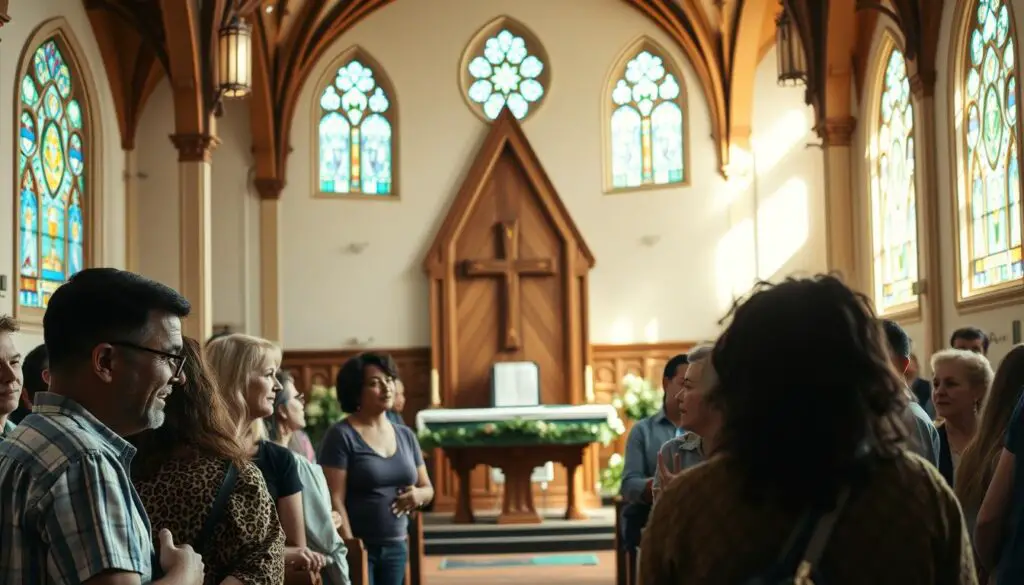
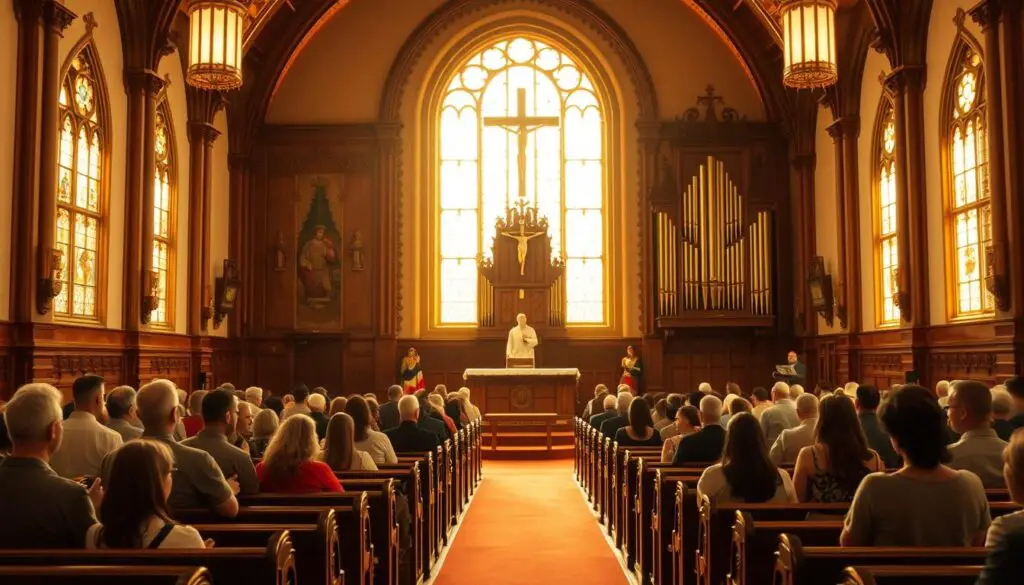
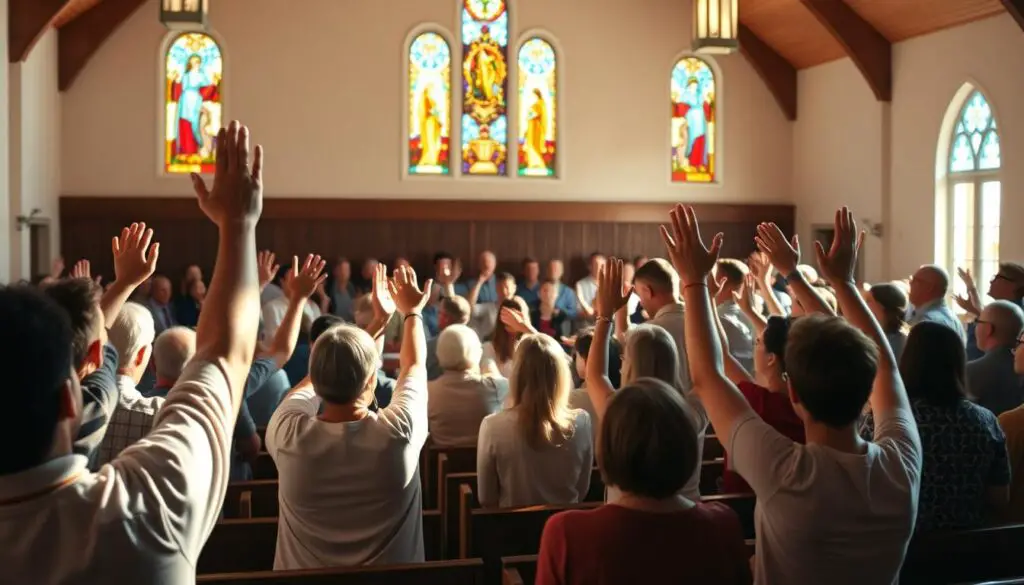
Finding a welcoming faith community close to home can deepen your spiritual journey. Many local congregations offer vibrant worship services, supportive networks, and opportunities to serve others. Whether you’re new to the area or seeking a fresh start, connecting with neighbors who share your values can make all the difference.
For example, the congregation at West 108th Street in Central Harlem embodies this spirit. Their Sunday gatherings blend heartfelt sermons with lively music, creating an atmosphere where everyone feels included. This kind of authenticity is common in New York’s diverse spiritual landscape, where traditions meet modern needs.
Looking for guidance? This article will help you explore service schedules, outreach programs, and practical details like addresses. You’ll also learn how these communities partner with groups like the United Church of Christ or Christian Missionary Alliance to strengthen neighborhoods.
Key Takeaways
Local congregations provide meaningful connections through worship and service.
Detailed directories help you find gatherings tailored to your schedule.
Authentic examples like Central Harlem’s West 108th Street location showcase community impact.
Many churches collaborate with broader networks to address local needs.
Flexible options, including online services, make participation accessible.
Introduction to Southern Baptist Churches
Rooted in traditions that shaped America’s spiritual landscape, these congregations blend timeless values with modern outreach. Their story begins in the mid-1800s, when believers sought to unify around shared missions and biblical teachings. Today, they remain committed to fostering connections through worship and service.
A Brief History and Core Beliefs
Founded in 1845, the Southern Baptist Convention emerged from a desire to support missionaries and uphold scripture as the ultimate authority. Unlike some American Baptist churches, they emphasize local congregation autonomy while collaborating nationally on initiatives like disaster relief. Core teachings include:
Biblical inerrancy: Scripture guides all decisions.
Evangelism: Sharing faith through action and outreach.
Community baptism: Public declarations of faith unite members.
Many congregations hold Sunday services at 09:00, blending hymns with contemporary music. This rhythm mirrors practices in Methodist Episcopal Zion assemblies, where tradition meets evolving needs.
The Role of Faith in Community Life
These churches often partner with groups like the Calvary Chapel Catholic network to address hunger or housing shortages. One member shared:
This balance of heritage and innovation helps congregations thrive. Like Episcopal African Methodist communities, they prioritize unity through shared purpose—a theme we’ll explore further in finding local gatherings.
Finding a southern baptist church near me
Discovering gatherings that align with your spiritual needs starts with smart search strategies. Online directories simplify the process by organizing details like service times, addresses, and contact information in one place. For instance, the West 108th Street congregation lists its Sunday schedule as 10:30 AM alongside a live-stream link—details easily found through platforms like Google Places or specialized faith-based hubs.
Using Service Directories Effectively
Start by entering phrases like “places of worship” or “local congregations” paired with your ZIP code. Filter results by denomination to narrow options quickly. Always cross-check listings: verify phone numbers match official websites, and compare addresses with transit apps like MTA’s Trip Planner for accuracy.
Many directories allow users to save preferred locations. Bookmarking spots like the Methodist Episcopal African fellowship in Brooklyn or the Salvation Army Seventh-Day outreach center ensures quick access later. Reviews often highlight community vibes—look for mentions of active ministries or welcoming atmospheres.
Tips for Locating Nearby Churches
Combine digital tools with local insights. Visit bulletin boards at libraries or community centers, where flyers for prophecy church Nazarene events might appear. Check social media groups for neighborhood recommendations—posts about Orthodox Christian Orthodox gatherings often include firsthand experiences.
Don’t hesitate to call ahead. Ask about parking availability or public transport routes. Some congregations, like those partnered with Army Seventh-Day Adventist networks, even offer shuttle services from subway stations. Confirming these details upfront helps avoid surprises and creates a smoother first visit.
Exploring Services, Worship Times, and Ministries
Weekly rhythms of faith create opportunities for both personal growth and community impact. Many congregations structure their calendars to accommodate diverse schedules while maintaining core traditions. This balance ensures everyone—from early risers to night owls—can find moments that resonate.
Worship Schedules and Sunday Services
Sunday gatherings often anchor weekly routines. The Central Harlem congregation on West 108th Street hosts services at 10:30 AM, blending hymns with modern worship bands. Midweek options like Wednesday prayer meetings at 7:00 PM cater to busy professionals.
Many locations now stream services live, letting you join from home. One member noted: “The 8:00 AM online service fits perfectly with my hospital shift schedule.” Special events like holiday concerts or guest speaker series add variety without disrupting regular rhythms.
Traditional
Modern
Sunday morning focus
Multiple service times
Printed bulletins
Mobile app updates
In-person only
Hybrid participation
Children’s Ministry and Outreach Programs
Families appreciate structured youth programs running parallel to adult services. After-school tutoring partnerships with local schools mirror the African Methodist Episcopal approach to community uplift. Vacation Bible School events often draw 100+ children through creative themes like “Urban Garden Explorers.”
Outreach initiatives extend beyond Sunday. The Queens fellowship distributes 150 backpacks yearly through their Tools for School drive. Food pantries operated with Methodist Episcopal partners address neighborhood hunger six days a week.
These efforts reflect a simple truth: spiritual growth thrives when worship schedules and service opportunities work hand-in-hand. Whether you’re drawn to early morning quiet or evening energy, there’s space for you to connect and contribute.
Integrating Tradition and Modern Community Outreach
Today’s faith communities weave cherished customs with fresh approaches to stay relevant. They honor time-tested values while embracing tools that expand their reach. This fusion creates spaces where generations connect through shared purpose and innovative service.
Local Partnerships That Spark Change
Neighborhood collaborations breathe life into traditional practices. The Central Harlem fellowship teams with the Missionary Alliance to host monthly cultural festivals celebrating local artists. These events often pair live gospel music with free health screenings—mirroring the Salvation Army’s holistic approach to care.
One volunteer shared: “Our summer block party fed 500 people and connected families with job training resources. It’s faith in motion.” Seasonal drives, like school supply distributions through children ministry programs, demonstrate how old-school generosity meets modern needs.
Bridging Physical and Digital Spaces
While Sunday services remain central, many congregations now offer hybrid participation. The Queens assembly streams its 11:00 AM worship live, complete with real-time prayer requests. Midweek Bible studies happen both in person and via Zoom, appealing to busy parents and remote workers alike.
Traditional Element
Modern Twist
Morning hymns
YouTube worship playlists
Paper newsletters
Mobile app updates
In-person volunteering
Virtual donation drives
This balance ensures everyone stays connected—whether they’re raising hands in a pew or typing “Amen” in a chat. As one leader noted: “Our doors are always open, but so are our laptops.” Explore both options to find what fuels your spiritual journey best.
Conclusion
Your spiritual growth thrives when faith meets action. This guide has equipped you with tools to explore meaningful connections through christian churches that value both heritage and innovation. From historical roots in american baptist traditions to modern partnerships with calvary chapel networks, these communities balance timeless values with fresh outreach methods.
Online directories simplify discovering congregations aligned with your schedule and values. Many zion church hubs now blend Sunday sermons with digital prayer groups—proving tradition and technology can coexist. Whether you’re drawn to episcopal zion cultural events or christian missionary food drives, opportunities to serve abound.
Take the next step today. Visit official websites for service times or volunteer sign-ups. Like the seventh-day adventist collaborations mentioned earlier, your participation strengthens neighborhoods while deepening personal faith. Remember, every journey begins with a single connection.
Ready to begin? Explore trusted resources like churches usa listings or local blogs highlighting god prophecy study groups. Your perfect spiritual home awaits—where christ church warmth meets purposeful action.
FAQ
What distinguishes Southern Baptist churches from other denominations like the African Methodist Episcopal or United Church of Christ?
Southern Baptist churches emphasize congregational autonomy, believer’s baptism, and Scripture as the ultimate authority. Unlike the African Methodist Episcopal Zion Church’s historic social justice focus or the United Church of Christ’s progressive theology, Southern Baptists prioritize evangelism and traditional doctrines.
How can I find churches with Sunday services starting at 09:00?
Many church directories filter worship times. Check websites like the Southern Baptist Convention’s locator or local listings. Some Calvary Chapel congregations and American Baptist churches also share early service schedules online.
Do Southern Baptist churches offer programs like the Salvation Army’s community outreach?
Yes! Ministries often include food drives, youth programs, and disaster relief. While the Salvation Army operates globally, local Southern Baptist churches partner with groups like the Christian Missionary Alliance for neighborhood-focused initiatives.
Are online worship options available for those unable to attend in person?
Many congregations, including Episcopal Zion and Orthodox Christian churches, stream services. Southern Baptist churches often post sermons on platforms like YouTube or Facebook, blending tradition with modern accessibility.
What children’s ministry activities are common in these churches?
Vacation Bible School, Sunday school, and youth camps are popular. Churches like the Church of God (Cleveland) and Nazarene congregations also integrate music and interactive lessons to engage younger members.
How do denominations like the Seventh-day Adventist differ in worship style?
Seventh-day Adventists worship on Saturdays and focus on health-centric teachings. Southern Baptist services typically feature Sunday sermons, contemporary music, and altar calls, aligning with their evangelistic mission.
At the heart of our mission lies a simple truth: everyone deserves a place to grow in faith and fellowship. This congregation thrives as a vibrant spiritual family, united by timeless teachings and authentic connections. Whether you’re exploring faith or deepening your walk, you’ll find warmth here.
Our gatherings focus on sharing the transformative message of Jesus Christ. Through dynamic sermons and heartfelt prayers, we explore how His teachings apply to modern life. Music bridges generations, blending hymns with contemporary praise to create meaningful moments of reflection.
Members don’t just attend—they belong. From small groups to outreach programs, there’s space for every passion and gift. Visitors often remark on the genuine kindness they experience, a reflection of our commitment to living out Christ’s love.
Looking to join us? This page serves as your guide to weekly services, special events, and volunteer opportunities. Come as you are, and discover how faith comes alive through community.
Key Takeaways
A faith-centered family focused on biblical teachings and practical support
Blends modern relevance with cherished traditions in worship experiences
Active member involvement creates authentic connections
Multiple service times and ministries accommodate diverse schedules
Open-door policy welcomes newcomers at every life stage
Welcome to Our Community of Faith
Walking through our doors, you’ll immediately sense a spirit of belonging. Casual attire reigns here—jeans and smiles are always welcome. Families often ask about activities for young ones during gatherings. We offer age-specific programs where little ones engage in interactive learning while adults participate in services.
What to Expect When You Visit
First-time guests receive a warm greeting without pressure. Our family-friendly environment includes secure check-in systems for kids and quiet spaces for nursing mothers. You’ll find clear signage directing you to coffee stations, restrooms, and activity areas.
Services blend music, prayer, and practical messages about Jesus Christ’s teachings. No one will single you out or ask you to speak publicly. Many visitors appreciate how our weekly rhythms create natural opportunities for connection.
Our Mission, Vision, and Values
Every week brings fresh ways to live out our core purpose: loving God and neighbors through action. Our vision centers on creating spaces where faith transforms daily life. You’ll see this in our community food drives, youth mentorship programs, and partnerships with local schools.
Three pillars guide us:
Authentic relationships over perfect attendance
Service that meets real needs
Growth opportunities for all ages
Whether you’re exploring spirituality or seeking deeper roots, there’s room here for your journey. Midweek gatherings let you dive into scripture discussions or join outreach teams—whatever fuels your heart.
Service and Worship Details
Finding meaningful ways to connect with faith starts with understanding our weekly rhythms. Three distinct gatherings let you choose how to engage – whether through upbeat praise, interactive learning, or time-honored traditions.
Contemporary and Traditional Worship Experiences
Contemporary worship at 8:30 AM blends live bands with modern spiritual themes. One regular attendee shared, “The music feels like a conversation with God – raw, real, and refreshing.” Later at 11:00 AM, traditional services feature organ-led hymns and liturgical elements that longtime believers cherish.
Both styles explore the same scripture passages, ensuring everyone grows from shared biblical foundations. Recent sermon series like “Rooted in Hope” demonstrate how ancient truths address current struggles.
Sunday School and Family Services
At 9:45 AM, classrooms buzz with age-specific discussions. Kids explore Bible stories through crafts, while adults tackle topics like forgiveness in workplaces. Parents appreciate the secure check-in system mentioned earlier, knowing their children learn in safe spaces.
Multiple service times mean families can worship together before or after Sunday School. As one mother noted, “We grab pancakes between gatherings – faith feels woven into our whole morning.” Nursery care and sensory-friendly options ensure everyone participates comfortably.
These intentional schedules help believers at every stage strengthen their walk. Whether you crave energetic worship or quiet reflection, there’s space here to recharge your spiritual life.
Involvement and Ministries for All Ages
Building meaningful connections happens through shared purpose. Our programs create spaces where individuals of every generation grow spiritually while serving others. Whether nurturing young hearts or empowering seasoned leaders, there’s a place for you to thrive.
Springhill Kids: Faith Foundations
Children discover God’s love through interactive Bible stories and creative play. Age-appropriate activities help little ones grasp eternal truths in relatable ways. One parent shared, “My kids beg to come back each week—they feel celebrated here.”
Youth and Adult Growth Opportunities
Teens engage in service projects that build character and leadership skills. Adult groups tackle real-life faith challenges through book studies and mentorship programs. Weekly gatherings strengthen bonds between people across generations, creating a support network for life’s ups and downs.
Making Impact Beyond Our Walls
Mission trips—both local and international—put faith into action. Teams repair homes, lead vacation Bible schools, and partner with food banks. These experiences often spark lasting change. “Serving others reshaped how I see my purpose,” noted a recent participant.
New opportunities emerge every week, from neighborhood cleanups to prayer partnerships. Whether you have minutes or hours to give, your time becomes part of something eternal. Come find where your gifts meet the world’s needs.
What Sets spring hill baptist church Apart?
What makes a spiritual home stand out in today’s world? Our commitment to four foundational principles shapes every program and interaction. These values—rooted in timeless wisdom—create a space where lives transform through connection and purpose.
The Four Pillars: Gathering, Going, Gospel, and Growing
Gathering fuels our shared journey. Weekly worship unites individuals through prayer and celebration. Regular meetups build bonds that extend beyond Sunday mornings.
Going pushes us beyond comfort zones. Teams partner with local schools and food banks, living out faith through action. One volunteer noted, “Helping others taught me what hope looks like in practice.”
Pillar
Focus
Impact
Gospel
Teaching Scripture
Deepens understanding of faith
Growing
Personal Development
Equips for life challenges
Fostering Fellowship and a Welcoming Environment
Newcomers quickly notice the emphasis on belonging. From dedicated play areas for kids to mentorship programs for teens, families find tailored support. Small groups discuss real-life topics like parenting and workplace ethics.
Children thrive in activities designed to spark curiosity about faith. Parents appreciate how lessons blend fun with meaningful takeaways. Our doors stay open to all—because everyone deserves a place to grow.
Conclusion
Together, we build more than a congregation—we create a family. This community thrives through shared worship, practical service, and genuine relationships rooted in Christ’s teachings. Every gathering offers fresh ways to connect, whether through uplifting services or impactful outreach programs.
Our four pillars—Gathering, Going, Gospel, and Growing—shape a vibrant spiritual journey. Multiple service times and ministries ensure everyone finds their place. As the scripture reminds us: “For we are co‐workers in God’s service; you are God’s field, God’s building.”
Each week brings new opportunities to strengthen faith and serve others. Whether you’re exploring spirituality or deepening your walk, your gifts matter here. Join us for upcoming events where people of all backgrounds grow together in hope.
Come experience how believers support one another through life’s seasons. Your time and talents can help build something eternal. Let’s walk this path of purpose—side by side.
FAQ
What types of worship services do you offer?
We provide both contemporary and traditional worship experiences. Whether you prefer modern music or classic hymns, there’s a service that resonates with everyone’s spiritual journey.
Are there programs available for kids and teens?
Absolutely! Our Springhill Kids ministry offers engaging activities for children, while youth groups provide mentorship and fellowship for teens. Families can also join Sunday School classes designed for all ages.
How can I get involved in community outreach?
We organize mission trips, local service projects, and partnerships with charitable organizations. From feeding the hungry to supporting global missions, there are countless ways to serve others.
What makes your church community unique?
Our focus on the Four Pillars—Gathering, Going, Gospel, and Growing—creates a welcoming environment where believers connect deeply, share faith boldly, and grow together in Christ’s love.
Do I need to dress formally for services?
Come as you are! Whether in jeans or business attire, you’ll find a warm, judgment-free atmosphere where everyone is invited to worship authentically.
How do you support spiritual growth for adults?
We offer Bible studies, leadership development courses, and small groups tailored to different life stages. These ministries help adults deepen their faith and build meaningful relationships.
Since opening its doors in 1988, this Murfreesboro-based congregation has grown into one of Tennessee’s most dynamic faith communities. With over 4,200 weekly attendees across two campuses, it combines authentic worship experiences with practical teachings rooted in timeless truths.
What makes this community stand out? It’s the genuine warmth you’ll feel from the first visit. Members describe it as “a place where faith becomes action,” focusing on helping people apply spiritual principles to daily life. The leadership team prioritizes compassionate service and family-oriented programs that strengthen local neighborhoods.
Weekly gatherings blend modern worship music with messages that tackle real-life challenges. Many visitors appreciate how teachings balance biblical depth with relatable examples. Beyond Sunday services, the community actively supports food drives, mentorship initiatives, and youth development projects.
Key Takeaways
Established in 1988 with two locations serving Middle Tennessee
Weekly attendance exceeds 4,200 across all campuses
Focuses on practical faith application and community service
Offers family-friendly programs and contemporary worship
Known for welcoming atmosphere and impactful outreach initiatives
Explore Our Worship and Community Values
Discover a space where faith thrives through heartfelt connection and shared purpose. Every gathering centers on creating environments where people encounter God’s presence while building lasting relationships.
Authentic Worship Experiences
Services blend modern melodies with soul-stirring hymns, designed to spark genuine spiritual moments. Many describe the atmosphere as “a conversation with heaven,” where lyrics and prayers become personal journeys. Live bands and choirs lead attendees through uplifting sets, while quiet reflection times allow space for individual meditation.
One member shares: “The music isn’t just performance—it’s an invitation to connect deeply.” This approach helps people engage beyond surface-level participation, fostering transformative encounters.
Connecting Through Scripture-Based Messages
Teachings unpack biblical truths in ways that address modern challenges. Recent series have explored topics like forgiveness in relationships and finding purpose through service. Leaders use real-life stories to illustrate scriptural principles, making ancient wisdom feel immediate and practical.
Worship Element
Traditional Roots
Modern Expression
Music Style
Classic hymns
Contemporary arrangements
Teaching Format
Verse-by-verse study
Interactive discussion groups
Prayer Practices
Silent reflection
Guided meditation apps
Special events like monthly prayer nights and seasonal workshops reinforce these values. Whether you’re exploring faith or deepening your walk, there’s a place for you here. Come experience how timeless truths meet today’s realities in a welcoming environment.
new vision baptist church tn: A Place for Gospel Transformation
Transformation begins when faith meets action in a supportive environment. This community’s heartbeat is helping people grow spiritually while fostering connections that last. At its core, the mission focuses on guiding individuals toward life-changing encounters with Christ’s teachings.
Our Mission & Vision for Spiritual Growth
The driving force behind every initiative is simple: know Christ deeply and share His love boldly. Weekly studies unpack Scripture through modern lenses, equipping members to apply wisdom at work, home, and beyond. One attendee notes, “The teachings don’t just inform—they reshape how I approach daily challenges.”
Small groups provide spaces for honest conversations and mutual encouragement. Leaders emphasize mentorship, pairing seasoned believers with those new to faith journeys. This blend of learning and support helps individuals thrive at every spiritual stage.
Embracing Family and Authentic Relationships
Families find tailored resources here, from parenting workshops to youth programs that build character. Monthly “family nights” strengthen bonds through shared meals and activities, reflecting the belief that strong homes create thriving communities.
Men’s groups tackle topics like integrity and leadership, while women’s circles focus on purpose and resilience. These gatherings nurture vulnerability, helping members move beyond surface-level interactions.
Core Value
Practical Expression
Community Impact
Authentic Relationships
Small group mentorship
300+ annual participants
Family Focus
Parenting workshops
82% satisfaction rate
Practical Service
Neighborhood cleanups
1,200 volunteer hours yearly
Service projects—like tutoring local students or repairing homes—turn faith into tangible action. Members describe it as “living out beliefs with our hands, not just our hearts.” This hands-on approach bridges spiritual growth with community betterment.
Programs, Events, and Community Outreach
Building bridges beyond Sunday services, this congregation creates meaningful connections through hands-on initiatives. From healing support groups to neighborhood celebrations, every program reflects a commitment to uplifting others.
The GriefShare Experience & Support Groups
Walking through loss becomes less lonely with the 13-week GriefShare program. Meetings occur Thursdays from 6-8pm CT, offering practical tools and peer support. One participant shares, “It’s like finding light in the darkest season.” Free childcare allows parents to focus fully on healing.
Upcoming Gatherings and Community Engagement
Monthly potluck dinners foster friendships across generations, while youth mentorship programs pair teens with local professionals. Summer brings free outdoor movie nights, drawing hundreds to shared laughter under the stars.
Event Type
Frequency
Key Benefit
Parent Workshops
Quarterly
Practical parenting strategies
Service Projects
Monthly
Hands-on neighborhood impact
Prayer Circles
Weekly
Personalized spiritual support
These efforts mirror Jesus’ example of compassionate service. Whether you’re seeking support or wanting to give back, there’s a place for you here. Visit the Vision Baptist Church website for location details and RSVP options—your journey toward connection starts today.
Conclusion
For over three decades, this Tennessee congregation has shaped lives through authentic relationships and hands-on faith. What began in 1988 as a small Murfreesboro gathering now thrives as a beacon of hope, blending timeless teachings with modern community needs.
The vision baptist community stands out through its action-oriented approach. Weekly services spark spiritual growth, while outreach programs like GriefShare offer practical support during life’s toughest moments. Families find strength in mentorship initiatives, and neighbors connect through shared service projects.
At its core, the new vision baptist mission transforms Sunday beliefs into Monday actions. Whether through uplifting worship or neighborhood cleanups, members live out their faith tangibly. Over 4,000 attendees yearly prove that deep connections flourish here.
Ready to experience this life-giving journey? Visit the website for event schedules or join a Thursday support group. Everyone’s story matters in this welcoming space—where hope grows and burdens lift, one genuine connection at a time.
FAQ
What should I expect during Sunday services?
Services focus on heartfelt worship and practical teachings rooted in the Bible. You’ll experience uplifting music, prayer, and messages designed to inspire spiritual growth.
Are there programs available for children?
Yes! Families are prioritized here, with engaging activities and age-appropriate lessons for kids. Safety and meaningful connections are central to our children’s ministry.
How can I get involved in community outreach?
From volunteer opportunities to events like food drives or neighborhood projects, we offer multiple ways to serve. Check our website or bulletin for current initiatives.
What is GriefShare, and how does it work?
GriefShare is a supportive program for those navigating loss. It combines group discussions, video lessons, and resources to help participants heal in a caring environment.
Do you host events for newcomers?
Absolutely! Regular gatherings like welcome lunches or small group meetups help visitors connect. Explore our calendar for details on upcoming activities.
How does the congregation support spiritual growth?
Through Bible studies, mentorship, and discipleship programs, we encourage members to deepen their faith while fostering authentic relationships within the community.
On September 15, 1963, an act of violence shook Birmingham, Alabama, and became a defining moment in America’s fight for equality. A Sunday morning explosion at a prominent African American house of worship left four young girls dead and galvanized nationwide outrage. This tragedy exposed the harsh realities of racial hatred while uniting activists to demand justice and change.
The targeted site was more than a spiritual center—it served as a gathering place for civil rights leaders organizing marches and meetings. Families trusted its walls as a safe space, making the attack feel deeply personal. Eyewitnesses described chaos: shattered stained glass, smoke-filled halls, and grief-stricken congregants.
National figures like Reverend Martin Luther King Jr. condemned the bombing, calling it “one of the most vicious crimes of the century.” The event accelerated support for landmark legislation, including the Civil Rights Act of 1964. It reminded the nation that progress often comes at a heartbreaking cost.
Key Takeaways
The 1963 bombing marked a turning point in mobilizing civil rights activism across the U.S.
Four children lost their lives during Sunday services, sparking national mourning.
The church was a vital hub for organizing protests and community support.
Public outrage after the attack helped push forward critical anti-discrimination laws.
Martin Luther King Jr. highlighted the event as a symbol of systemic racism’s brutality.
Introduction and Overview
Why does a single act of violence become a catalyst for nationwide change? This case study examines the 1963 tragedy that transformed grief into momentum for civil rights progress. By exploring its roots and ripple effects, we uncover how collective pain can fuel lasting reform.
Purpose of the Case Study
Our goal is to unpack the layers of this pivotal moment. Through eyewitness stories, legal records, and historical analysis, we’ll answer key questions:
How did systemic racism create conditions for such violence?
What made this location a symbolic target?
How did national leaders like Martin Luther King turn tragedy into legislative action?
Scope of the Article
We’ll walk through three main areas:
Context: Birmingham’s racial climate before the attack
Impact: Immediate aftermath and delayed justice
Legacy: Connections to the 1964 Civil Rights Act
You’ll discover how ordinary people became extraordinary advocates. As one survivor noted:
“Our tears watered the seeds of change.”
Historical Context of Birmingham and Segregation
Birmingham, Alabama, earned the nickname “Bombingham” long before 1963 due to frequent attacks on African American homes and institutions. The city’s strict segregation laws created two separate worlds. Public spaces like parks, buses, and water fountains carried “Whites Only” signs, while Black residents faced inferior facilities and limited opportunities.
Racial Landscape in Birmingham
City leaders like Commissioner Eugene “Bull” Connor enforced racial divides through intimidation. Police turned a blind eye to cross burnings and beatings. In 1962, over 50 unsolved bombings targeted Black neighborhoods, creating constant fear.
Economic and Social Disparities
Black workers earned half the wages of white counterparts for similar jobs. Most were barred from skilled positions, trapping families in poverty. Housing policies confined African Americans to overcrowded areas with poor sanitation.
These conditions made Birmingham’s civil rights activists relentless. As one organizer recalled: “We couldn’t drink from the same fountains, so we drank from the same well of courage.” The 16th Street community center became a rallying point, where strategies for equality took shape amid growing resistance.
The Role of the 16th Street Baptist Church in the Civil Rights Movement
Strategically positioned near key city landmarks, this historic building became more than a spiritual sanctuary—it operated as the command center for Birmingham’s fight against segregation. Its steps welcomed organizers, students, and families united by a shared vision of justice.
Community Hub for Activism
Leaders like the Southern Christian Leadership Conference (SCLC) chose the location for its accessibility. Situated blocks from the Birmingham public commercial district and City Hall, it allowed quick mobilization during protests. Weekly meetings here shaped plans for boycotts and sit-ins that challenged discriminatory laws.
The space provided safety in a city where the Klux Klan routinely threatened activists. One volunteer recalled: “We knew the walls had ears elsewhere, but here, we could speak freely.” For decades, the site symbolized resilience, hosting icons like Dr. King and serving as a classroom for nonviolent resistance training.
After the 1963 attack, the building’s name echoed across the United States as a testament to courage. News photos of its damaged facade stirred national empathy, transforming it from a local gathering spot into a timeless emblem of the movement’s sacrifices and strength.
Prelude to the Tragedy: Tensions in Birmingham
By 1963, Birmingham had become a tinderbox of racial tensions, where even small sparks risked catastrophe. The city earned its grim nickname “Bombingham” after over 20 unsolved explosions rocked African American neighborhoods since 1950. Families lived with constant dread, knowing their homes or gathering places could be next.
Local Racism and Violence
Systemic segregation created powder-keg conditions. White supremacists burned crosses on lawns and firebombed activists’ cars with impunity. One resident recalled: “We slept in shifts, listening for broken glass or footsteps.” Economic inequality deepened divides—Black workers earned 45% less than white counterparts despite similar jobs.
Community Warnings and Rising Tensions
Leaders like Martin Luther King Jr. had warned about escalating dangers months earlier. In May 1963, the Gaston Motel—King’s headquarters—was bombed during protests. Yet city officials dismissed concerns, claiming activists “exaggerated threats.”
By September, community meetings buzzed with urgent whispers. Church deacons patrolled basements for suspicious packages. A shopkeeper’s diary entry read: “The air feels heavy, like thunder without rain.” These overlooked warnings foreshadowed the coming storm.
16th Baptist Church Bombing: A Case Study
At 10:22 AM on September 15, 1963, a hidden dynamite bundle detonated beneath a staircase, collapsing part of the building during Sunday school. This calculated act of violence targeted a space where children gathered, turning a day of worship into a national reckoning.
Incident Overview and Significance
The explosive device contained 15 sticks of dynamite, planted hours earlier by white supremacists. Survivors described a deafening blast followed by screams and falling debris. Four young lives were lost instantly—Addie Mae Collins, Carole Robertson, Cynthia Wesley, and Carol Denise McNair, aged 11 to 14.
Eyewitness James Stone recalled: “The stained-glass Jesus hung sideways in the rubble, watching over those four little souls.” Rescue workers dug through wreckage with bare hands, finding shoes and hymnbooks amid the chaos.
Key Aspect
Details
Impact
Timing
26th Sunday after integration protests began
Highlighted racial retaliation
Victims
Four little girls in restroom
Humanized systemic racism’s toll
Investigation
FBI identified suspects within days
Delayed justice revealed institutional bias
This attack became America’s wake-up call. Northern newspapers that rarely covered Southern violence ran front-page photos for weeks. As one senator noted:
“When they kill four little children in God’s house, we’re all complicit.”
The tragedy exposed how segregationist policies enabled domestic terrorism. It shifted public opinion, proving that legalized discrimination didn’t just limit opportunities—it cost lives.
The Horrific Explosion and Immediate Impact
A deafening roar shattered the calm of a Sunday morning as worshippers gathered for youth day services. At 10:22 AM, hidden dynamite detonated beneath the basement stairs, collapsing part of the building. Panic erupted as smoke filled the halls, trapping children and adults under debris.
Timeline of the Explosion
The attack unfolded with chilling precision. At 8:45 AM, witnesses reported a suspicious car parked near the east wall. By 10:15, Sunday school classes were in full session when the blast ripped through the lower level. Survivors described a “wall of fire” followed by screams for help.
Casualties, Damage, and Aftermath
Four young lives—Addie Mae Collins, Carole Robertson, Cynthia Wesley, and Denise McNair—were lost instantly. Over 20 others suffered injuries from flying glass and falling bricks. The explosion blew out windows blocks away, damaging nearby stores and a parked ambulance.
Within minutes, community members formed human chains to clear rubble. Medics used pews as stretchers while nurses triaged wounds on the sidewalk. As one volunteer later recalled, “We didn’t see strangers that day—only neighbors needing help.”
The building’s eastern wall crumbled, exposing Sunday school artwork still hanging in shattered classrooms. Firefighters worked for hours to stabilize the structure, their boots crunching on broken hymnals. This collective trauma would soon fuel demands for justice and stronger civil rights protections nationwide.
Eyewitness Accounts and Personal Testimonies
Personal stories from survivors and grieving families reveal the human cost of racial violence. These accounts transform statistics into heartbeats, reminding us how systemic hatred reshaped individual lives forever.
Survivor Narratives
Sarah Collins Rudolph, then 12, was steps away from her sister Addie Mae when the blast occurred. “Glass flew like arrows—I lost an eye, but others lost their futures,” she recalled decades later. Shrapnel embedded in her body became permanent reminders of the attack’s brutality.
Other witnesses described scenes of confusion. A deacon’s grandson, aged 9, mistook the explosion for thunder until he saw blood on his shoes. Rescue worker Jefferson Drew later wrote: “We lifted bricks stained with Sunday school lessons. The violence stole innocence, not just lives.”
Impact on Affected Families
Parents of the victims faced unimaginable grief. Carole Robertson’s mother kept her daughter’s intact choir robe in a cedar chest, unwashed for 40 years. Cynthia Wesley’s adoptive parents withdrew from public life, their silence speaking volumes about unresolved pain.
Despite this trauma, many families channeled sorrow into action. Denise McNair’s father joined NAACP leadership, declaring: “Hate broke our hearts, but the movement mends communities.” Their courage turned personal loss into collective resolve, proving that even shattered spirits could rebuild.
The Aftermath: Community Response and Unrest
Grief became a bridge between communities as Birmingham faced its darkest hour. Within hours of the tragedy, crowds gathered outside the Sixteenth Street Baptist site, their candles flickering like defiant stars against the night. Mothers held photos of the victims while students carried signs reading, “Their dreams live in our march.”
Public Mourning and Outrage
Over 8,000 people attended the girls’ joint funeral three days later—a sea of sorrow stretching blocks. One mourner described the scene: “Black and white hands clasped hymnbooks together, but anger simmered beneath the hymns.” While many white residents condemned the attack, others blamed activists for “stirring trouble.”
The tragedy ignited fresh determination. NAACP chapters nationwide saw membership double within weeks. Youth protesters adopted the victims’ names as rallying cries, chanting “Remember Addie, Carole, Cynthia, Denise!” during sit-ins. Even hesitant allies joined marches, realizing segregation’s human toll.
Memorial services drew interfaith leaders, amplifying calls for justice
Business districts faced boycotts as consumers demanded accountability
Artists created murals honoring the girls, turning walls into classrooms
As Dr. King told reporters:
“This crime didn’t just wound a house of worship—it exposed America’s moral fractures.”
Thecivil rights movementharnessed this collective anguish, transforming tear-stained vigils into unstoppable momentum for change.
The Investigation: FBI and Legal Pursuits
Within hours of the explosion, federal agents descended on Birmingham, marking the start of a decades-long quest for justice. Investigators faced immediate hurdles—witnesses feared retaliation, and critical evidence seemed to vanish. A 1963 memo to J. Edgar Hoover revealed early doubts: “Local cooperation remains… problematic.”
Initial FBI Efforts
The Bureau identified four suspects within days, including Bobby Frank Cherry, through bomb residue analysis and car descriptions. Yet witnesses refused to testify, and prosecutors deemed evidence “insufficient for trial.” Key documents sat untouched in the Birmingham Public Library archives for years, containing unverified tips about Klan involvement.
Cold Case Reopenings and Evidence
New momentum came in 1971 when the New York Times published leaked FBI files, reigniting public interest. Advances in forensic technology allowed experts to match 1963 dynamite fragments to a suspect’s workshop in 1997. Former Klansmen’s testimonies finally broke the silence—one admitted hearing Cherry boast about “teaching them a lesson.”
Investigation Phase
Key Evidence
Outcome
1963-1965
Witness statements, bomb fragments
No charges filed
1977-1979
FBI memo analysis
Grand jury convened
1997-2002
Forensic matches, deathbed confessions
Cherry convicted (2002)
Legal teams faced race against time as suspects aged. Prosecutor Doug Jones later noted:
“Justice delayed isn’t justice denied—it just requires more stubborn hope.”
Persistent advocacy groups and declassified files ultimately turned the tide, proving truth could outlive fear.
The Trials and Convictions of Perpetrators
Justice arrived in waves, decades after the attack that claimed Addie Mae Collins and three other girls. Legal teams faced a maze of obstacles—lost evidence, reluctant witnesses, and institutional indifference—but persistence rewrote the story.
Landmark Legal Decisions
Robert Chambliss became the first convicted perpetrator in 1977 after his niece bravely testified about his role. Prosecutor Bill Baxley used old FBI tapes where Chambliss called dynamite his “equalizer.” The verdict marked a turning point, proving hate crimes wouldn’t fade into history.
Thomas Blanton and Bobby Frank Cherry faced trials in 2001-2002, aided by fresh forensic matches and declassified files. Former civil rights activists rallied survivors to share suppressed memories. Attorney Doug Jones famously declared:
“Time doesn’t heal all wounds—it just gives us better tools for truth.”
Key outcomes reshaped legal precedents:
Chambliss: Life sentence (1977)
Blanton: Four life terms (2001)
Cherry: Life imprisonment (2002)
These convictions validated decades of advocacy, showing delayed justice still carries weight. Families of Addie Mae Collins and others found closure, while the Civil Rights Act gained renewed respect as a shield against systemic violence.
Martin Luther King Jr. and National Reactions
In the wake of unspeakable loss, a voice emerged to channel collective grief into purposeful action. Dr. Martin Luther King Jr. stood before cameras three days after the tragedy, his words cutting through America’s numbness. “The blood of these innocent children demands that we confront our nation’s sickness,” he declared, framing the attack as a moral test for all citizens.
Leadership Amid Crisis
King’s telegram to Alabama Governor George Wallace laid bare the stakes: “The southern christian leadership you ignore today will shape tomorrow’s conscience.” He organized interfaith vigils while urging Northern allies to pressure Congress. Newspapers nationwide reprinted his speeches, transforming local pain into a unifying call for justice.
The 1963 bombing Birmingham response revealed King’s strategic brilliance. He balanced raw emotion with policy demands, telling reporters: “Tears alone won’t change laws—but votes will.” His coalition-building efforts gained traction as white religious groups joined marches, signaling shifting attitudes.
Key outcomes of his leadership:
Rallied bipartisan support for the Civil Rights Act within months
Inspired the national park service to later designate key sites as historical landmarks
Strengthened the southern christian leadership conference’s role in national dialogues
Decades later, King’s words during this crisis remain etched in public memory. As one historian noted: “He turned a crime against four children into a referendum on America’s soul.” The national park service now preserves these stories, ensuring new generations understand courage’s cost.
Media Coverage and Legacy in Public Memory
Headlines across America transformed a local tragedy into a national awakening. Front-page photos of shattered stained glass and grieving families forced readers to confront racial violence’s human toll. Outlets like the New York Times framed the event as a moral failure, with one editorial asking: “What kind of nation lets children die for equality?”
Contemporary Reporting
Initial coverage focused on the victims’ youth, dubbing them “four little girls” to emphasize innocence lost. Reporters highlighted the Christian Leadership Conference’s role in organizing memorials, linking spiritual resolve to political action. While Southern papers downplayed racial motives, national outlets connected the attack to broader American civil rights struggles.
Television networks aired footage of Dr. King’s eulogy, amplifying his call for legislative change. A CBS anchor noted: “This isn’t just Alabama’s shame—it’s America’s crossroads.” Such framing shifted public opinion, turning regional grief into federal policy demands.
Long-Term Media Impact
Decades later, documentaries like 4 Little Girls reintroduced the story to new generations. Museums now display the Times’ original headlines alongside victims’ diaries, creating visceral connections between past and present. Annual retrospectives keep the Christian Leadership Conference’s message alive, showing how media can combat historical erasure.
Social media campaigns recently paired #FourLittleGirls with modern injustice stories, proving the power of enduring narratives. As one journalist observed:
“Truth doesn’t expire—it just needs retelling.”
Through books, films, and digital archives, theAmerican civil rightsmovement’s pivotal moment remains a living lesson in courage and consequence.
Long-Term Impact on Civil Rights Legislation
A community’s loss became the nation’s moral compass, steering landmark laws into existence. The tragedy at the sixteenth street gathering place shocked lawmakers into action, proving that grassroots pain could reshape federal policy. Within months, stalled bills gained momentum as public pressure reached a tipping point.
President Lyndon B. Johnson signed the Civil Rights Act of 1964 just nine months later, banning segregation in public spaces. Legal experts credit the Birmingham tragedy for breaking Senate filibusters. As one congressman admitted: “How could we block reforms while mothers buried their daughters?”
The legislation sparked a domino effect. The Voting Rights Act (1965) and Fair Housing Act (1968) followed, dismantling systemic barriers nationwide. These laws transformed the rights movement from street protests to enforceable mandates, embedding equality into legal frameworks.
Legislation
Key Provisions
Connection to Event
Civil Rights Act (1964)
Banned employment discrimination
Directly referenced in Johnson’s speech
Voting Rights Act (1965)
Outlawed literacy tests
Funded federal election monitors
Fair Housing Act (1968)
Prohibited housing bias
Inspired by displaced families
Decades later, the Americans with Disabilities Act (1990) and marriage equality rulings drew inspiration from these precedents. Activist Diane Nash observed:
“They tried to bury justice in rubble—we turned it into bedrock.”
Today, the sixteenth street site reminds us how courage can rewrite laws. Its legacy lives in every jury box, classroom, and ballot booth where fairness prevails over fear.
The Rebirth of a Historic Landmark
Decades after tragedy, a landmark rises from the ashes, symbolizing resilience and unity. Once a target of violence, this sacred space now stands as a testament to collective healing. Preservationists and community members joined forces to repair both physical scars and fractured trust.
Church Rehabilitation Efforts
By the 1990s, weather damage and aging threatened the building’s structure. A $3 million grant from the National Park Service’s African American Civil Rights Program launched critical repairs in 2017. Workers restored stained-glass windows shattered in 1963, including one depicting a Black Christ—a powerful symbol of endurance.
Local teens partnered with the public library to archive oral histories displayed in the new education wing. As project lead Marcia Conwell noted:
“We’re not just fixing bricks—we’re rebuilding connections between generations.”
Initiative
Funding Source
Impact
Structural repairs
Federal Heritage Grant
Stabilized foundation and walls
Education Center
Community Donations
Hosts 15,000 annual visitors
Memorial Garden
State Arts Council
Honors the four girls
Ongoing programs address broader justice themes, including exhibits on Robert Chambliss’s 1977 conviction. Tours now link past struggles to modern activism, proving preservation fuels progress.
Reflecting on Forgiveness and Resilience
Healing often begins where pain runs deepest. Survivors of the 1963 tragedy transformed personal anguish into pathways for reconciliation, proving that courage comes in many forms—even quiet acts of mercy.
Sarah Collins Rudolph’s Journey
Blinded in one eye during the attack, Sarah Collins Rudolph spent decades wrestling with anger. “I wanted justice, not revenge,” she told the New York Times in 2013. Her sister, Denise McNair, was among the victims, but Sarah chose forgiveness over bitterness. She became a vocal advocate for dialogue, speaking at schools and interfaith events nationwide.
Her memoir, My Sister’s Keeper, details how faith guided her healing. “Hate is a heavy load to carry,” she wrote. Community initiatives now use her story in conflict resolution workshops, showing how personal grace can mend collective wounds.
Community Healing and Renewal
Birmingham’s reconciliation projects focus on shared futures rather than divided pasts. The “Healing Steps” program pairs survivors’ families with former segregationists to co-lead neighborhood cleanups. A local mural honoring Denise McNair and the other girls includes tiles painted by descendants of Klansmen—a visual truce.
Civil rights leaders amplify this message. Reverend Jesse Jackson once noted during a New York rally:
“Love builds bridges where rage burned them.”
Annual unity marches now end at the restored church, where participants swap stories instead of stones. These efforts remind us that resilience isn’t about forgetting—it’s about rewriting tomorrow’s script.
Conclusion
In the shadow of tragedy, communities find strength to forge lasting change. The 1963 attack on Birmingham’s spiritual hub revealed both humanity’s capacity for cruelty and its resilience. While figures like Bobby Frank Cherry delayed justice for decades, survivors transformed grief into tools for progress—pushing civil rights laws forward and rebuilding trust.
This case study reminds us that historical wounds can shape futures. Landmark legislation like the 1964 Civil Rights Act emerged from collective outrage, proving systemic change often follows profound loss. Yet the true legacy lies in everyday courage—families choosing forgiveness, neighbors bridging divides, and new generations upholding equality.
As we reflect on these events, their lessons remain urgent. Modern activists draw inspiration from those who turned pain into purpose, showing how unity outlives hatred. Let their stories challenge us to ask: How will we honor their sacrifice in today’s fight for justice?
FAQ
Why was the 16th Street Baptist Church significant during the civil rights era?
The church served as a vital gathering place for activists, hosting meetings led by figures like Dr. Martin Luther King Jr. Its central location made it a symbol of unity and resistance against segregation in Birmingham.
How did the 1963 attack impact national civil rights laws?
The tragedy galvanized public support, accelerating the passage of the Civil Rights Act of 1964. It exposed the urgency of addressing racial violence and systemic inequality across the United States.
Were the perpetrators ever brought to justice?
Yes, but decades later. Robert Chambliss was convicted in 1977, followed by Thomas Blanton and Bobby Frank Cherry in the early 2000s. These trials highlighted the persistence of cold case investigations in seeking accountability.
What role did media play in shaping the legacy of this event?
Outlets like The New York Times amplified the story, forcing national attention on Birmingham’s racial violence. Photographs of the devastation became enduring symbols of the fight for equality.
How did survivors like Sarah Collins Rudolph contribute to healing?
Sarah, who lost her sister Addie Mae Collins, became a vocal advocate for forgiveness and education. Her resilience inspired community efforts to rebuild and honor the victims’ memories.
Is the church still active today?
Absolutely. Restored as a National Historic Landmark, it remains a place of worship and education. The Birmingham Public Library also preserves archives to ensure the tragedy is never forgotten.
Did local leaders anticipate violence before the explosion?
Tensions were high due to repeated threats. Activists had warned of potential attacks, but inadequate protections left vulnerable spaces like churches exposed to hate-driven acts.
How did Dr. King respond to the bombing?
He condemned the attack as a “moral blindness” and urged nonviolent resistance. His eulogy for the victims reinforced the movement’s commitment to justice through peaceful means.
Walking into a place where warmth meets purpose can transform how you experience faith. This community opens its doors to everyone, offering a space where spiritual growth and meaningful connections flourish. Through lively services and practical teachings, they focus on fostering a deeper relationship with Christ.
What makes this congregation stand out? It’s their blend of timeless values and modern engagement. Rooted in biblical truth, they address real-life challenges while inspiring hope. Weekly gatherings mix heartfelt music with messages that resonate long after Sunday ends.
Beyond the sanctuary, their impact stretches across neighborhoods and continents. Local food drives, youth mentoring, and global mission trips reflect their dedication to serving others. Members don’t just attend—they actively shape a legacy of compassion.
Ready to explore more? This article will guide you through their mission, worship style, and outreach efforts. Whether you’re seeking spiritual renewal or ways to give back, there’s something here for you.
Key Takeaways
Welcomes newcomers with open arms and inclusive values
Blends dynamic worship with practical biblical teachings
Actively improves lives through local and global initiatives
Prioritizes personal spiritual growth for all ages
Encourages members to participate in outreach programs
Our Mission and Core Beliefs
A clear mission acts as a compass, directing both individual growth and collective action. For this congregation, that purpose centers on transforming lives through intentional faith-building. Their vision—“to effectively win the world to Jesus Christ by renewing minds through teaching and discipleship”—fuels every initiative.
Vision That Sparks Change
This community doesn’t just talk about faith—they live it. Their approach combines evangelism with practical learning, helping members apply biblical wisdom daily. Weekly studies and mentorship programs create spaces where curiosity meets spiritual growth.
Rooted in Timeless Truth
At the foundation lies an unwavering belief in Scripture as God’s inspired word. Leaders emphasize its role as life’s ultimate guidebook, addressing modern struggles with age-old truths. Teachings explore the nature of God as a loving Trinity and humanity’s need for redemption.
Walking the Talk Together
What sets this group apart? Their commitment to turning beliefs into action. From neighborhood outreach to global partnerships, they bridge faith and service. Members are encouraged to deepen their relationship with Christ while uplifting others—proving faith thrives when shared.
Exploring the galilee baptist church Experience
Finding your rhythm in a faith community starts with opportunities that fit your life. Whether you’re an early riser or prefer evening reflection, there’s space for everyone to connect and grow.
Service Times and Worship Opportunities
Start your week with Sunday gatherings at 8:00 AM or 10:00 AM, featuring vibrant music and practical messages. Between services, join the 9:00 AM Sunday School for interactive discussions. Young families thrive during Youth Church weekends (2nd & 4th Sundays), while the Global Galilee event every first Wednesday at 7:00 PM unites members worldwide through prayer and cultural exchange.
Online and In-Person Community Engagement
Can’t make it to the building? Live streams bring services directly to your living room. The digital platform also hosts virtual small groups and Bible studies, creating meaningful connections across miles. Members frequently describe these gatherings as “like sitting in your best friend’s kitchen” – relaxed yet deeply enriching.
This community masterfully blends time-honored traditions with tech-friendly solutions. From hymn sing-alongs to app-based devotionals, every generation finds ways to engage. Explore their ministries page to discover volunteer teams, mentorship programs, and outreach projects that turn faith into action.
Dynamic Ministries and Community Outreach
Every age group finds purpose through tailored spiritual pathways. Programs stretch across generations, creating spaces where teens explore identity, young adults build careers on faith foundations, and seniors share wisdom. This ecosystem thrives because it meets people exactly where they are—whether in school cafeterias or retirement communities.
Ministries Tailored for All Ages
Weeknights buzz with activity as different groups gather. High schoolers tackle real-world ethics through gaming sessions, while parents discuss balancing work and spiritual life. Retirees lead neighborhood gardening projects that stock local food pantries.
Age Group
Ministry Name
Focus Area
12-18
Youth Ignite
Leadership development
19-35
CHOSEN Collective
Career & faith integration
36-60
Cornerstone Men
Family stewardship
60+
Golden Horizons
Legacy mentoring
Leadership Under Rev. Dr. Nathan Scovens
Dr. Scovens often says, “Faith without feet stays parked in the pew.” His team launched the Mobile Hope Unit—a retrofitted bus delivering meals and job training resources. Partnering with CVS Pharmacy, they’ve placed free health clinics in three underserved neighborhoods.
The Global Galilee platform connects members worldwide through virtual prayer circles and disaster relief coordination. Over 300 participants joined last month’s online mentorship summit, proving that compassion knows no zip codes.
Conclusion
A community rooted in faith creates ripples of change far beyond its walls. This congregation stands as a beacon of hope, blending spiritual growth with practical service. Their commitment to sharing the message of Jesus Christ shines through diverse worship styles and life-applicable teachings.
Central to their work is a mission to uplift others through local partnerships and global outreach. Vibrant ministries empower all ages to grow spiritually while addressing real needs—from mentoring youth to feeding families. These efforts build bridges between Sunday services and everyday life.
Under visionary leadership, the community continues expanding its impact. Rev. Dr. Nathan Scovens’ guidance helps members turn faith into action, proving that biblical values thrive when lived out loud.
Ready to join this movement? Explore upcoming events online or visit in person. Whether you volunteer, donate, or simply attend a service, your journey toward purposeful living starts here. Discover how one mission-driven group is rewriting what it means to be a church in today’s world.
FAQ
What are the service times and worship opportunities?
Our worship services are held Sundays at 9:00 AM and 11:00 AM, with midweek gatherings every Wednesday at 7:00 PM. We also offer seasonal events and Bible studies for deeper spiritual growth.
Can I participate in services or events online?
Yes! We livestream Sunday services on our website and host virtual small groups through Zoom. Visit our “Online Community” page for links and schedules.
What types of ministries are available for families and youth?
From children’s programs to teen discipleship and adult small groups, we provide age-specific ministries that foster faith, fellowship, and service. Seasonal workshops and mission trips add hands-on learning.
Who is Rev. Dr. Nathan Scovens, and what role does he play?
Rev. Dr. Nathan Scovens serves as our senior pastor, offering visionary leadership rooted in Scripture. His teachings focus on applying biblical truths to everyday life, nurturing both individual and collective spiritual journeys.
What core beliefs shape your community’s values?
We’re grounded in the authority of Scripture, salvation through Jesus Christ, and the call to love others sacrificially. These principles guide our worship, outreach, and personal walk with God.
How does your church support local outreach and global missions?
Through partnerships with food banks, mentorship programs, and international mission teams, we actively share Christ’s love. Volunteer opportunities are available year-round for those eager to serve.
In the heart of the community, a vibrant congregation thrives through meaningful connections and uplifting traditions. This faith-based organization blends time-honored practices with fresh approaches to create spaces where everyone feels valued. Sunday gatherings remain a cornerstone, offering heartfelt messages and opportunities to connect face-to-face.
What makes this group stand out? Its ability to adapt while staying rooted in authenticity. Many locals praise how it reshapes perceptions of spiritual life through dynamic events and inclusive programs. Whether attending in person or joining online, participants experience the same warmth and sense of belonging.
Discussions about modern worship often highlight this congregation’s creative energy. From interactive prayer sessions to youth-focused initiatives, there’s always something new to explore. Visitors quickly notice the joyful atmosphere that turns first-time guests into regular members.
Key Takeaways
A welcoming environment that prioritizes authentic connections
Balanced mix of traditional services and digital engagement
Positive influence on local perceptions of spiritual communities
Diverse programs catering to all age groups and interests
Commitment to fostering meaningful relationships beyond Sundays
Welcome to Our Vibrant Worship Community
Imagine walking into a space where every smile feels genuine and every handshake carries warmth. Our gatherings begin with clear signage and friendly greeters at the parking lot, ensuring your first moments set the tone for what’s ahead. Two Sunday services – 9:15 and 11:00 a.m. – let you choose a time that fits your schedule, with livestream options for those joining remotely.
A Warm Invitation to Join Our Services
First-time visitors often compare the experience to attending a supportive school of life lessons. The atmosphere balances structure with spontaneity – think uplifting music, relatable messages, and moments for quiet reflection. Coffee stations and name tags help break the ice, while volunteers stand ready to answer questions discreetly.
What to Expect from Your First Visit
Arrive 15 minutes early to find parking near the main entrance. Ushers provide bulletins outlining the service flow, from opening songs to closing blessings. After the final prayer, many linger for snacks and conversations in the fellowship hall. One guest recently shared: “I felt included before I even sat down – like they’d been waiting just for me.”
Service Feature
9:15 a.m.
11:00 a.m.
Music Style
Blended hymns
Modern worship
Message Focus
Practical living
Deep-dive studies
Post-Service
Coffee hour
Youth group meetup
Whether you’re exploring faith or seeking community, every detail aims to make you feel at home. The goal isn’t perfection – it’s creating space for authentic connections that last beyond Sunday mornings.
Explore Worship and Life at sevier baptist church
Every week brings fresh opportunities to connect through shared rhythms of worship and service. Whether you prefer early morning reflections or midday fellowship, our gatherings adapt to modern lifestyles while maintaining timeless values.
Sunday Mornings and Online Gatherings
Two distinct services anchor the week at 9:15 and 11:00 a.m. The earlier hour blends classic hymns with practical life guidance, while the later service features contemporary music paired with in-depth scriptural exploration. Online streaming extends these experiences beyond physical walls, with one regular participant noting: “Joining remotely feels just as meaningful – I never miss the message or the community vibe.”
Discover Our Engaging Ministries
Beyond Sundays, specialized groups meet diverse spiritual needs. Young families appreciate interactive Bible hours designed for preschoolers, while retirees find purpose in neighborhood outreach teams. Midweek options include:
Evening study circles dissecting faith in modern culture
Creative arts workshops blending worship with self-expression
Service projects addressing local hunger and housing needs
This variety ensures everyone finds their niche. As one longtime member shared: “The real magic happens when Sunday’s inspiration meets Tuesday’s action.” Newcomers can explore multiple pathways without pressure, discovering where their passions align with communal goals.
Family Programs and Community Outreach
Families grow best when rooted in shared purpose and playful discovery. Our tailored programs nurture young minds while strengthening bonds between generations. Through structured activities and spontaneous moments of joy, every age group finds space to thrive.
Children’s Ministries and Youth Engagement
KidHeights programs spark curiosity from infancy through elementary years. Sunday mornings buzz with age-specific sessions:
Age Group
Time
Focus Area
Birth-PreK
9:15 a.m.
Sensory play & Bible stories
K-5th Grade
11:00 a.m.
Interactive lessons
Middle School
5:30 p.m. Wed
Peer discussions
High School
7:00 p.m. Fri
Leadership workshops
Teens particularly love the Friday night “Real Talk” sessions where they explore faith through current events and creative projects.
Building Community Through Group Gatherings
Neighborhood meetups turn strangers into extended family. Weekly groups gather in homes across Knoxville for:
Tuesday suppers with recipe swaps in Cedar Bluff
Thursday morning walks at Victor Ashe Park
Saturday service projects in Fountain City
One parent shared: “These groups helped us build friendships that feel like anchors in busy times.” Whether baking cookies or painting community centers, every activity weaves tighter social connections.
Special Events and Seasonal Gatherings
Mark your calendars for unforgettable moments that blend faith with festive energy! Our annual lineup goes beyond weekly services, creating spaces where biblical stories leap off the page through creative themes and hands-on experiences. Seasonal happenings strengthen bonds between generations while introducing fresh ways to engage with timeless truths.
Exciting VBSMC and Seasonal Highlights
This summer’s Vacation Bible School Multi-Experience (VBSMC) runs July 7-11, featuring the adventurous theme Danny & the Shacks. Kids aged 4-12 will explore faith through:
Interactive drama sessions
Team-building games
Creative craft stations
The week culminates in a lively family presentation on Friday at 6:00 p.m. – complete with music performances and student artwork displays. Other annual favorites include:
Event
Season
Special Feature
Harvest Festival
October
Pumpkin patch & live music
Christmas Journey
December
Interactive Nativity experience
Making Impact Through Shared Missions
Seasonal celebrations naturally flow into service opportunities. The organization partners with local shelters during winter months and coordinates school supply drives every August. Summer mission trips allow teens to practice compassion through home repairs and community gardening projects.
One volunteer recently shared: “Helping at the food pantry during Thanksgiving showed me how joy multiplies when we serve together.” Whether packing meals or caroling at nursing homes, every effort reinforces the connection between celebration and purpose.
These gatherings create ripple effects that last long after the decorations come down. Hosted by the church, they remind us that faith grows best when nurtured through both celebration and service.
Conclusion
At the crossroads of tradition and innovation, lives are transformed through genuine fellowship. This community thrives by blending uplifting worship with practical support, offering multiple pathways to grow spiritually and relationally. Weekly gatherings—both in-person and online—create spaces where people from all walks of life find belonging.
From dynamic Sunday services to youth leadership programs, every activity strengthens connections. Seasonal events like summer mission trips and holiday celebrations turn faith into action, fostering bonds that extend beyond the sanctuary walls. Families especially appreciate how programs nurture curiosity across generations while addressing real-world needs.
What makes this experience unique? The seamless integration of spiritual growth with daily life. Members don’t just attend events—they build relationships that inspire purpose. One participant shared: “Here, my faith feels alive and relevant every day of the week.”
Ready to explore a community that values both legacy and progress? Visit this Sunday or join a livestream to discover how shared moments can enrich your life. Step into a space where your story becomes part of a greater narrative—we’re saving a seat just for you.
FAQ
What are your service times?
We host in-person worship every Sunday morning and offer live-streamed gatherings for those joining remotely. Check our website for specific times and updates!
How can I get involved in community outreach programs?
From seasonal events like VBSMC to ongoing mission projects, there are many ways to serve. Visit our ministries page or contact our outreach team to learn more.
Are there activities for children and teens?
Absolutely! Our youth programs include Bible studies, fellowship events, and age-specific groups designed to nurture faith and build lasting friendships.
Do you offer small group gatherings?
Yes! We encourage connection through weekly Bible studies, prayer groups, and fellowship circles. These meet both on-campus and in local homes.
Can I watch services online?
Of course! We livestream Sunday worship and archive sermons for later viewing. Join us virtually anytime via our website or social media channels.
What should I wear to a service?
Come as you are! Attire ranges from casual to business-casual—focus on comfort while celebrating worship and fellowship with others.